Cold spell occuring from March 21 2010 to May 16 2010 at 46.0°N 91.0°E

Download data: JSON

Event type: Cold spell

Countries affected (identified with ArcGIS Online; provided only for geographical reference):

  • China
  • Japan
  • Kazakhstan
  • Kyrgyzstan
  • Mongolia
  • North Korea
  • Russian Federation
  • South Korea
  • United States
  • Vietnam

Duration: 57 days

Time span: March 21 2010 to May 16 2010

Statistics over entire affected area:

  • Mean temperature anomaly: -6.2 °C
  • Mean temperature: -3.8 °C
  • Minimum temperature anomaly: -21.7 °C
  • Minimum temperature: -38.0 °C

Event center: 46.0°N 91.0°E

Area affected: 34609336 km$^2$
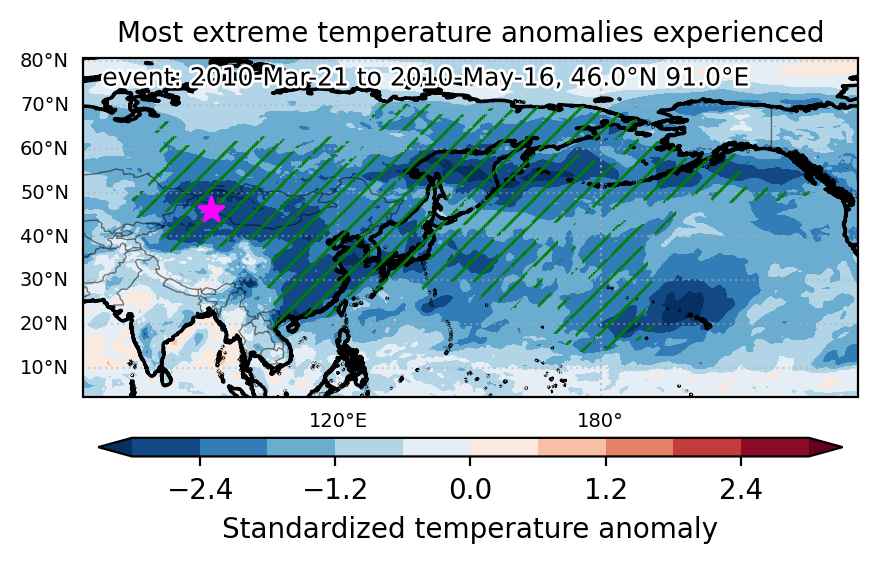

Fig. 1: Map of most extreme temperature anomalies (standardized) experienced during the event. The purple star indicates the center of the extreme event. Green hatching illustrates all areas under the effect of extremes at some time during the event.
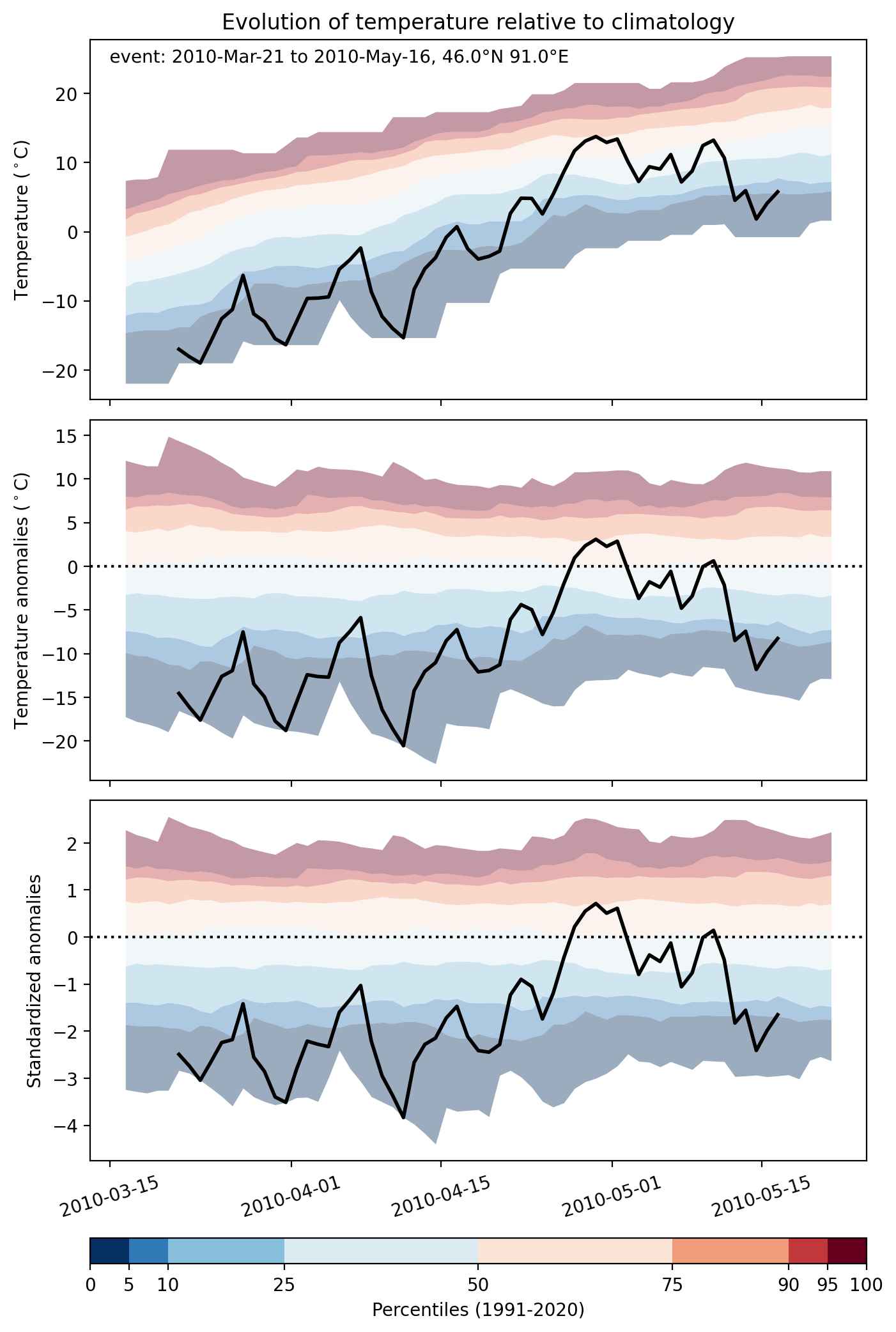


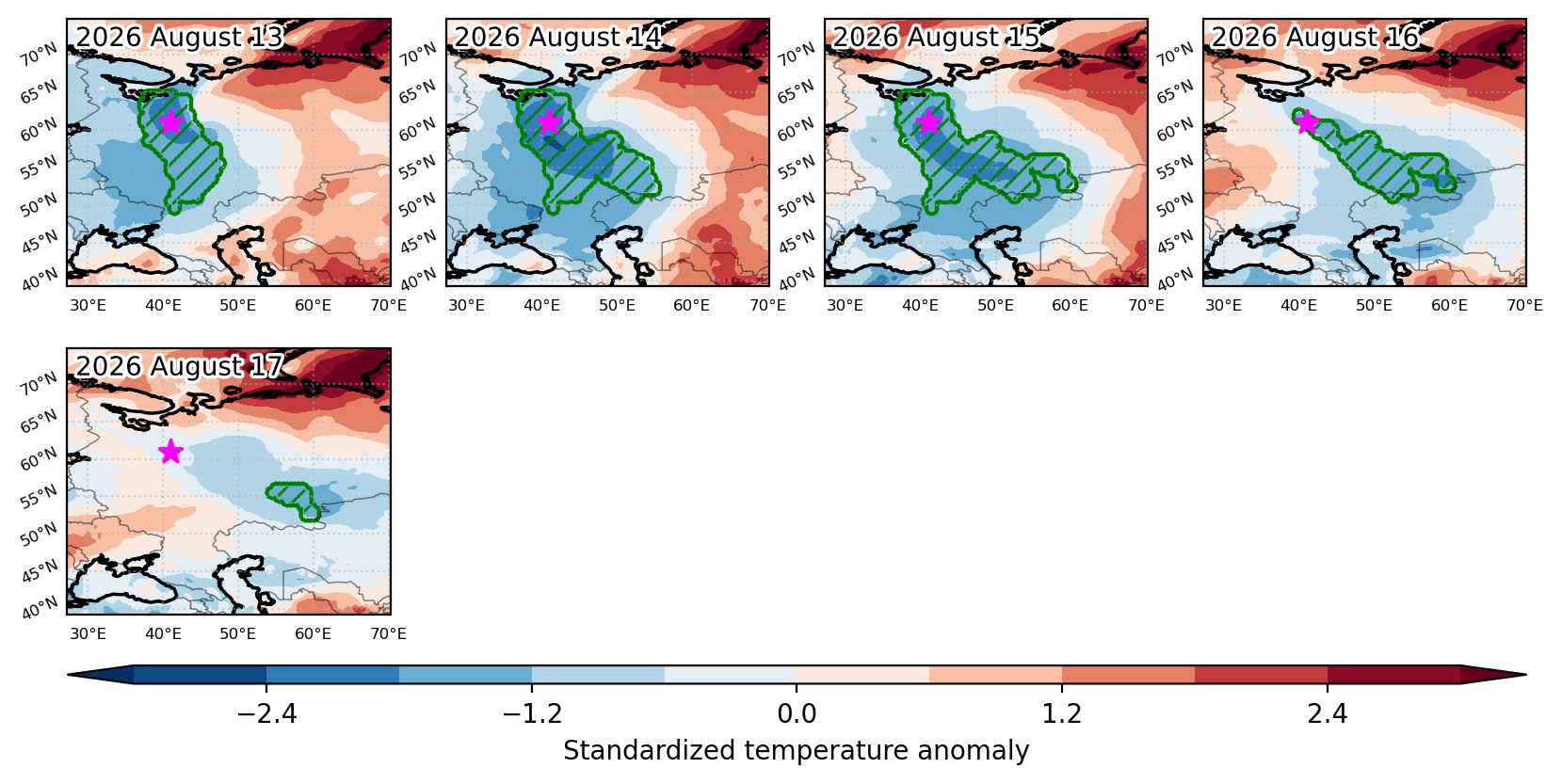
Fig. 2: Evolution of temperature at the center of the event. The climatological percentile distribution is illustrated with color shadings.
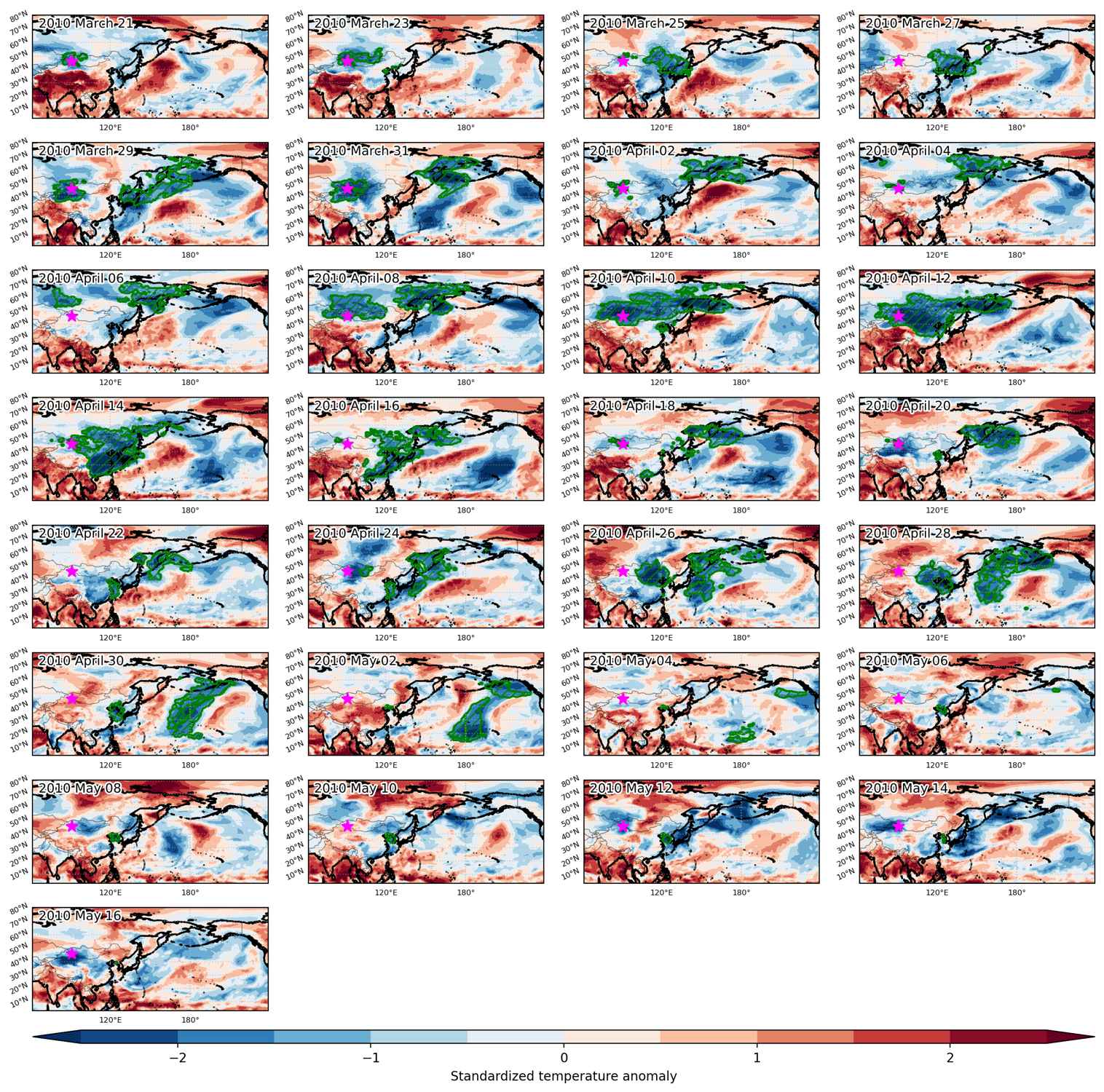


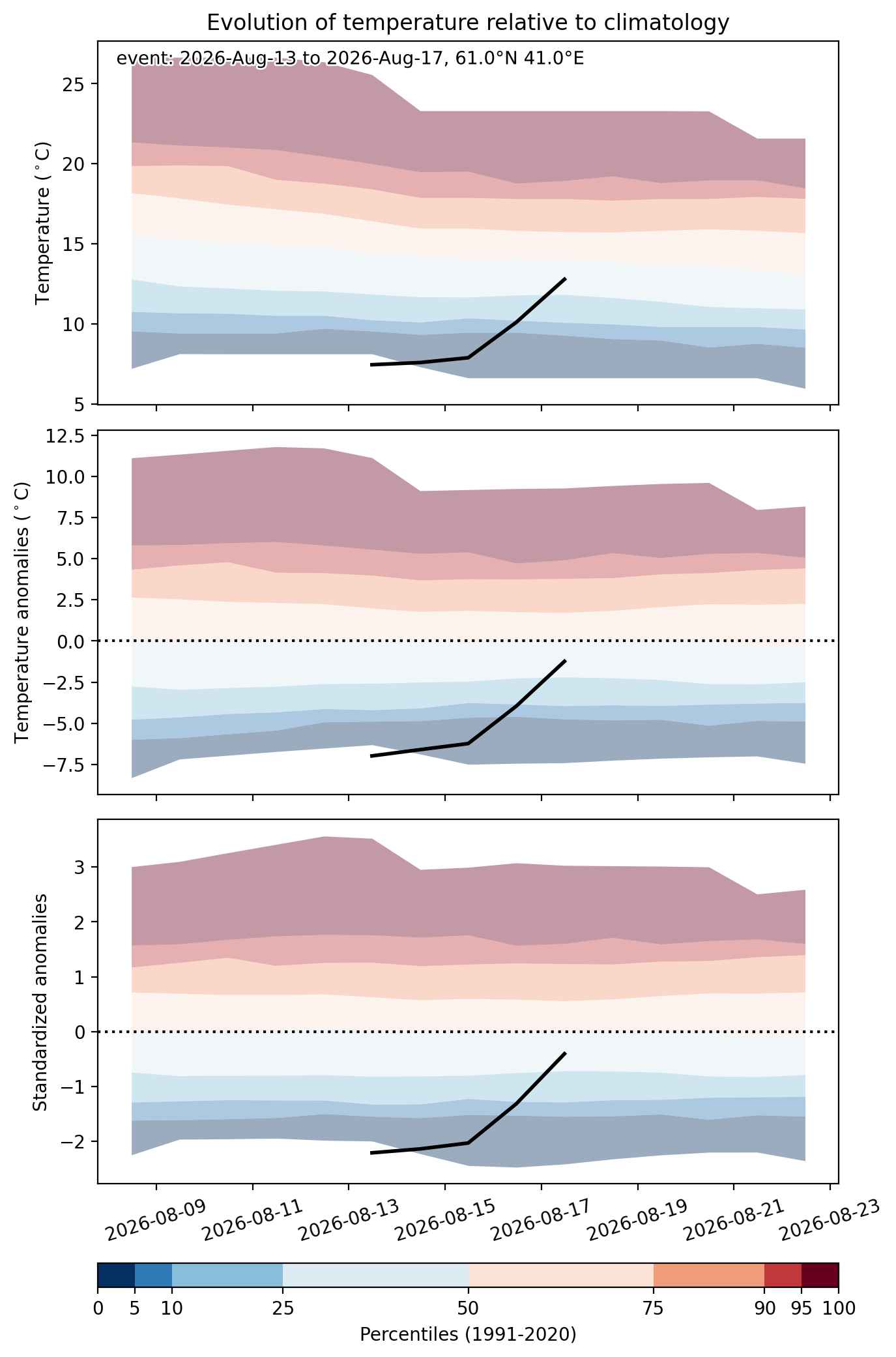
Fig. 3: Maps illustrating the evolution of standardized temperature anomalies during the event.

Event ID: Cold_spell_2010-Mar-21_to_2010-May-16_91.0_46.0
Cold spell occuring from March 10 2010 to March 22 2010 at 69.5°N 21.0°E

Download data: JSON

Event type: Cold spell

Countries affected (identified with ArcGIS Online; provided only for geographical reference):

  • Belarus
  • Estonia
  • Finland
  • Kazakhstan
  • Latvia
  • Lithuania
  • Norway
  • Russian Federation
  • Sweden
  • Ukraine

Duration: 13 days

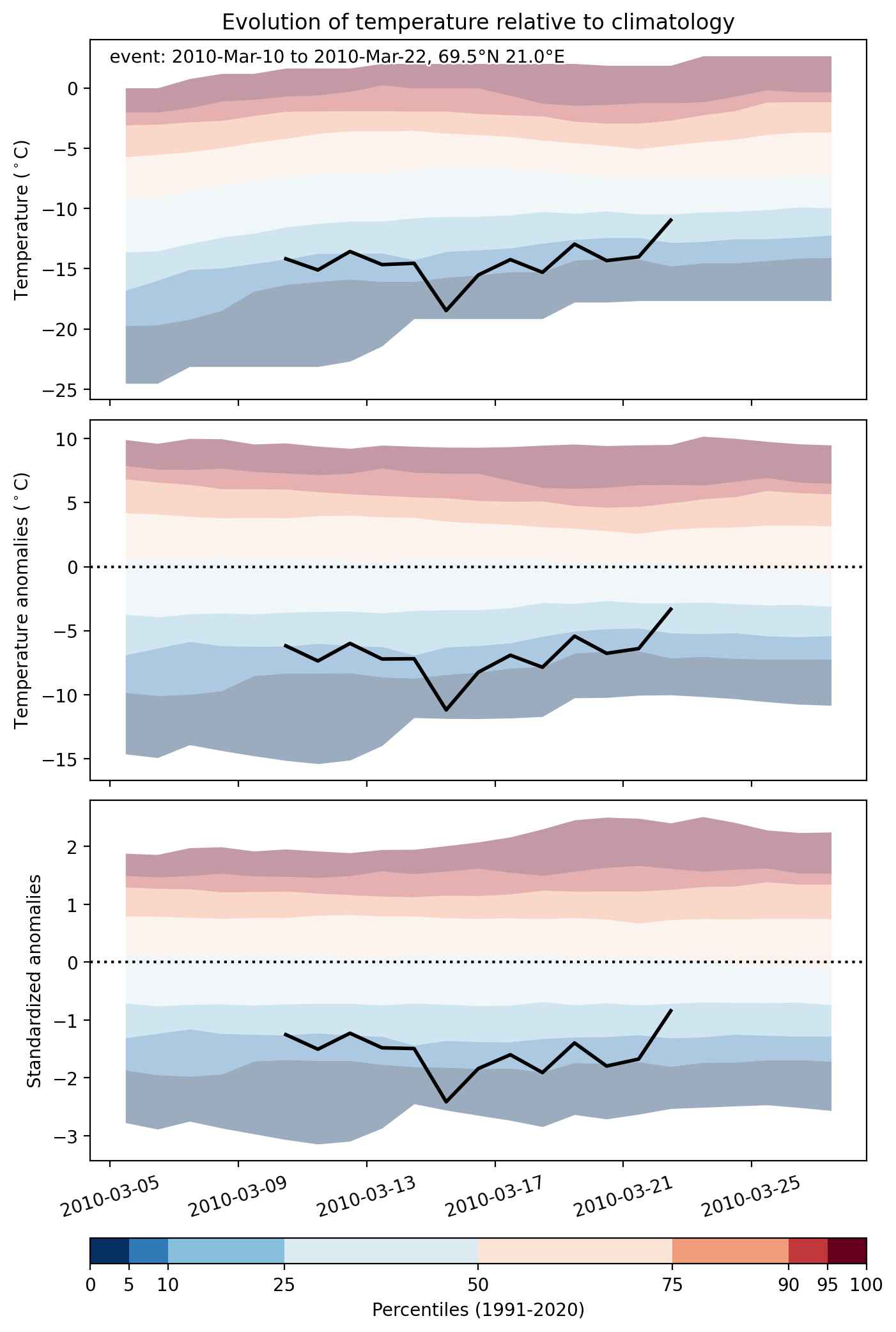
Time span: March 10 2010 to March 22 2010

Statistics over entire affected area:

  • Mean temperature anomaly: -8.1 °C
  • Mean temperature: -10.9 °C
  • Minimum temperature anomaly: -16.3 °C
  • Minimum temperature: -21.4 °C

Event center: 69.5°N 21.0°E

Area affected: 2649132 km$^2$


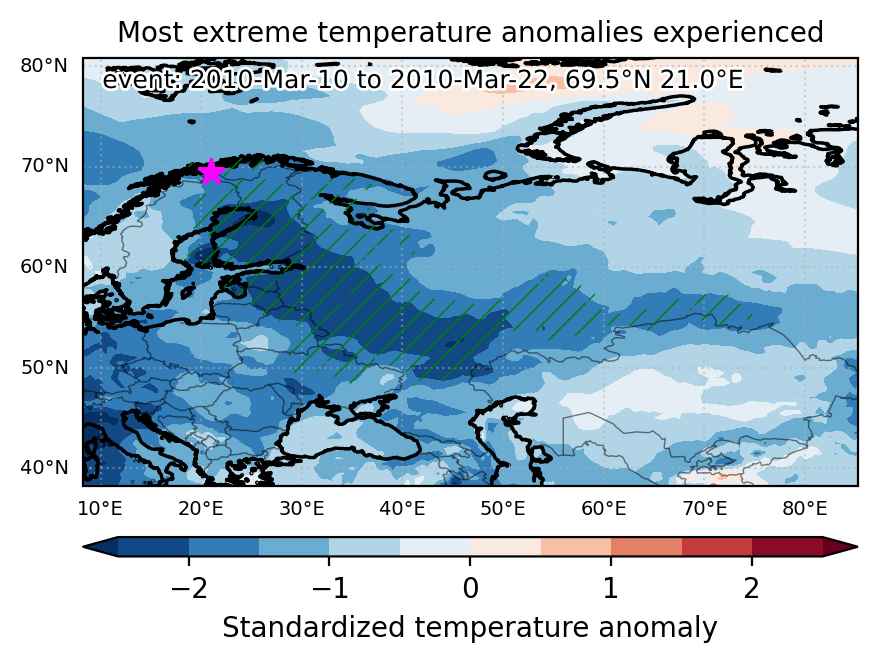
Fig. 1: Map of most extreme temperature anomalies (standardized) experienced during the event. The purple star indicates the center of the extreme event. Green hatching illustrates all areas under the effect of extremes at some time during the event.


Fig. 2: Evolution of temperature at the center of the event. The climatological percentile distribution is illustrated with color shadings.


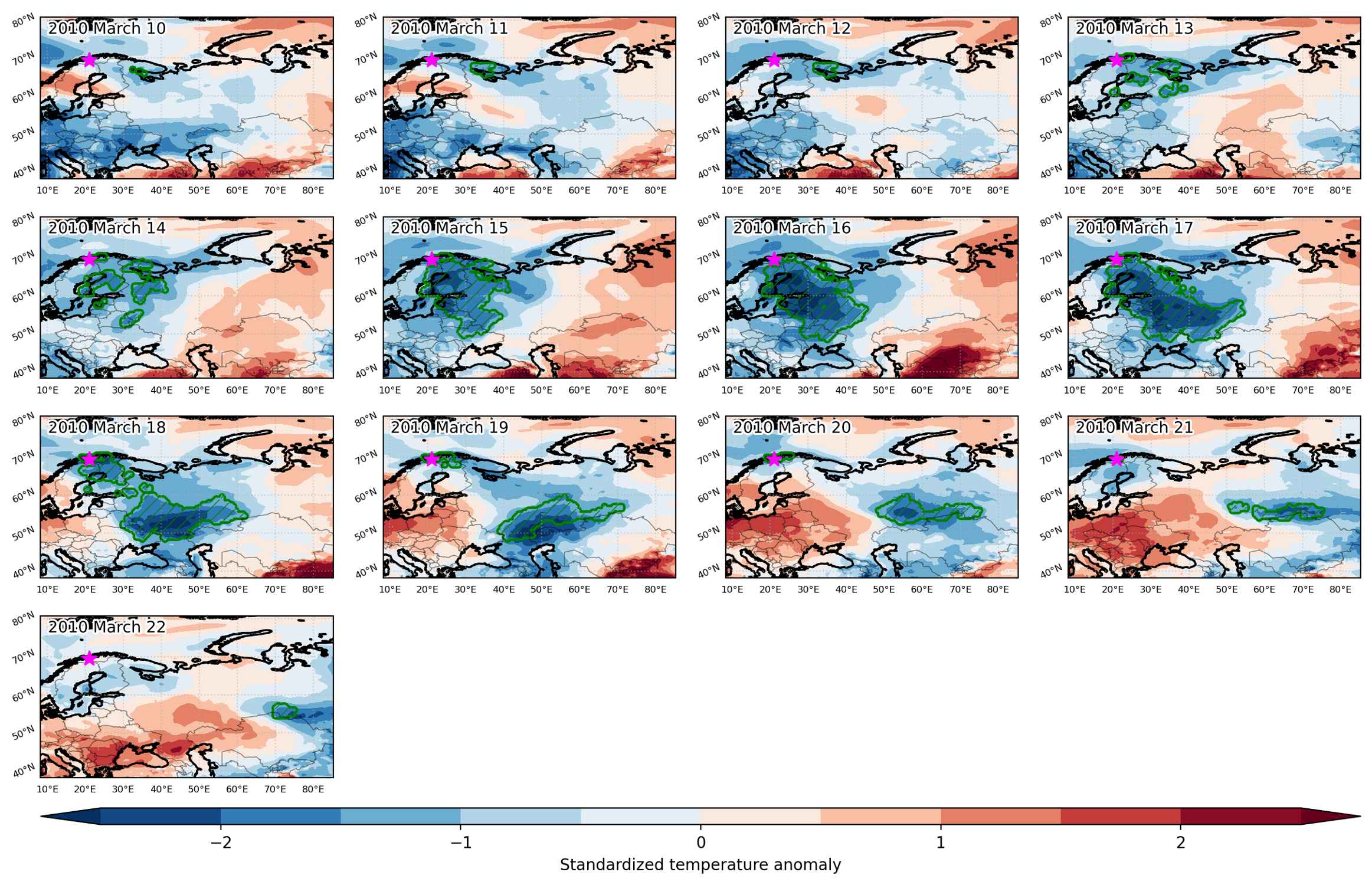
Fig. 3: Maps illustrating the evolution of standardized temperature anomalies during the event.

Event ID: Cold_spell_2010-Mar-10_to_2010-Mar-22_21.0_69.5

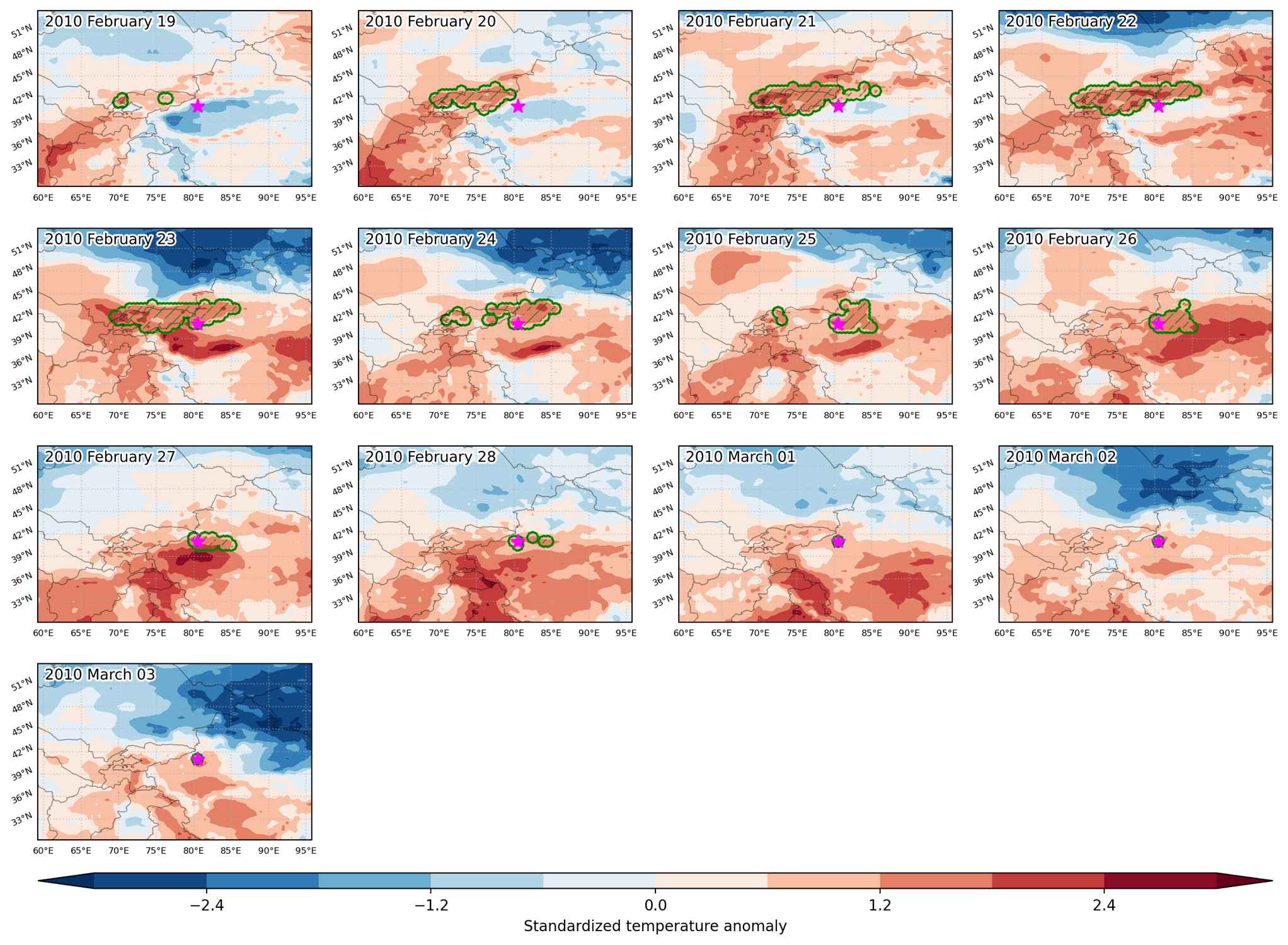
Heat wave occuring from February 19 2010 to March 03 2010 at 41.0°N 80.5°E

Download data: JSON

Event type: Heat wave

Countries affected (identified with ArcGIS Online; provided only for geographical reference):

  • China
  • Kazakhstan
  • Kyrgyzstan
  • Uzbekistan

Duration: 13 days

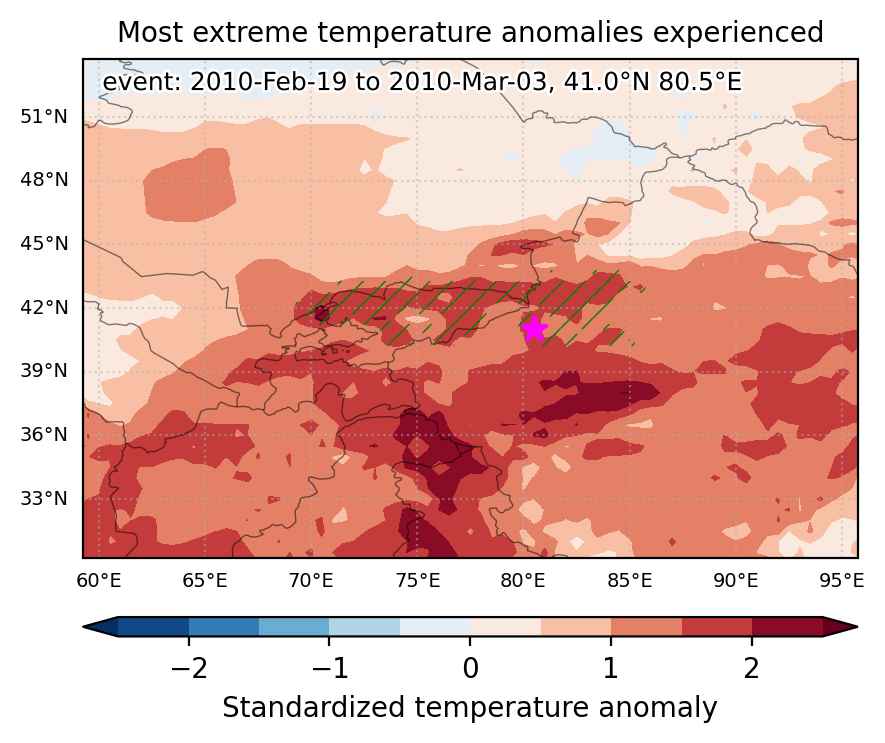
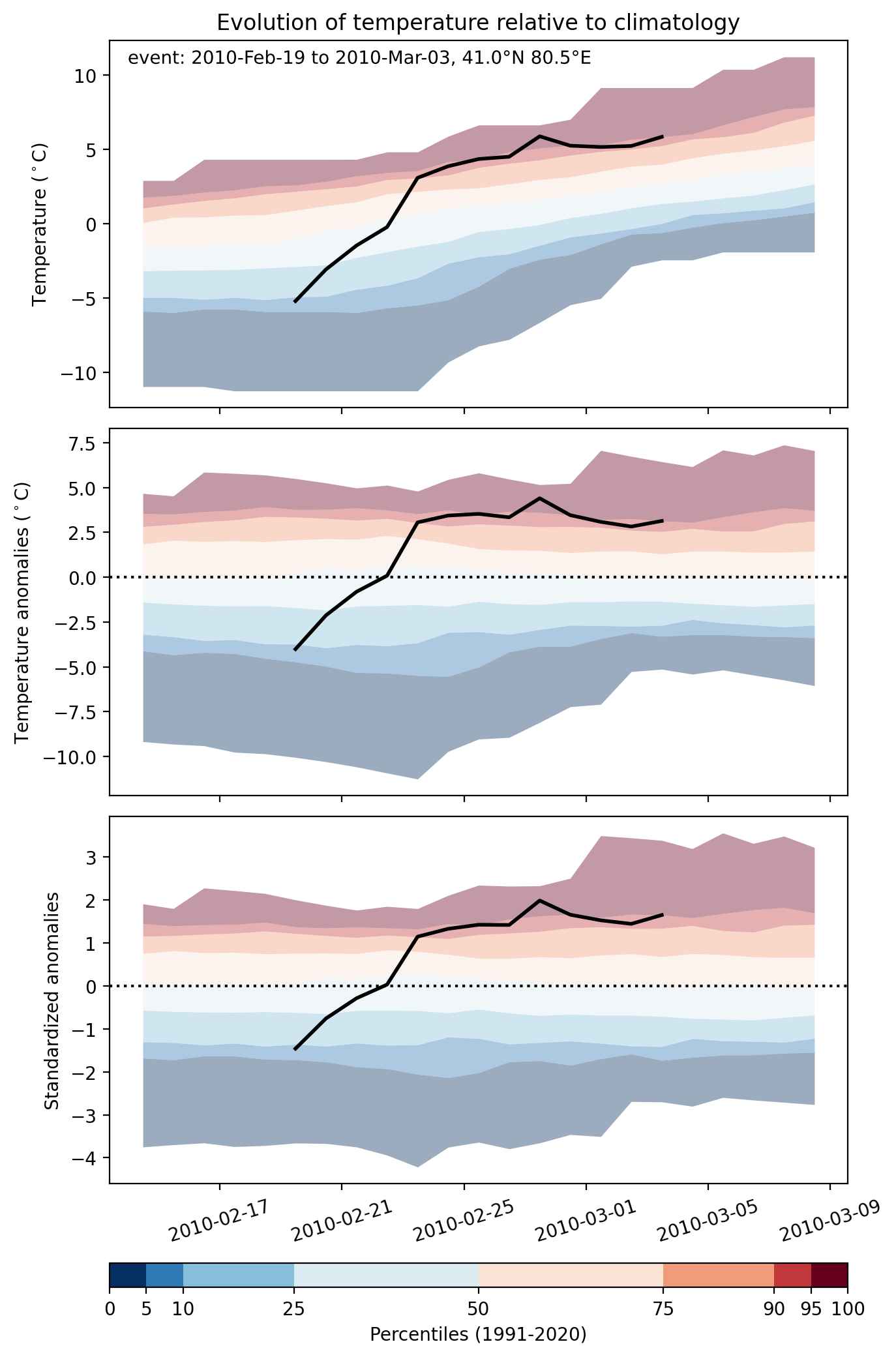
Time span: February 19 2010 to March 03 2010

Statistics over entire affected area:

  • Mean temperature anomaly: 5.9 °C
  • Mean temperature: -1.9 °C
  • Maximum temperature anomaly: 10.9 °C
  • Maximum temperature: 12.7 °C

Event center: 41.0°N 80.5°E

Area affected: 305283 km$^2$


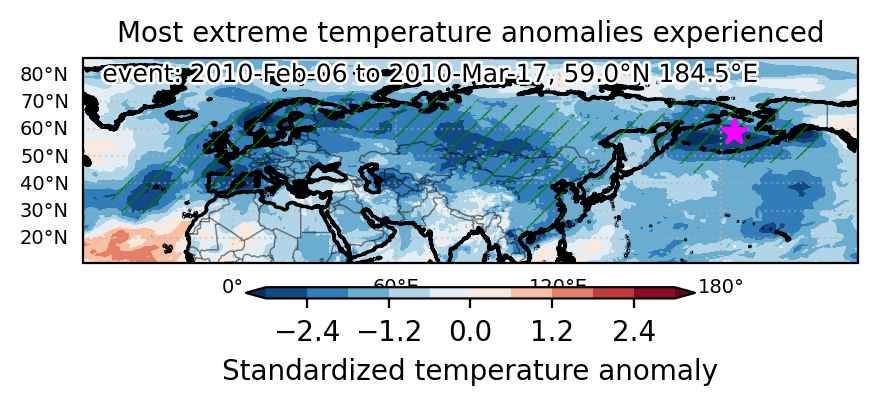
Fig. 1: Map of most extreme temperature anomalies (standardized) experienced during the event. The purple star indicates the center of the extreme event. Green hatching illustrates all areas under the effect of extremes at some time during the event.


Fig. 2: Evolution of temperature at the center of the event. The climatological percentile distribution is illustrated with color shadings.


Fig. 3: Maps illustrating the evolution of standardized temperature anomalies during the event.

Event ID: Heat_wave_2010-Feb-19_to_2010-Mar-03_80.5_41.0

Cold spell occuring from February 06 2010 to March 17 2010 at 59.0°N 184.5°E

Download data: JSON

Event type: Cold spell

Countries affected (identified with ArcGIS Online; provided only for geographical reference):

  • Algeria
  • Andorra
  • Austria
  • Azores
  • Belgium
  • China
  • Czech Republic
  • Denmark
  • Estonia
  • Faroe Islands
  • Finland
  • France
  • Germany
  • Ireland
  • Kazakhstan
  • Luxembourg
  • Mongolia
  • Netherlands
  • Norway
  • Portugal
  • Russian Federation
  • Spain
  • Sweden
  • Switzerland
  • United Kingdom
  • United States
  • Vietnam

Duration: 40 days

Time span: February 06 2010 to March 17 2010

Statistics over entire affected area:

  • Mean temperature anomaly: -9.5 °C
  • Mean temperature: -16.0 °C
  • Minimum temperature anomaly: -27.1 °C
  • Minimum temperature: -48.6 °C

Event center: 59.0°N 184.5°E

Area affected: 36314510 km$^2$


Fig. 1: Map of most extreme temperature anomalies (standardized) experienced during the event. The purple star indicates the center of the extreme event. Green hatching illustrates all areas under the effect of extremes at some time during the event.


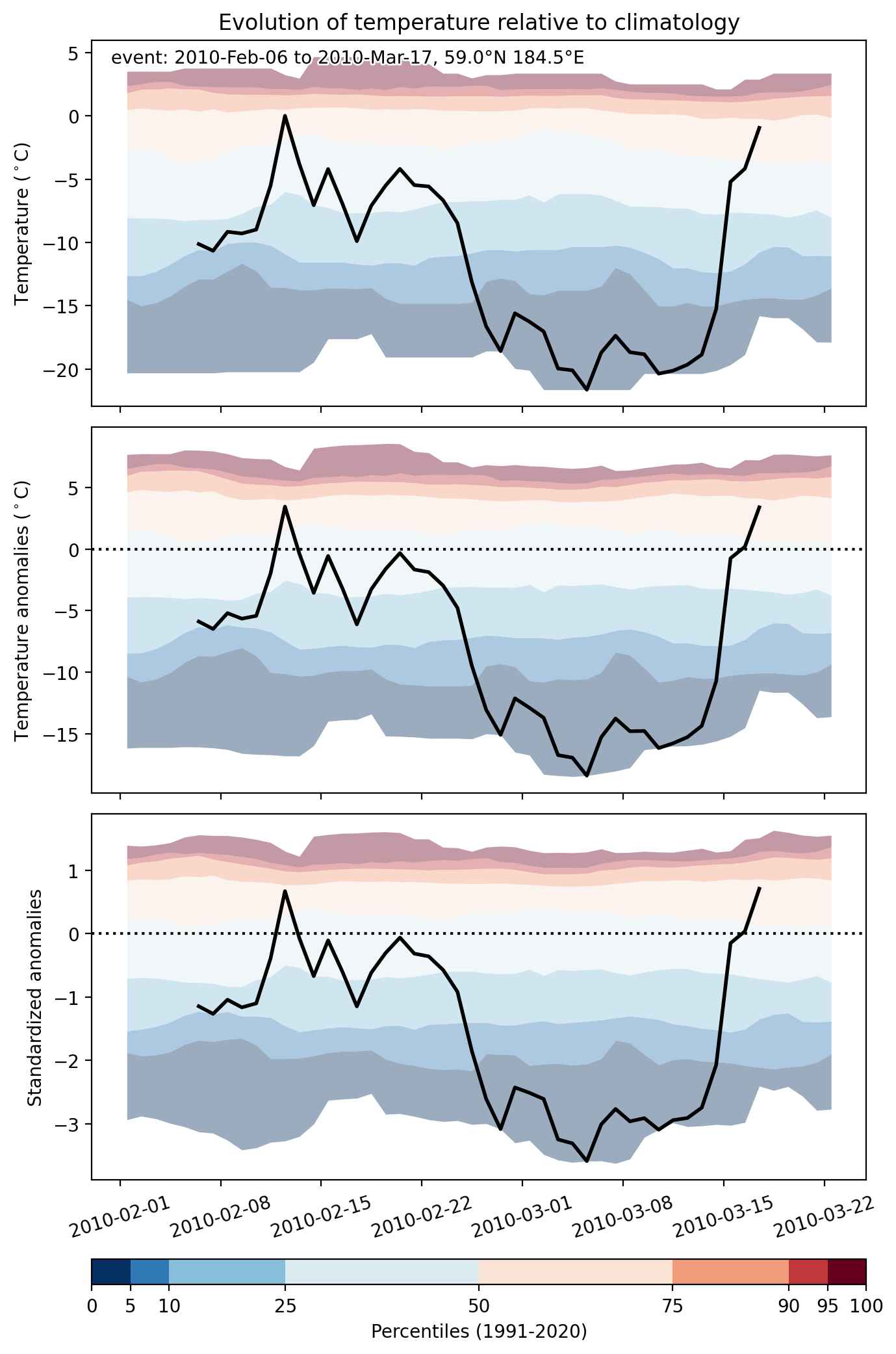
Fig. 2: Evolution of temperature at the center of the event. The climatological percentile distribution is illustrated with color shadings.


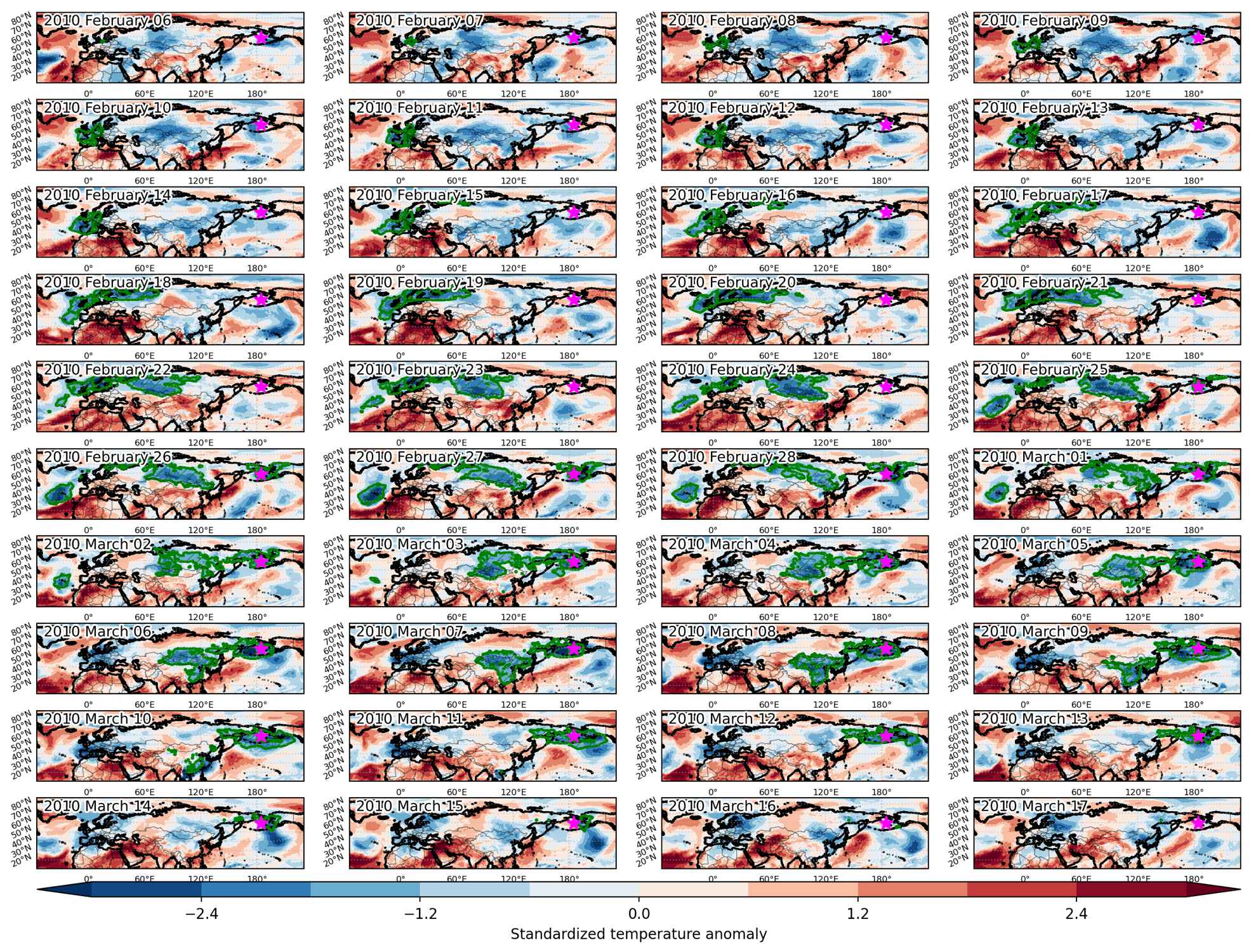
Fig. 3: Maps illustrating the evolution of standardized temperature anomalies during the event.

Event ID: Cold_spell_2010-Feb-06_to_2010-Mar-17_184.5_59.0

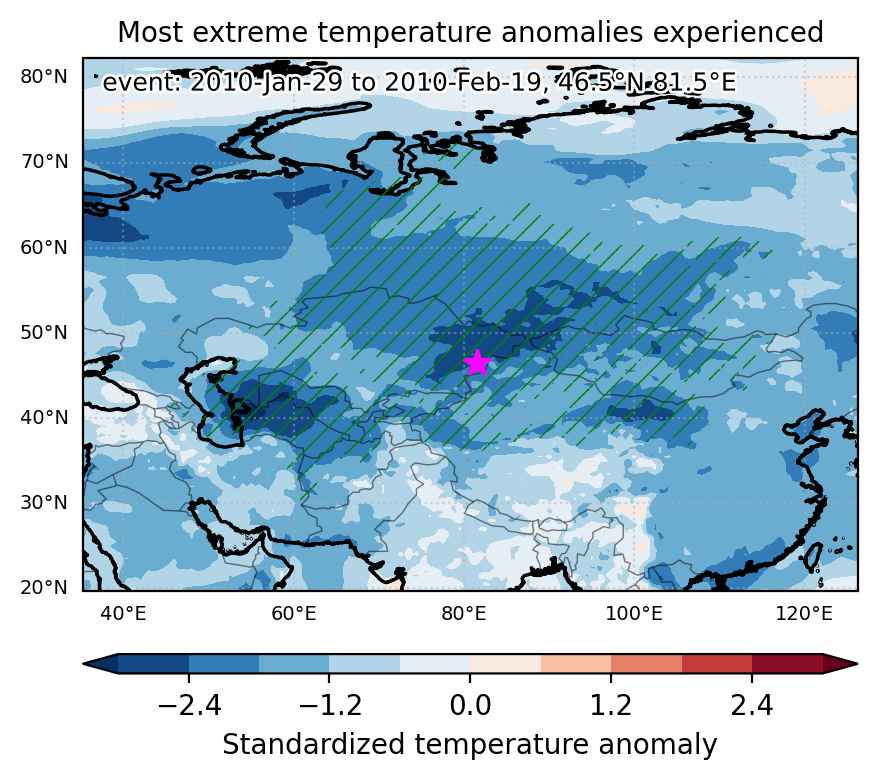
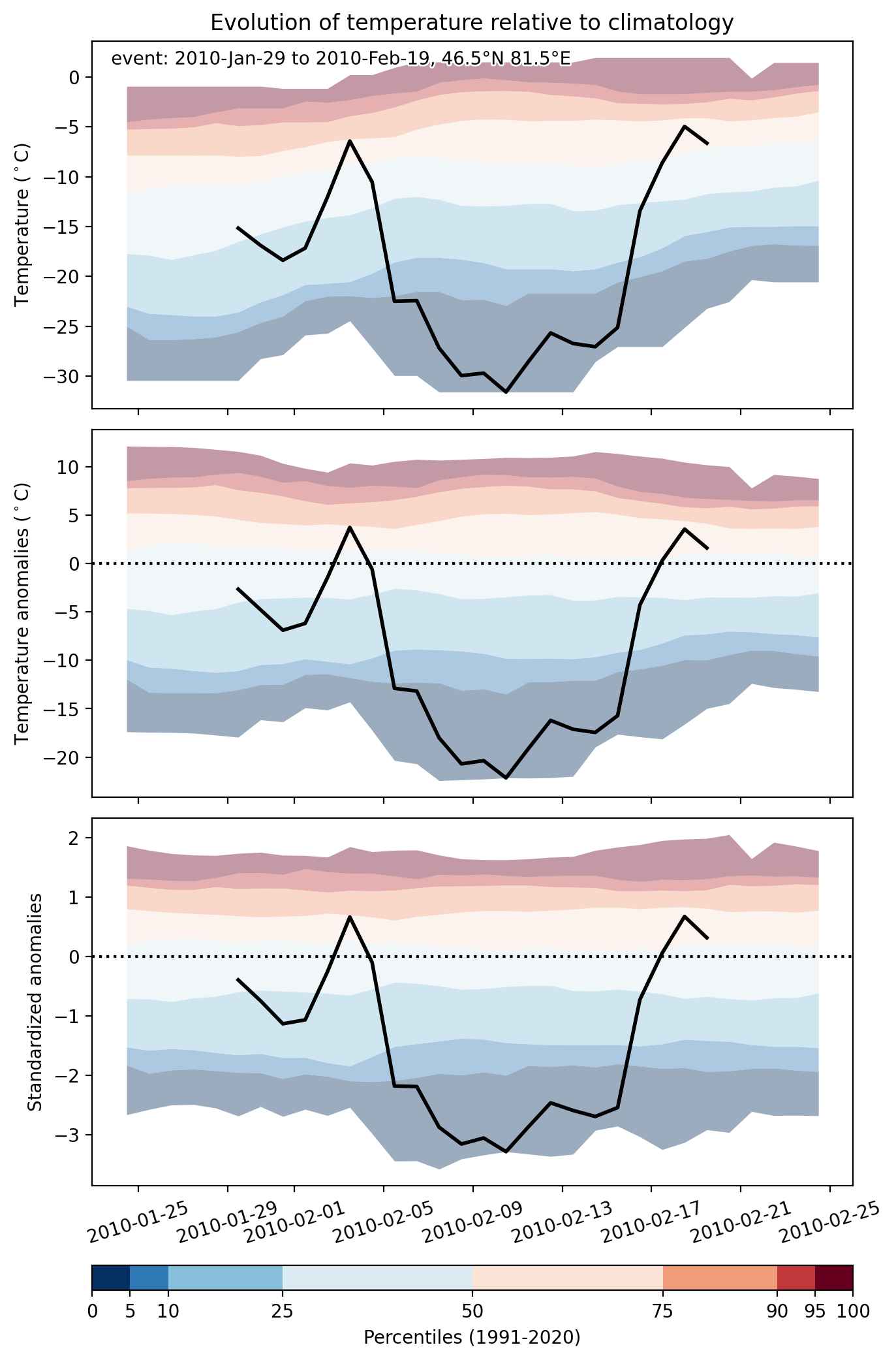
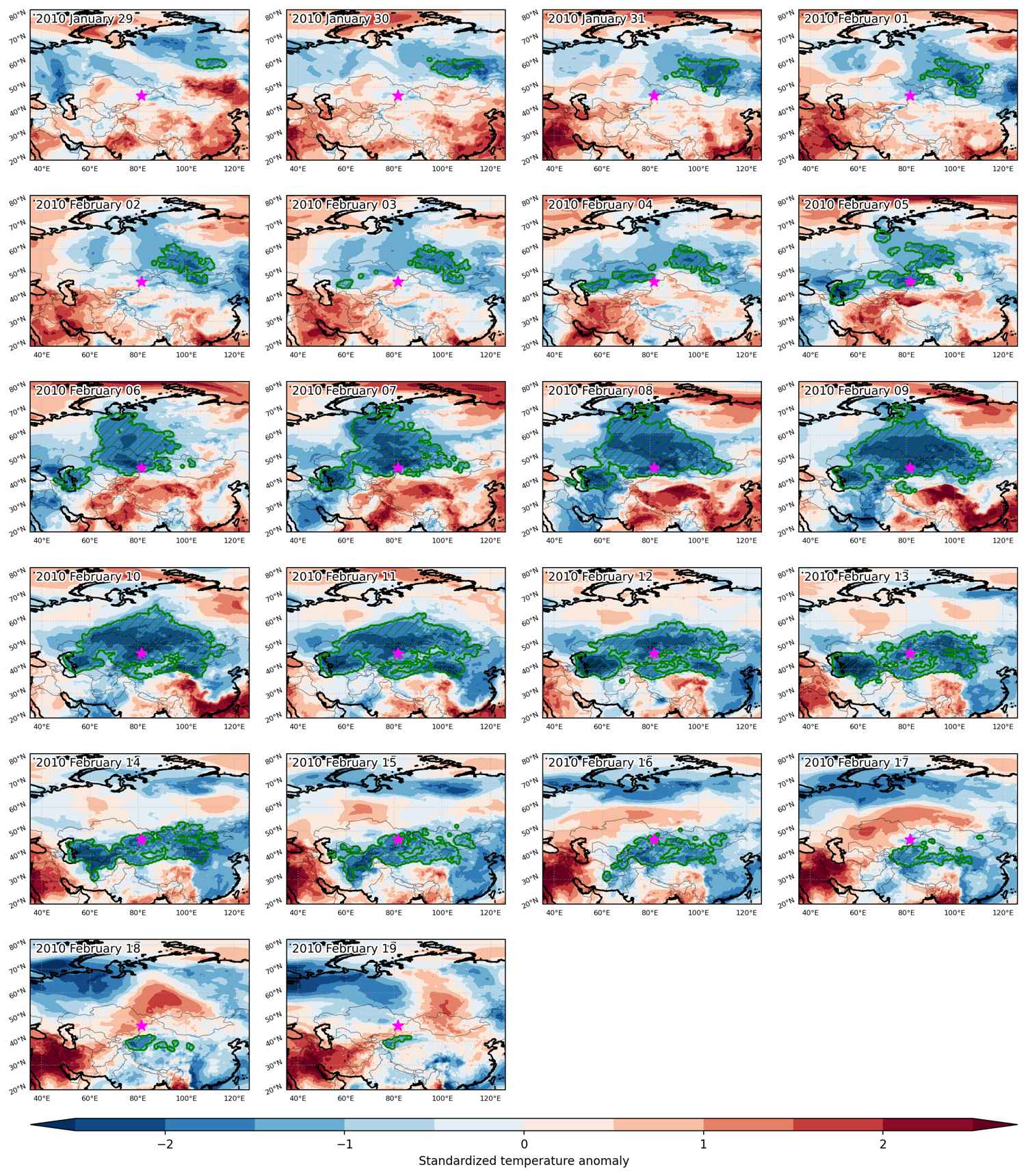
Cold spell occuring from January 29 2010 to February 19 2010 at 46.5°N 81.5°E

Download data: JSON

Event type: Cold spell

Countries affected (identified with ArcGIS Online; provided only for geographical reference):

  • Afghanistan
  • Azerbaijan
  • China
  • Georgia
  • Iran
  • Kazakhstan
  • Kyrgyzstan
  • Mongolia
  • Russian Federation
  • Tajikistan
  • Turkmenistan
  • Uzbekistan

Duration: 22 days

Time span: January 29 2010 to February 19 2010

Statistics over entire affected area:

  • Mean temperature anomaly: -12.5 °C
  • Mean temperature: -24.9 °C
  • Minimum temperature anomaly: -26.3 °C
  • Minimum temperature: -47.7 °C

Event center: 46.5°N 81.5°E

Area affected: 10467115 km$^2$


Fig. 1: Map of most extreme temperature anomalies (standardized) experienced during the event. The purple star indicates the center of the extreme event. Green hatching illustrates all areas under the effect of extremes at some time during the event.


Fig. 2: Evolution of temperature at the center of the event. The climatological percentile distribution is illustrated with color shadings.


Fig. 3: Maps illustrating the evolution of standardized temperature anomalies during the event.

Event ID: Cold_spell_2010-Jan-29_to_2010-Feb-19_81.5_46.5

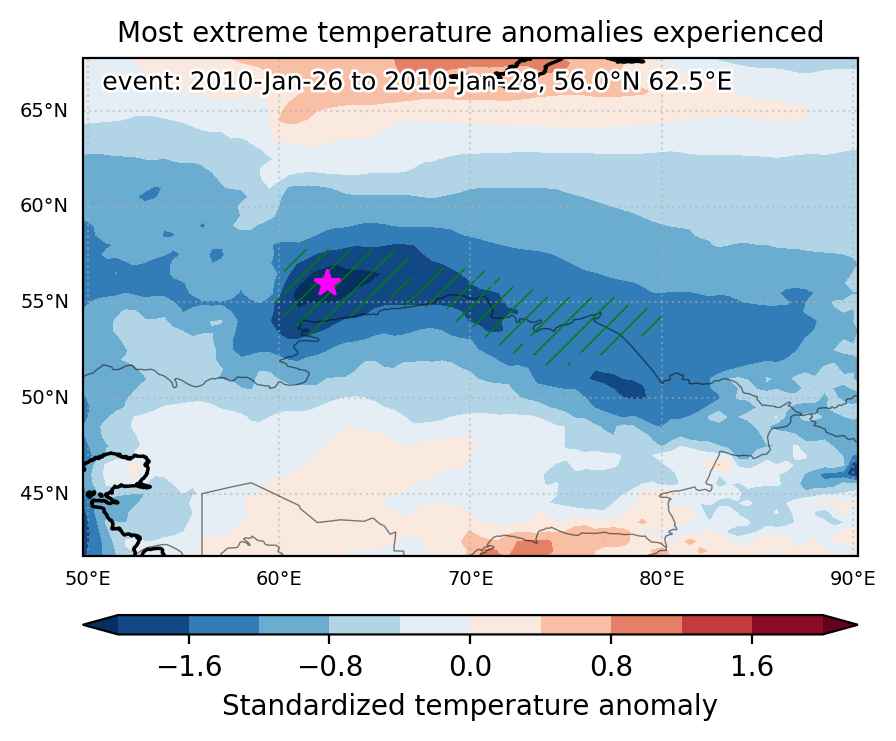
Cold spell occuring from January 26 2010 to January 28 2010 at 56.0°N 62.5°E

Download data: JSON

Event type: Cold spell

Countries affected (identified with ArcGIS Online; provided only for geographical reference):

  • Kazakhstan
  • Russian Federation

Duration: 3 days

Time span: January 26 2010 to January 28 2010

Statistics over entire affected area:

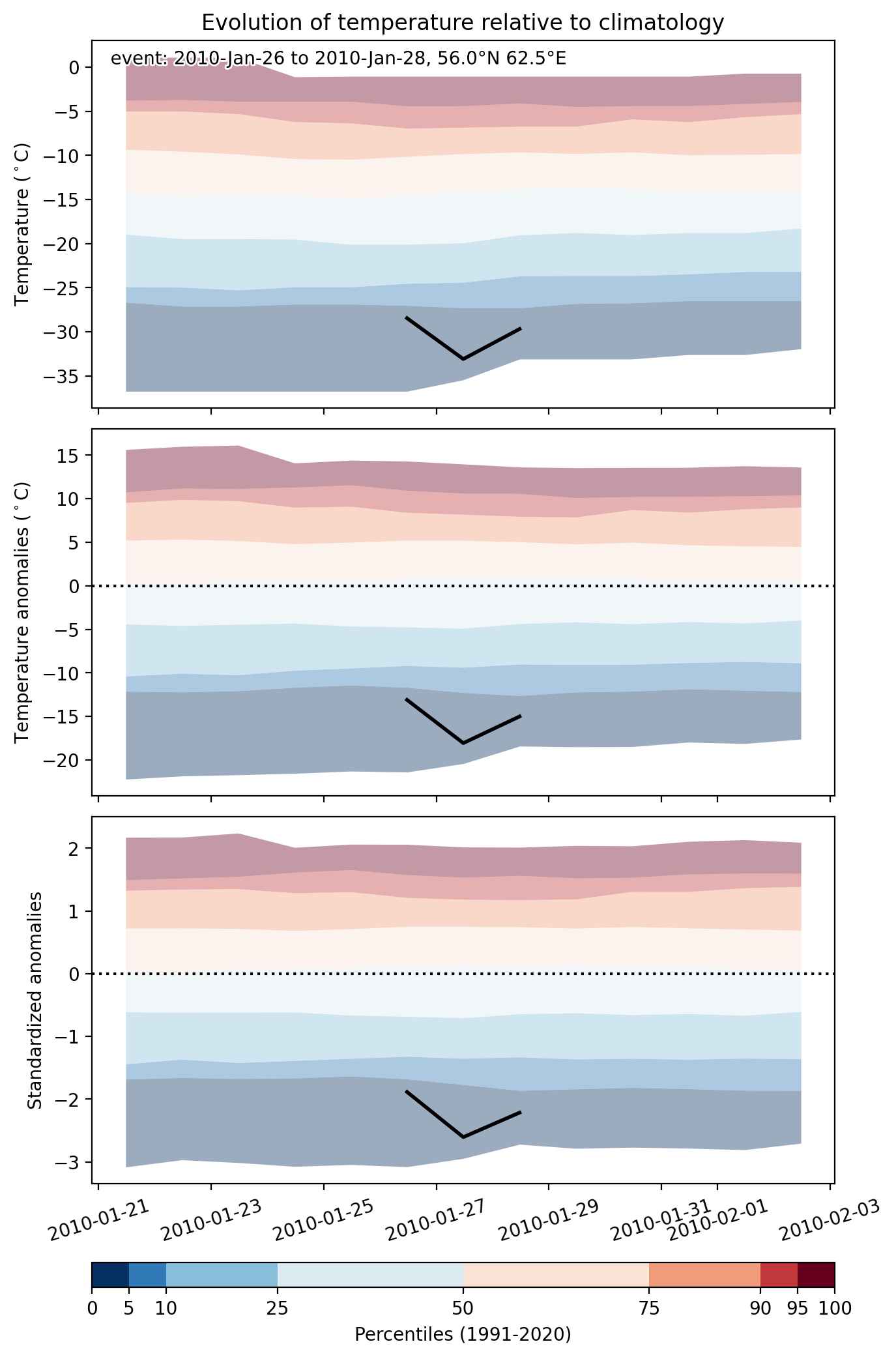
  • Mean temperature anomaly: -12.8 °C
  • Mean temperature: -29.3 °C
  • Minimum temperature anomaly: -18.5 °C
  • Minimum temperature: -34.8 °C

Event center: 56.0°N 62.5°E

Area affected: 400912 km$^2$


Fig. 1: Map of most extreme temperature anomalies (standardized) experienced during the event. The purple star indicates the center of the extreme event. Green hatching illustrates all areas under the effect of extremes at some time during the event.


Fig. 2: Evolution of temperature at the center of the event. The climatological percentile distribution is illustrated with color shadings.


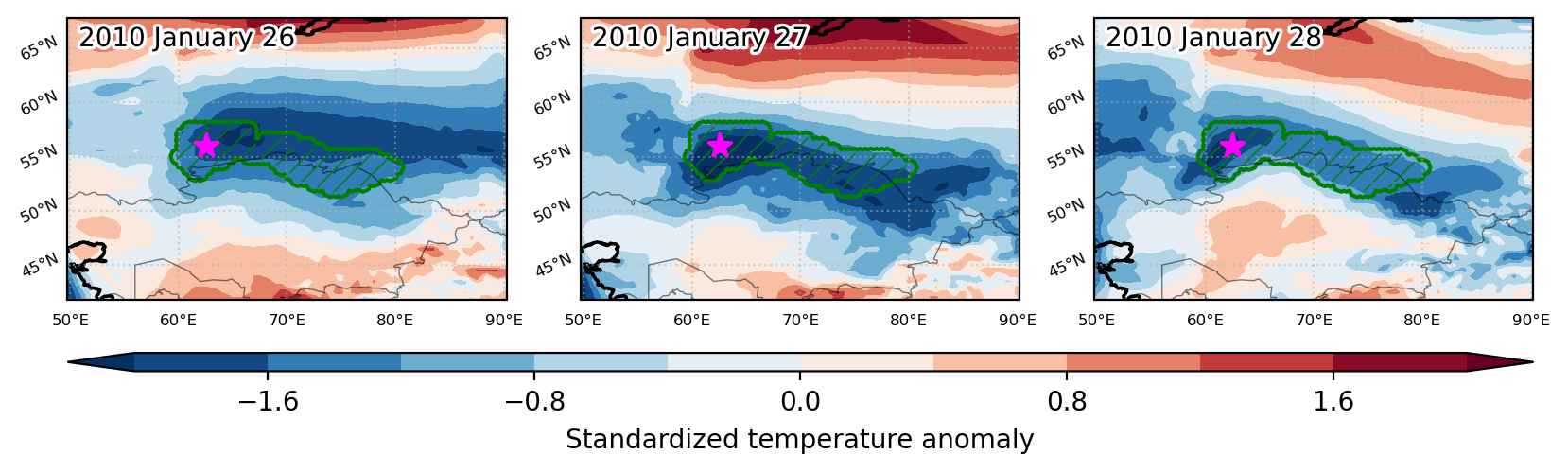
Fig. 3: Maps illustrating the evolution of standardized temperature anomalies during the event.

Event ID: Cold_spell_2010-Jan-26_to_2010-Jan-28_62.5_56.0

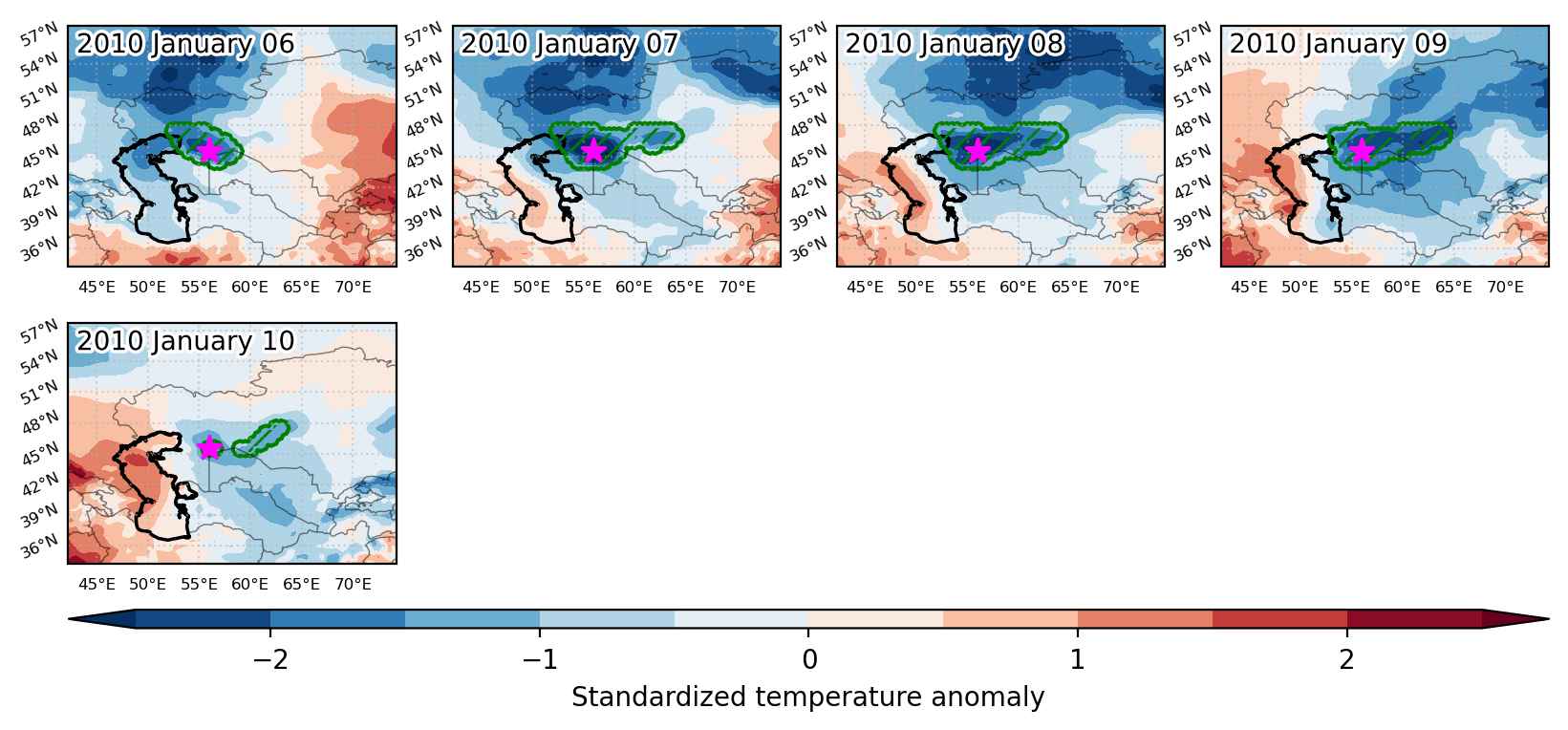
Cold spell occuring from January 06 2010 to January 10 2010 at 45.5°N 56.0°E

Download data: JSON

Event type: Cold spell

Countries affected (identified with ArcGIS Online; provided only for geographical reference):

  • Kazakhstan
  • Uzbekistan

Duration: 5 days

Time span: January 06 2010 to January 10 2010

Statistics over entire affected area:

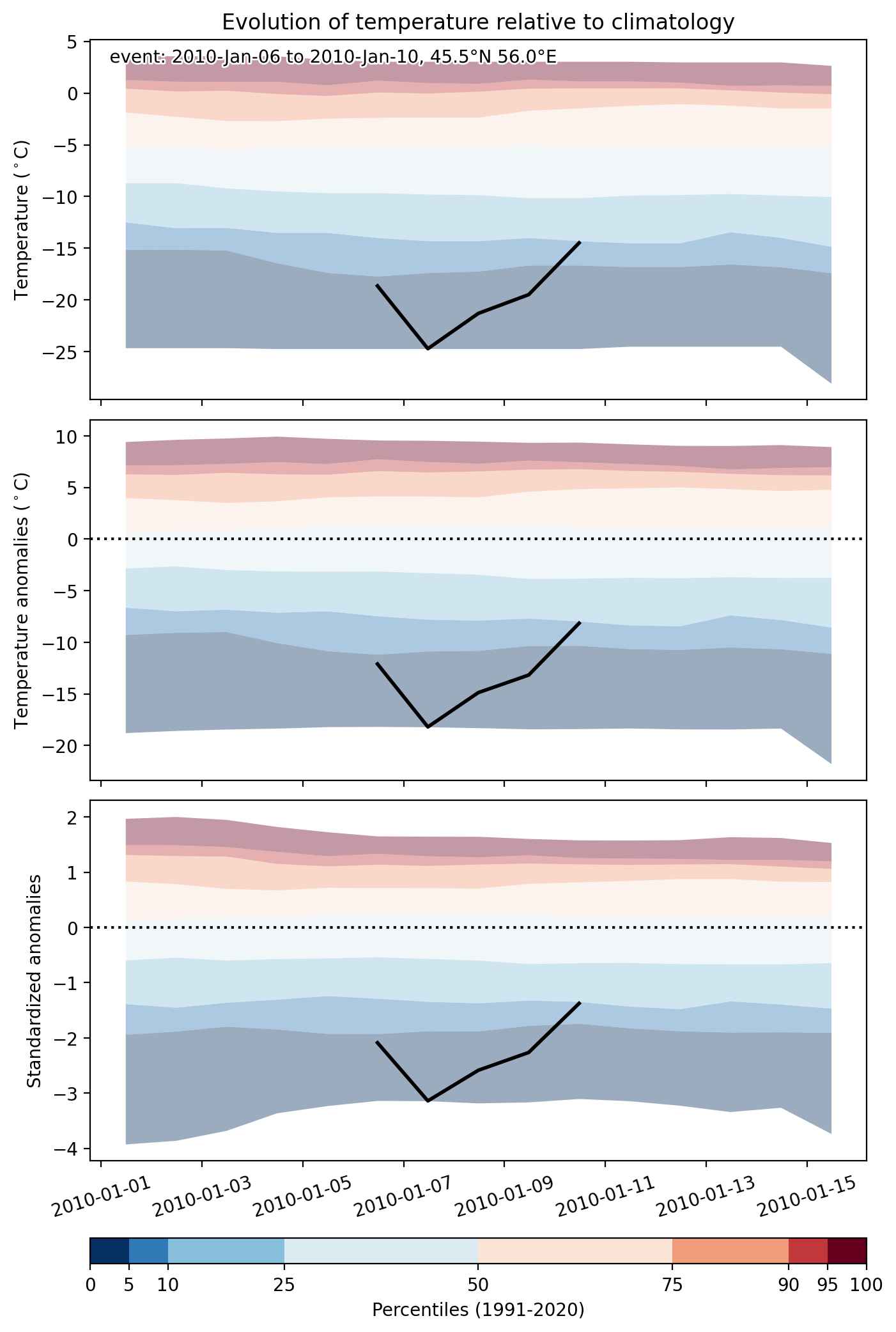
  • Mean temperature anomaly: -11.8 °C
  • Mean temperature: -19.5 °C
  • Minimum temperature anomaly: -19.9 °C
  • Minimum temperature: -26.0 °C

Event center: 45.5°N 56.0°E

Area affected: 215659 km$^2$


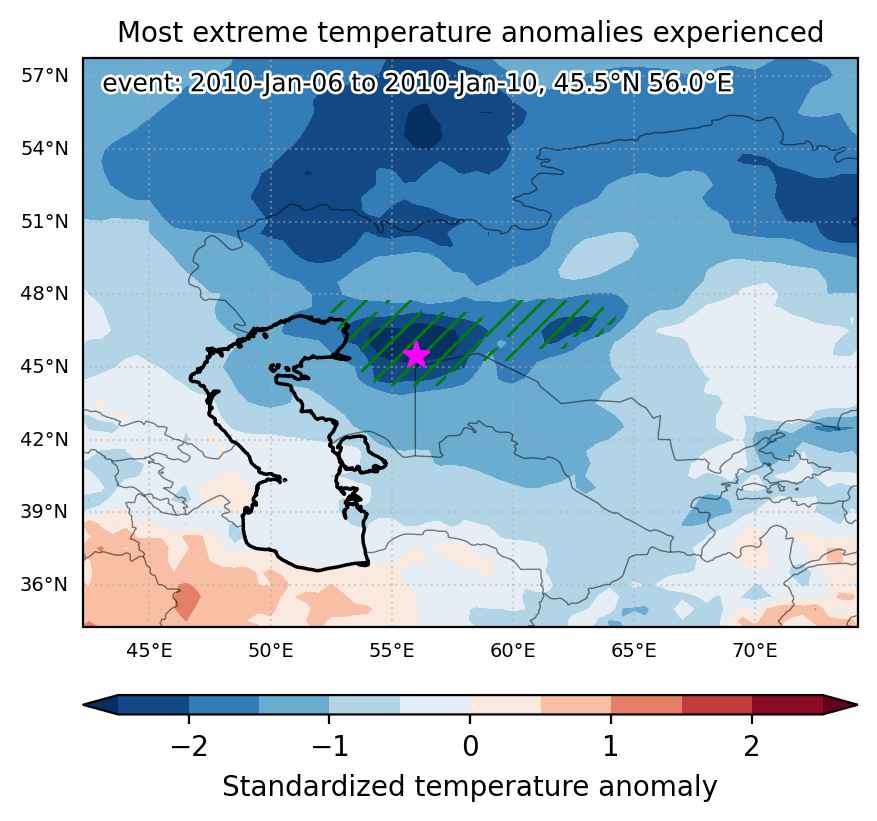
Fig. 1: Map of most extreme temperature anomalies (standardized) experienced during the event. The purple star indicates the center of the extreme event. Green hatching illustrates all areas under the effect of extremes at some time during the event.


Fig. 2: Evolution of temperature at the center of the event. The climatological percentile distribution is illustrated with color shadings.


Fig. 3: Maps illustrating the evolution of standardized temperature anomalies during the event.

Event ID: Cold_spell_2010-Jan-06_to_2010-Jan-10_56.0_45.5

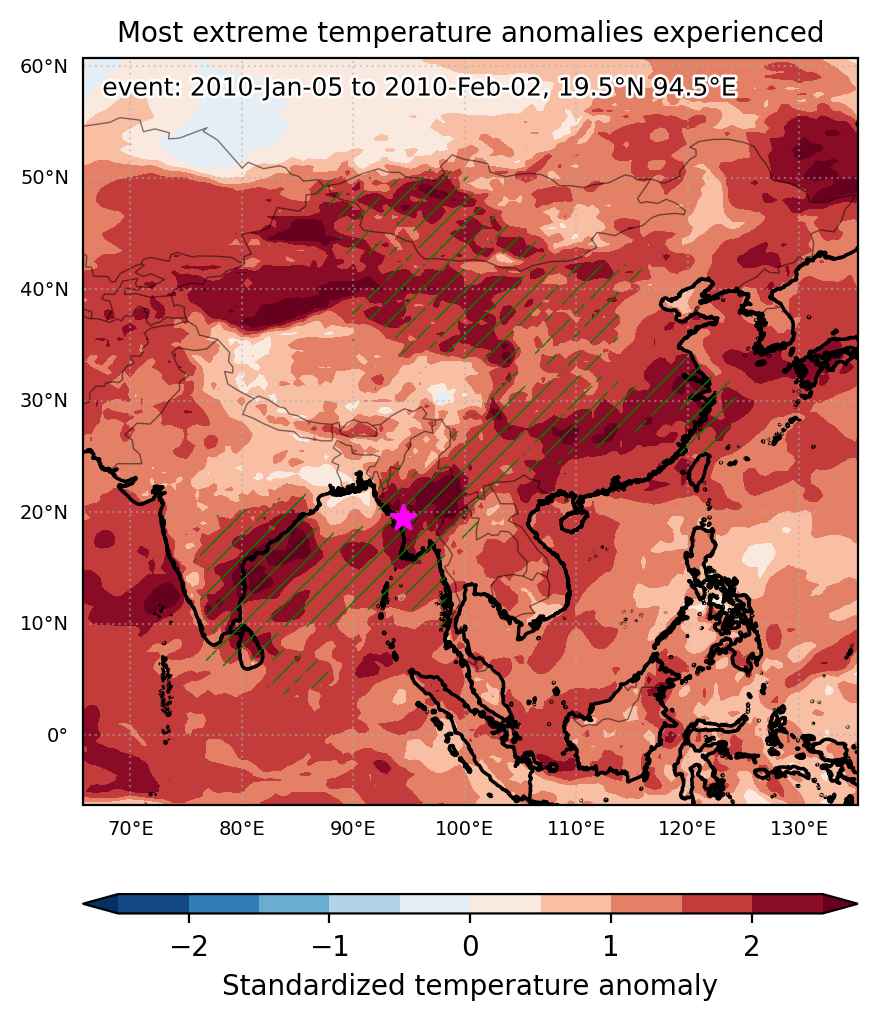
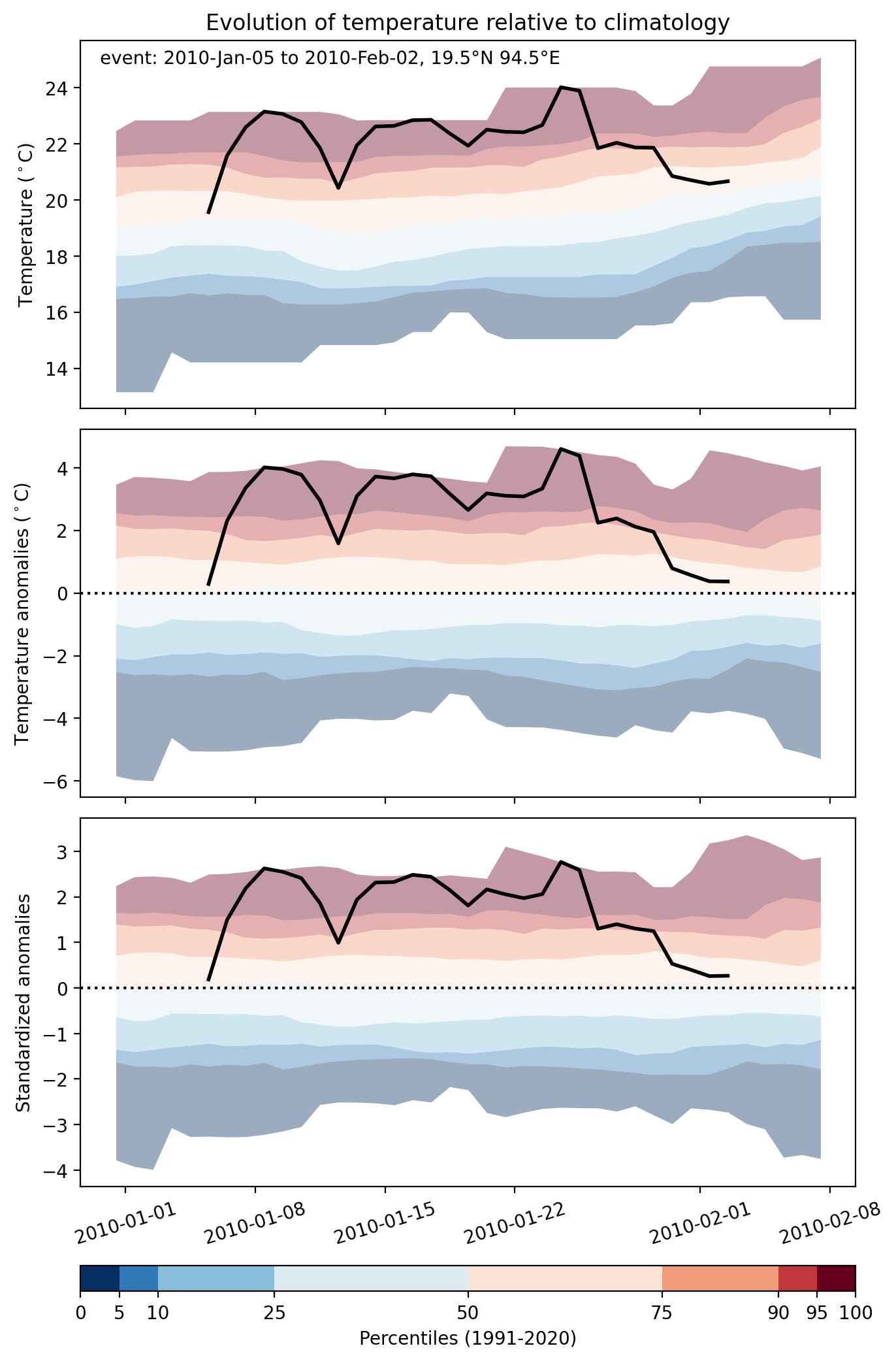
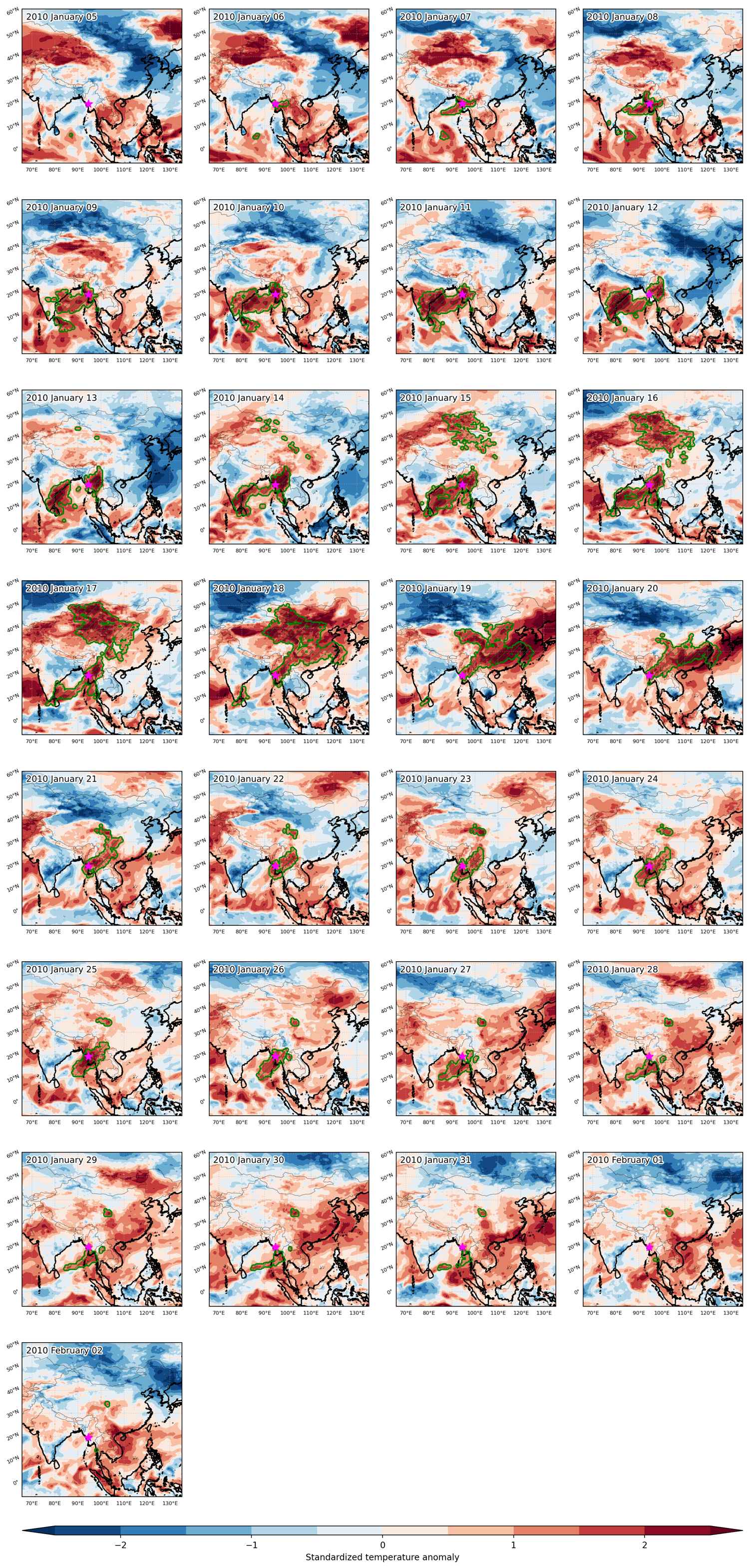
Heat wave occuring from January 05 2010 to February 02 2010 at 19.5°N 94.5°E

Download data: JSON

Event type: Heat wave

Countries affected (identified with ArcGIS Online; provided only for geographical reference):

  • Bangladesh
  • China
  • India
  • Kazakhstan
  • Laos
  • Mongolia
  • Myanmar
  • Russian Federation
  • Sri Lanka
  • Thailand
  • Vietnam

Duration: 29 days

Time span: January 05 2010 to February 02 2010

Statistics over entire affected area:

  • Mean temperature anomaly: 3.8 °C
  • Mean temperature: 14.3 °C
  • Maximum temperature anomaly: 17.9 °C
  • Maximum temperature: 28.9 °C

Event center: 19.5°N 94.5°E

Area affected: 6957679 km$^2$


Fig. 1: Map of most extreme temperature anomalies (standardized) experienced during the event. The purple star indicates the center of the extreme event. Green hatching illustrates all areas under the effect of extremes at some time during the event.


Fig. 2: Evolution of temperature at the center of the event. The climatological percentile distribution is illustrated with color shadings.


Fig. 3: Maps illustrating the evolution of standardized temperature anomalies during the event.

Event ID: Heat_wave_2010-Jan-05_to_2010-Feb-02_94.5_19.5

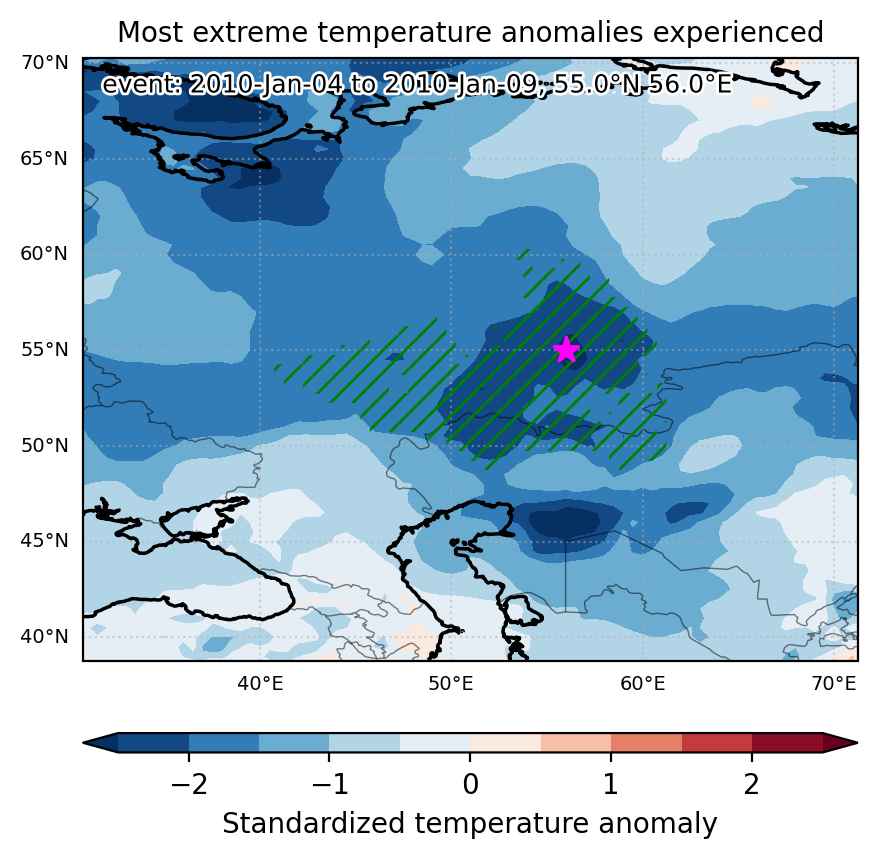
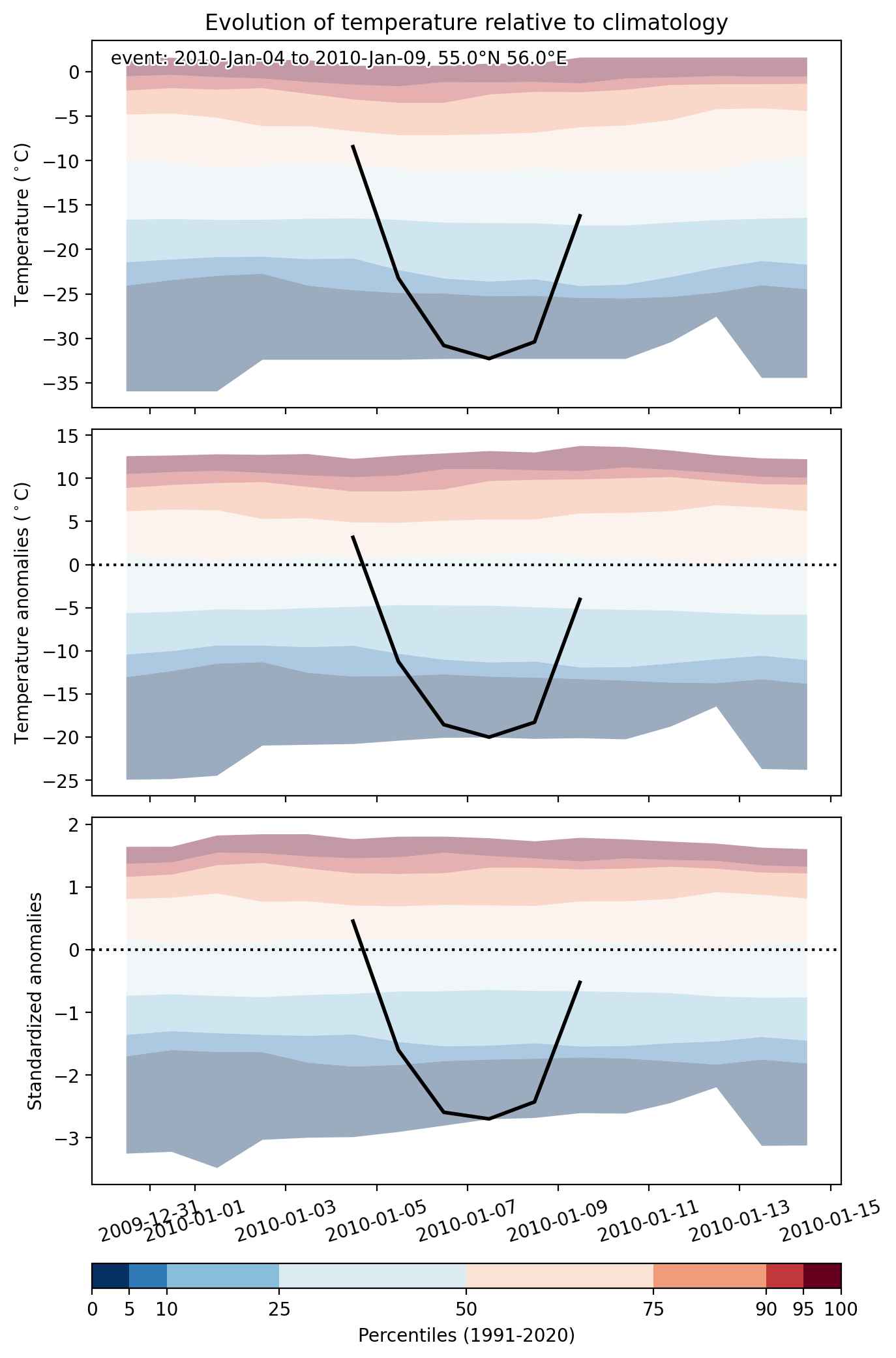
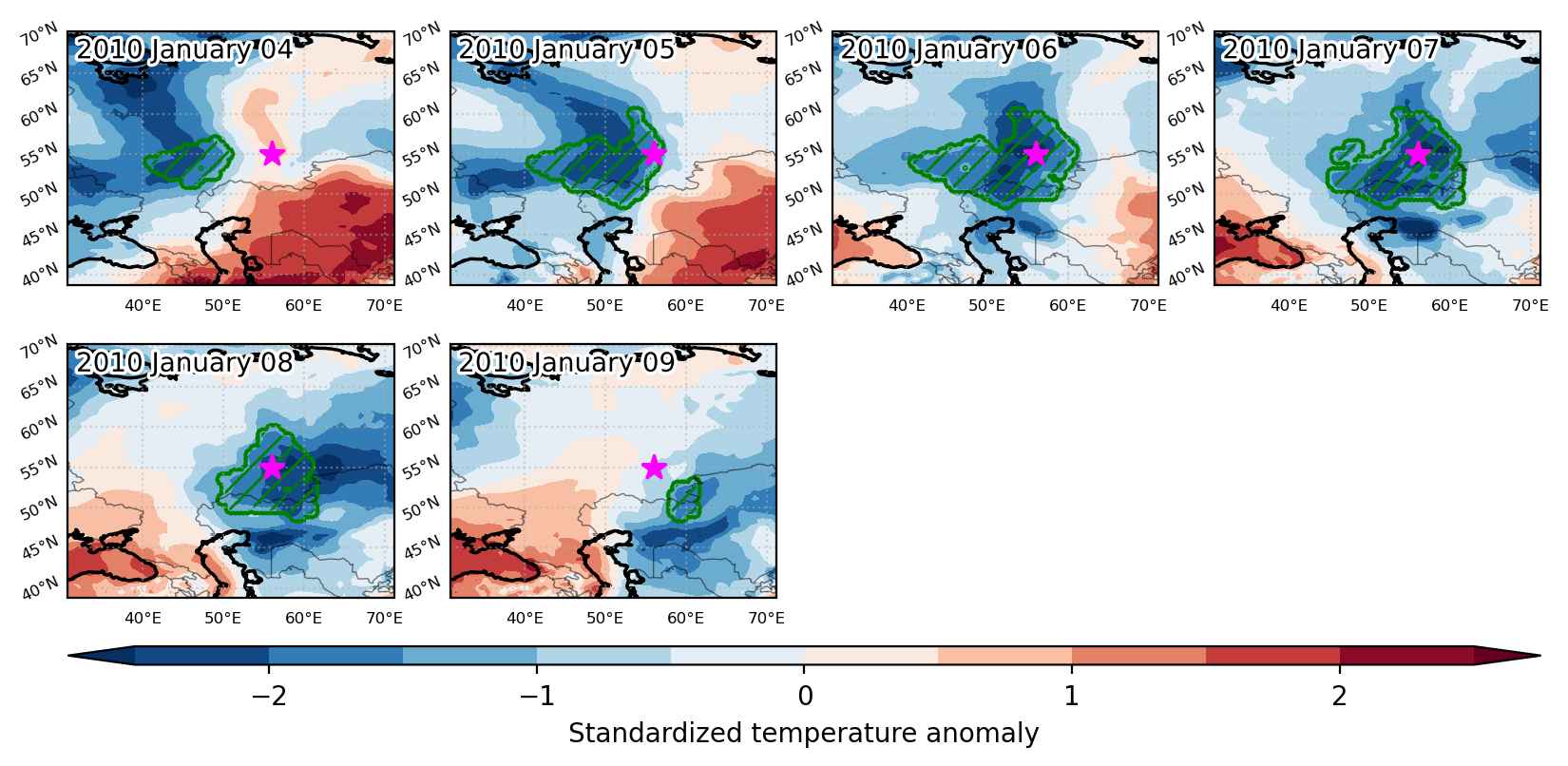
Cold spell occuring from January 04 2010 to January 09 2010 at 55.0°N 56.0°E

Download data: JSON

Event type: Cold spell

Countries affected (identified with ArcGIS Online; provided only for geographical reference):

  • Kazakhstan
  • Russian Federation

Duration: 6 days

Time span: January 04 2010 to January 09 2010

Statistics over entire affected area:

  • Mean temperature anomaly: -13.8 °C
  • Mean temperature: -25.2 °C
  • Minimum temperature anomaly: -20.5 °C
  • Minimum temperature: -34.3 °C

Event center: 55.0°N 56.0°E

Area affected: 853401 km$^2$


Fig. 1: Map of most extreme temperature anomalies (standardized) experienced during the event. The purple star indicates the center of the extreme event. Green hatching illustrates all areas under the effect of extremes at some time during the event.


Fig. 2: Evolution of temperature at the center of the event. The climatological percentile distribution is illustrated with color shadings.


Fig. 3: Maps illustrating the evolution of standardized temperature anomalies during the event.

Event ID: Cold_spell_2010-Jan-04_to_2010-Jan-09_56.0_55.0

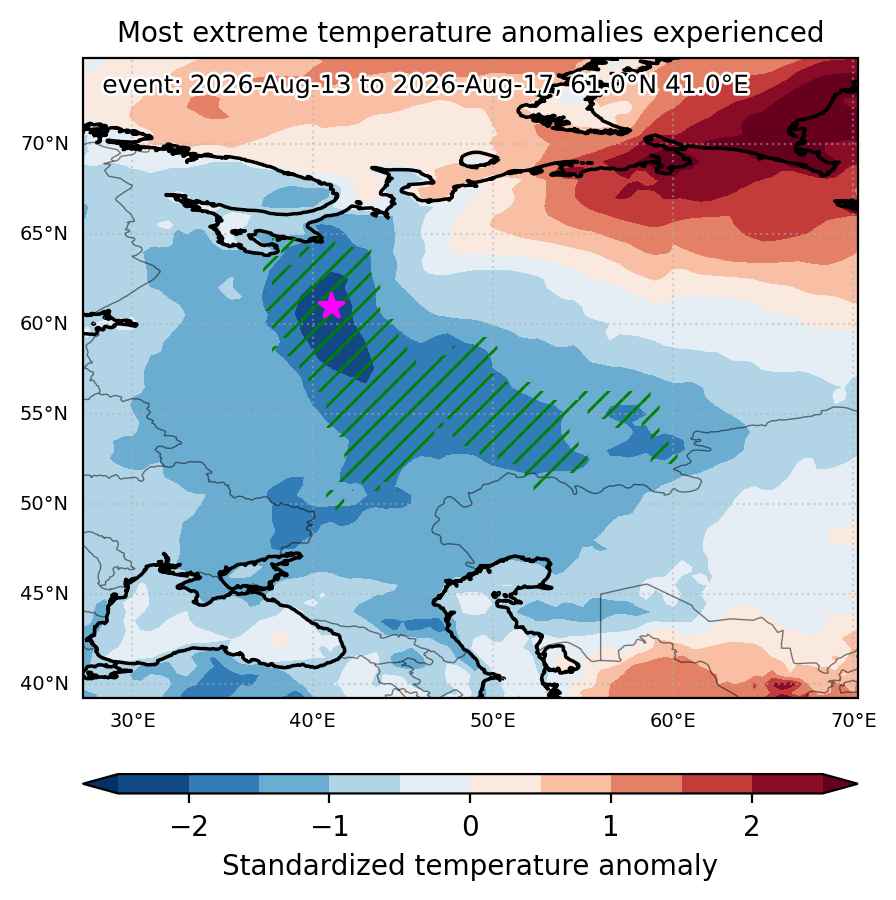
Cold spell occuring from August 13 2026 to August 17 2026 at 61.0°N 41.0°E

Download data: JSON

Event type: Cold spell

Countries affected (identified with ArcGIS Online; provided only for geographical reference):

  • Kazakhstan
  • Russian Federation

Duration: 5 days

Time span: August 13 2026 to August 17 2026

Statistics over entire affected area:

  • Mean temperature anomaly: -6.2 °C
  • Mean temperature: 10.9 °C
  • Minimum temperature anomaly: -8.7 °C
  • Minimum temperature: 7.2 °C

Event center: 61.0°N 41.0°E

Area affected: 863308 km$^2$


Fig. 1: Map of most extreme temperature anomalies (standardized) experienced during the event. The purple star indicates the center of the extreme event. Green hatching illustrates all areas under the effect of extremes at some time during the event.


Fig. 2: Evolution of temperature at the center of the event. The climatological percentile distribution is illustrated with color shadings.


Fig. 3: Maps illustrating the evolution of standardized temperature anomalies during the event.

Event ID: Cold_spell_2026-Aug-13_to_2026-Aug-17_41.0_61.0