Cold spell occuring from March 02 2023 to March 08 2023 at 65.0°N 59.0°E

Download data: JSON

Event type: Cold spell

Countries affected (identified with ArcGIS Online; provided only for geographical reference):

  • Russian Federation

Duration: 7 days

Time span: March 02 2023 to March 08 2023

Statistics over entire affected area:

  • Mean temperature anomaly: -10.3 °C
  • Mean temperature: -20.6 °C
  • Minimum temperature anomaly: -14.5 °C
  • Minimum temperature: -29.0 °C

Event center: 65.0°N 59.0°E

Area affected: 271299 km$^2$
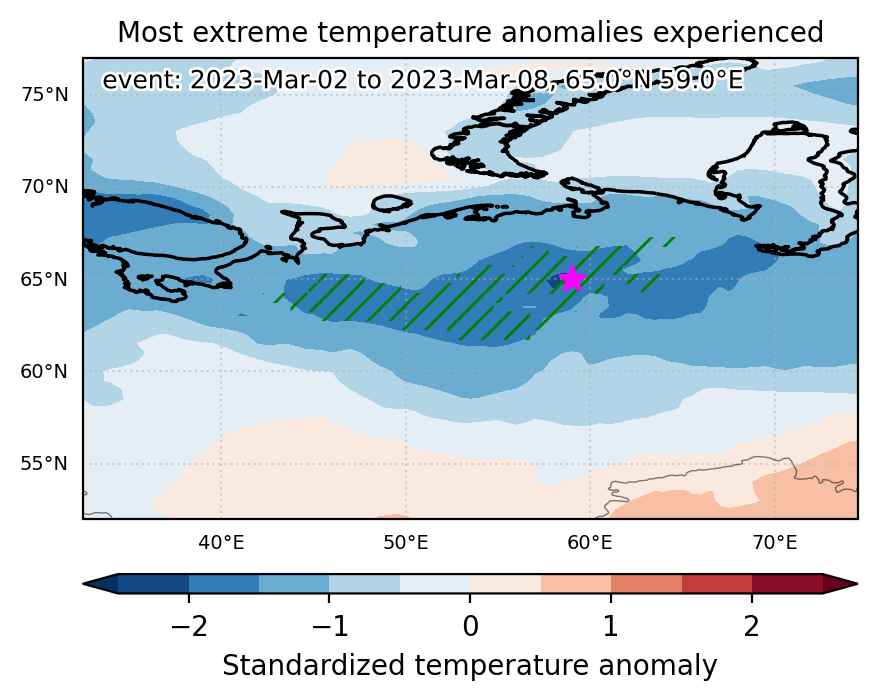

Fig. 1: Map of most extreme temperature anomalies (standardized) experienced during the event. The purple star indicates the center of the extreme event. Green hatching illustrates all areas under the effect of extremes at some time during the event.
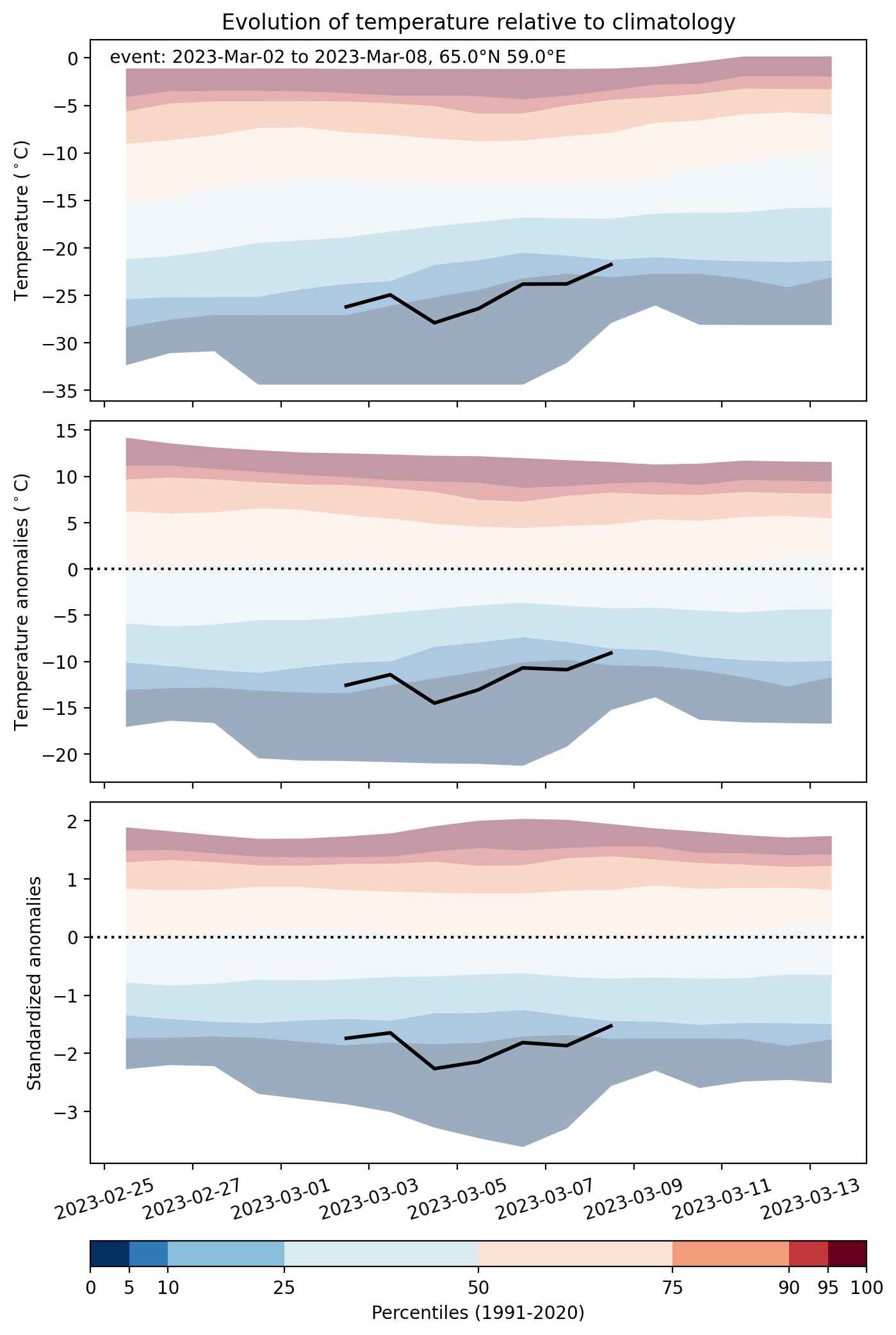


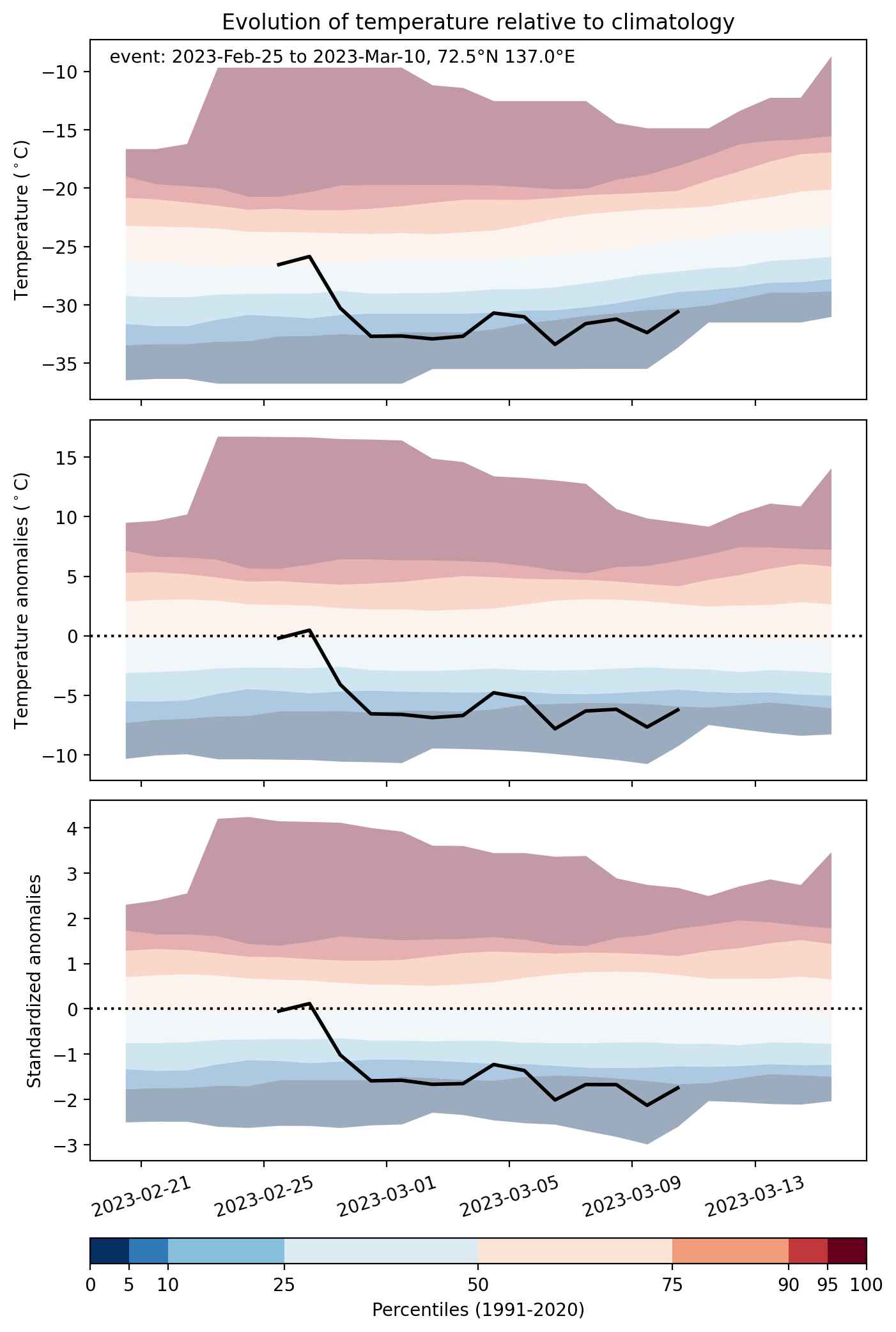
Fig. 2: Evolution of temperature at the center of the event. The climatological percentile distribution is illustrated with color shadings.
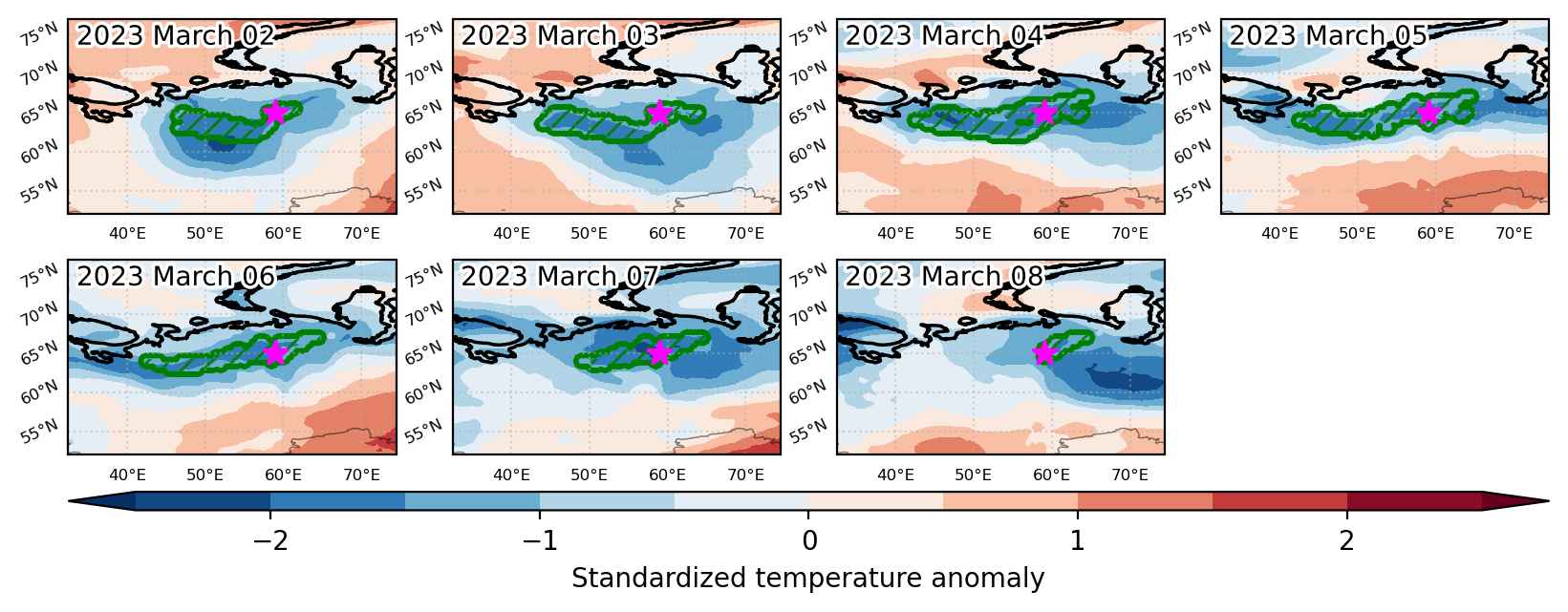


Fig. 3: Maps illustrating the evolution of standardized temperature anomalies during the event.

Event ID: Cold_spell_2023-Mar-02_to_2023-Mar-08_59.0_65.0
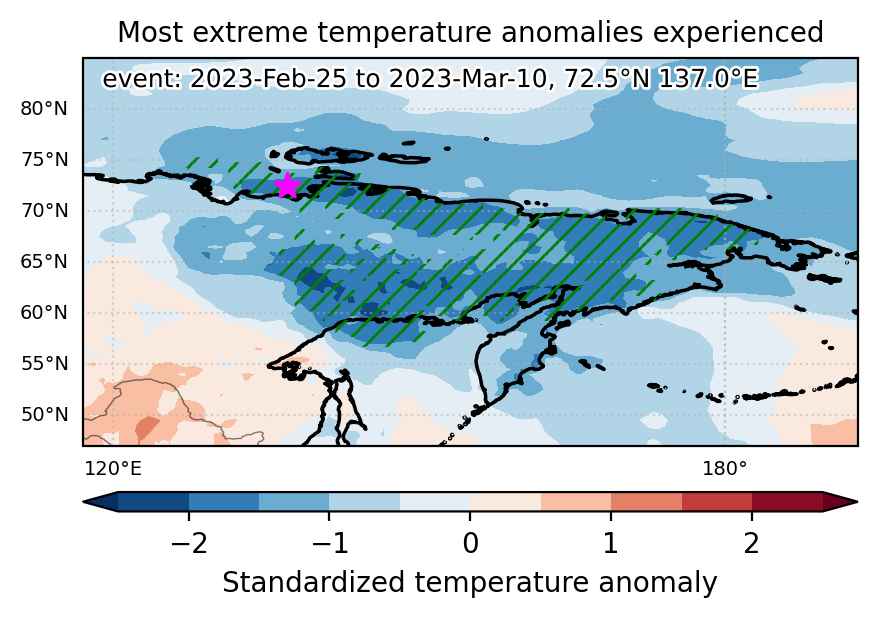
Cold spell occuring from February 25 2023 to March 10 2023 at 72.5°N 137.0°E

Download data: JSON

Event type: Cold spell

Countries affected (identified with ArcGIS Online; provided only for geographical reference):

  • Russian Federation

Duration: 14 days

Time span: February 25 2023 to March 10 2023

Statistics over entire affected area:

  • Mean temperature anomaly: -10.0 °C
  • Mean temperature: -35.3 °C
  • Minimum temperature anomaly: -18.7 °C
  • Minimum temperature: -46.2 °C

Event center: 72.5°N 137.0°E

Area affected: 2016230 km$^2$


Fig. 1: Map of most extreme temperature anomalies (standardized) experienced during the event. The purple star indicates the center of the extreme event. Green hatching illustrates all areas under the effect of extremes at some time during the event.


Fig. 2: Evolution of temperature at the center of the event. The climatological percentile distribution is illustrated with color shadings.


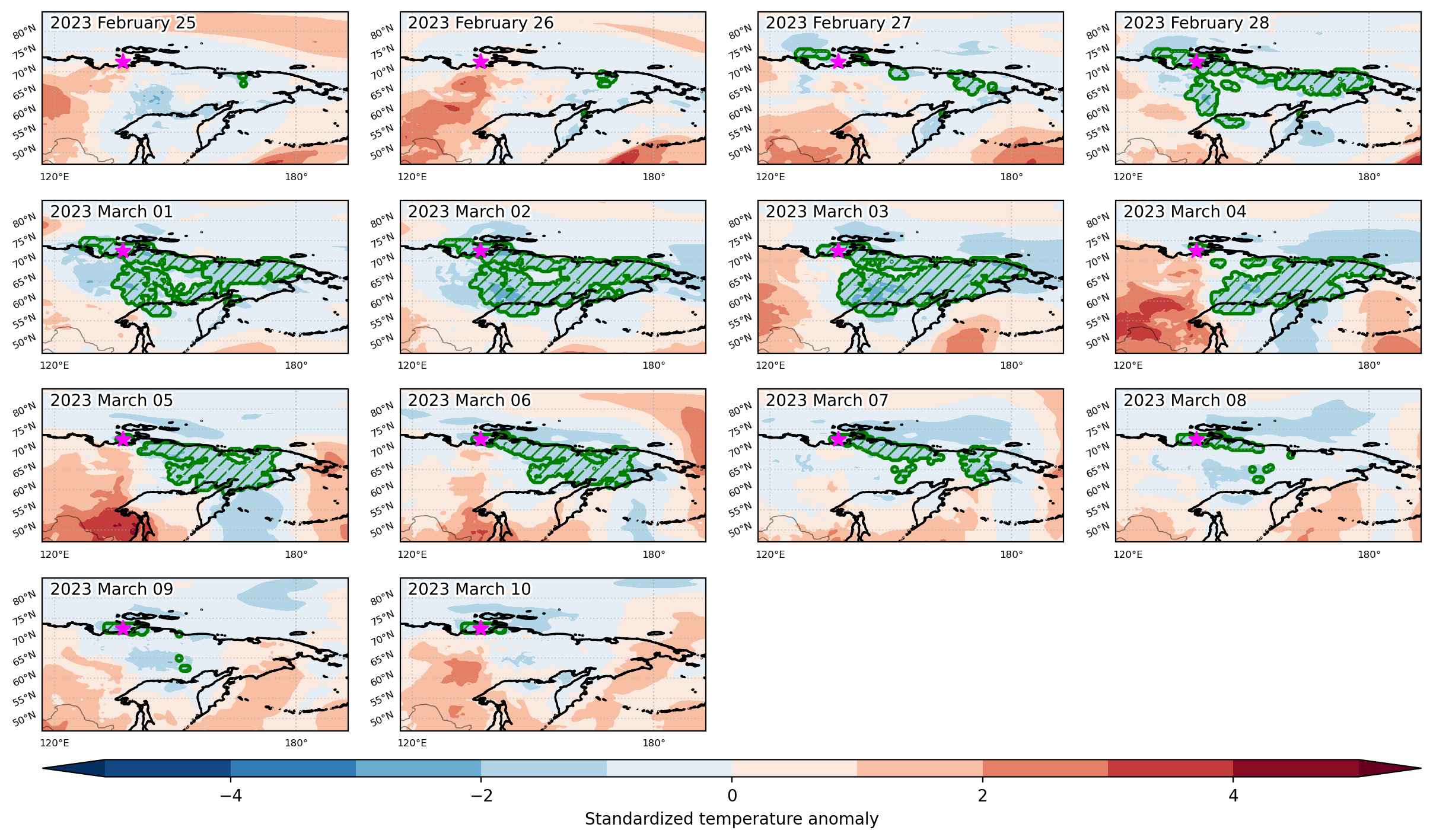
Fig. 3: Maps illustrating the evolution of standardized temperature anomalies during the event.

Event ID: Cold_spell_2023-Feb-25_to_2023-Mar-10_137.0_72.5

Heat wave occuring from February 24 2023 to February 28 2023 at 48.0°N 122.0°E

Download data: JSON

Event type: Heat wave

Countries affected (identified with ArcGIS Online; provided only for geographical reference):

  • China
  • Russian Federation

Duration: 5 days

Time span: February 24 2023 to February 28 2023

Statistics over entire affected area:

  • Mean temperature anomaly: 9.5 °C
  • Mean temperature: -8.3 °C
  • Maximum temperature anomaly: 14.4 °C
  • Maximum temperature: 5.4 °C

Event center: 48.0°N 122.0°E

Area affected: 390446 km$^2$


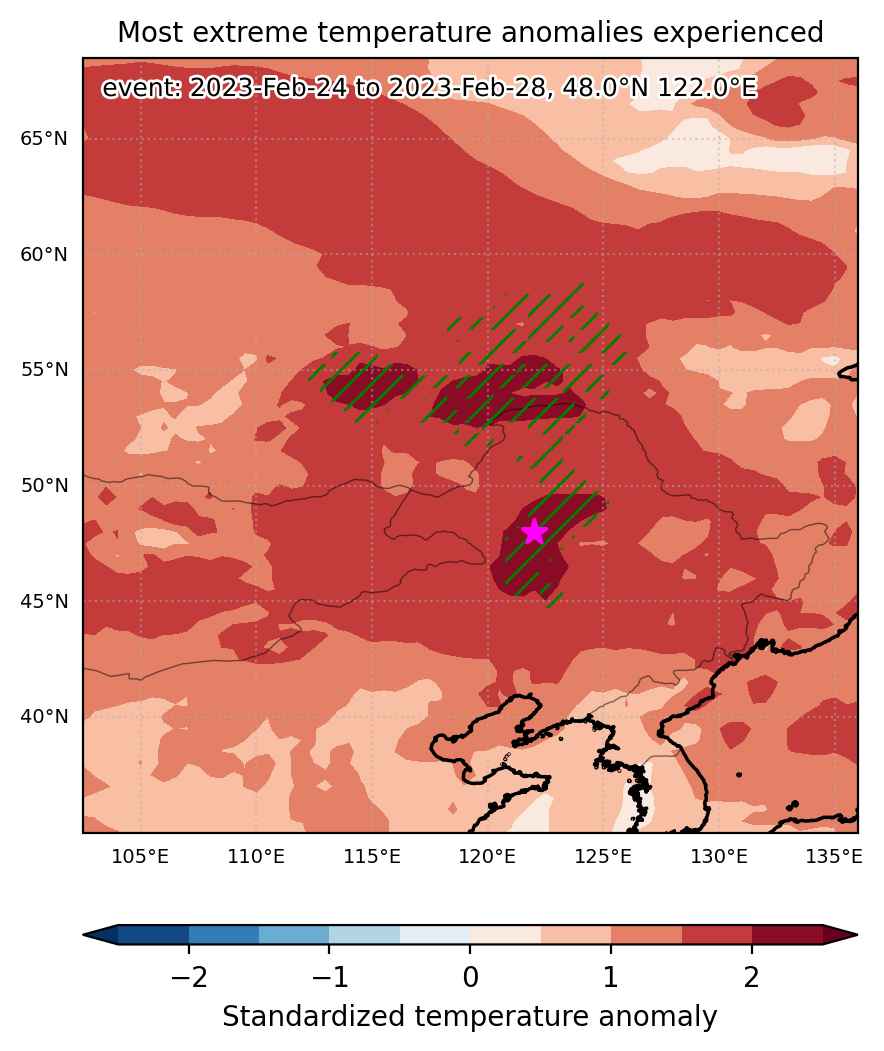
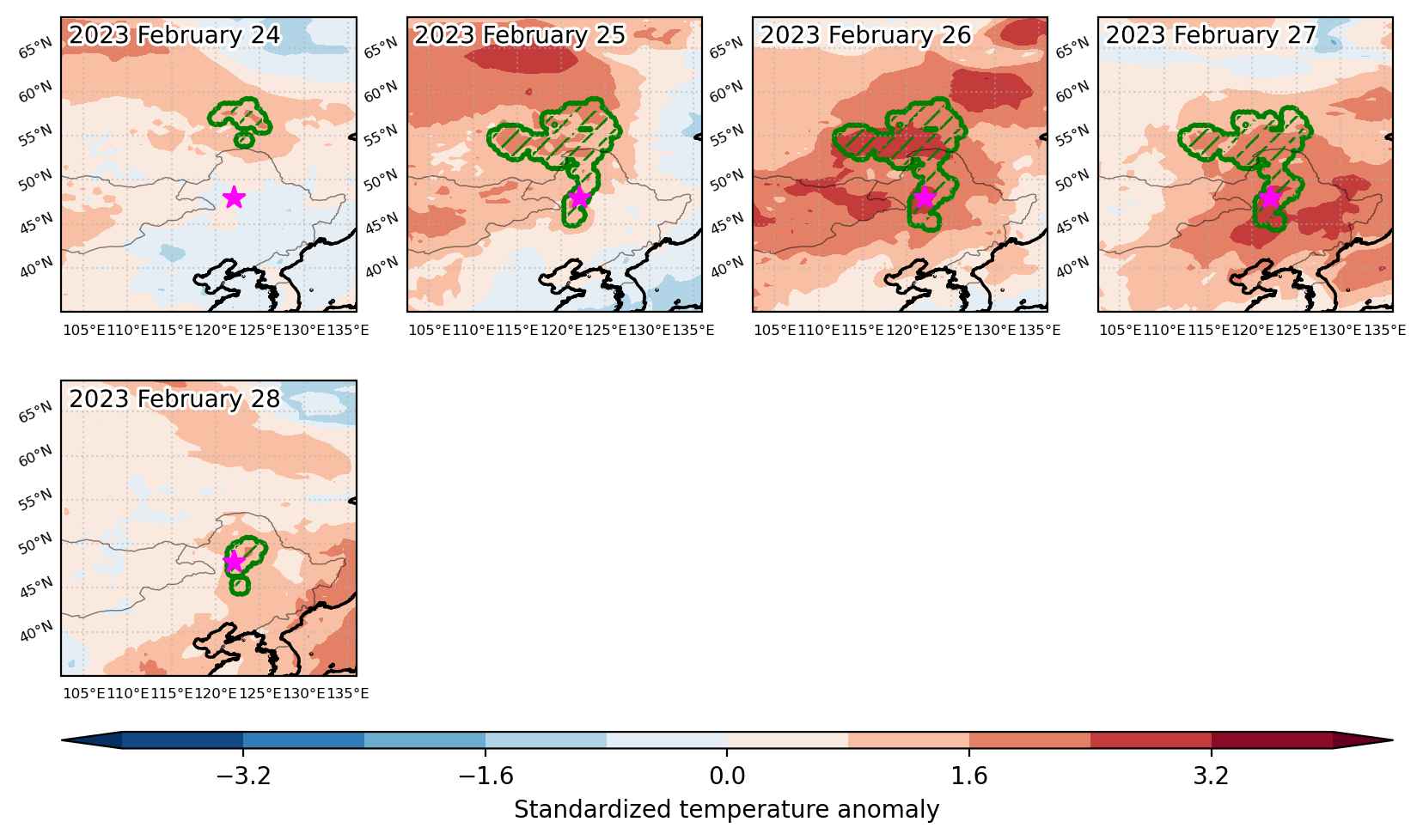
Fig. 1: Map of most extreme temperature anomalies (standardized) experienced during the event. The purple star indicates the center of the extreme event. Green hatching illustrates all areas under the effect of extremes at some time during the event.


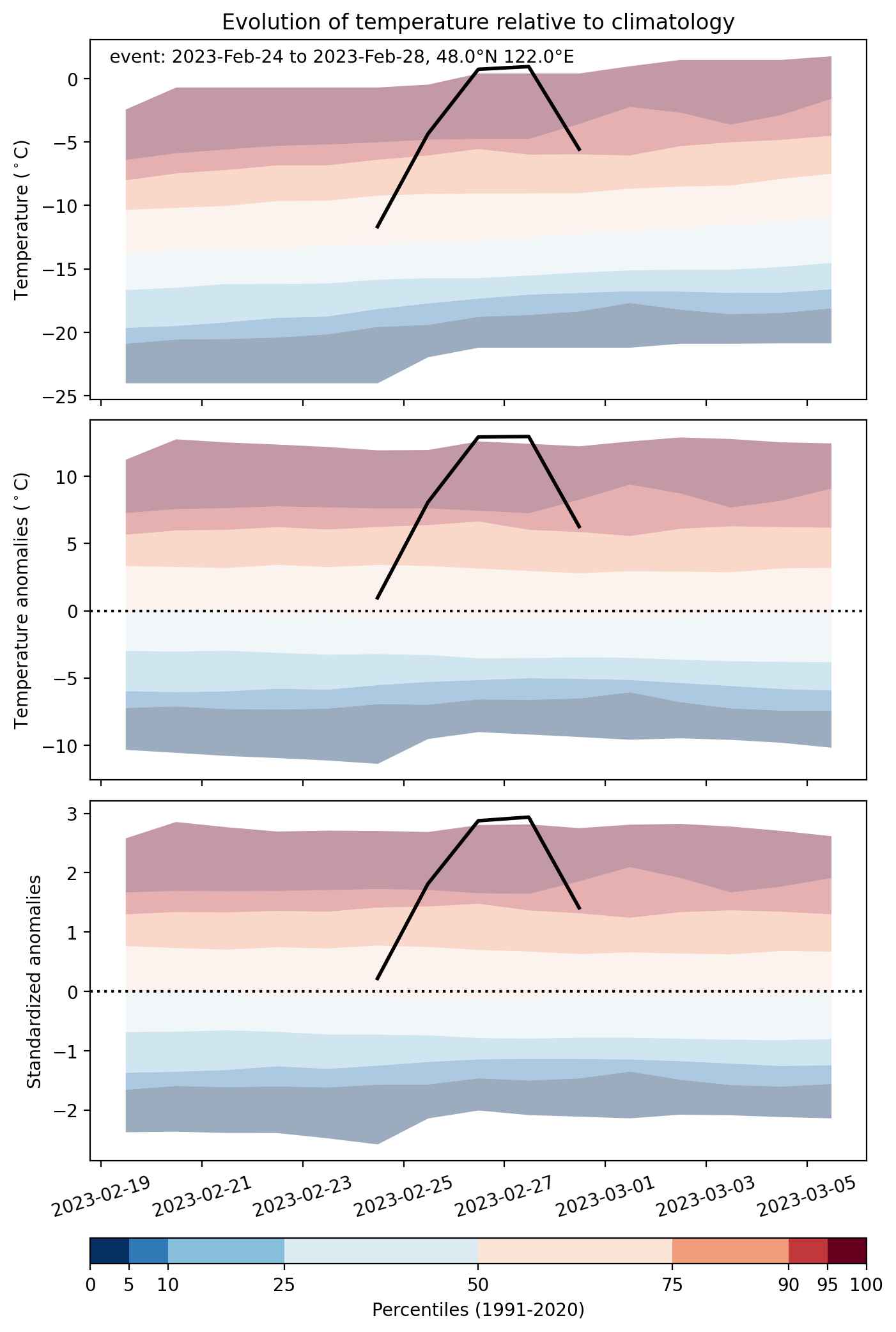
Fig. 2: Evolution of temperature at the center of the event. The climatological percentile distribution is illustrated with color shadings.


Fig. 3: Maps illustrating the evolution of standardized temperature anomalies during the event.

Event ID: Heat_wave_2023-Feb-24_to_2023-Feb-28_122.0_48.0

Heat wave occuring from February 22 2023 to March 03 2023 at 80.5°N 84.5°E

Download data: JSON

Event type: Heat wave

Countries affected (identified with ArcGIS Online; provided only for geographical reference):

  • Russian Federation
  • Svalbard and Jan Mayen

Duration: 10 days

Time span: February 22 2023 to March 03 2023

Statistics over entire affected area:

  • Mean temperature anomaly: 11.9 °C
  • Mean temperature: -8.1 °C
  • Maximum temperature anomaly: 19.5 °C
  • Maximum temperature: 2.6 °C

Event center: 80.5°N 84.5°E

Area affected: 1273953 km$^2$


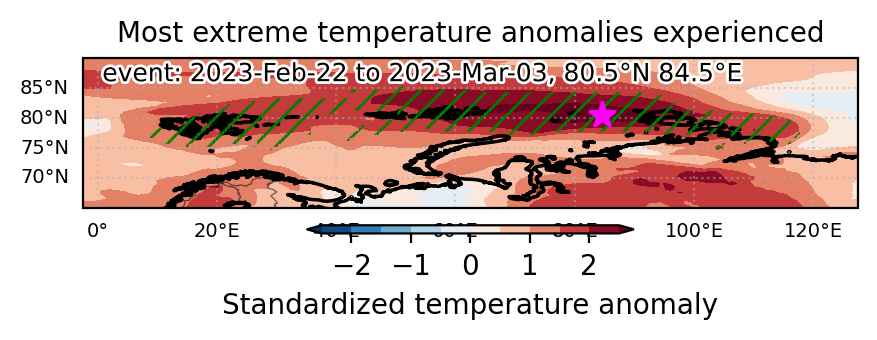
Fig. 1: Map of most extreme temperature anomalies (standardized) experienced during the event. The purple star indicates the center of the extreme event. Green hatching illustrates all areas under the effect of extremes at some time during the event.


Fig. 2: Evolution of temperature at the center of the event. The climatological percentile distribution is illustrated with color shadings.


Fig. 3: Maps illustrating the evolution of standardized temperature anomalies during the event.

Event ID: Heat_wave_2023-Feb-22_to_2023-Mar-03_84.5_80.5

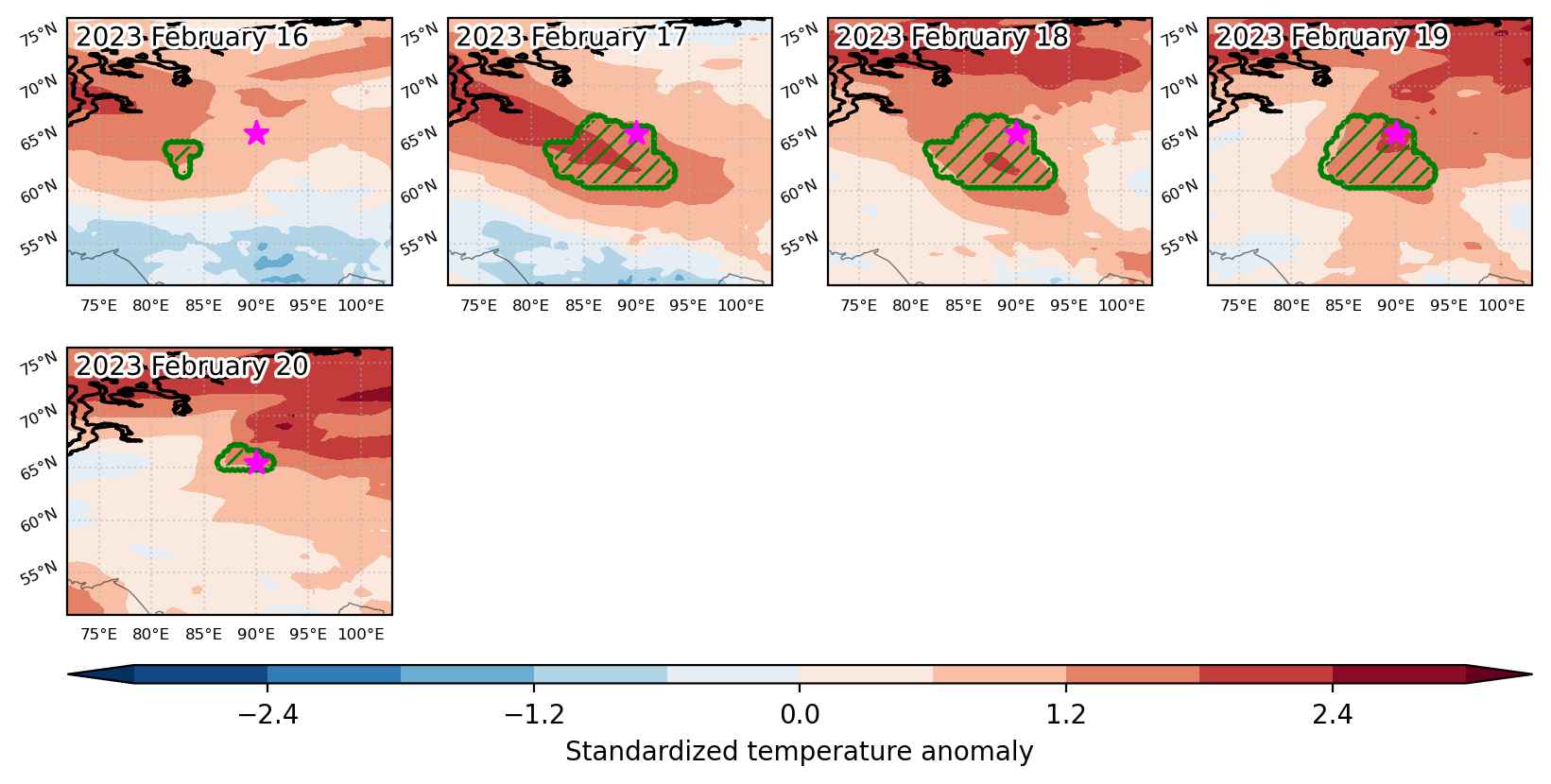
Heat wave occuring from February 16 2023 to February 20 2023 at 65.5°N 90.0°E

Download data: JSON

Event type: Heat wave

Countries affected (identified with ArcGIS Online; provided only for geographical reference):

  • Russian Federation

Duration: 5 days

Time span: February 16 2023 to February 20 2023

Statistics over entire affected area:

  • Mean temperature anomaly: 13.4 °C
  • Mean temperature: -8.2 °C
  • Maximum temperature anomaly: 19.8 °C
  • Maximum temperature: -3.5 °C

Event center: 65.5°N 90.0°E

Area affected: 252304 km$^2$


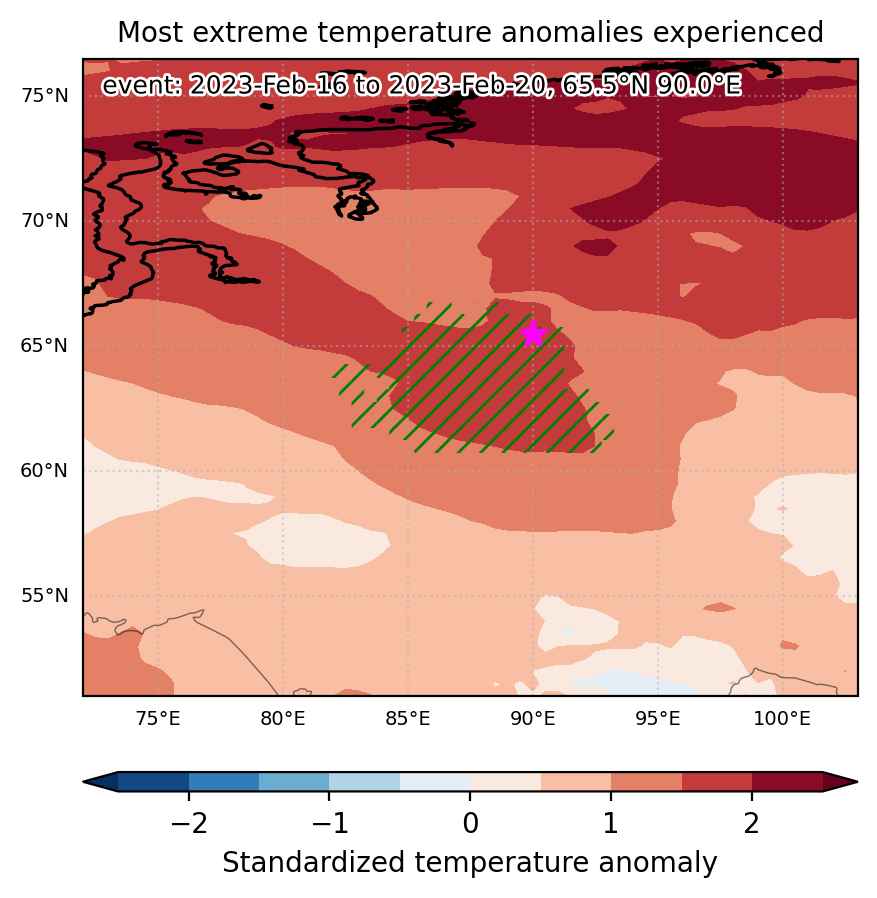
Fig. 1: Map of most extreme temperature anomalies (standardized) experienced during the event. The purple star indicates the center of the extreme event. Green hatching illustrates all areas under the effect of extremes at some time during the event.


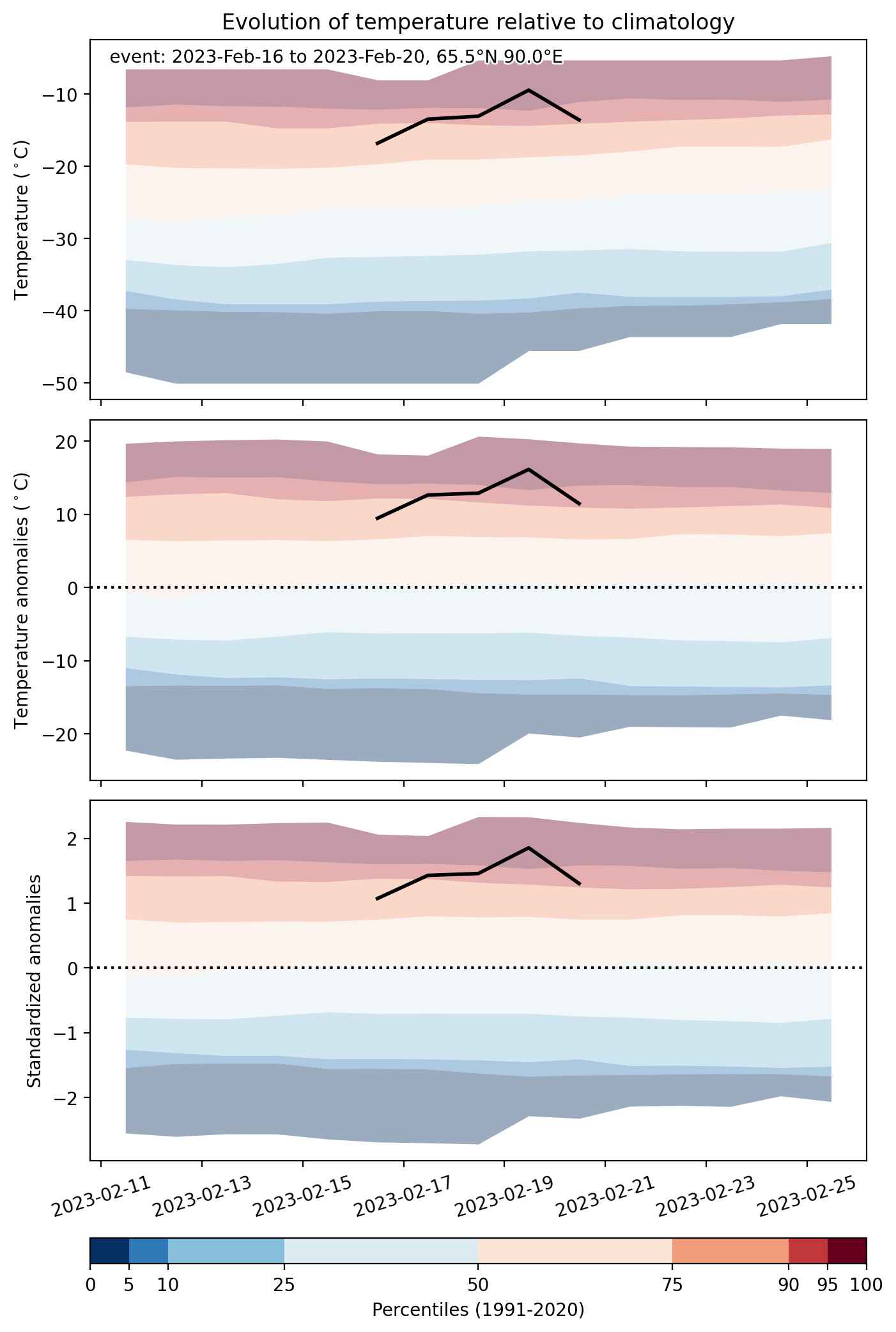
Fig. 2: Evolution of temperature at the center of the event. The climatological percentile distribution is illustrated with color shadings.


Fig. 3: Maps illustrating the evolution of standardized temperature anomalies during the event.

Event ID: Heat_wave_2023-Feb-16_to_2023-Feb-20_90.0_65.5

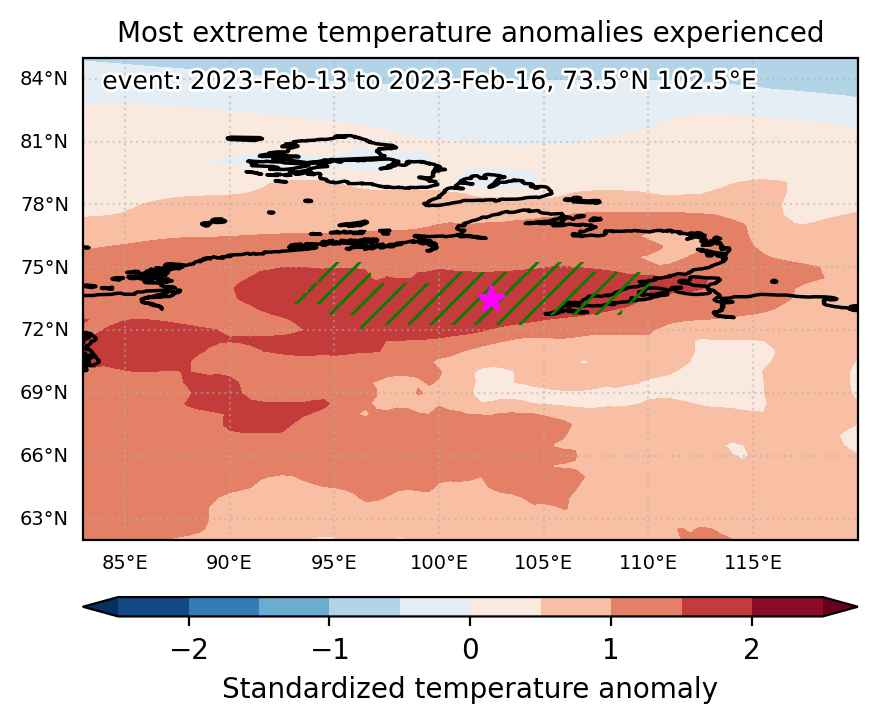
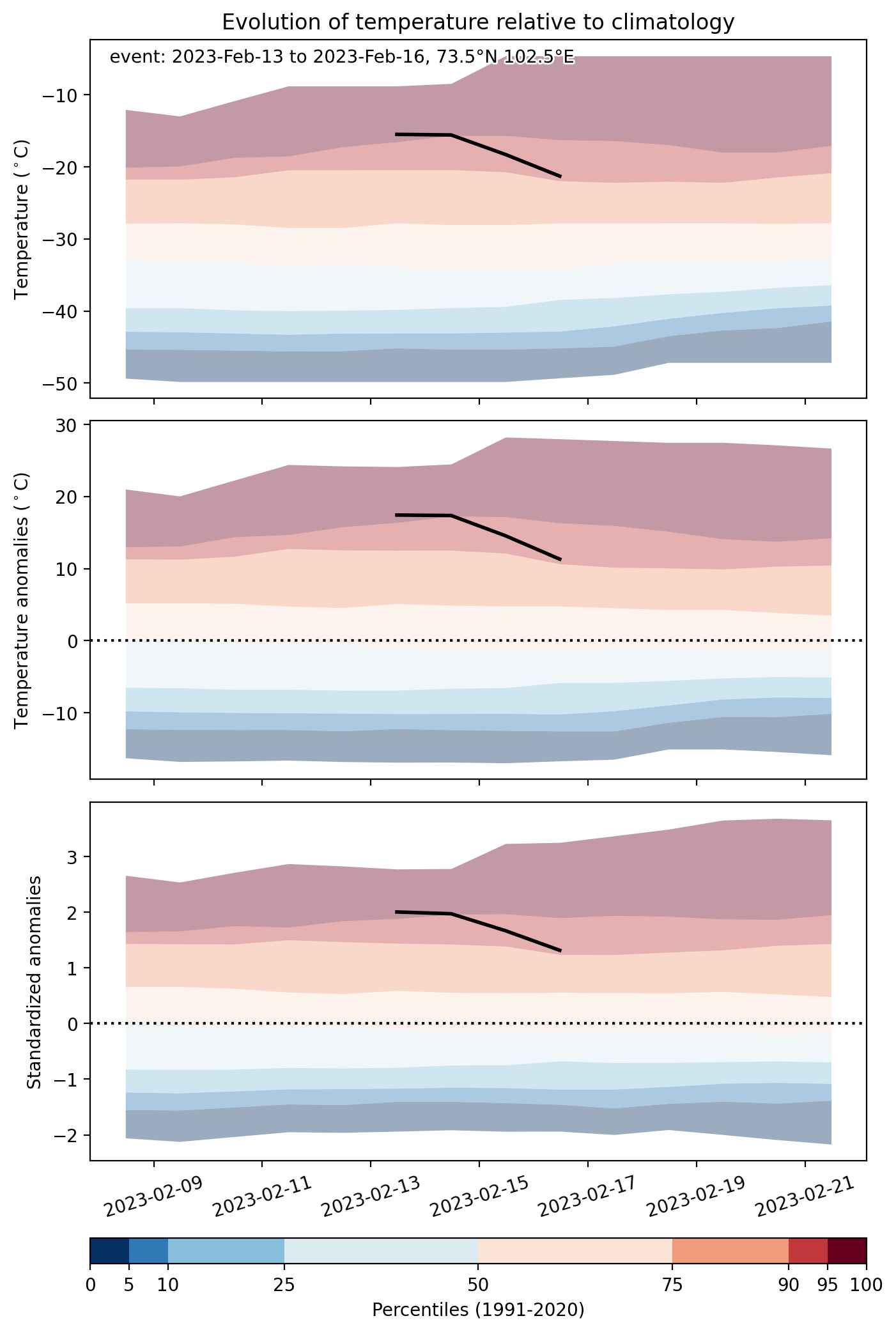
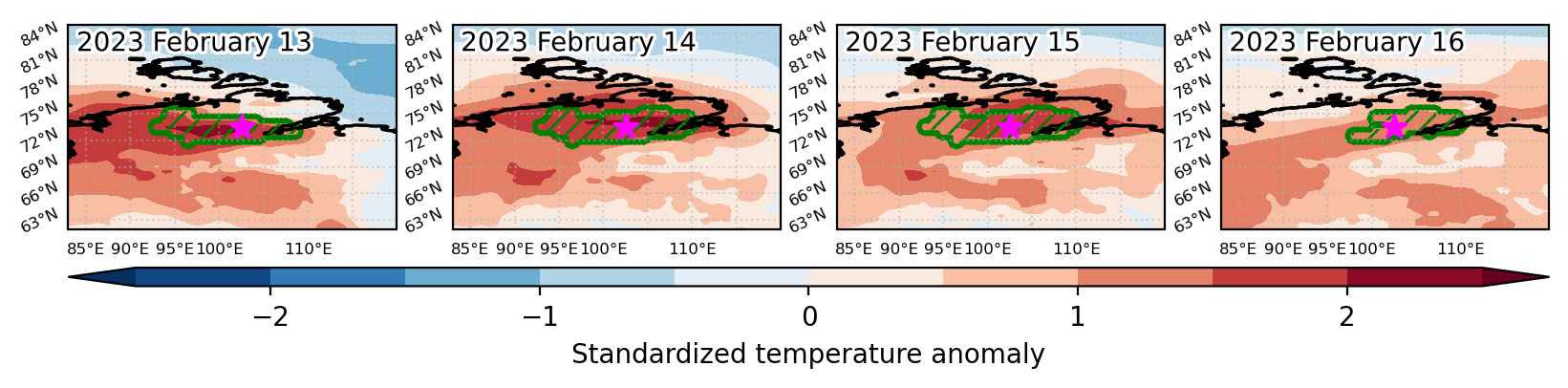
Heat wave occuring from February 13 2023 to February 16 2023 at 73.5°N 102.5°E

Download data: JSON

Event type: Heat wave

Countries affected (identified with ArcGIS Online; provided only for geographical reference):

  • Russian Federation

Duration: 4 days

Time span: February 13 2023 to February 16 2023

Statistics over entire affected area:

  • Mean temperature anomaly: 14.5 °C
  • Mean temperature: -17.7 °C
  • Maximum temperature anomaly: 20.3 °C
  • Maximum temperature: -11.0 °C

Event center: 73.5°N 102.5°E

Area affected: 128652 km$^2$


Fig. 1: Map of most extreme temperature anomalies (standardized) experienced during the event. The purple star indicates the center of the extreme event. Green hatching illustrates all areas under the effect of extremes at some time during the event.


Fig. 2: Evolution of temperature at the center of the event. The climatological percentile distribution is illustrated with color shadings.


Fig. 3: Maps illustrating the evolution of standardized temperature anomalies during the event.

Event ID: Heat_wave_2023-Feb-13_to_2023-Feb-16_102.5_73.5

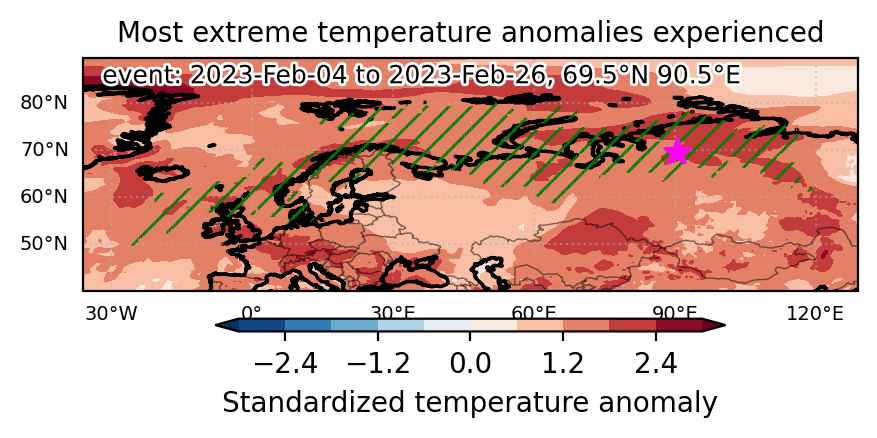
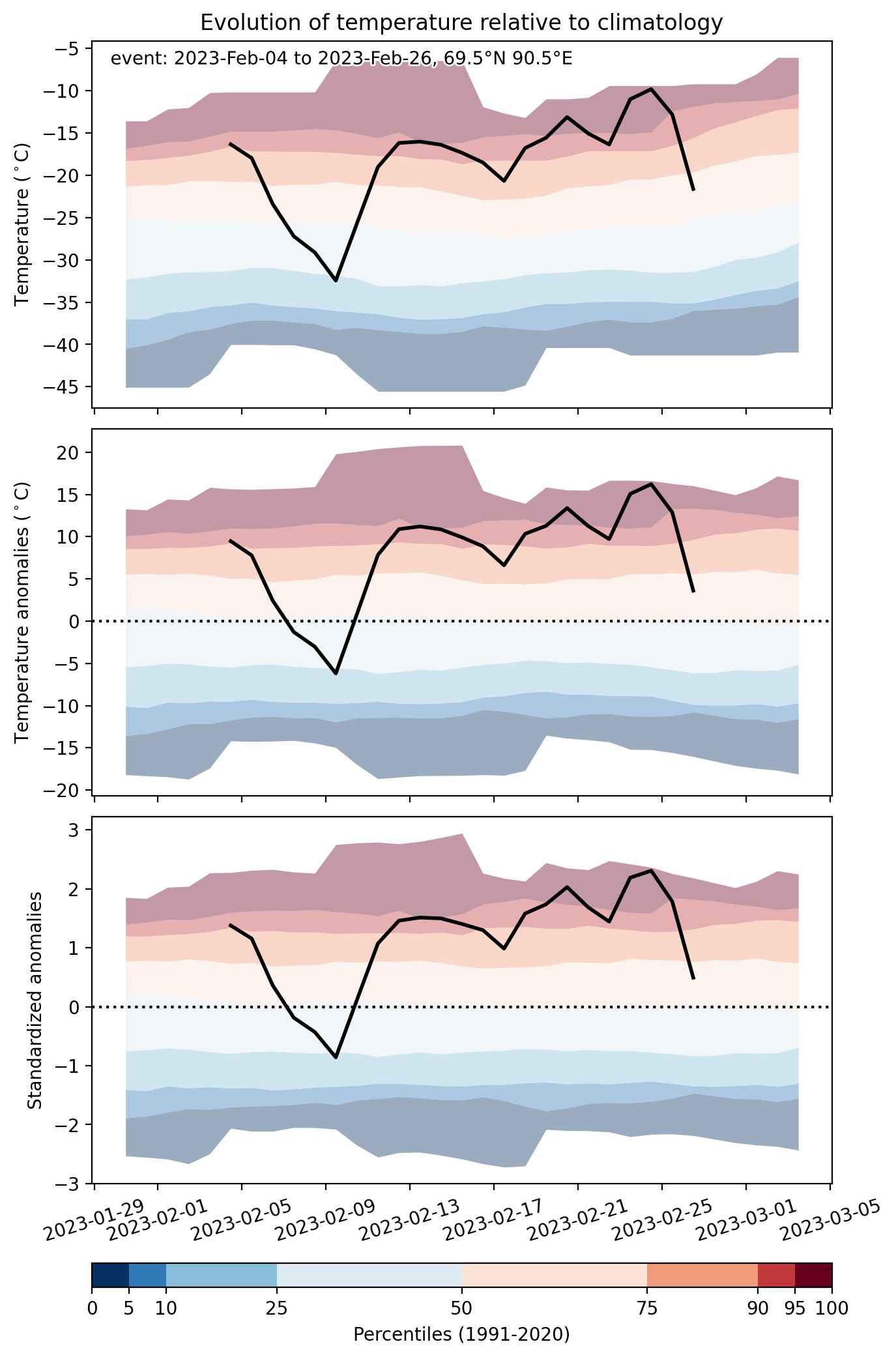
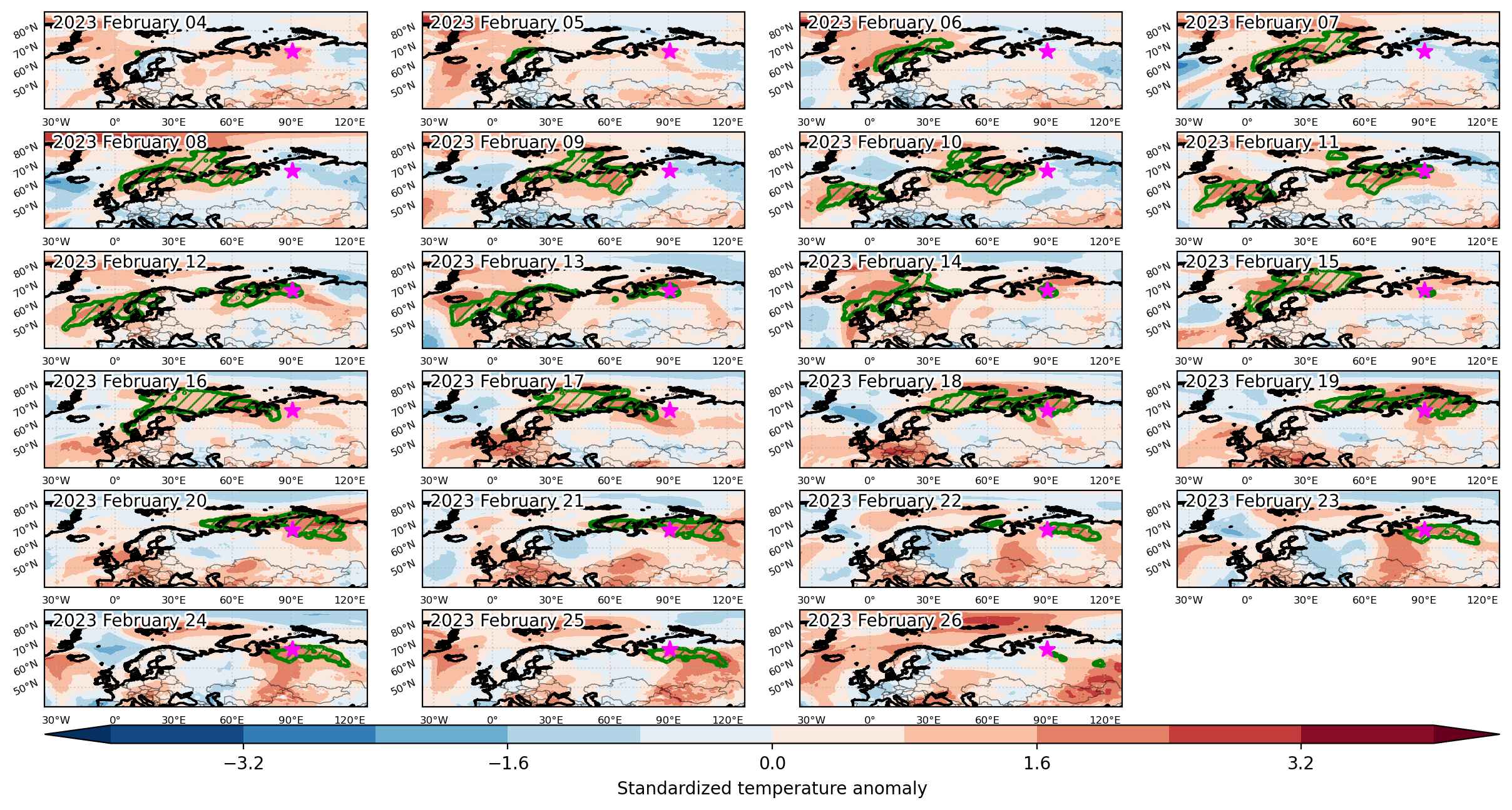
Heat wave occuring from February 04 2023 to February 26 2023 at 69.5°N 90.5°E

Download data: JSON

Event type: Heat wave

Countries affected (identified with ArcGIS Online; provided only for geographical reference):

  • Denmark
  • Finland
  • Norway
  • Russian Federation
  • Svalbard and Jan Mayen
  • Sweden
  • United Kingdom

Duration: 23 days

Time span: February 04 2023 to February 26 2023

Statistics over entire affected area:

  • Mean temperature anomaly: 10.7 °C
  • Mean temperature: -3.8 °C
  • Maximum temperature anomaly: 22.3 °C
  • Maximum temperature: 9.5 °C

Event center: 69.5°N 90.5°E

Area affected: 7021915 km$^2$


Fig. 1: Map of most extreme temperature anomalies (standardized) experienced during the event. The purple star indicates the center of the extreme event. Green hatching illustrates all areas under the effect of extremes at some time during the event.


Fig. 2: Evolution of temperature at the center of the event. The climatological percentile distribution is illustrated with color shadings.


Fig. 3: Maps illustrating the evolution of standardized temperature anomalies during the event.

Event ID: Heat_wave_2023-Feb-04_to_2023-Feb-26_90.5_69.5

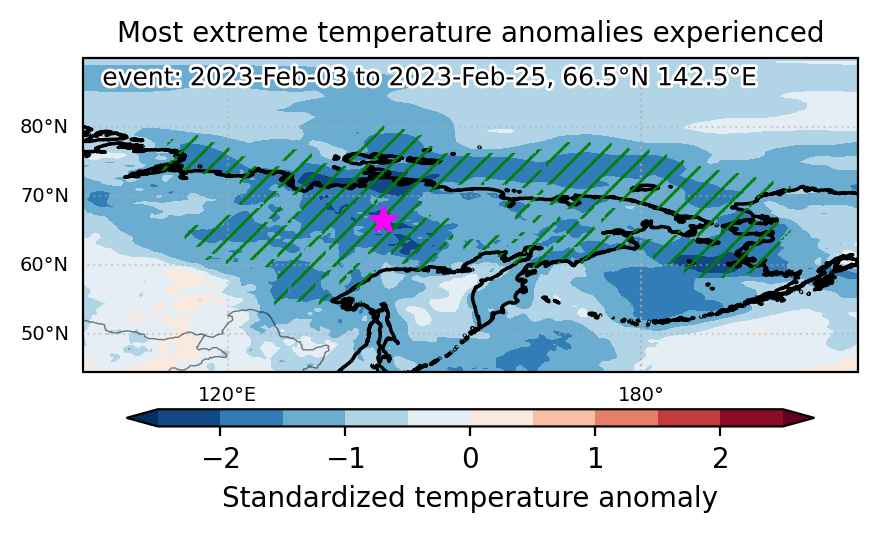
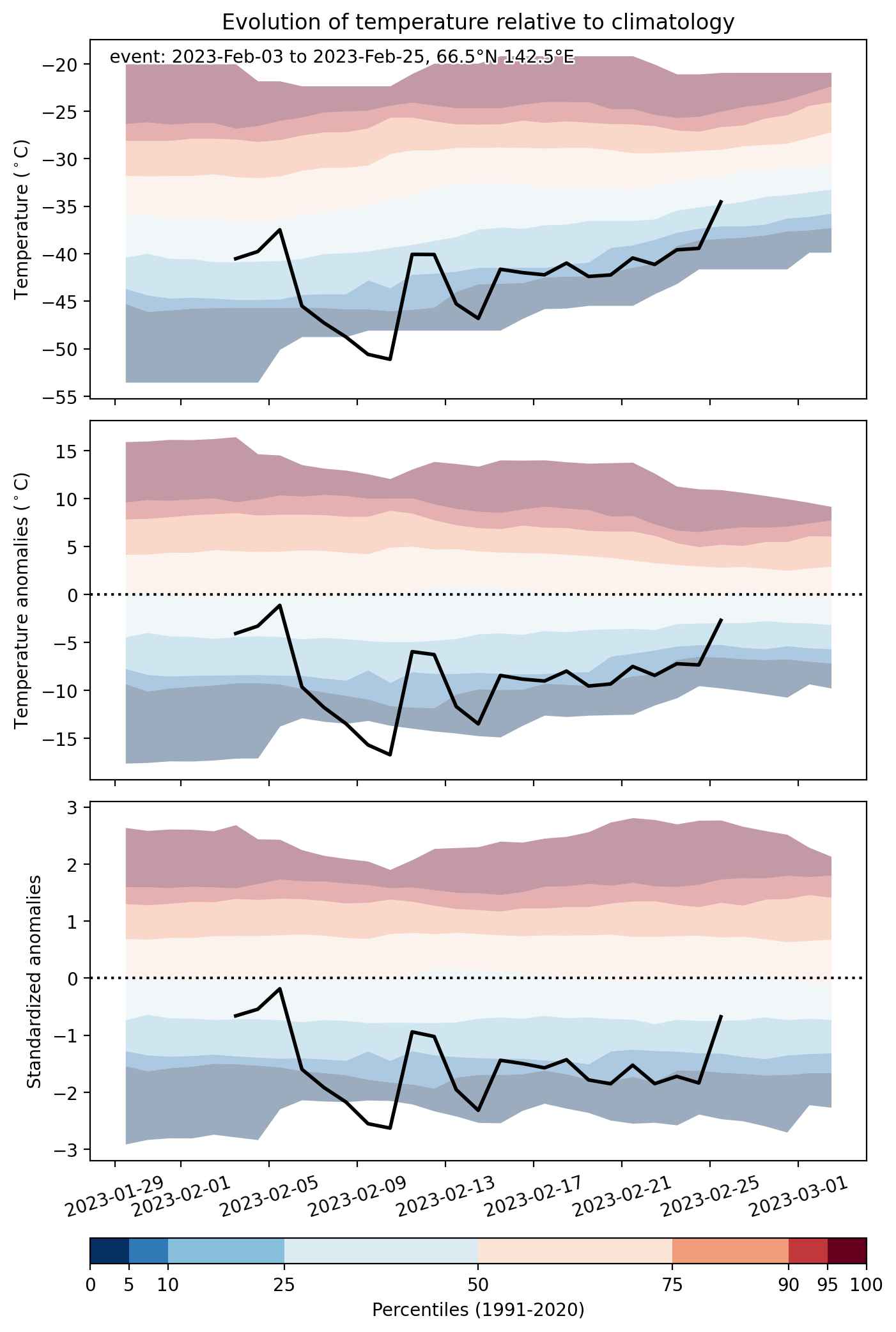
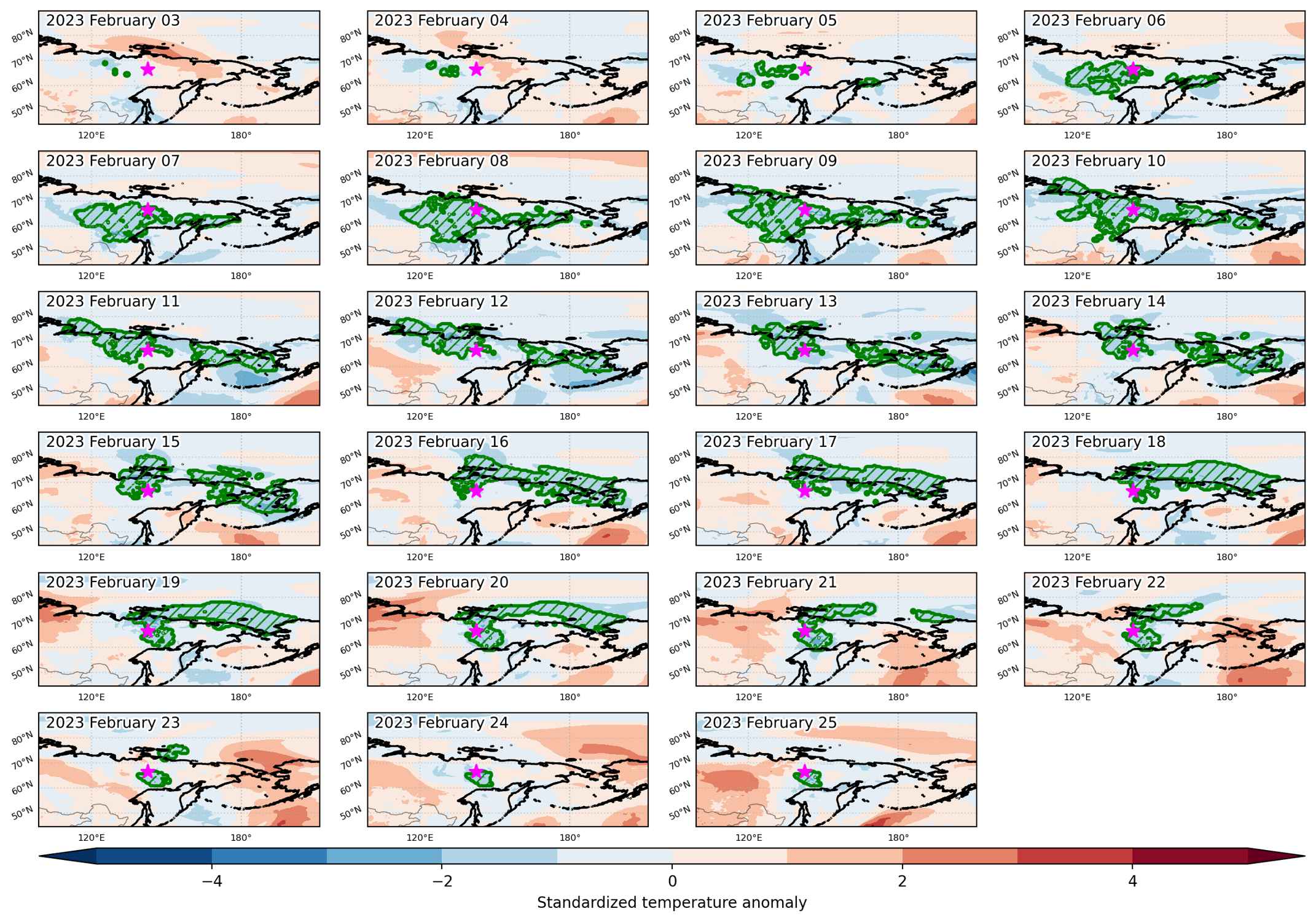
Cold spell occuring from February 03 2023 to February 25 2023 at 66.5°N 142.5°E

Download data: JSON

Event type: Cold spell

Countries affected (identified with ArcGIS Online; provided only for geographical reference):

  • Russian Federation
  • United States

Duration: 23 days

Time span: February 03 2023 to February 25 2023

Statistics over entire affected area:

  • Mean temperature anomaly: -9.4 °C
  • Mean temperature: -35.8 °C
  • Minimum temperature anomaly: -21.5 °C
  • Minimum temperature: -54.6 °C

Event center: 66.5°N 142.5°E

Area affected: 5159770 km$^2$


Fig. 1: Map of most extreme temperature anomalies (standardized) experienced during the event. The purple star indicates the center of the extreme event. Green hatching illustrates all areas under the effect of extremes at some time during the event.


Fig. 2: Evolution of temperature at the center of the event. The climatological percentile distribution is illustrated with color shadings.


Fig. 3: Maps illustrating the evolution of standardized temperature anomalies during the event.

Event ID: Cold_spell_2023-Feb-03_to_2023-Feb-25_142.5_66.5

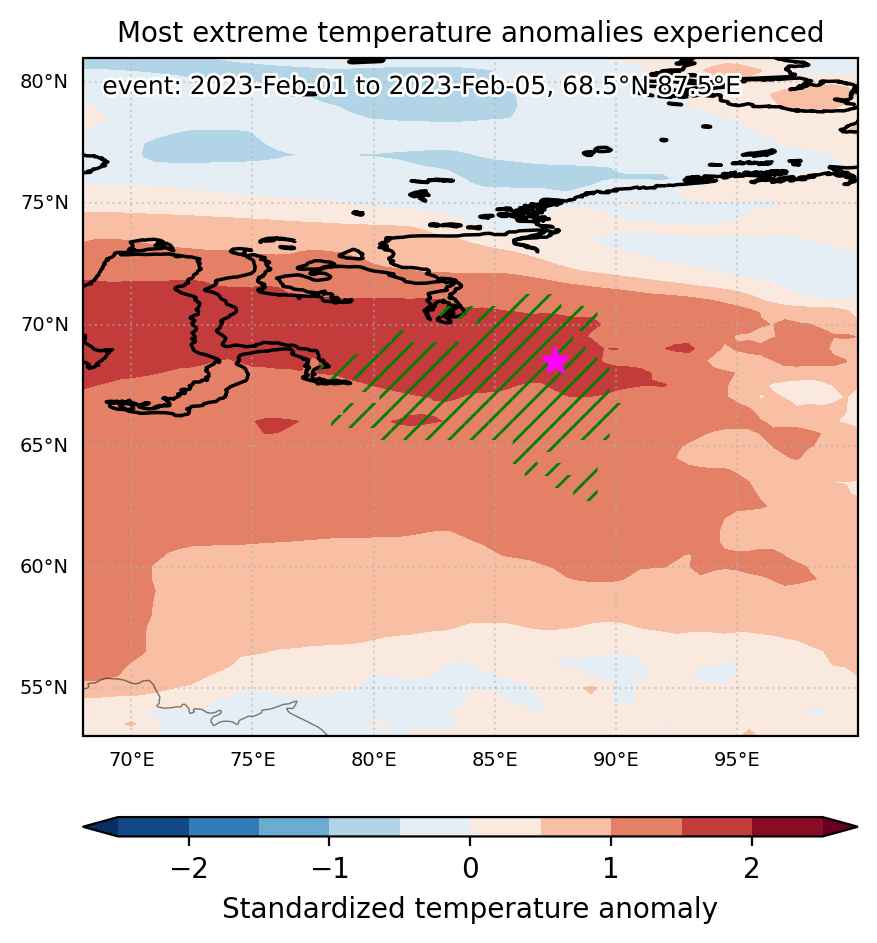
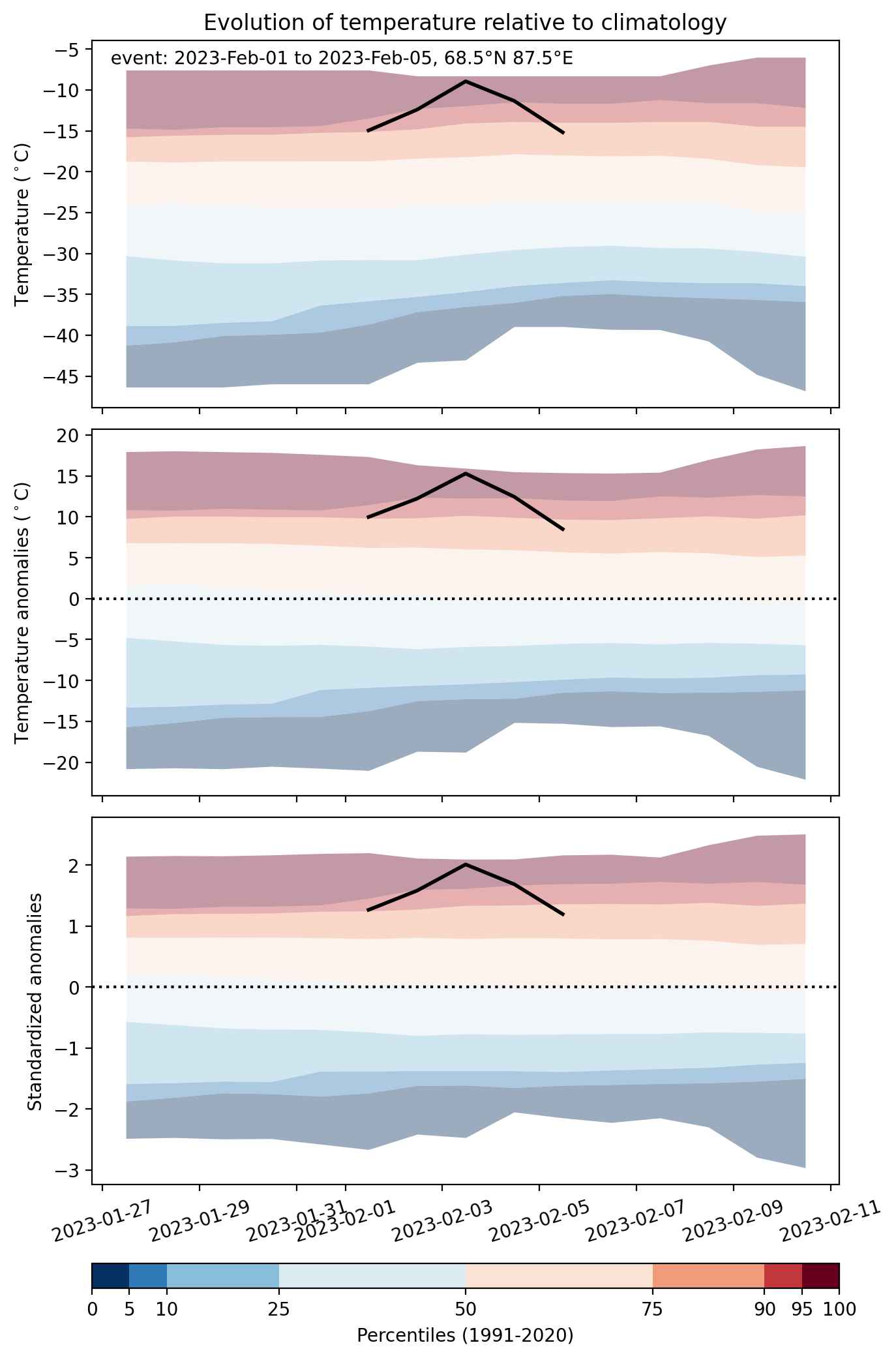
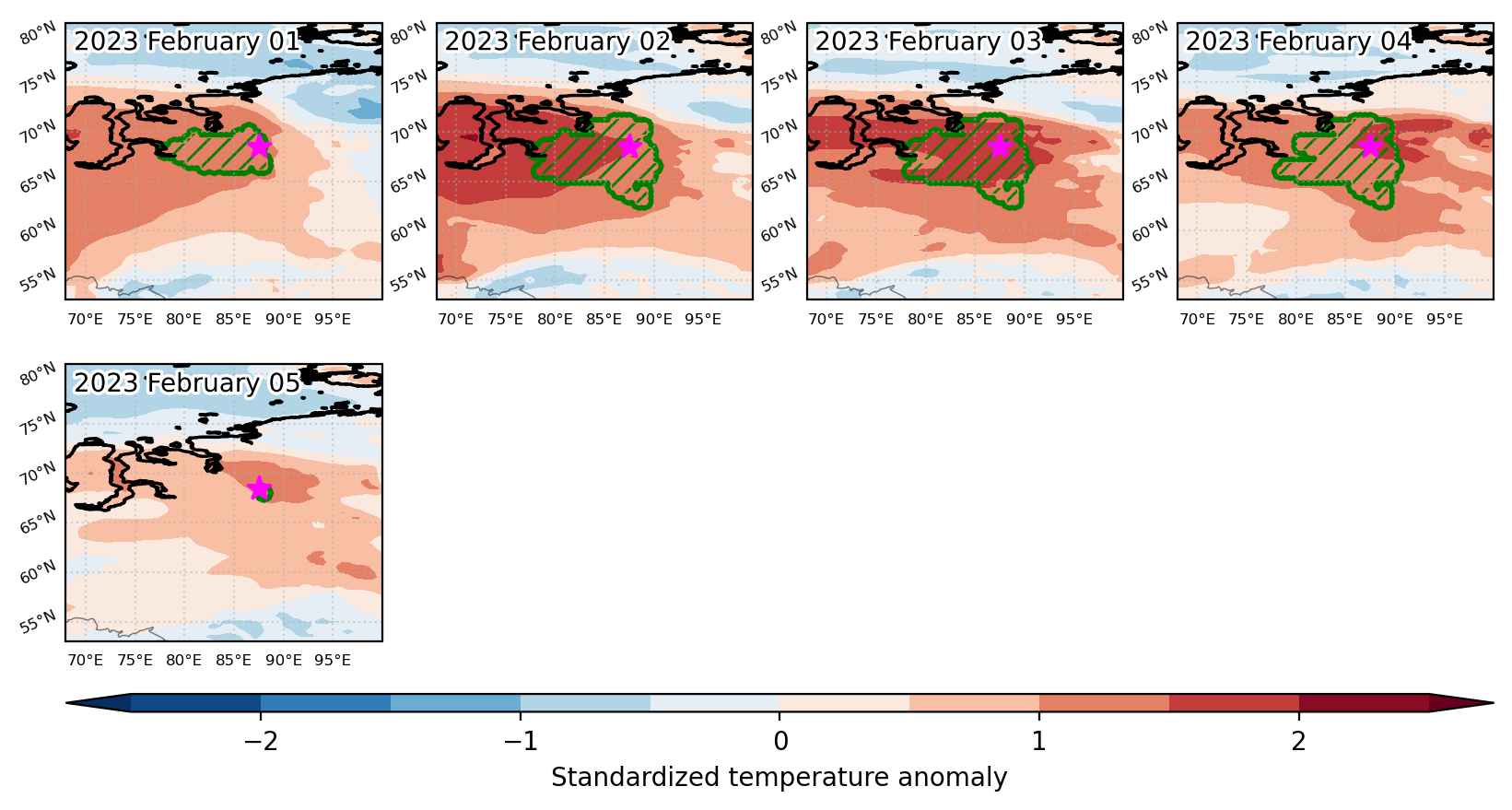
Heat wave occuring from February 01 2023 to February 05 2023 at 68.5°N 87.5°E

Download data: JSON

Event type: Heat wave

Countries affected (identified with ArcGIS Online; provided only for geographical reference):

  • Russian Federation

Duration: 5 days

Time span: February 01 2023 to February 05 2023

Statistics over entire affected area:

  • Mean temperature anomaly: 14.1 °C
  • Mean temperature: -10.2 °C
  • Maximum temperature anomaly: 18.0 °C
  • Maximum temperature: -6.8 °C

Event center: 68.5°N 87.5°E

Area affected: 259207 km$^2$


Fig. 1: Map of most extreme temperature anomalies (standardized) experienced during the event. The purple star indicates the center of the extreme event. Green hatching illustrates all areas under the effect of extremes at some time during the event.


Fig. 2: Evolution of temperature at the center of the event. The climatological percentile distribution is illustrated with color shadings.


Fig. 3: Maps illustrating the evolution of standardized temperature anomalies during the event.

Event ID: Heat_wave_2023-Feb-01_to_2023-Feb-05_87.5_68.5

Heat wave occuring from January 26 2023 to January 31 2023 at 54.0°N 92.0°E

Download data: JSON

Event type: Heat wave

Countries affected (identified with ArcGIS Online; provided only for geographical reference):

  • China
  • Mongolia
  • Russian Federation

Duration: 6 days

Time span: January 26 2023 to January 31 2023

Statistics over entire affected area:

  • Mean temperature anomaly: 10.4 °C
  • Mean temperature: -10.7 °C
  • Maximum temperature anomaly: 16.5 °C
  • Maximum temperature: -2.3 °C

Event center: 54.0°N 92.0°E

Area affected: 1127760 km$^2$


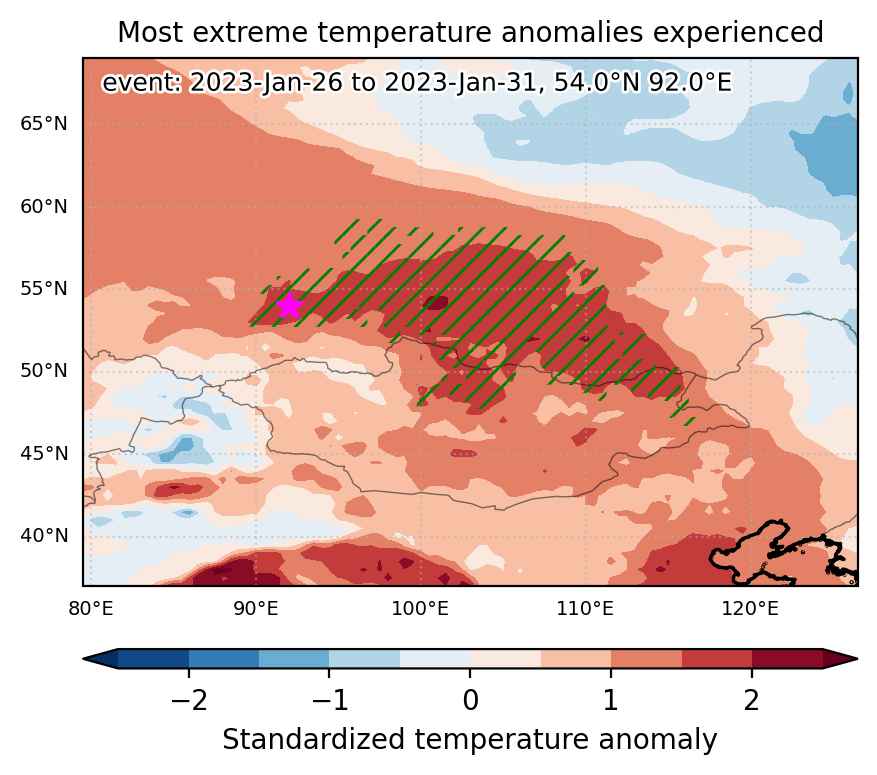
Fig. 1: Map of most extreme temperature anomalies (standardized) experienced during the event. The purple star indicates the center of the extreme event. Green hatching illustrates all areas under the effect of extremes at some time during the event.


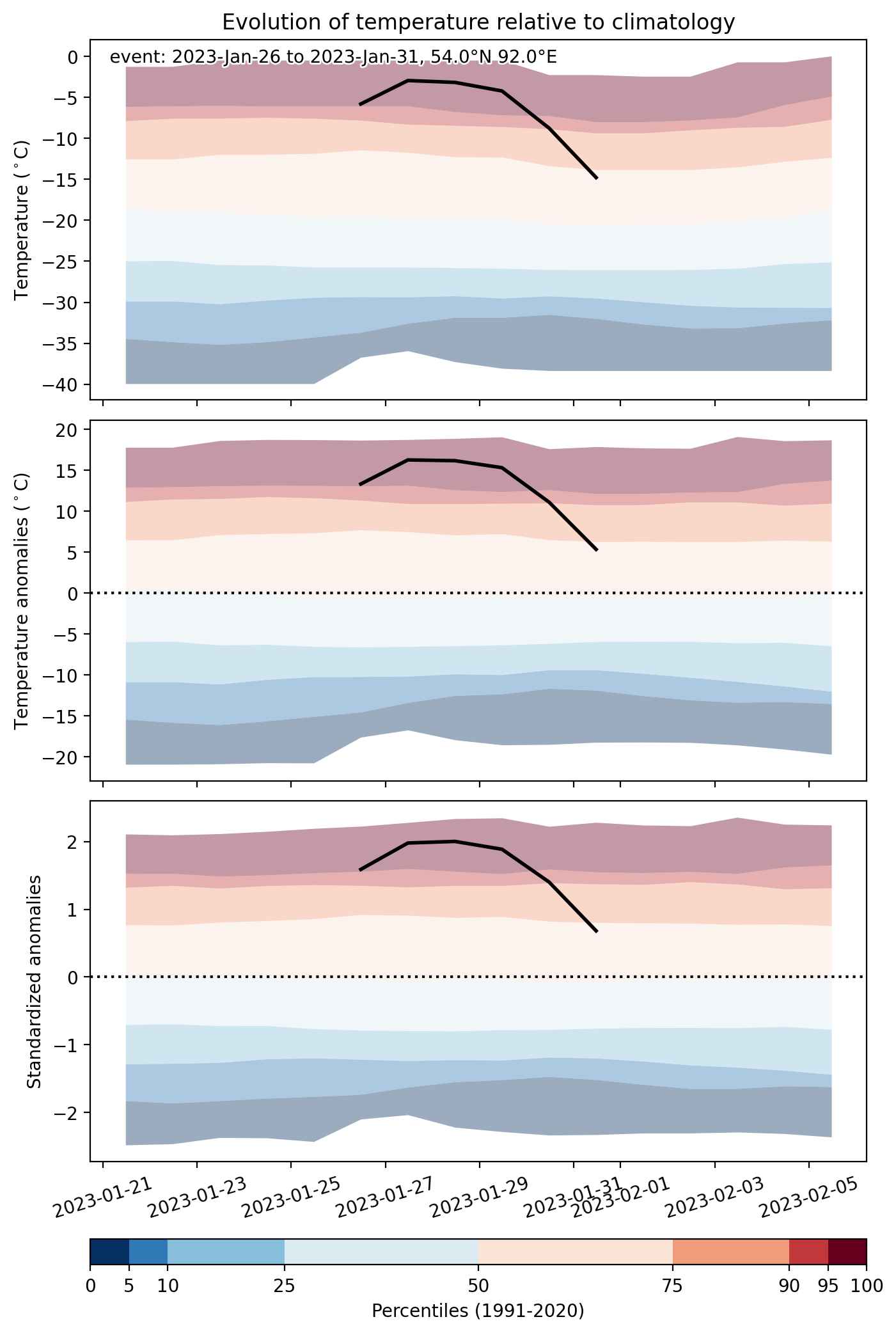
Fig. 2: Evolution of temperature at the center of the event. The climatological percentile distribution is illustrated with color shadings.


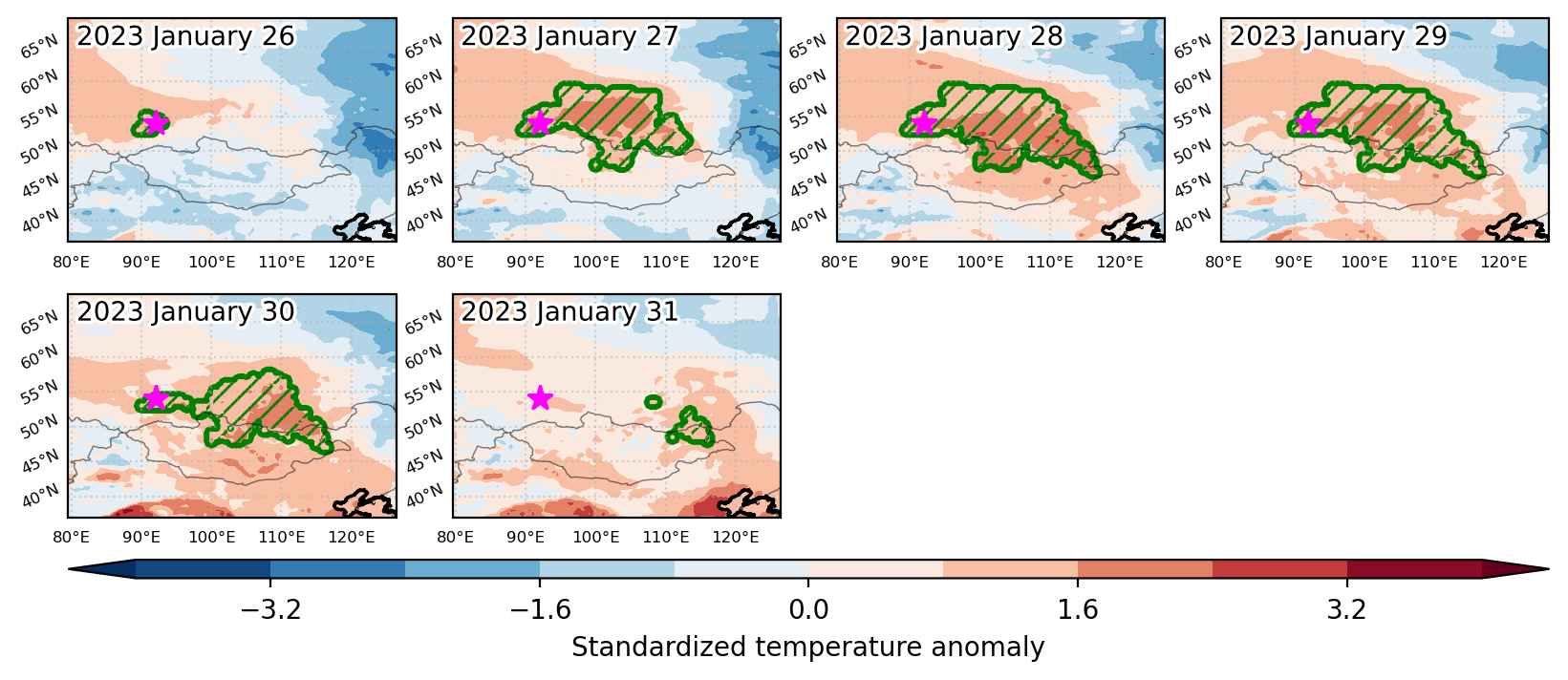
Fig. 3: Maps illustrating the evolution of standardized temperature anomalies during the event.

Event ID: Heat_wave_2023-Jan-26_to_2023-Jan-31_92.0_54.0