Cold spell occuring from January 29 2026 to February 02 2026 at 64.0°N 61.5°E

Download data: JSON

Event type: Cold spell

Countries affected (identified with ArcGIS Online; provided only for geographical reference):

  • Russian Federation

Duration: 5 days

Time span: January 29 2026 to February 02 2026

Statistics over entire affected area:

  • Mean temperature anomaly: -15.6 °C
  • Mean temperature: -35.3 °C
  • Minimum temperature anomaly: -21.5 °C
  • Minimum temperature: -41.8 °C

Event center: 64.0°N 61.5°E

Area affected: 467185 km$^2$
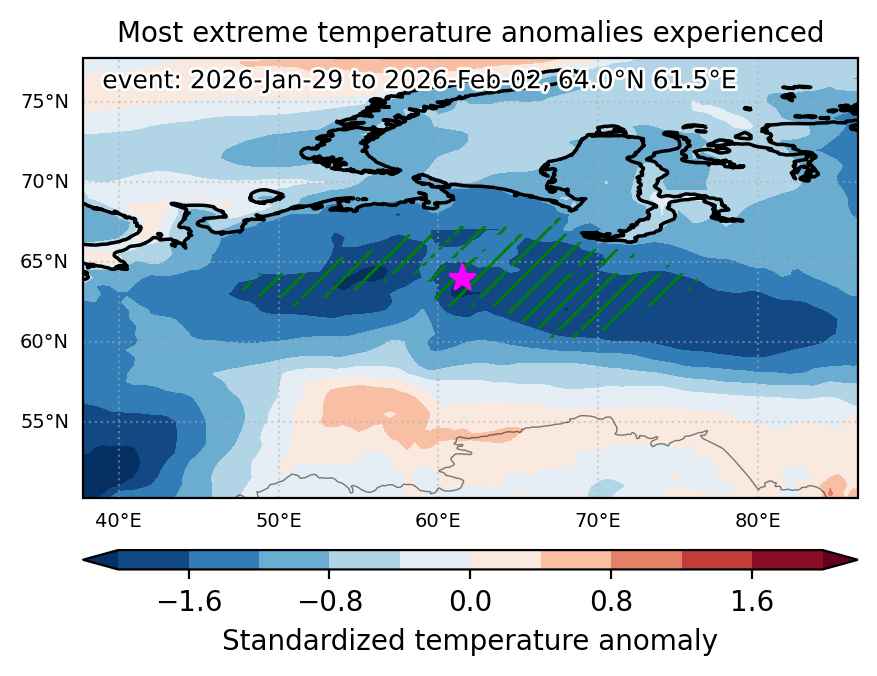

Fig. 1: Map of most extreme temperature anomalies (standardized) experienced during the event. The purple star indicates the center of the extreme event. Green hatching illustrates all areas under the effect of extremes at some time during the event.
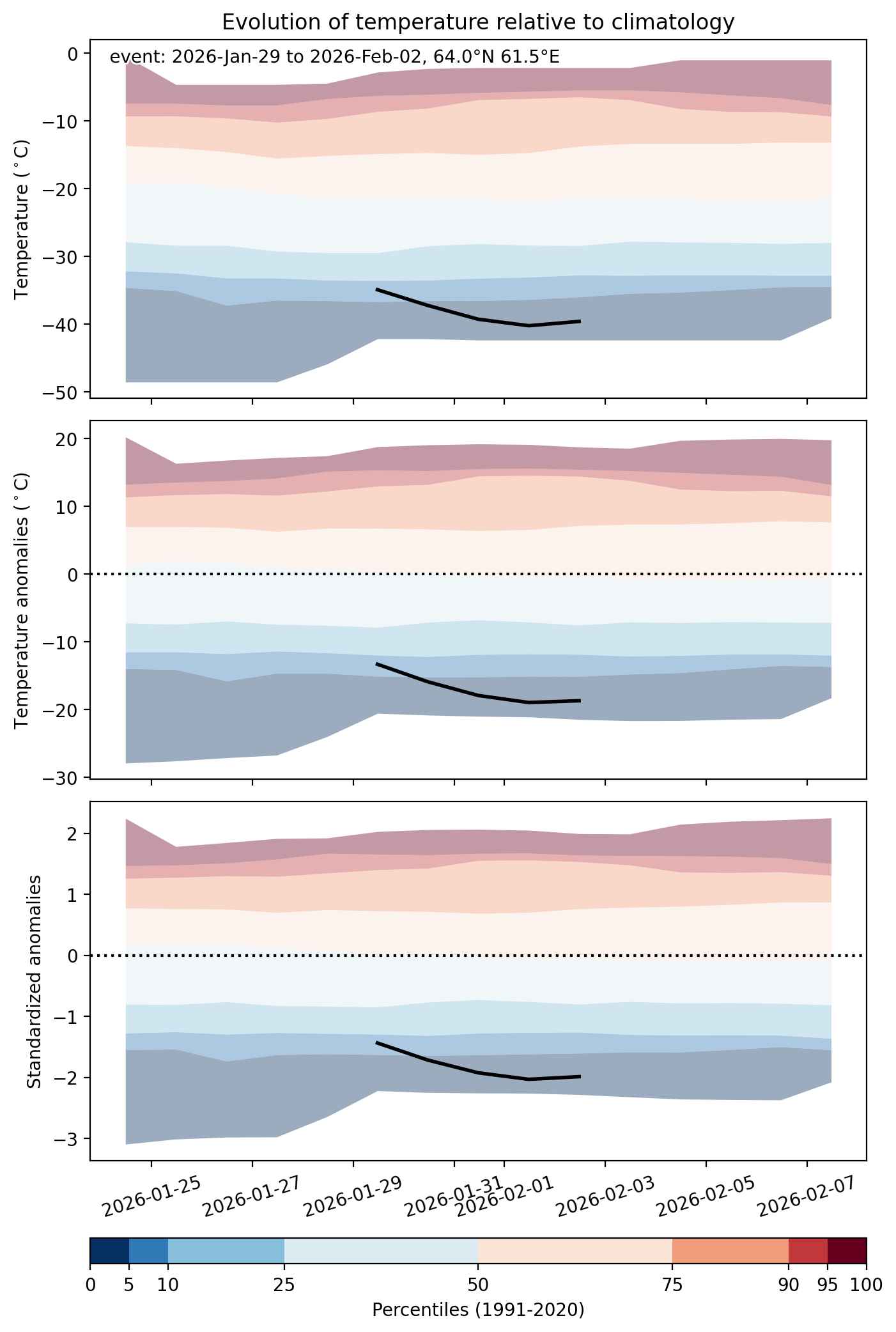


Fig. 2: Evolution of temperature at the center of the event. The climatological percentile distribution is illustrated with color shadings.
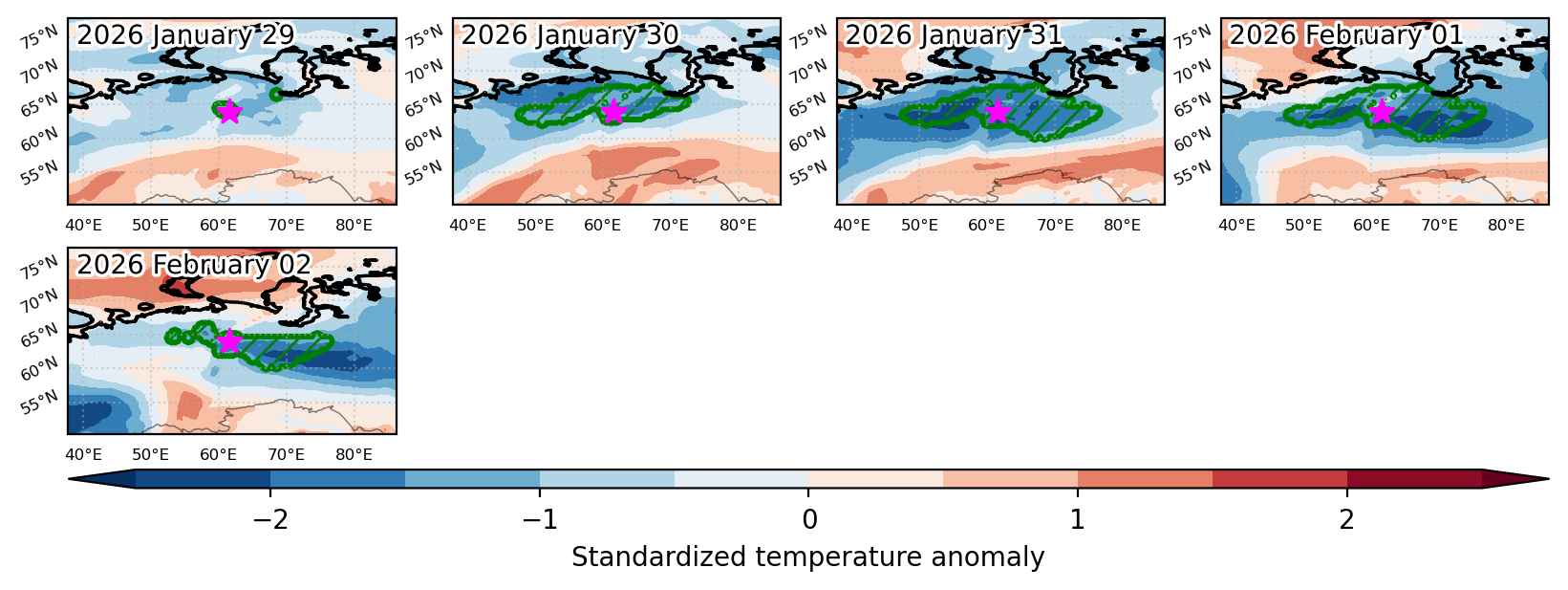


Fig. 3: Maps illustrating the evolution of standardized temperature anomalies during the event.

Event ID: Cold_spell_2026-Jan-29_to_2026-Feb-02_61.5_64.0
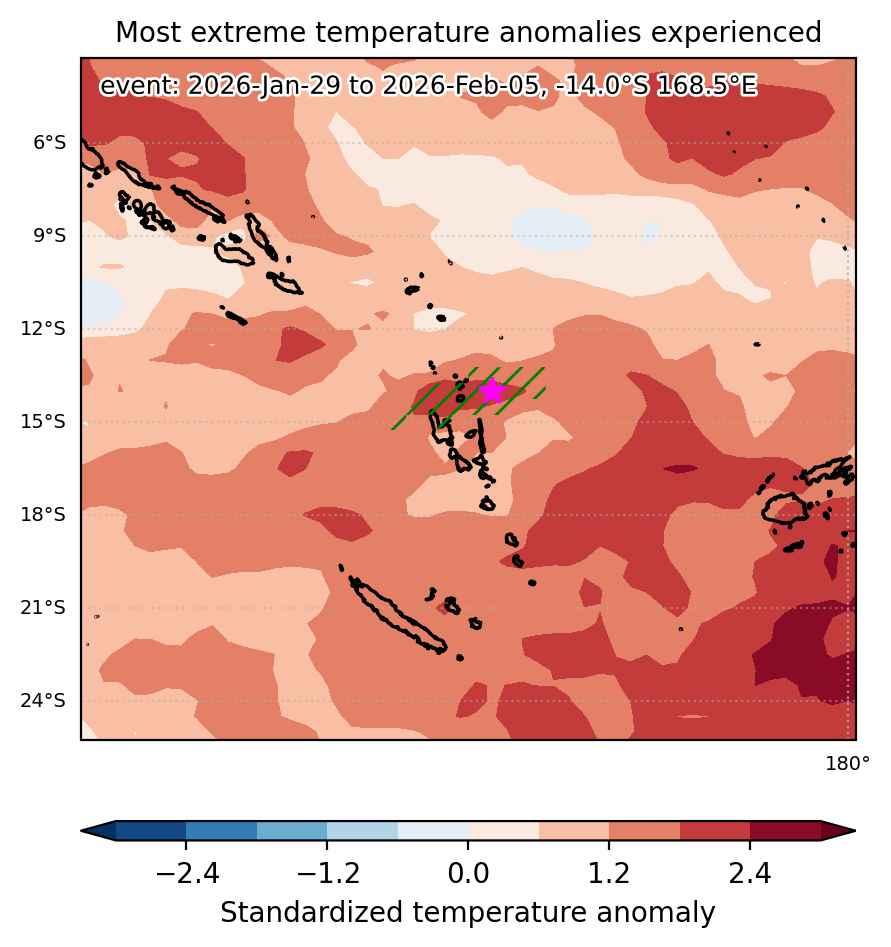
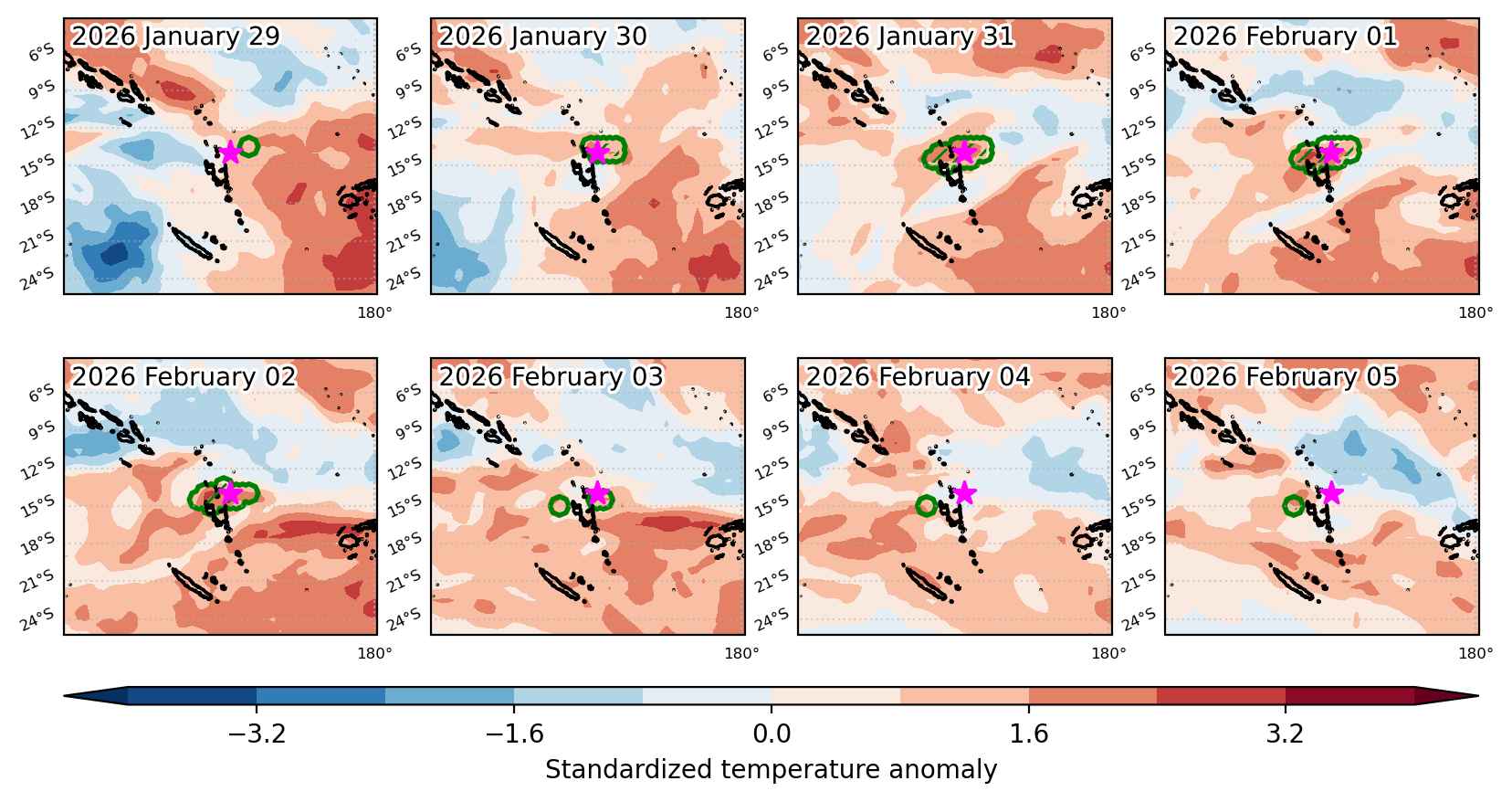
Heat wave occuring from January 29 2026 to February 05 2026 at -14.0°S 168.5°E

Download data: JSON

Event type: Heat wave

Countries affected (identified with ArcGIS Online; provided only for geographical reference):

  • Vanuatu

Duration: 8 days

Time span: January 29 2026 to February 05 2026

Statistics over entire affected area:

  • Mean temperature anomaly: 1.0 °C
  • Mean temperature: 28.3 °C
  • Maximum temperature anomaly: 1.5 °C
  • Maximum temperature: 28.8 °C

Event center: -14.0°S 168.5°E

Area affected: 65942 km$^2$


Fig. 1: Map of most extreme temperature anomalies (standardized) experienced during the event. The purple star indicates the center of the extreme event. Green hatching illustrates all areas under the effect of extremes at some time during the event.


Fig. 2: Evolution of temperature at the center of the event. The climatological percentile distribution is illustrated with color shadings.


Fig. 3: Maps illustrating the evolution of standardized temperature anomalies during the event.

Event ID: Heat_wave_2026-Jan-29_to_2026-Feb-05_168.5_-14.0

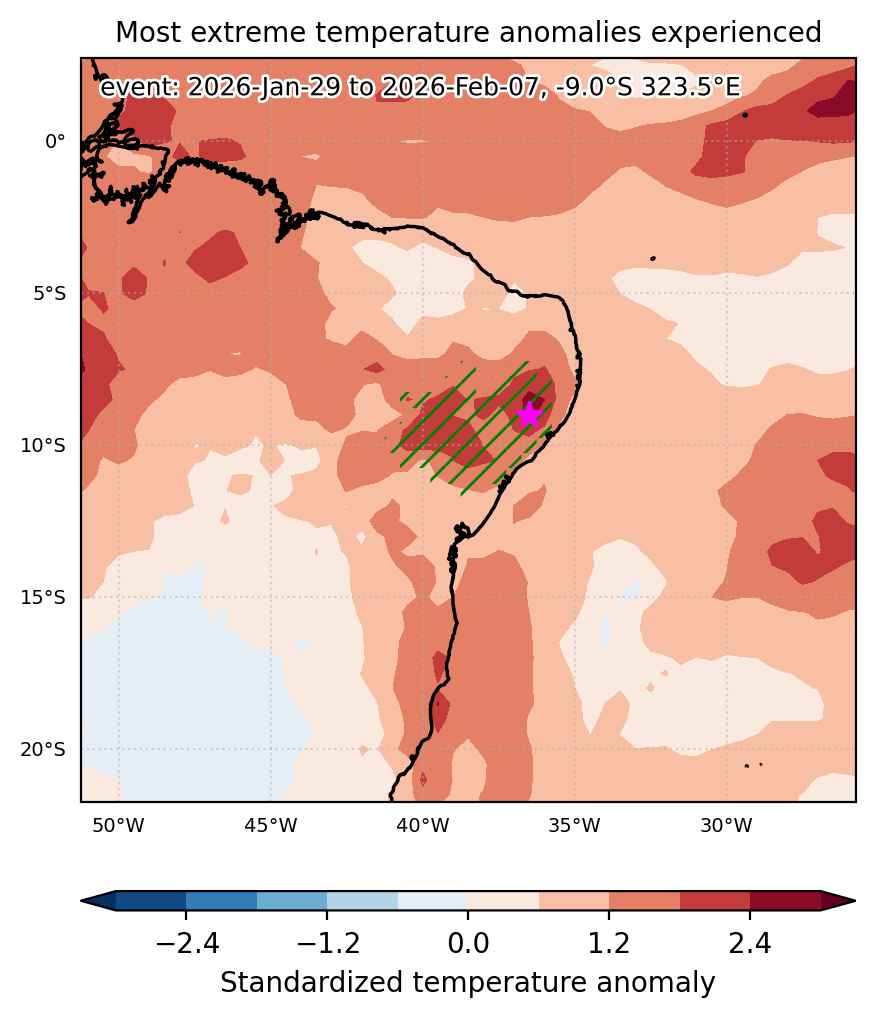
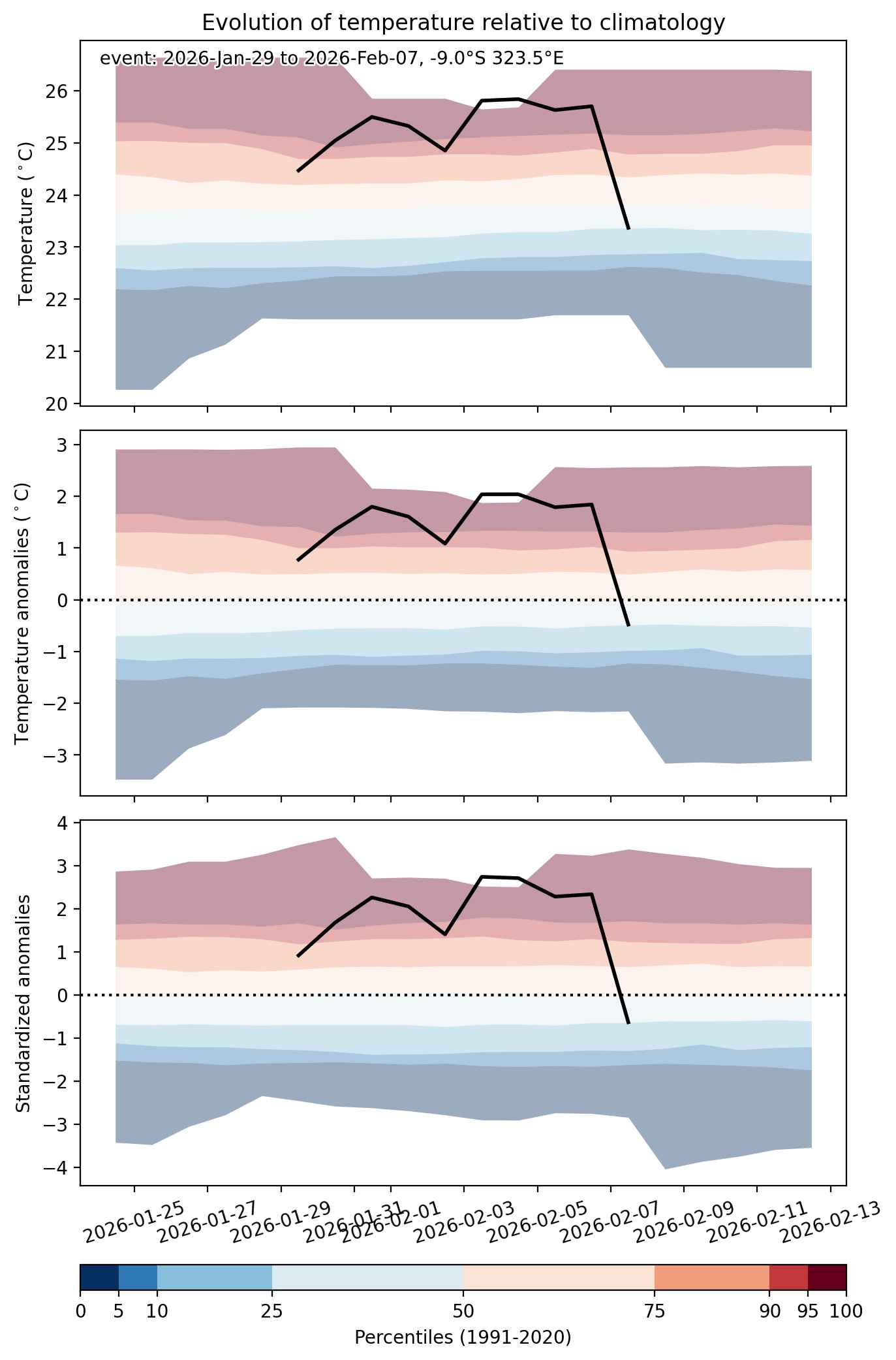
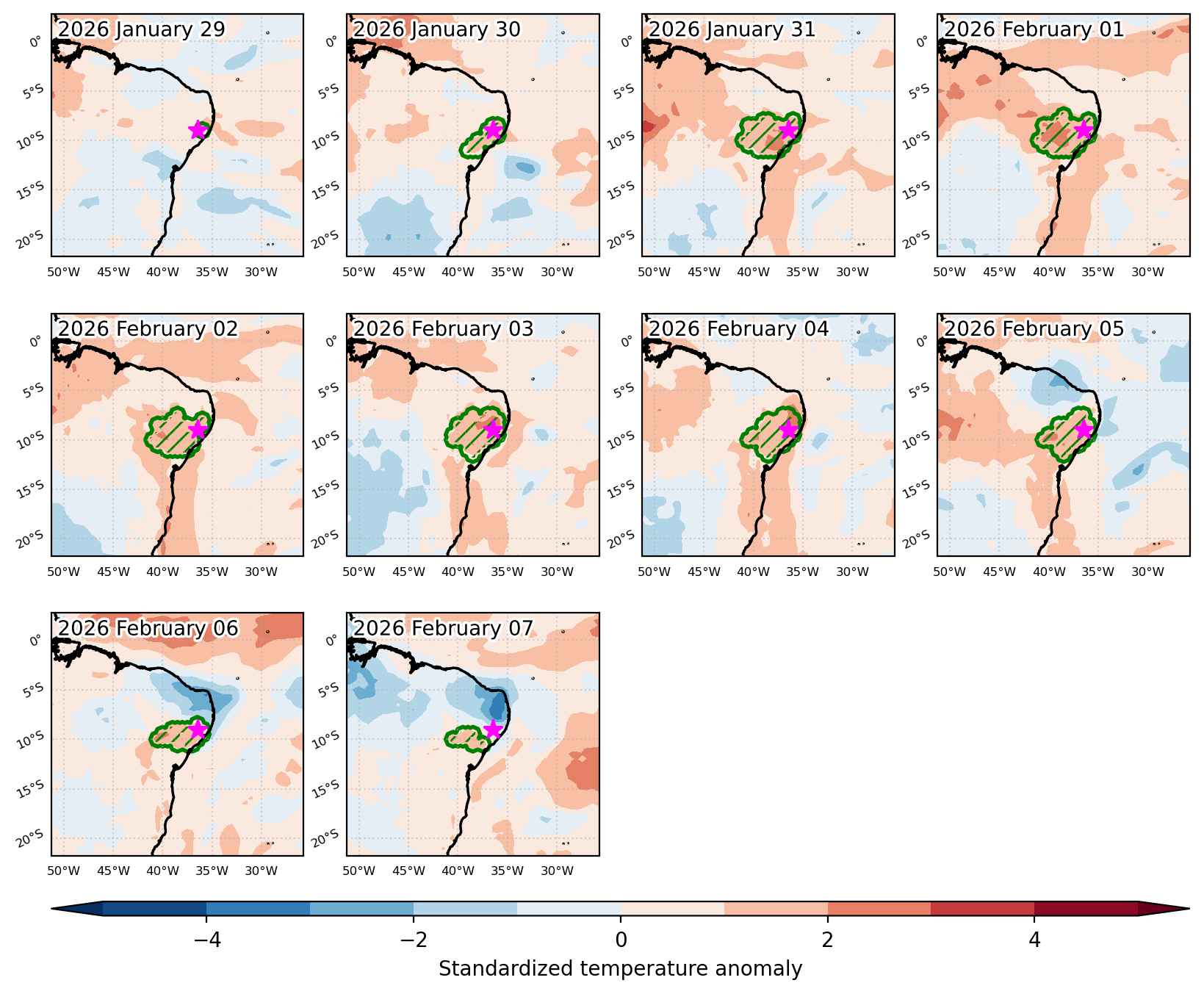
Heat wave occuring from January 29 2026 to February 07 2026 at -9.0°S 323.5°E

Download data: JSON

Event type: Heat wave

Countries affected (identified with ArcGIS Online; provided only for geographical reference):

  • Brazil

Duration: 10 days

Time span: January 29 2026 to February 07 2026

Statistics over entire affected area:

  • Mean temperature anomaly: 2.1 °C
  • Mean temperature: 29.0 °C
  • Maximum temperature anomaly: 4.0 °C
  • Maximum temperature: 32.3 °C

Event center: -9.0°S 323.5°E

Area affected: 189051 km$^2$


Fig. 1: Map of most extreme temperature anomalies (standardized) experienced during the event. The purple star indicates the center of the extreme event. Green hatching illustrates all areas under the effect of extremes at some time during the event.


Fig. 2: Evolution of temperature at the center of the event. The climatological percentile distribution is illustrated with color shadings.


Fig. 3: Maps illustrating the evolution of standardized temperature anomalies during the event.

Event ID: Heat_wave_2026-Jan-29_to_2026-Feb-07_323.5_-9.0

Heat wave occuring from January 29 2026 to February 02 2026 at 66.5°N 257.5°E

Download data: JSON

Event type: Heat wave

Countries affected (identified with ArcGIS Online; provided only for geographical reference):

  • Canada

Duration: 5 days

Time span: January 29 2026 to February 02 2026

Statistics over entire affected area:

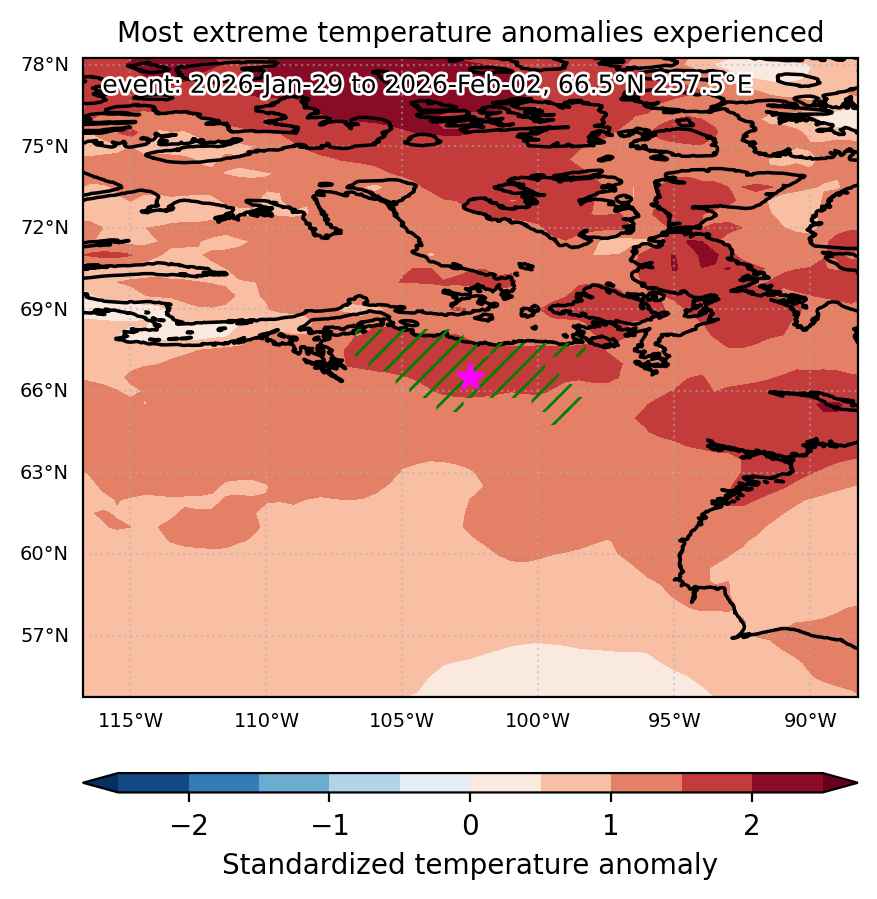
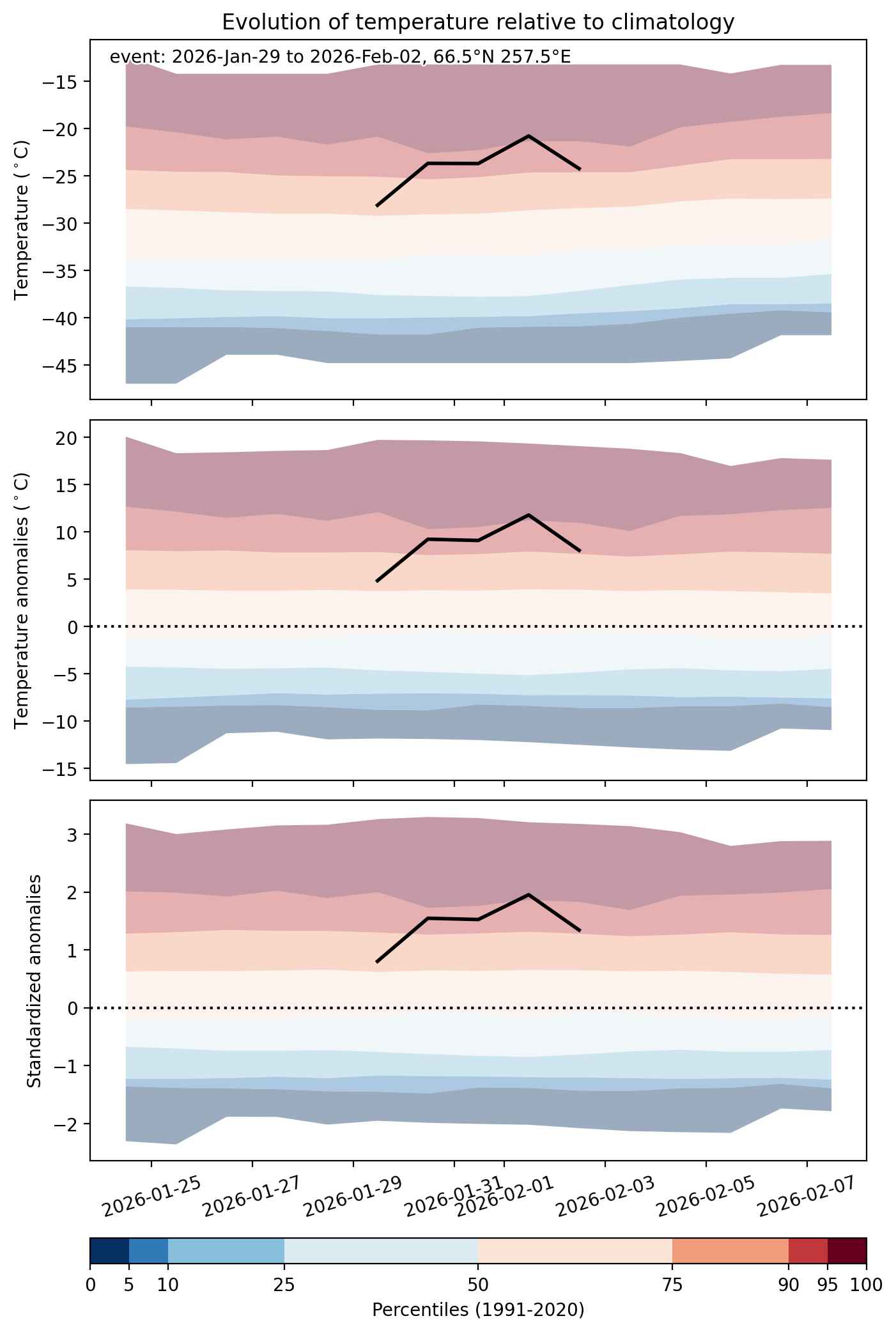
  • Mean temperature anomaly: 9.3 °C
  • Mean temperature: -23.3 °C
  • Maximum temperature anomaly: 12.9 °C
  • Maximum temperature: -20.0 °C

Event center: 66.5°N 257.5°E

Area affected: 84072 km$^2$


Fig. 1: Map of most extreme temperature anomalies (standardized) experienced during the event. The purple star indicates the center of the extreme event. Green hatching illustrates all areas under the effect of extremes at some time during the event.


Fig. 2: Evolution of temperature at the center of the event. The climatological percentile distribution is illustrated with color shadings.


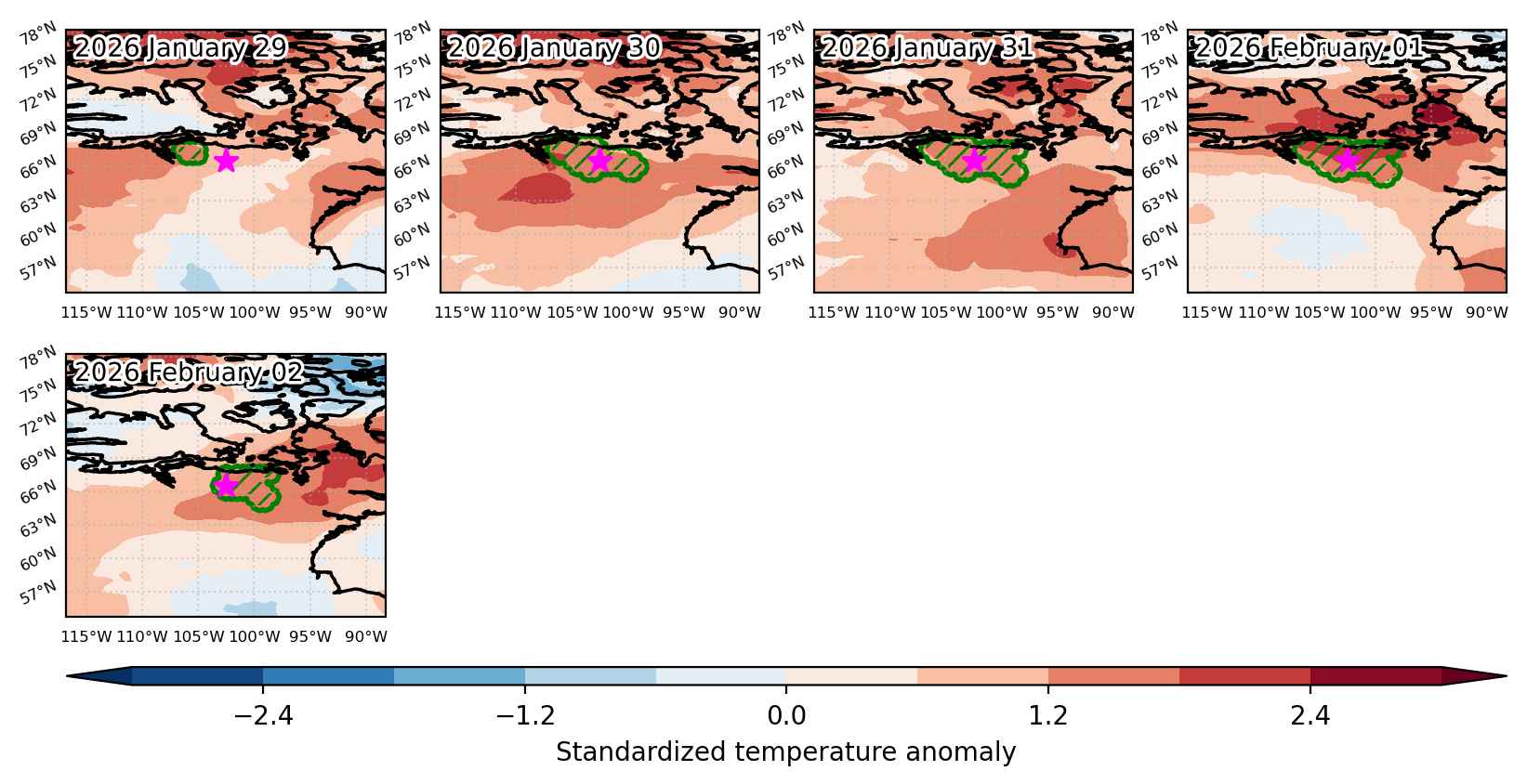
Fig. 3: Maps illustrating the evolution of standardized temperature anomalies during the event.

Event ID: Heat_wave_2026-Jan-29_to_2026-Feb-02_257.5_66.5

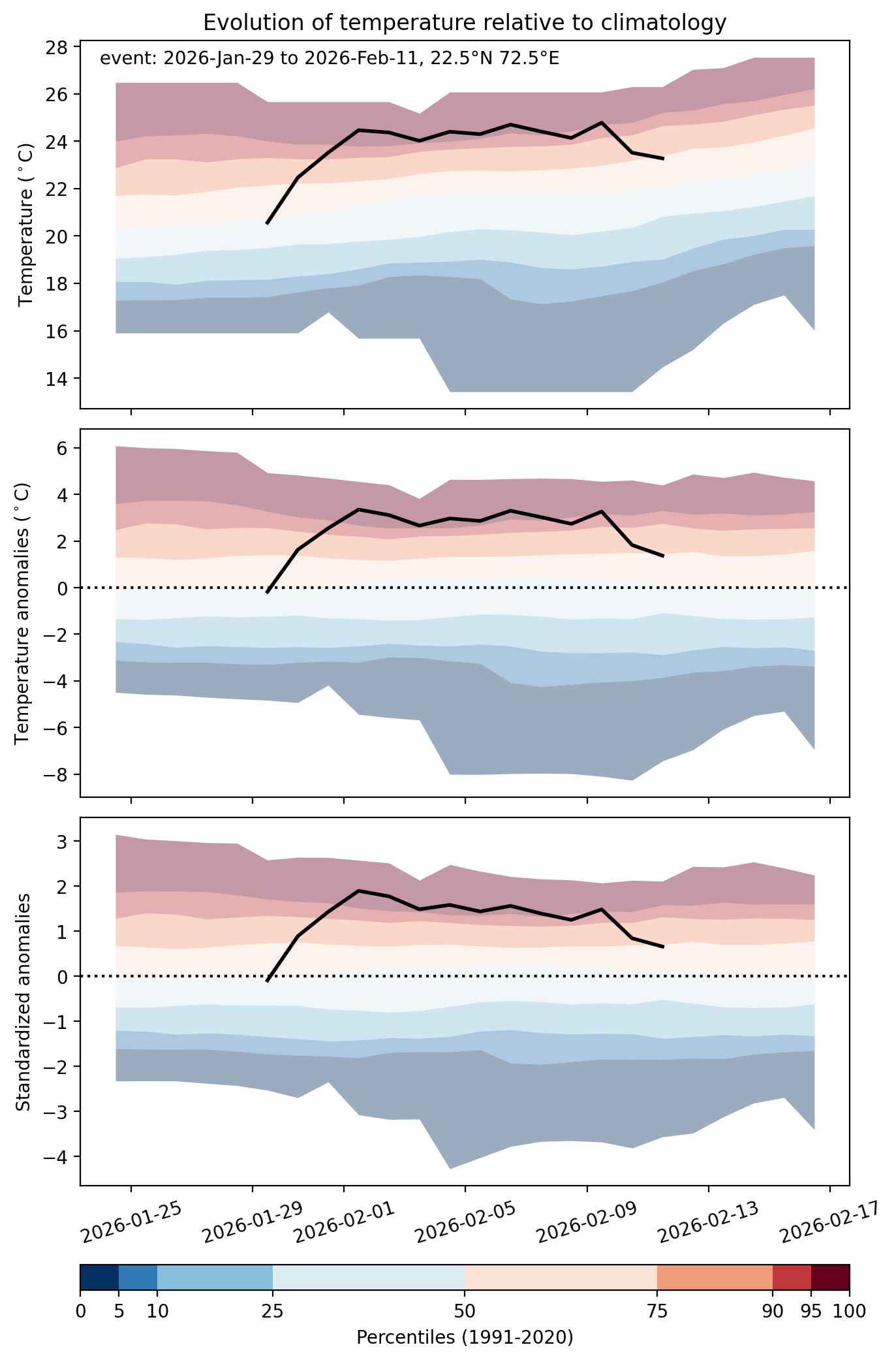
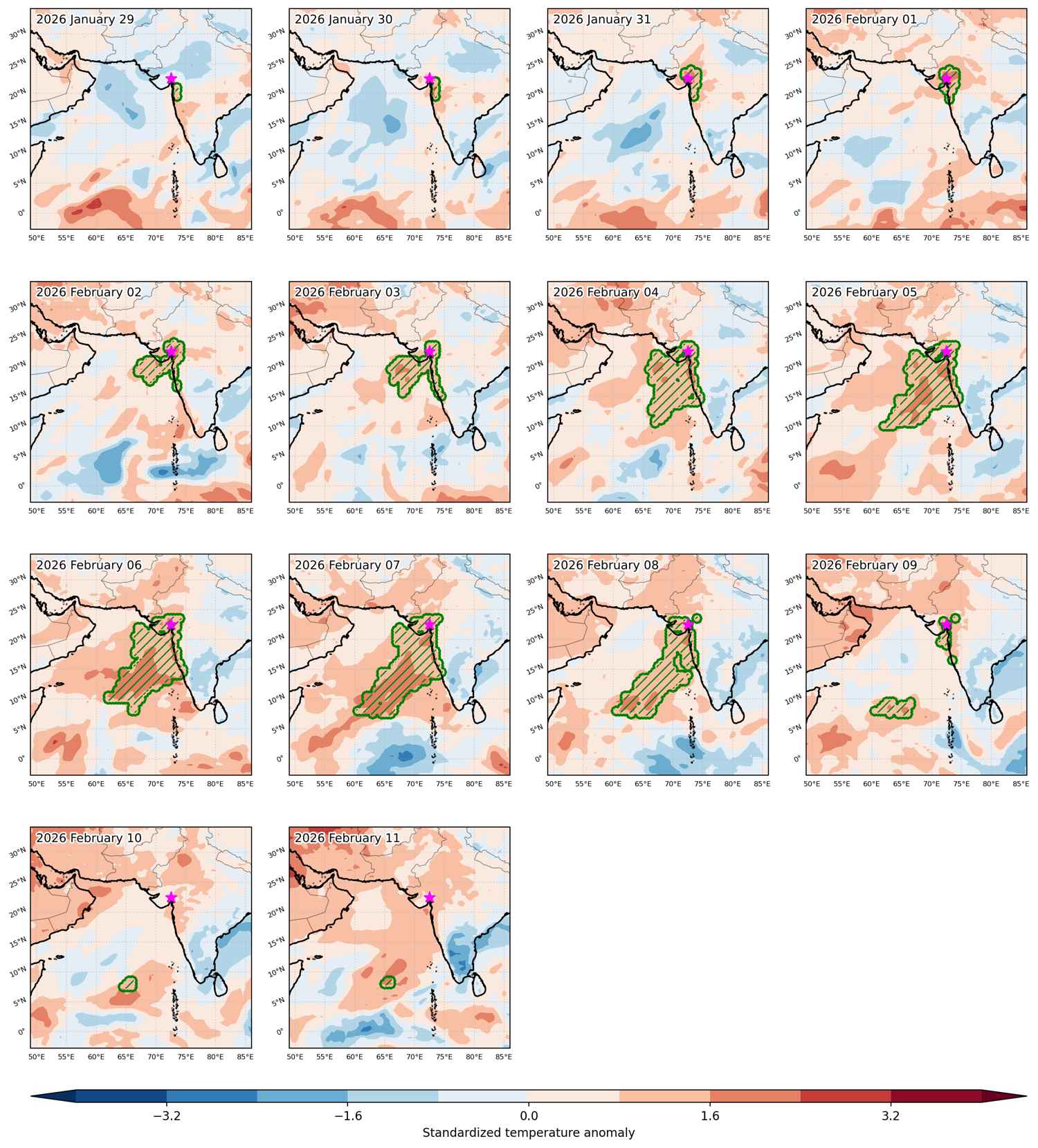
Heat wave occuring from January 29 2026 to February 11 2026 at 22.5°N 72.5°E

Download data: JSON

Event type: Heat wave

Countries affected (identified with ArcGIS Online; provided only for geographical reference):

  • India

Duration: 14 days

Time span: January 29 2026 to February 11 2026

Statistics over entire affected area:

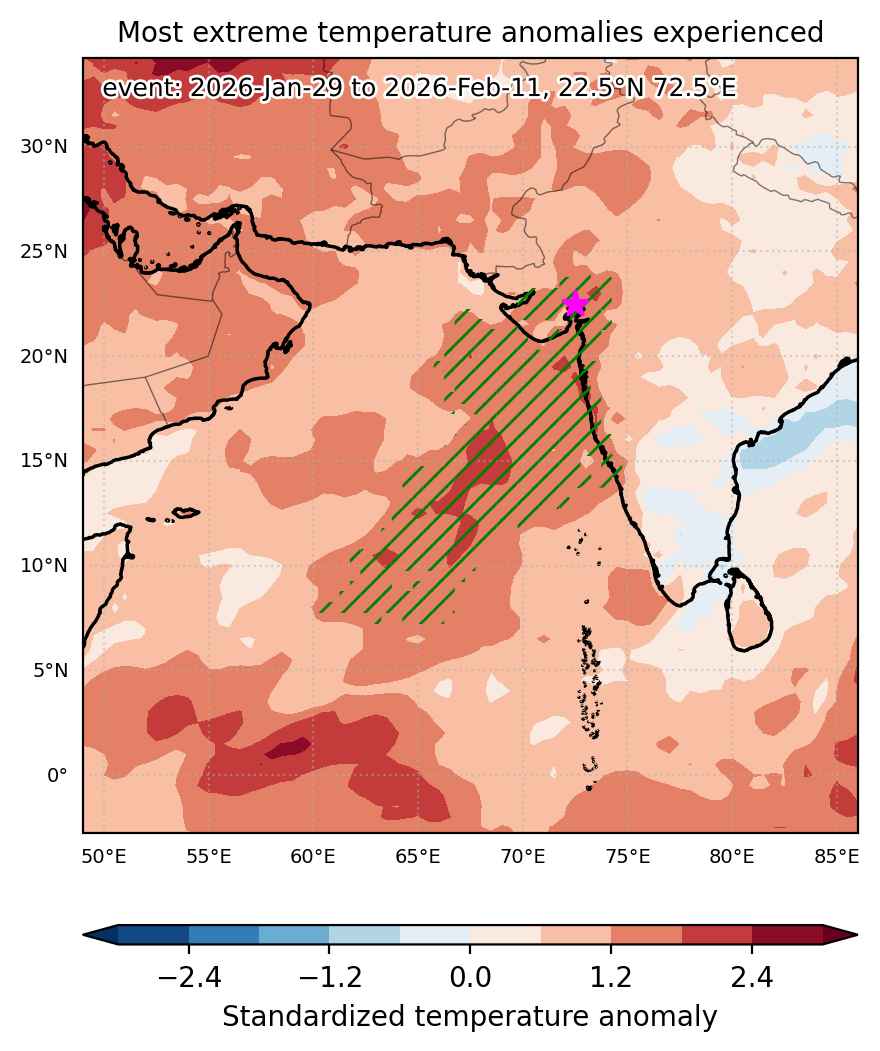
  • Mean temperature anomaly: 1.4 °C
  • Mean temperature: 26.1 °C
  • Maximum temperature anomaly: 4.1 °C
  • Maximum temperature: 28.0 °C

Event center: 22.5°N 72.5°E

Area affected: 1211731 km$^2$


Fig. 1: Map of most extreme temperature anomalies (standardized) experienced during the event. The purple star indicates the center of the extreme event. Green hatching illustrates all areas under the effect of extremes at some time during the event.


Fig. 2: Evolution of temperature at the center of the event. The climatological percentile distribution is illustrated with color shadings.


Fig. 3: Maps illustrating the evolution of standardized temperature anomalies during the event.

Event ID: Heat_wave_2026-Jan-29_to_2026-Feb-11_72.5_22.5

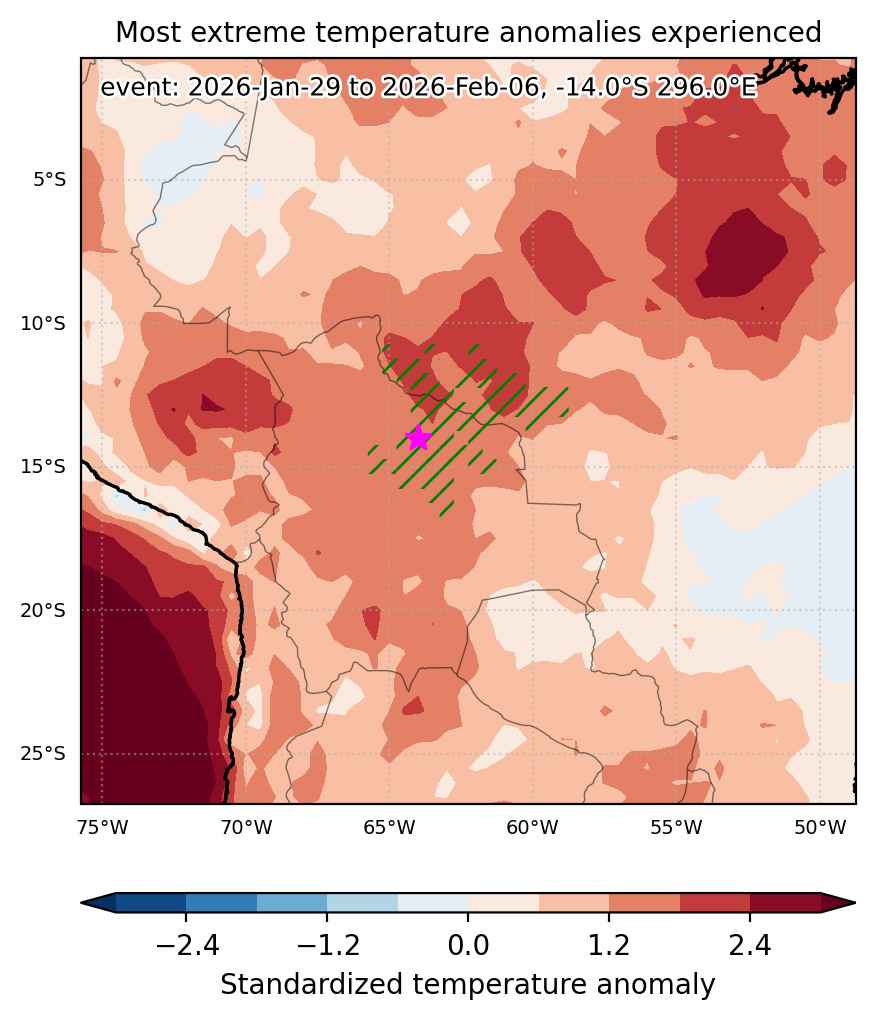
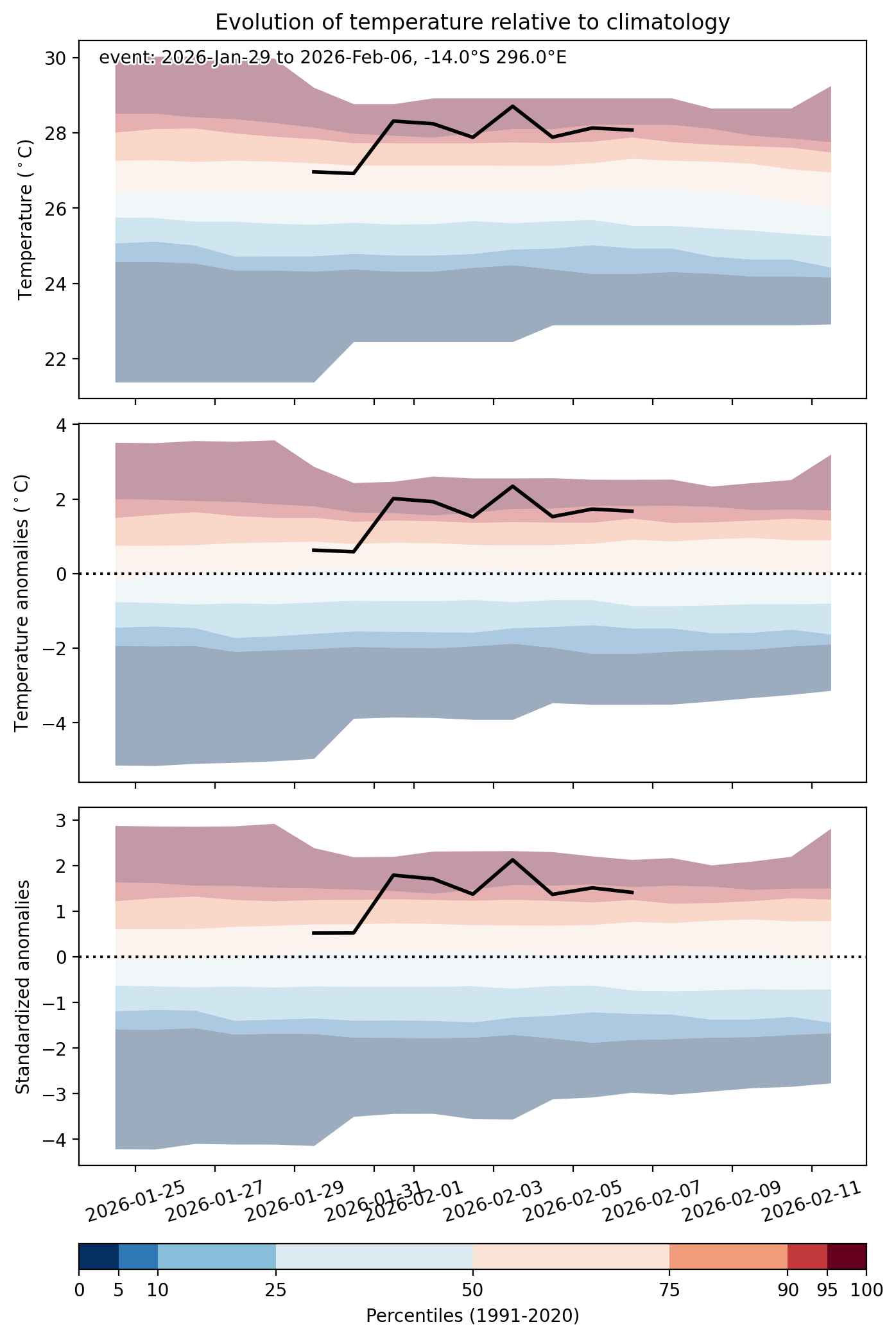
Heat wave occuring from January 29 2026 to February 06 2026 at -14.0°S 296.0°E

Download data: JSON

Event type: Heat wave

Countries affected (identified with ArcGIS Online; provided only for geographical reference):

  • Bolivia, Plurinational State of
  • Brazil

Duration: 9 days

Time span: January 29 2026 to February 06 2026

Statistics over entire affected area:

  • Mean temperature anomaly: 1.7 °C
  • Mean temperature: 27.3 °C
  • Maximum temperature anomaly: 2.7 °C
  • Maximum temperature: 28.9 °C

Event center: -14.0°S 296.0°E

Area affected: 210418 km$^2$


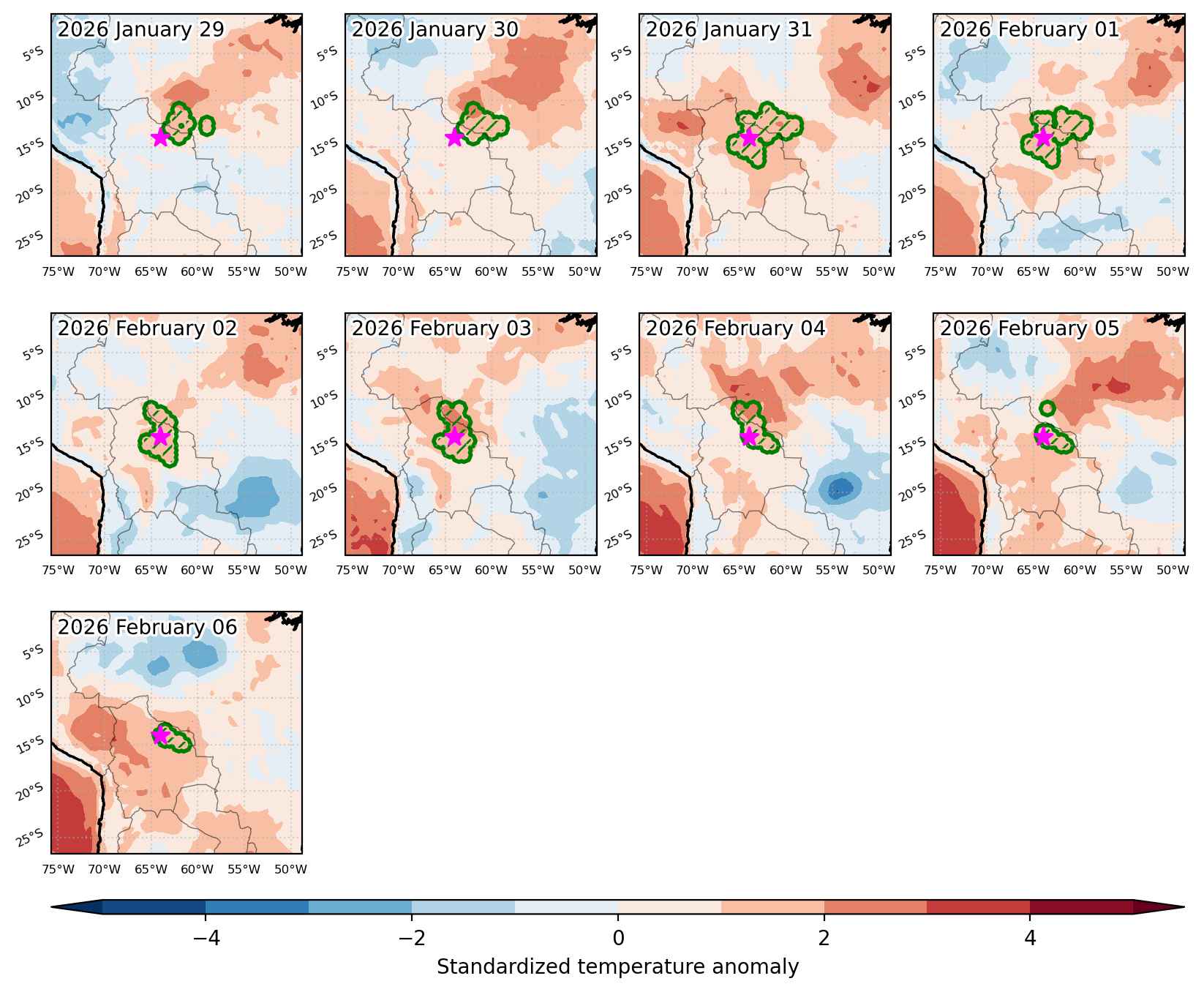
Fig. 1: Map of most extreme temperature anomalies (standardized) experienced during the event. The purple star indicates the center of the extreme event. Green hatching illustrates all areas under the effect of extremes at some time during the event.


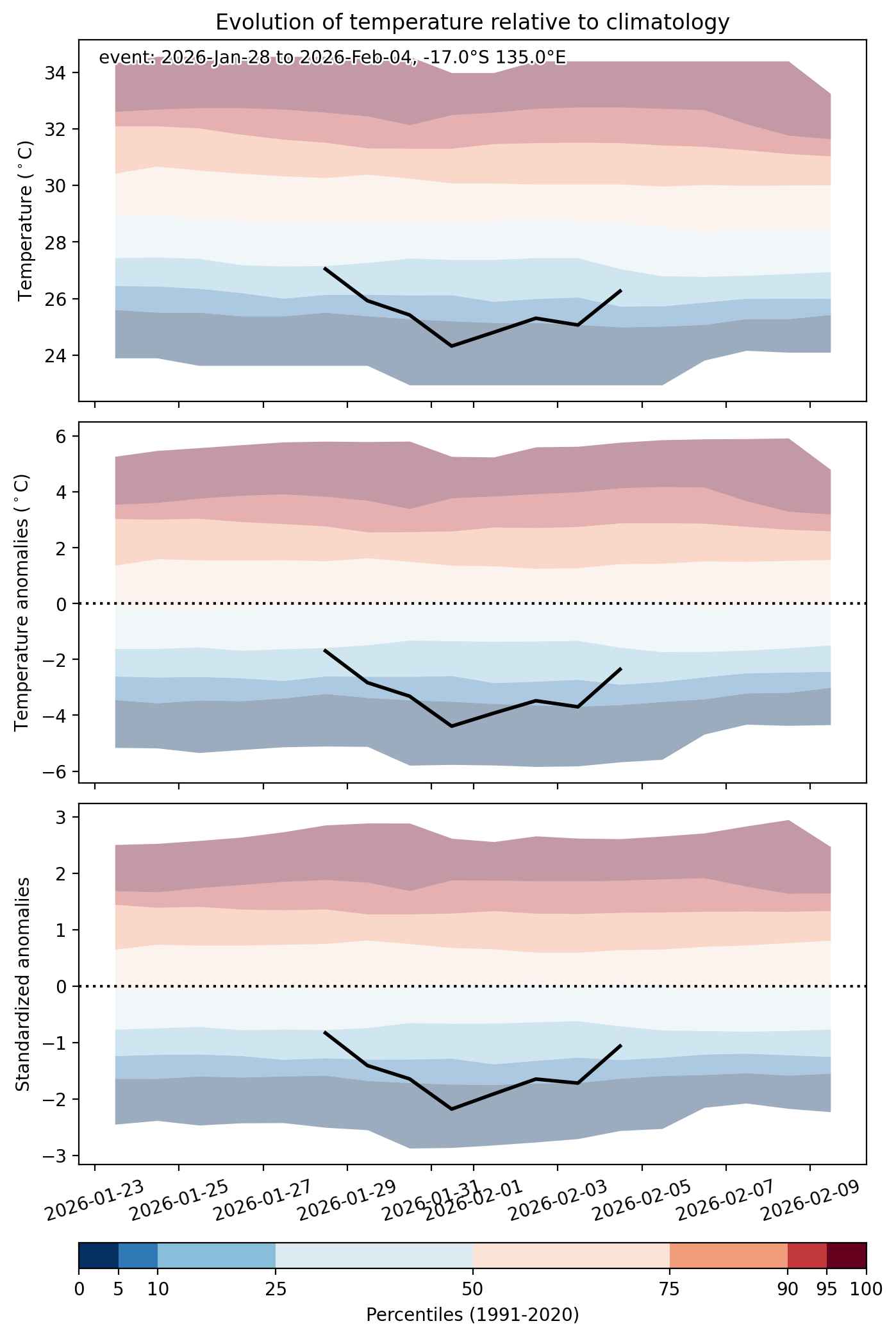
Fig. 2: Evolution of temperature at the center of the event. The climatological percentile distribution is illustrated with color shadings.


Fig. 3: Maps illustrating the evolution of standardized temperature anomalies during the event.

Event ID: Heat_wave_2026-Jan-29_to_2026-Feb-06_296.0_-14.0

Cold spell occuring from January 28 2026 to February 04 2026 at -17.0°S 135.0°E

Download data: JSON

Event type: Cold spell

Countries affected (identified with ArcGIS Online; provided only for geographical reference):

  • Australia

Duration: 8 days

Time span: January 28 2026 to February 04 2026

Statistics over entire affected area:

  • Mean temperature anomaly: -3.3 °C
  • Mean temperature: 25.6 °C
  • Minimum temperature anomaly: -7.5 °C
  • Minimum temperature: 21.7 °C

Event center: -17.0°S 135.0°E

Area affected: 509797 km$^2$


Fig. 1: Map of most extreme temperature anomalies (standardized) experienced during the event. The purple star indicates the center of the extreme event. Green hatching illustrates all areas under the effect of extremes at some time during the event.


Fig. 2: Evolution of temperature at the center of the event. The climatological percentile distribution is illustrated with color shadings.


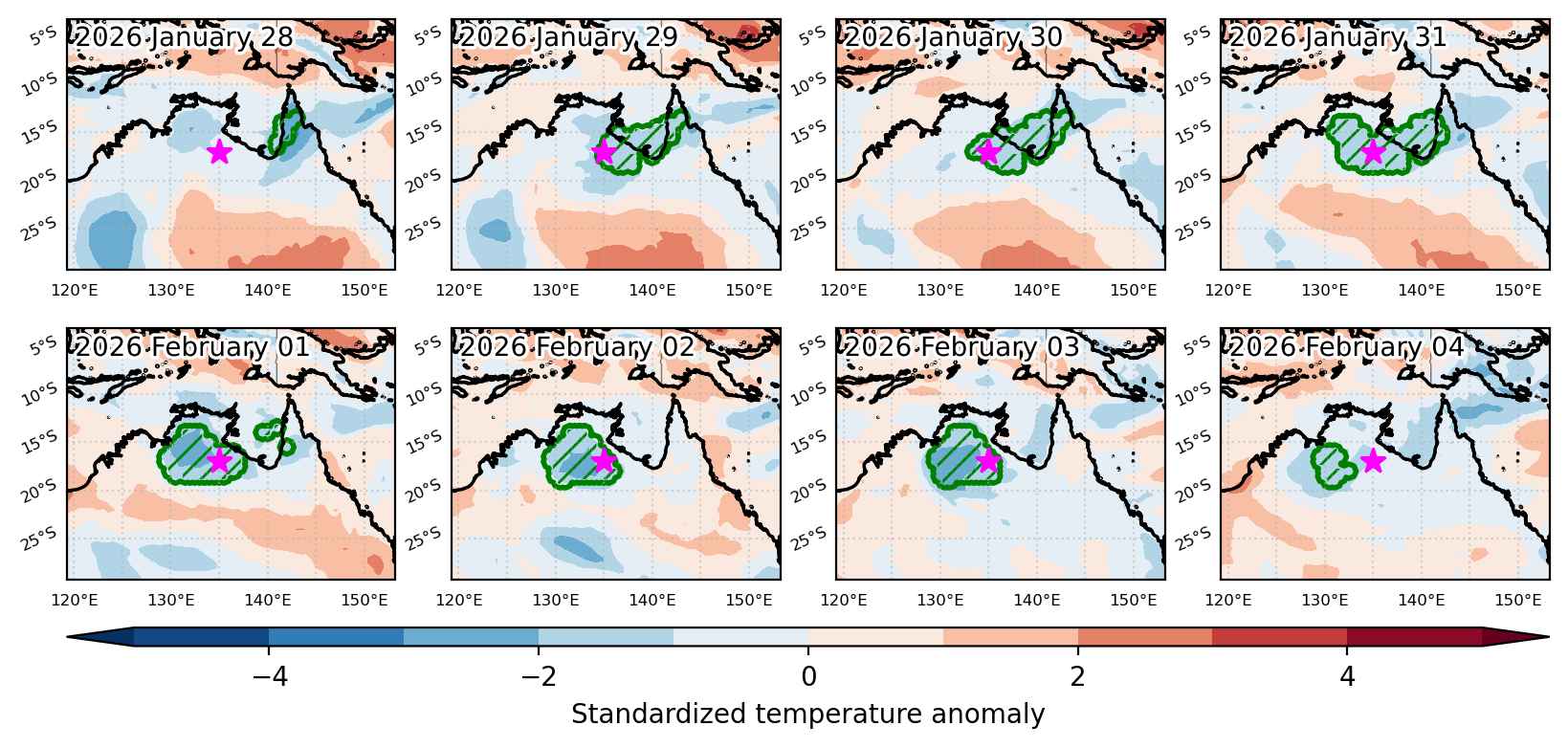
Fig. 3: Maps illustrating the evolution of standardized temperature anomalies during the event.

Event ID: Cold_spell_2026-Jan-28_to_2026-Feb-04_135.0_-17.0

Heat wave occuring from January 28 2026 to January 31 2026 at -15.0°S 27.0°E

Download data: JSON

Event type: Heat wave

Countries affected (identified with ArcGIS Online; provided only for geographical reference):

  • Zambia

Duration: 4 days

Time span: January 28 2026 to January 31 2026

Statistics over entire affected area:

  • Mean temperature anomaly: 1.6 °C
  • Mean temperature: 24.0 °C
  • Maximum temperature anomaly: 2.1 °C
  • Maximum temperature: 26.0 °C

Event center: -15.0°S 27.0°E

Area affected: 56572 km$^2$


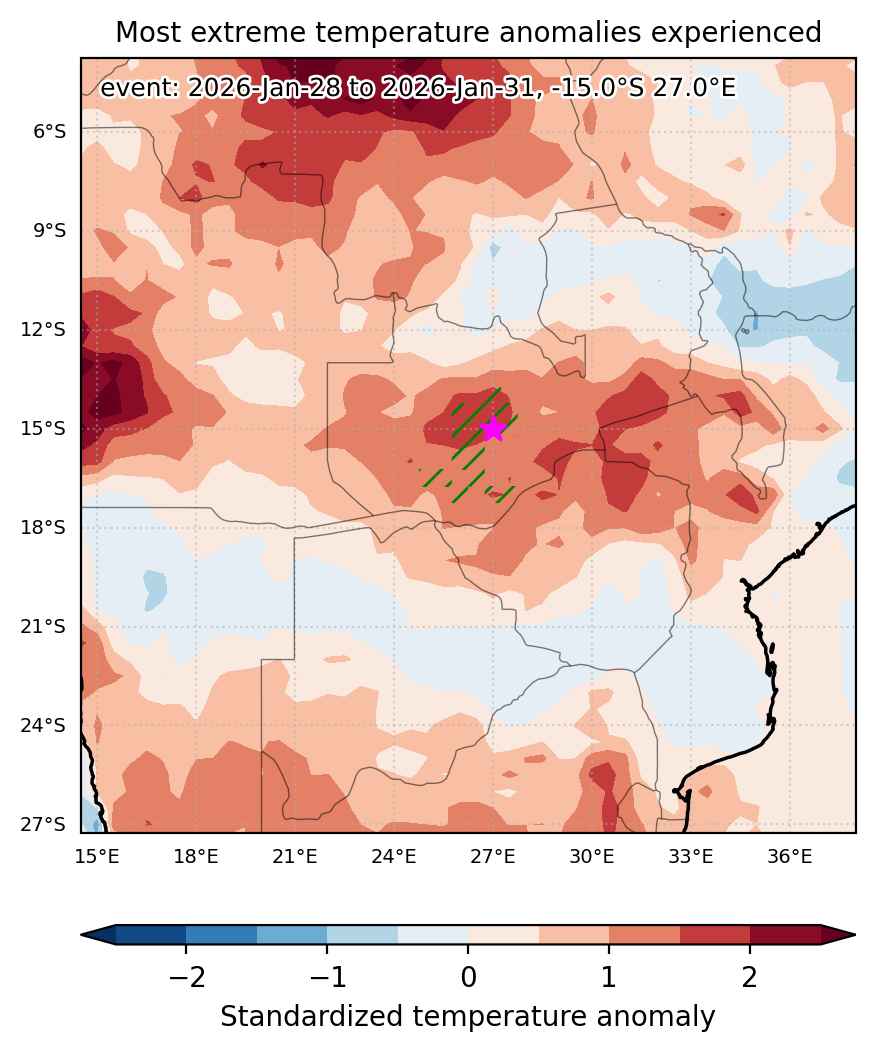
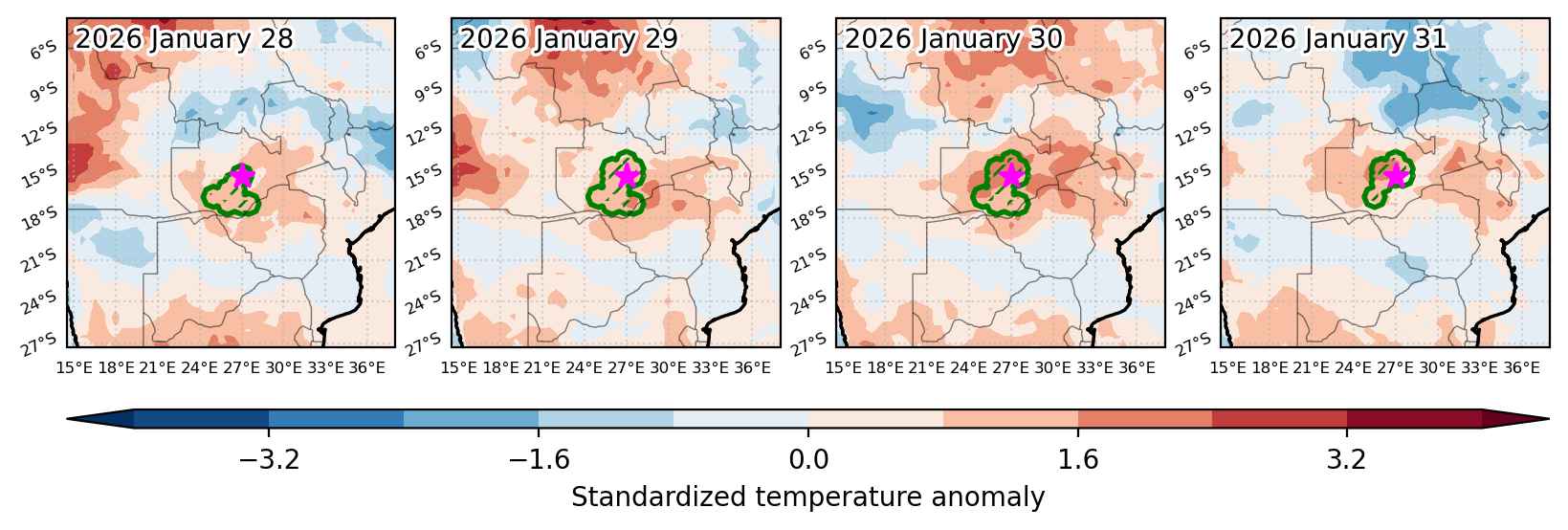
Fig. 1: Map of most extreme temperature anomalies (standardized) experienced during the event. The purple star indicates the center of the extreme event. Green hatching illustrates all areas under the effect of extremes at some time during the event.


Fig. 2: Evolution of temperature at the center of the event. The climatological percentile distribution is illustrated with color shadings.


Fig. 3: Maps illustrating the evolution of standardized temperature anomalies during the event.

Event ID: Heat_wave_2026-Jan-28_to_2026-Jan-31_27.0_-15.0

Cold spell occuring from January 28 2026 to February 03 2026 at 72.0°N 99.0°E

Download data: JSON

Event type: Cold spell

Countries affected (identified with ArcGIS Online; provided only for geographical reference):

  • Russian Federation

Duration: 7 days

Time span: January 28 2026 to February 03 2026

Statistics over entire affected area:

  • Mean temperature anomaly: -12.6 °C
  • Mean temperature: -43.5 °C
  • Minimum temperature anomaly: -18.0 °C
  • Minimum temperature: -48.6 °C

Event center: 72.0°N 99.0°E

Area affected: 162740 km$^2$


Fig. 1: Map of most extreme temperature anomalies (standardized) experienced during the event. The purple star indicates the center of the extreme event. Green hatching illustrates all areas under the effect of extremes at some time during the event.


Fig. 2: Evolution of temperature at the center of the event. The climatological percentile distribution is illustrated with color shadings.


Fig. 3: Maps illustrating the evolution of standardized temperature anomalies during the event.

Event ID: Cold_spell_2026-Jan-28_to_2026-Feb-03_99.0_72.0

Heat wave occuring from January 28 2026 to February 06 2026 at -4.5°S 306.0°E

Download data: JSON

Event type: Heat wave

Countries affected (identified with ArcGIS Online; provided only for geographical reference):

  • Brazil

Duration: 10 days

Time span: January 28 2026 to February 06 2026

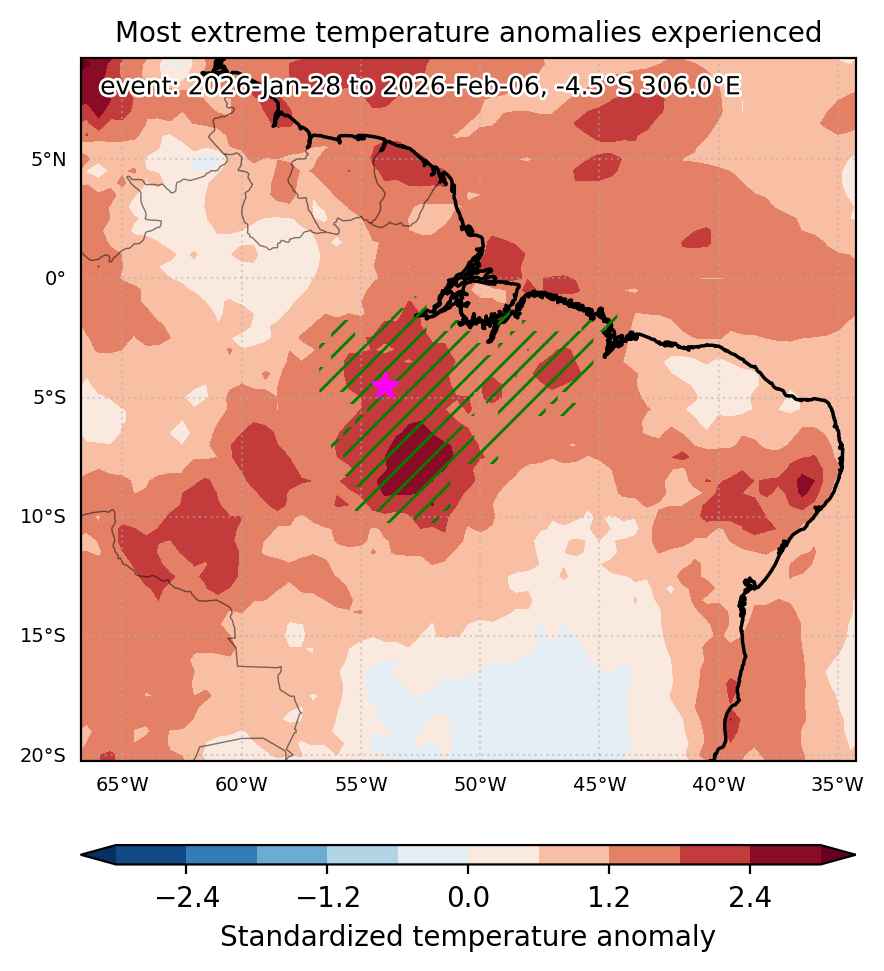
Statistics over entire affected area:

  • Mean temperature anomaly: 1.8 °C
  • Mean temperature: 27.0 °C
  • Maximum temperature anomaly: 2.8 °C
  • Maximum temperature: 28.9 °C

Event center: -4.5°S 306.0°E

Area affected: 750678 km$^2$


Fig. 1: Map of most extreme temperature anomalies (standardized) experienced during the event. The purple star indicates the center of the extreme event. Green hatching illustrates all areas under the effect of extremes at some time during the event.


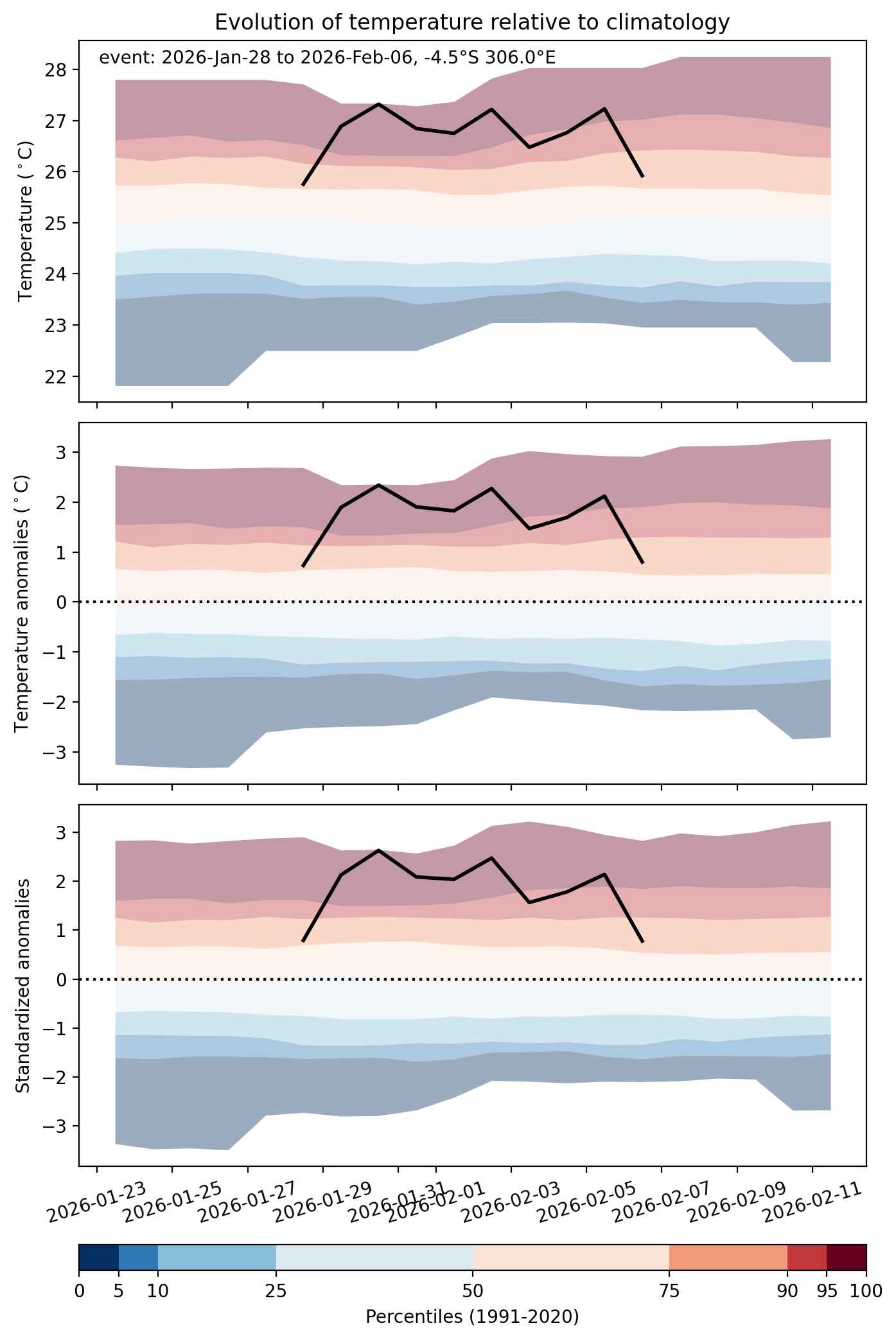
Fig. 2: Evolution of temperature at the center of the event. The climatological percentile distribution is illustrated with color shadings.


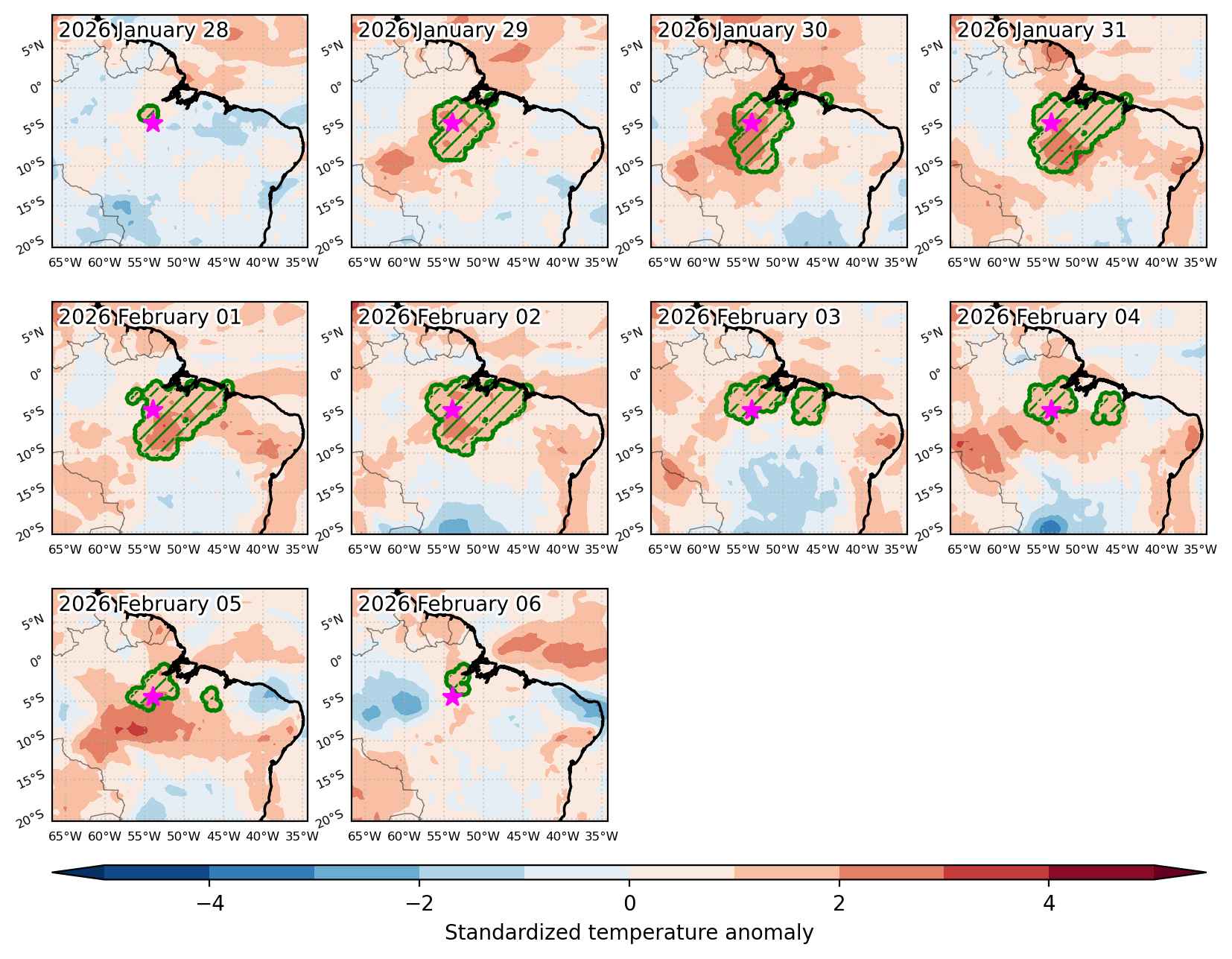
Fig. 3: Maps illustrating the evolution of standardized temperature anomalies during the event.

Event ID: Heat_wave_2026-Jan-28_to_2026-Feb-06_306.0_-4.5