Heat wave occuring from January 28 2026 to February 09 2026 at -16.5°S 31.0°E

Download data: JSON

Event type: Heat wave

Countries affected (identified with ArcGIS Online; provided only for geographical reference):

  • Malawi
  • Mozambique
  • Zambia
  • Zimbabwe

Duration: 13 days

Time span: January 28 2026 to February 09 2026

Statistics over entire affected area:

  • Mean temperature anomaly: 2.4 °C
  • Mean temperature: 27.8 °C
  • Maximum temperature anomaly: 4.8 °C
  • Maximum temperature: 31.7 °C

Event center: -16.5°S 31.0°E

Area affected: 163466 km$^2$


Fig. 1: Map of most extreme temperature anomalies (standardized) experienced during the event. The purple star indicates the center of the extreme event. Green hatching illustrates all areas under the effect of extremes at some time during the event.
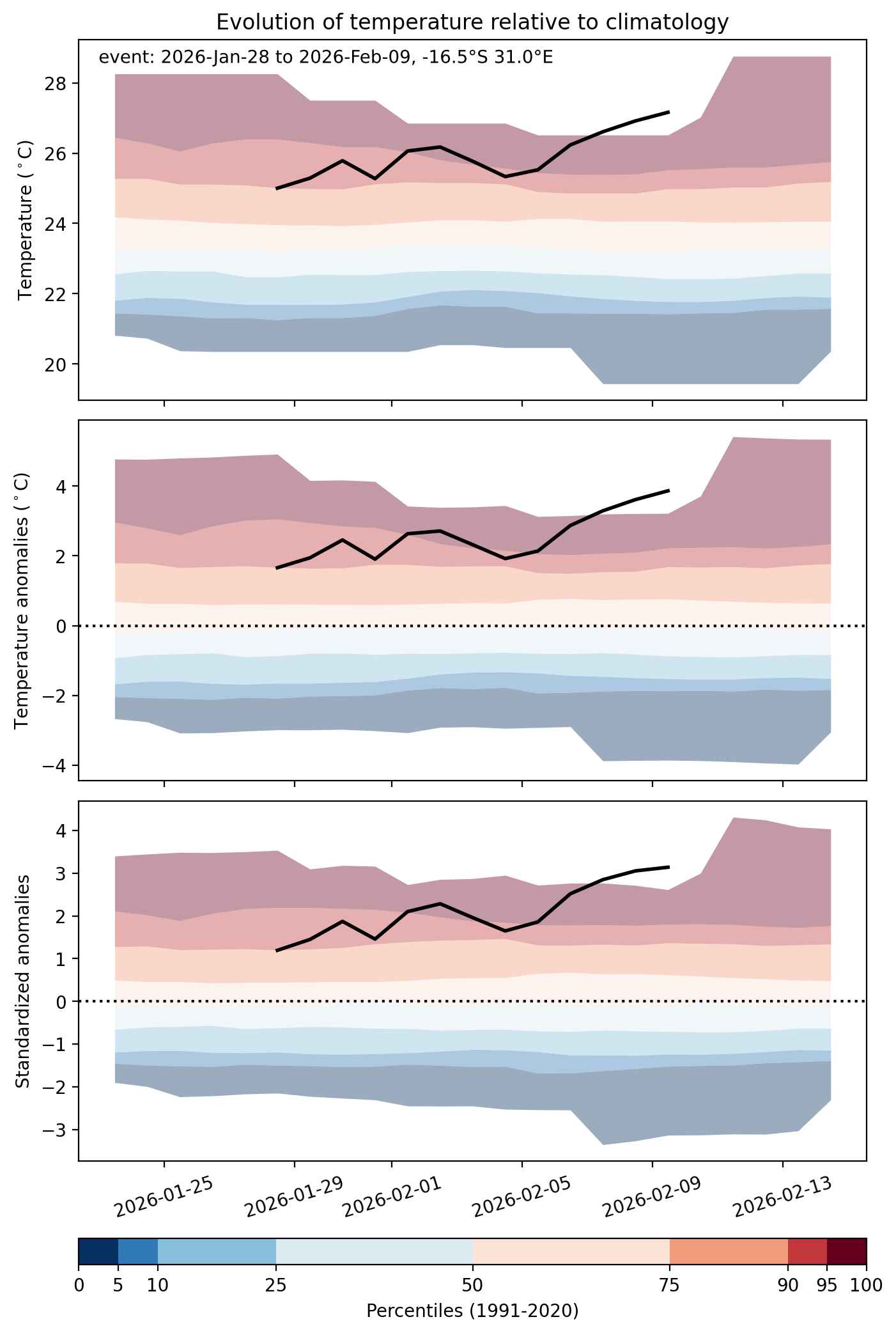


Fig. 2: Evolution of temperature at the center of the event. The climatological percentile distribution is illustrated with color shadings.
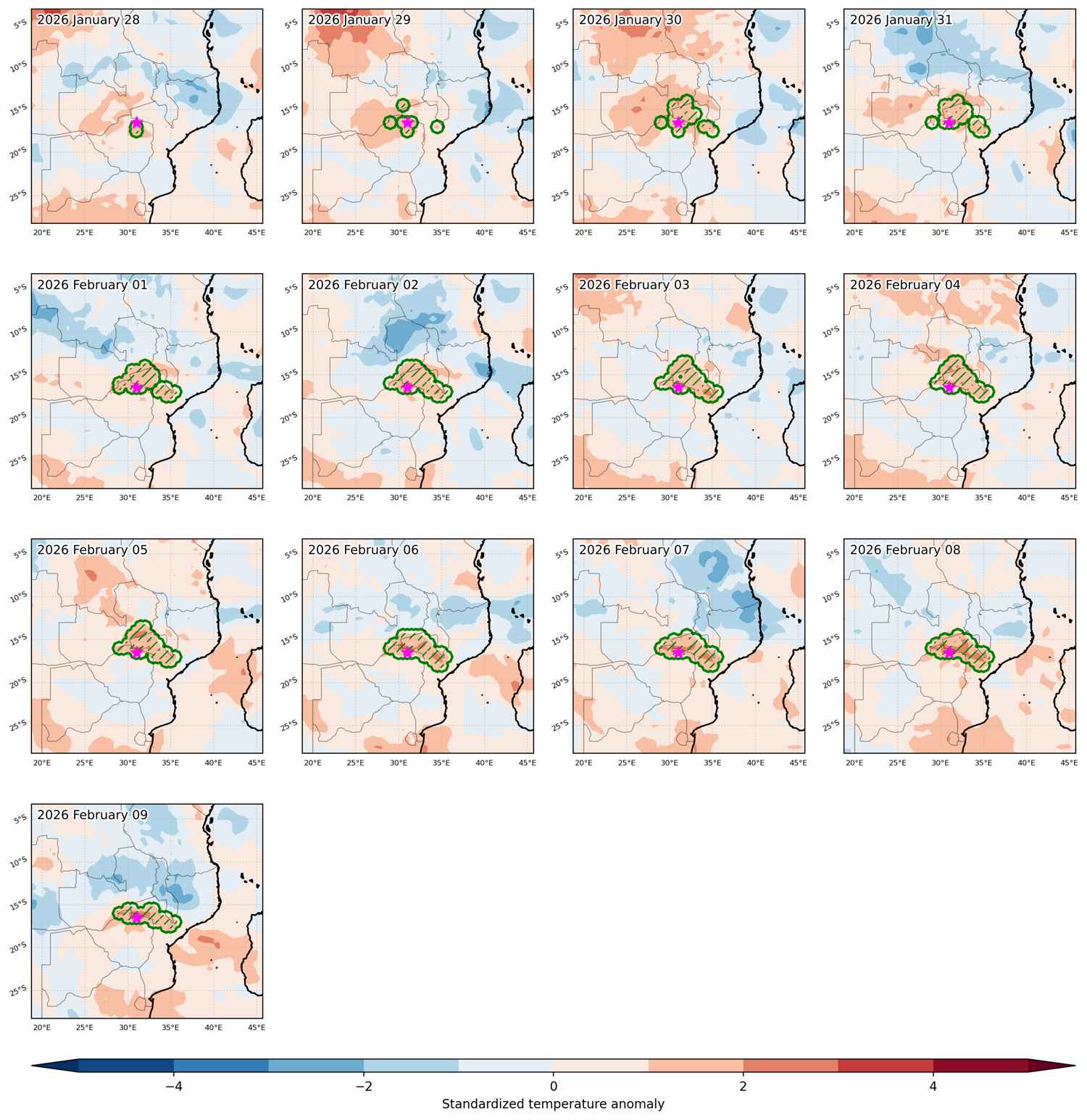


Fig. 3: Maps illustrating the evolution of standardized temperature anomalies during the event.

Event ID: Heat_wave_2026-Jan-28_to_2026-Feb-09_31.0_-16.5
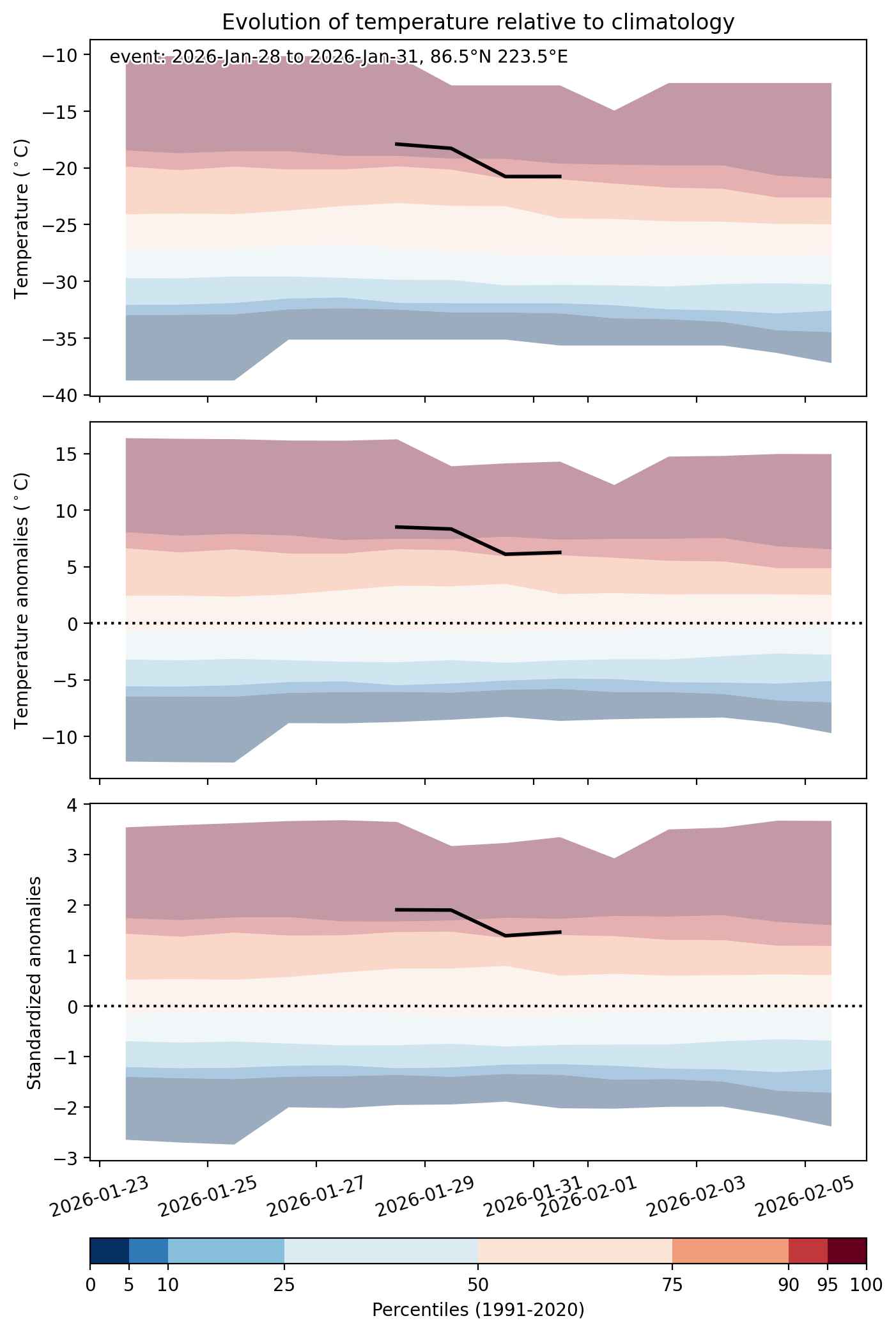
Heat wave occuring from January 28 2026 to January 31 2026 at 86.5°N 223.5°E

Download data: JSON

Event type: Heat wave

Countries affected (identified with ArcGIS Online; provided only for geographical reference):

  • Canada

Duration: 4 days

Time span: January 28 2026 to January 31 2026

Statistics over entire affected area:

  • Mean temperature anomaly: 7.1 °C
  • Mean temperature: -19.2 °C
  • Maximum temperature anomaly: 8.7 °C
  • Maximum temperature: -17.6 °C

Event center: 86.5°N 223.5°E

Area affected: 65989 km$^2$


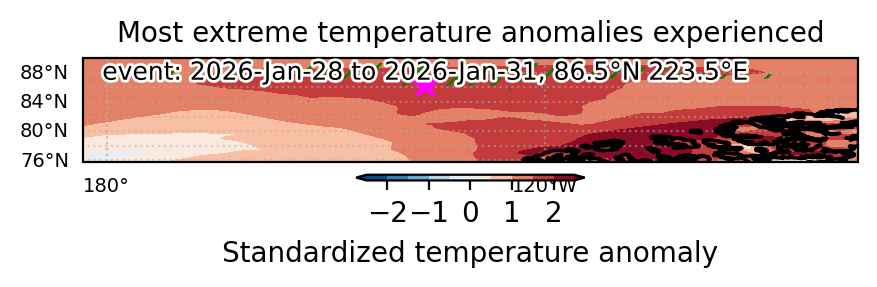
Fig. 1: Map of most extreme temperature anomalies (standardized) experienced during the event. The purple star indicates the center of the extreme event. Green hatching illustrates all areas under the effect of extremes at some time during the event.


Fig. 2: Evolution of temperature at the center of the event. The climatological percentile distribution is illustrated with color shadings.


Fig. 3: Maps illustrating the evolution of standardized temperature anomalies during the event.

Event ID: Heat_wave_2026-Jan-28_to_2026-Jan-31_223.5_86.5

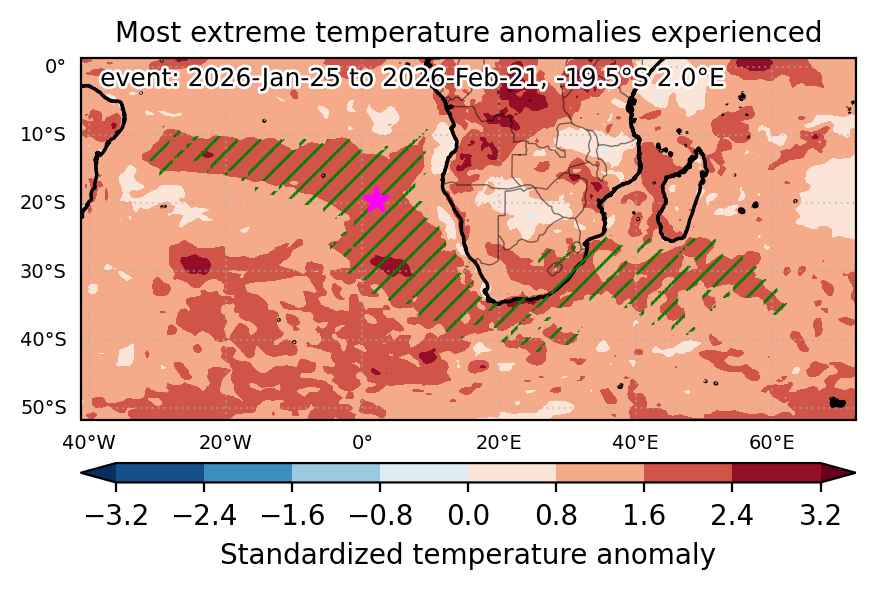
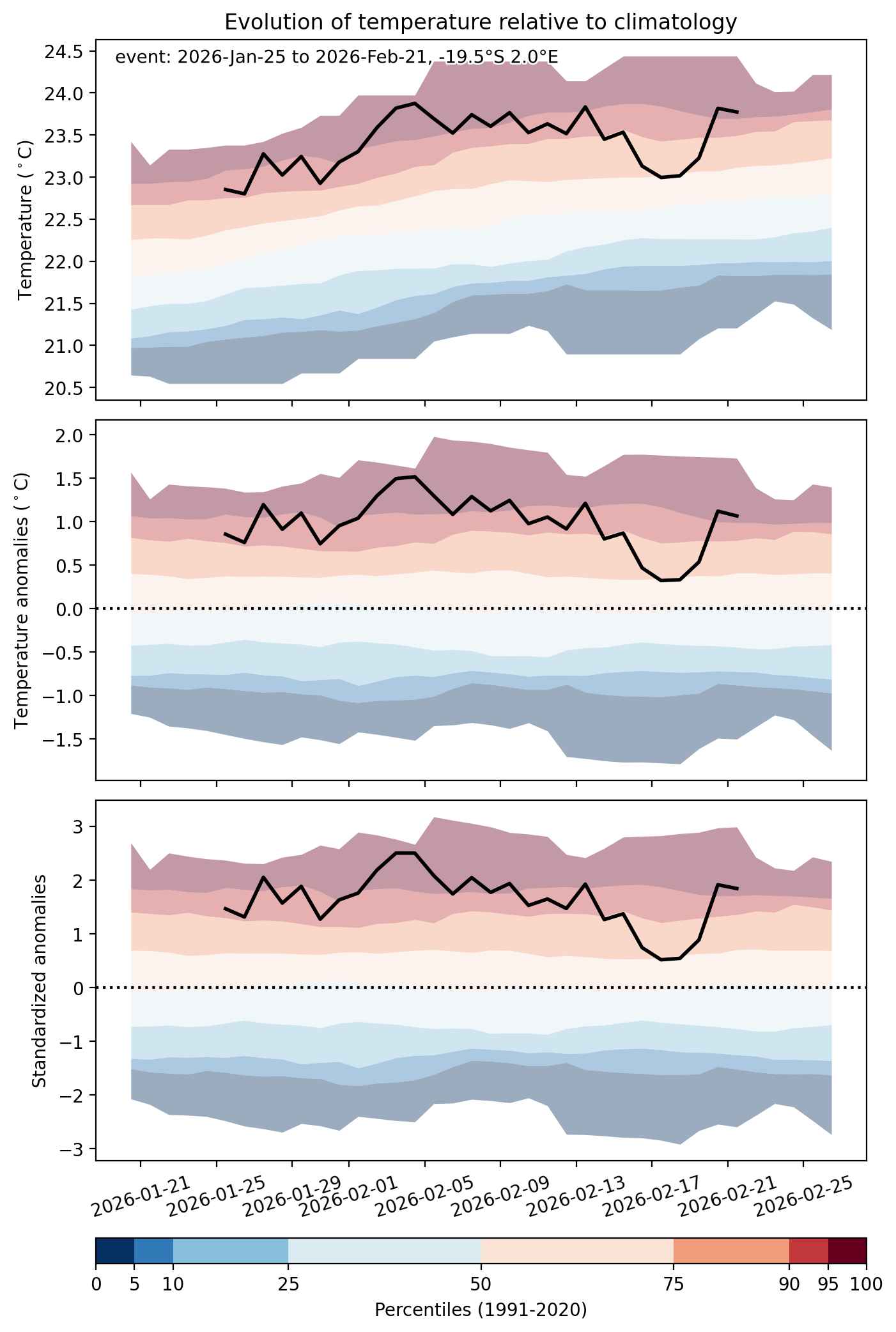
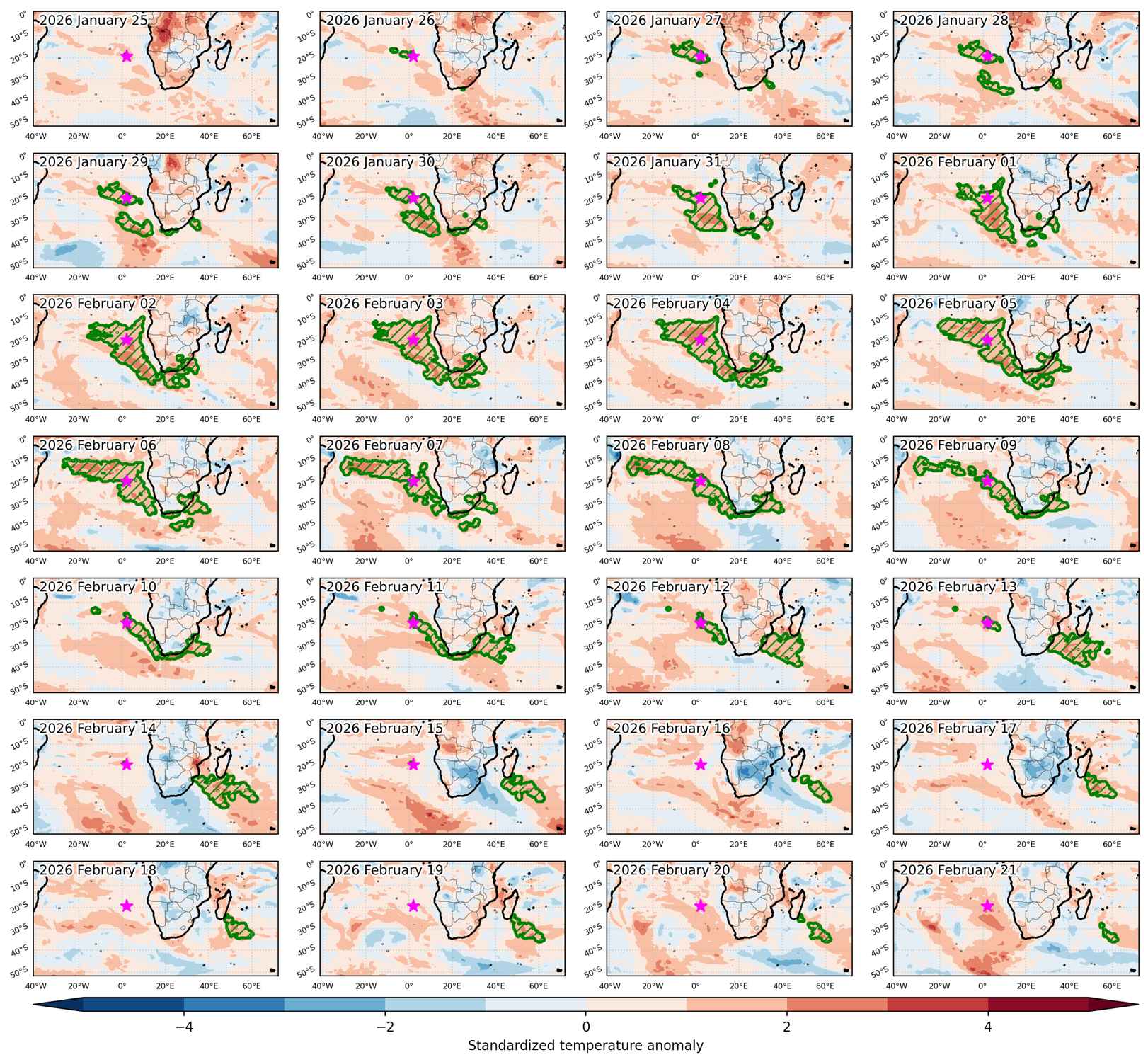
Heat wave occuring from January 25 2026 to February 21 2026 at -19.5°S 2.0°E

Download data: JSON

Event type: Heat wave

Countries affected (identified with ArcGIS Online; provided only for geographical reference):

  • Eswatini
  • Lesotho
  • Mozambique
  • South Africa

Duration: 28 days

Time span: January 25 2026 to February 21 2026

Statistics over entire affected area:

  • Mean temperature anomaly: 1.7 °C
  • Mean temperature: 23.6 °C
  • Maximum temperature anomaly: 5.6 °C
  • Maximum temperature: 30.3 °C

Event center: -19.5°S 2.0°E

Area affected: 9172668 km$^2$


Fig. 1: Map of most extreme temperature anomalies (standardized) experienced during the event. The purple star indicates the center of the extreme event. Green hatching illustrates all areas under the effect of extremes at some time during the event.


Fig. 2: Evolution of temperature at the center of the event. The climatological percentile distribution is illustrated with color shadings.


Fig. 3: Maps illustrating the evolution of standardized temperature anomalies during the event.

Event ID: Heat_wave_2026-Jan-25_to_2026-Feb-21_2.0_-19.5

Cold spell occuring from January 25 2026 to January 27 2026 at 3.5°N 303.5°E

Download data: JSON

Event type: Cold spell

Countries affected (identified with ArcGIS Online; provided only for geographical reference):

  • Brazil
  • Guyana
  • Suriname

Duration: 3 days

Time span: January 25 2026 to January 27 2026

Statistics over entire affected area:

  • Mean temperature anomaly: -1.7 °C
  • Mean temperature: 23.3 °C
  • Minimum temperature anomaly: -2.4 °C
  • Minimum temperature: 22.3 °C

Event center: 3.5°N 303.5°E

Area affected: 67951 km$^2$


Fig. 1: Map of most extreme temperature anomalies (standardized) experienced during the event. The purple star indicates the center of the extreme event. Green hatching illustrates all areas under the effect of extremes at some time during the event.


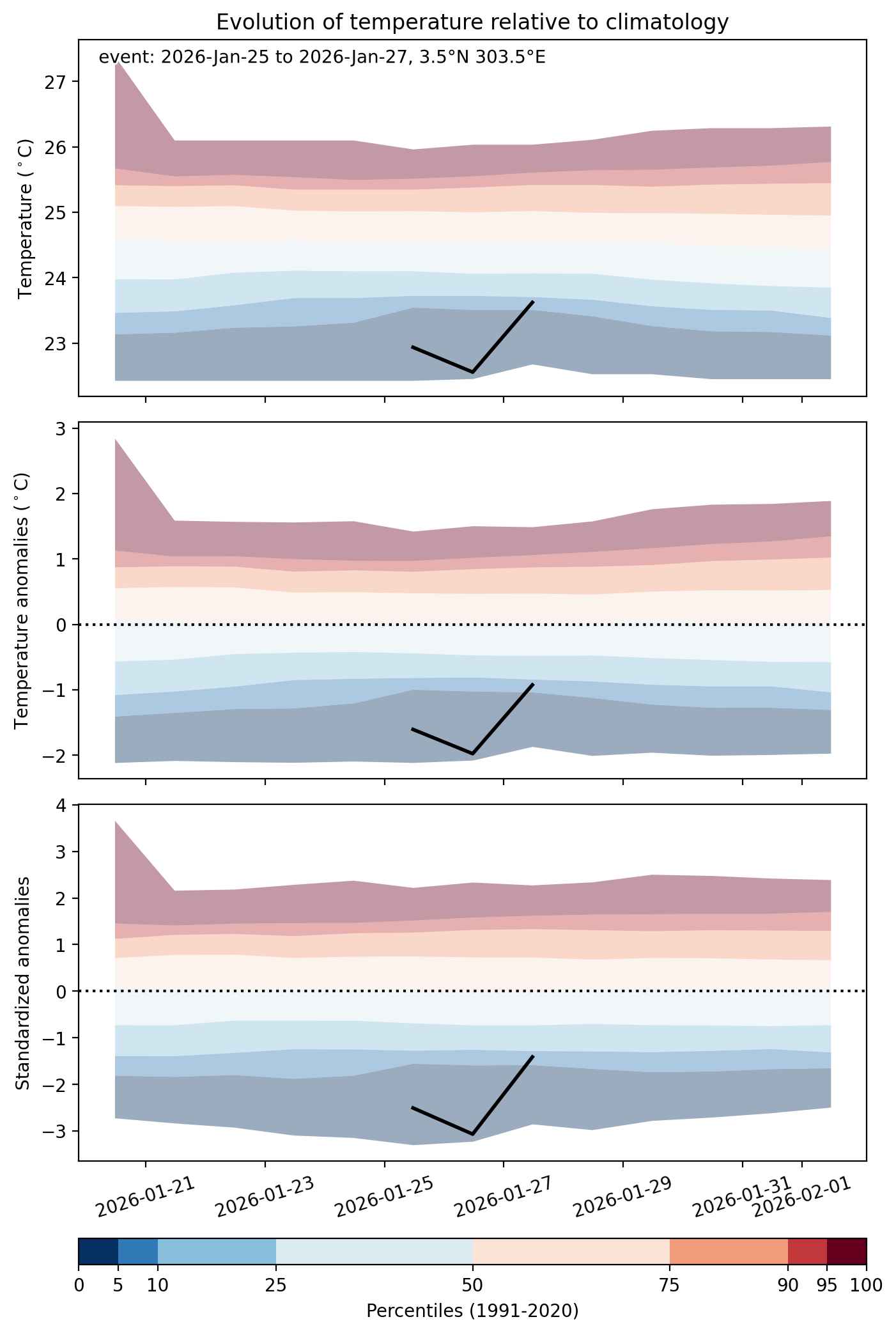
Fig. 2: Evolution of temperature at the center of the event. The climatological percentile distribution is illustrated with color shadings.


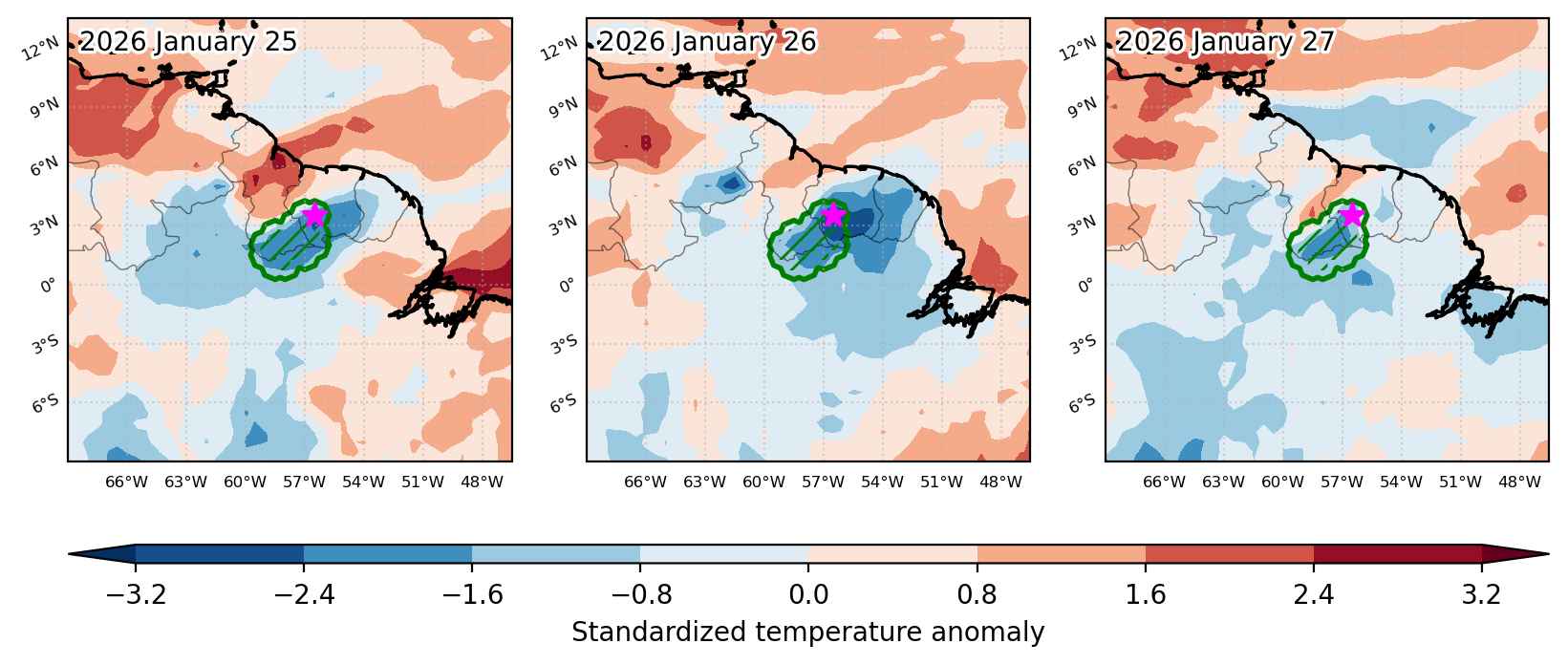
Fig. 3: Maps illustrating the evolution of standardized temperature anomalies during the event.

Event ID: Cold_spell_2026-Jan-25_to_2026-Jan-27_303.5_3.5

Heat wave occuring from January 24 2026 to February 07 2026 at 43.0°N 79.5°E

Download data: JSON

Event type: Heat wave

Countries affected (identified with ArcGIS Online; provided only for geographical reference):

  • China
  • Kazakhstan
  • Kyrgyzstan
  • Tajikistan
  • Turkmenistan
  • Uzbekistan

Duration: 15 days

Time span: January 24 2026 to February 07 2026

Statistics over entire affected area:

  • Mean temperature anomaly: 8.5 °C
  • Mean temperature: 4.8 °C
  • Maximum temperature anomaly: 14.2 °C
  • Maximum temperature: 18.0 °C

Event center: 43.0°N 79.5°E

Area affected: 503177 km$^2$


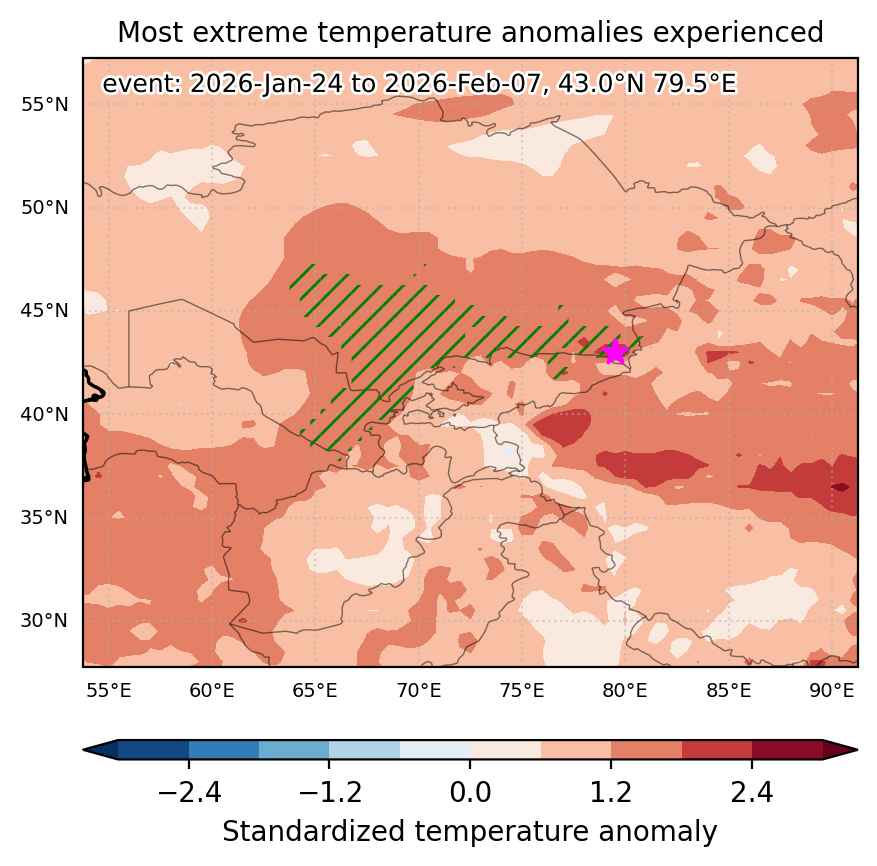
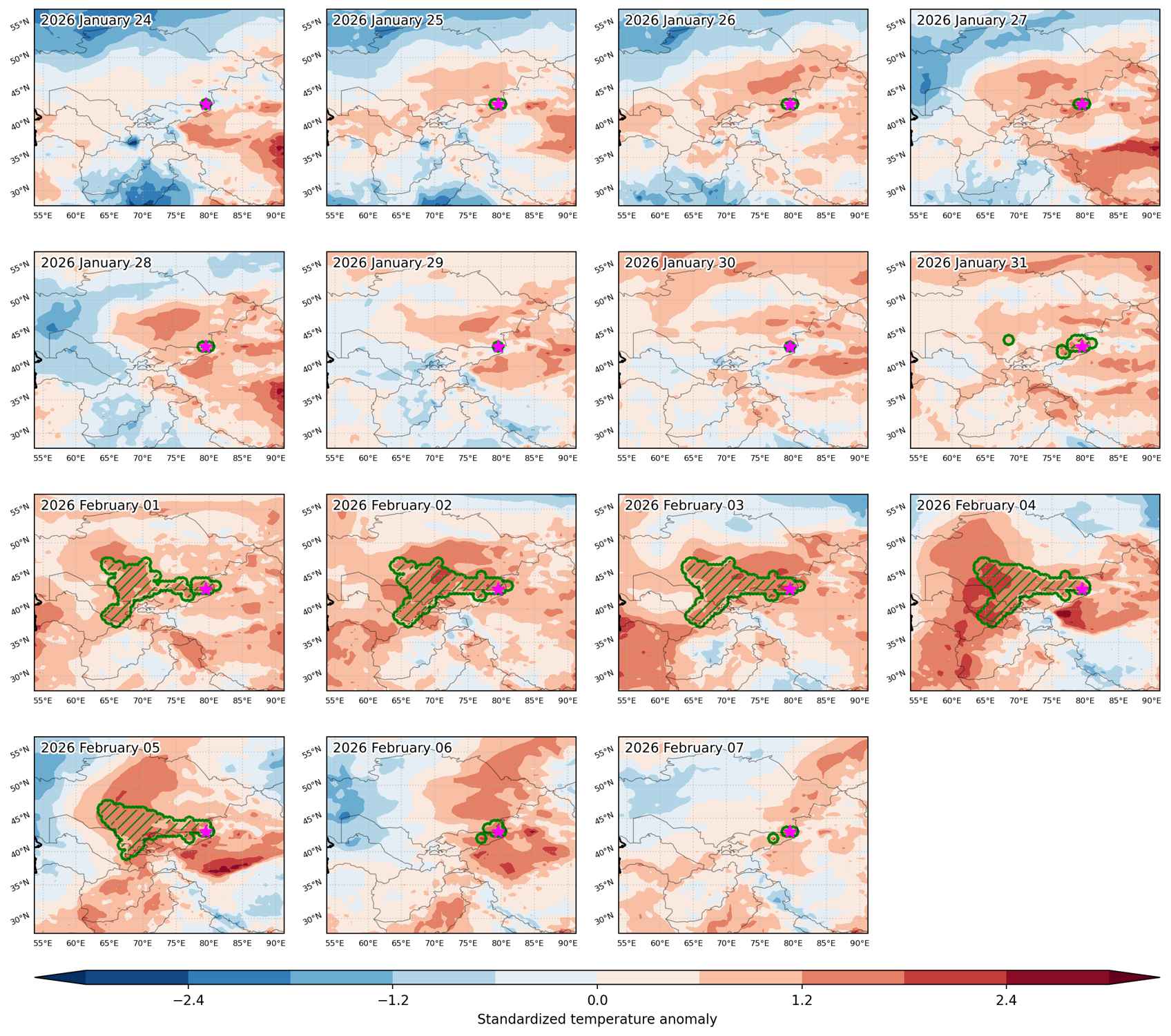
Fig. 1: Map of most extreme temperature anomalies (standardized) experienced during the event. The purple star indicates the center of the extreme event. Green hatching illustrates all areas under the effect of extremes at some time during the event.


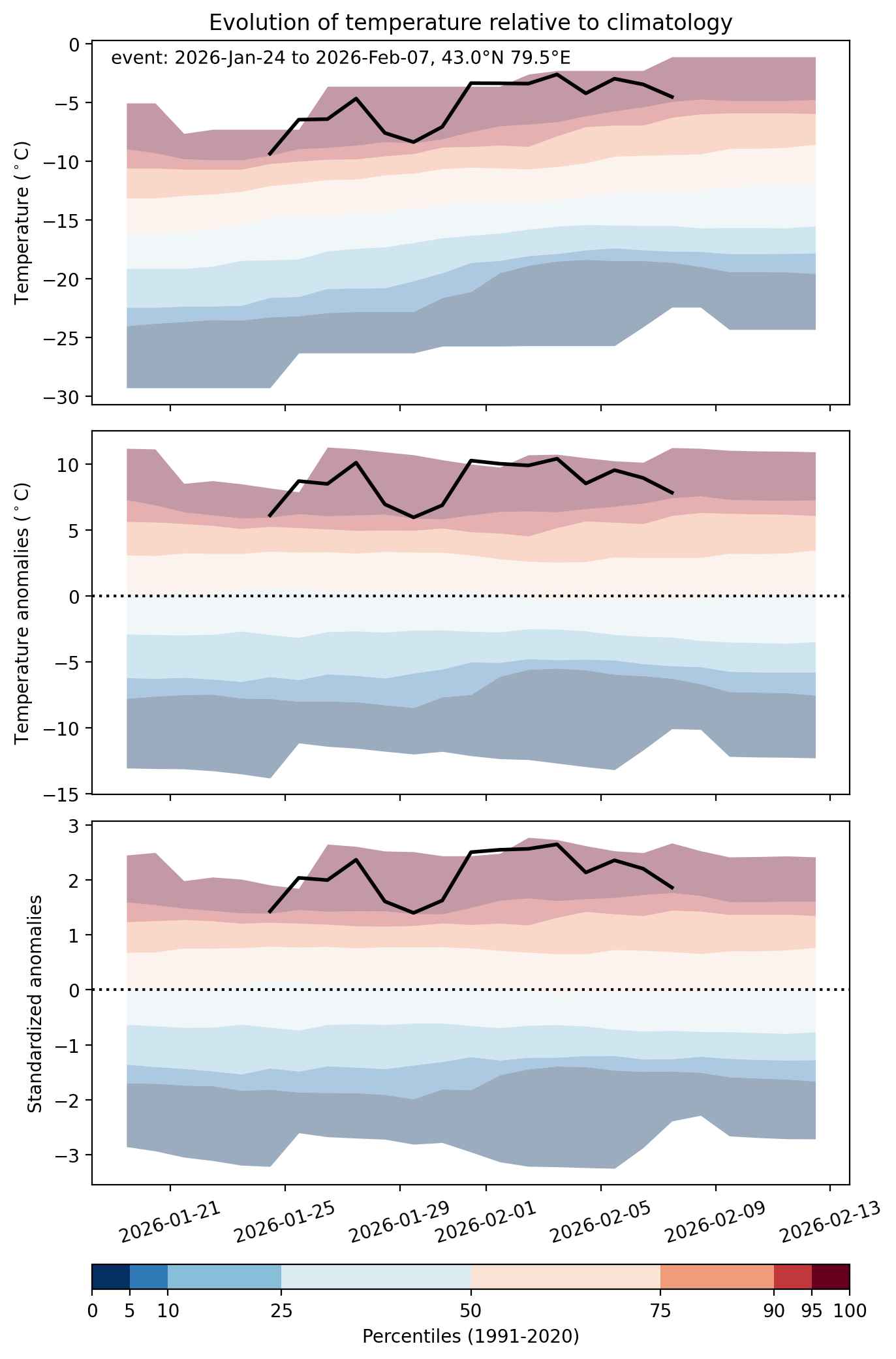
Fig. 2: Evolution of temperature at the center of the event. The climatological percentile distribution is illustrated with color shadings.


Fig. 3: Maps illustrating the evolution of standardized temperature anomalies during the event.

Event ID: Heat_wave_2026-Jan-24_to_2026-Feb-07_79.5_43.0

Heat wave occuring from January 24 2026 to January 30 2026 at -30.5°S 301.0°E

Download data: JSON

Event type: Heat wave

Countries affected (identified with ArcGIS Online; provided only for geographical reference):

  • Argentina
  • Brazil
  • Paraguay
  • Uruguay

Duration: 7 days

Time span: January 24 2026 to January 30 2026

Statistics over entire affected area:

  • Mean temperature anomaly: 3.5 °C
  • Mean temperature: 29.1 °C
  • Maximum temperature anomaly: 5.2 °C
  • Maximum temperature: 31.1 °C

Event center: -30.5°S 301.0°E

Area affected: 124315 km$^2$


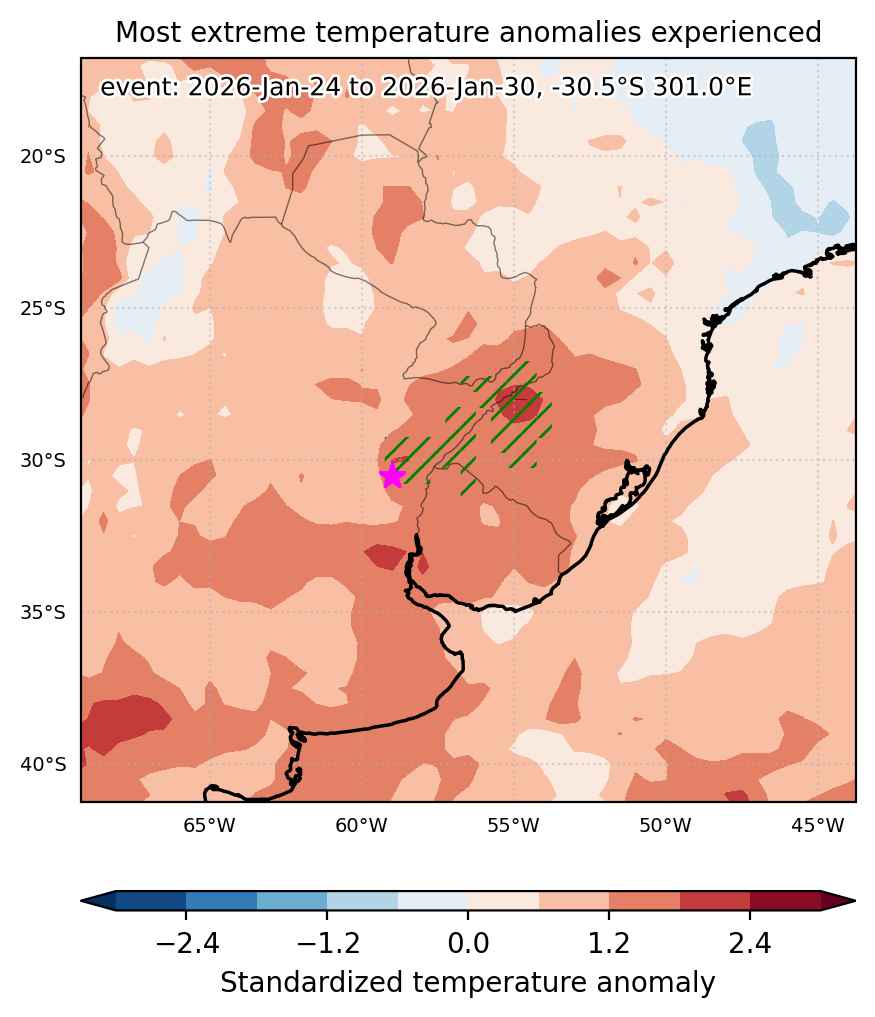
Fig. 1: Map of most extreme temperature anomalies (standardized) experienced during the event. The purple star indicates the center of the extreme event. Green hatching illustrates all areas under the effect of extremes at some time during the event.


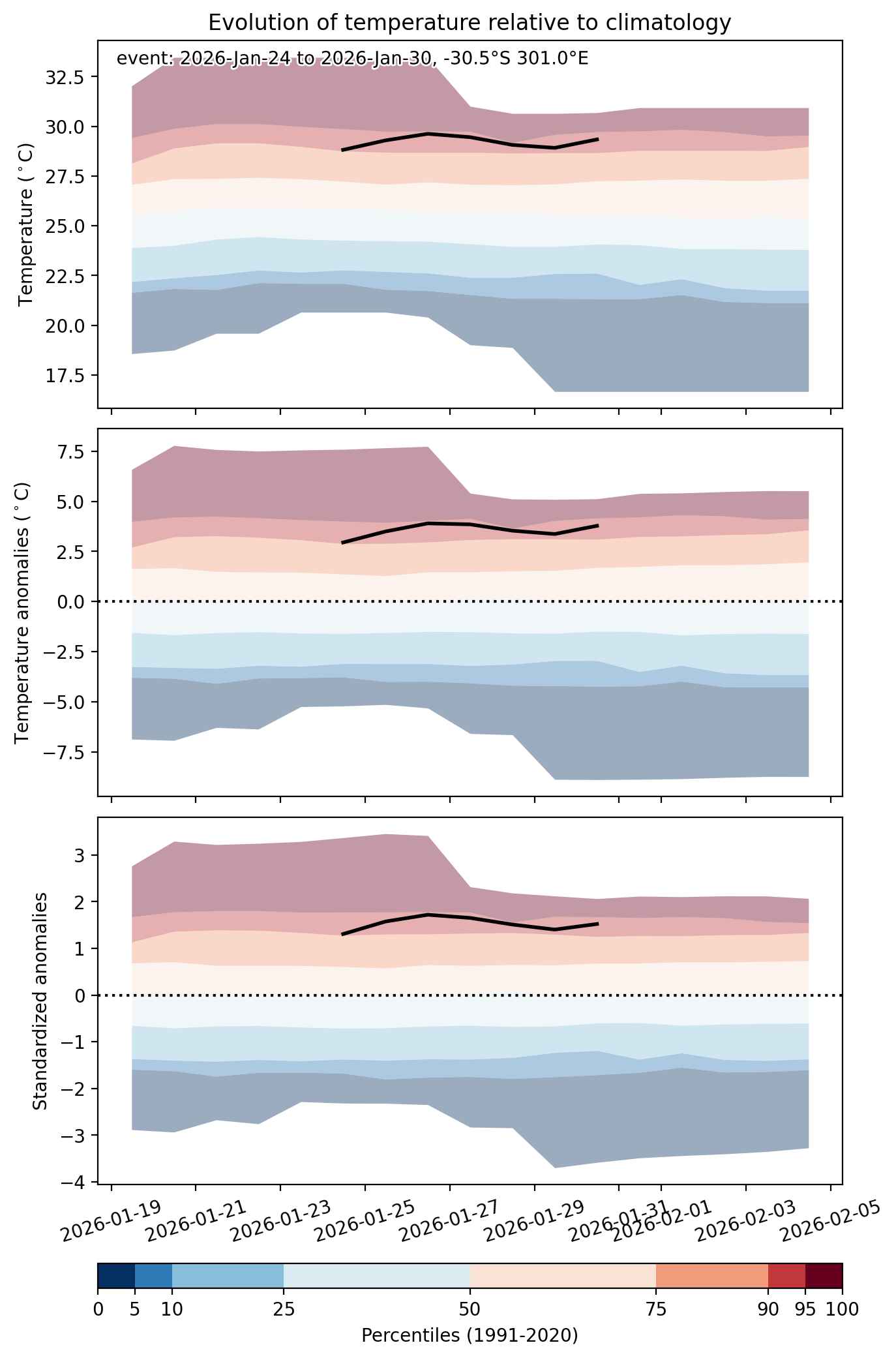
Fig. 2: Evolution of temperature at the center of the event. The climatological percentile distribution is illustrated with color shadings.


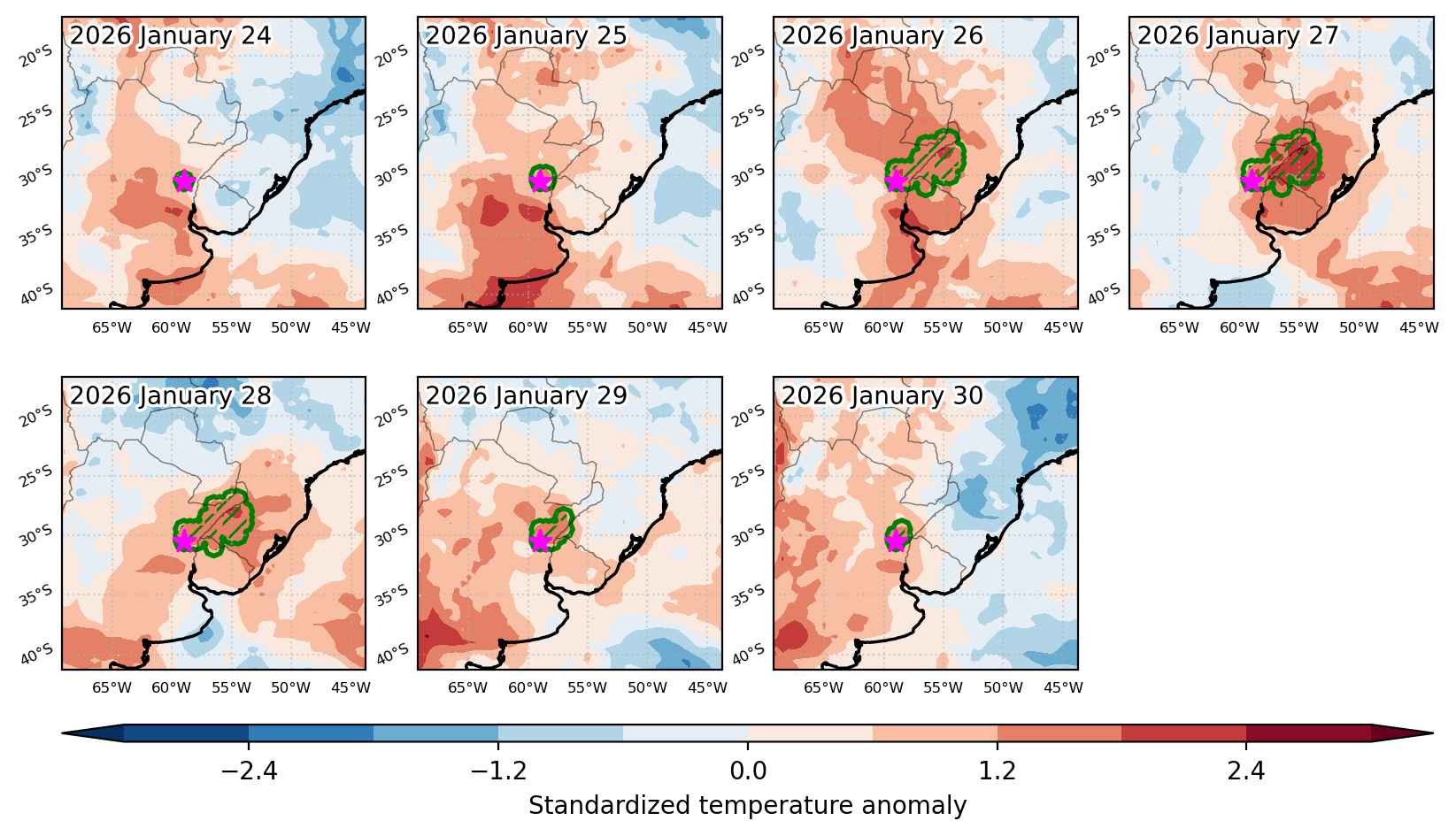
Fig. 3: Maps illustrating the evolution of standardized temperature anomalies during the event.

Event ID: Heat_wave_2026-Jan-24_to_2026-Jan-30_301.0_-30.5

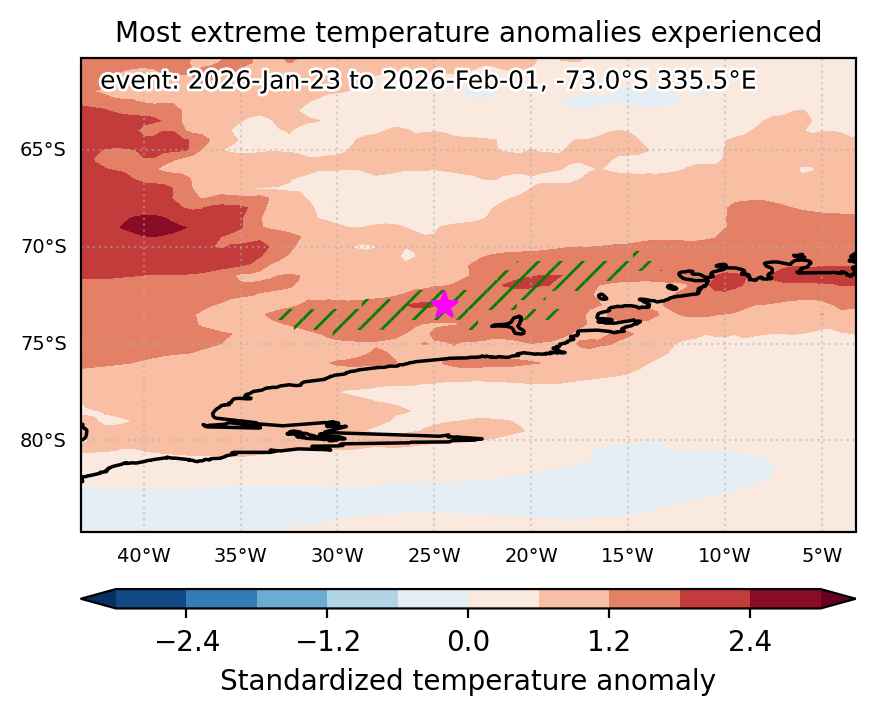
Heat wave occuring from January 23 2026 to February 01 2026 at -73.0°S 335.5°E

Download data: JSON

Event type: Heat wave

Countries affected (identified with ArcGIS Online; provided only for geographical reference):

  • Antarctica

Duration: 10 days

Time span: January 23 2026 to February 01 2026

Statistics over entire affected area:

  • Mean temperature anomaly: 1.6 °C
  • Mean temperature: -0.3 °C
  • Maximum temperature anomaly: 4.9 °C
  • Maximum temperature: 0.6 °C

Event center: -73.0°S 335.5°E

Area affected: 100811 km$^2$


Fig. 1: Map of most extreme temperature anomalies (standardized) experienced during the event. The purple star indicates the center of the extreme event. Green hatching illustrates all areas under the effect of extremes at some time during the event.


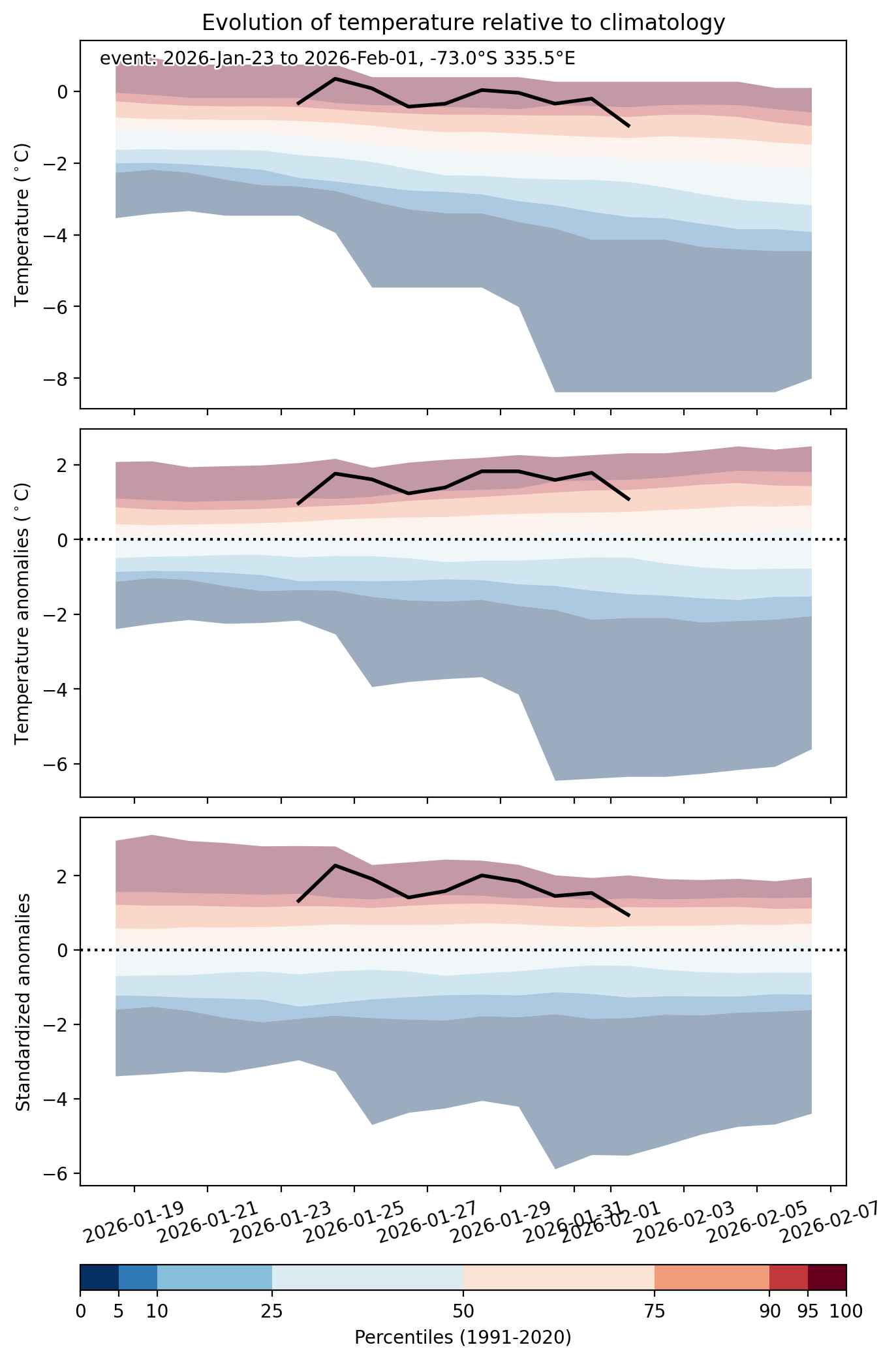
Fig. 2: Evolution of temperature at the center of the event. The climatological percentile distribution is illustrated with color shadings.


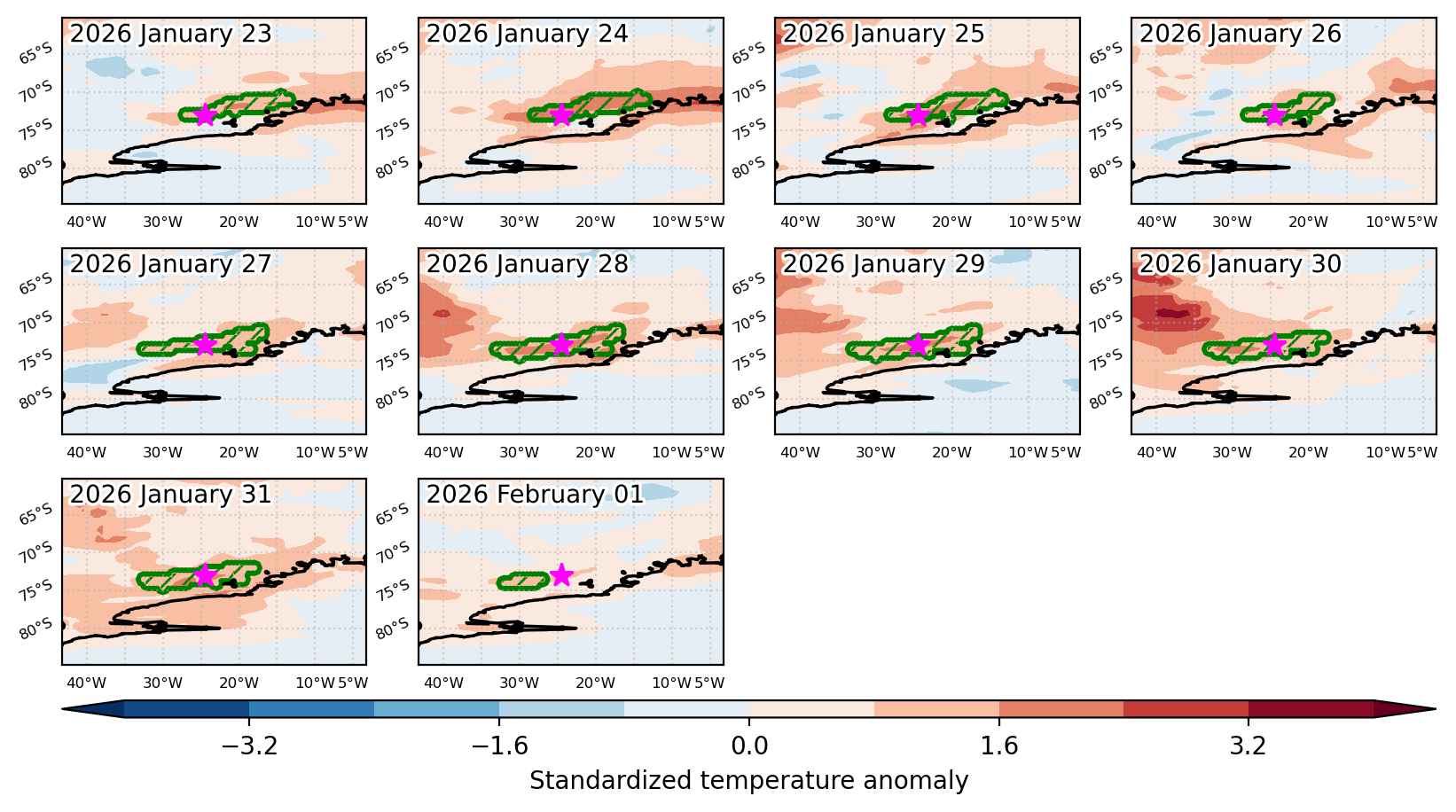
Fig. 3: Maps illustrating the evolution of standardized temperature anomalies during the event.

Event ID: Heat_wave_2026-Jan-23_to_2026-Feb-01_335.5_-73.0

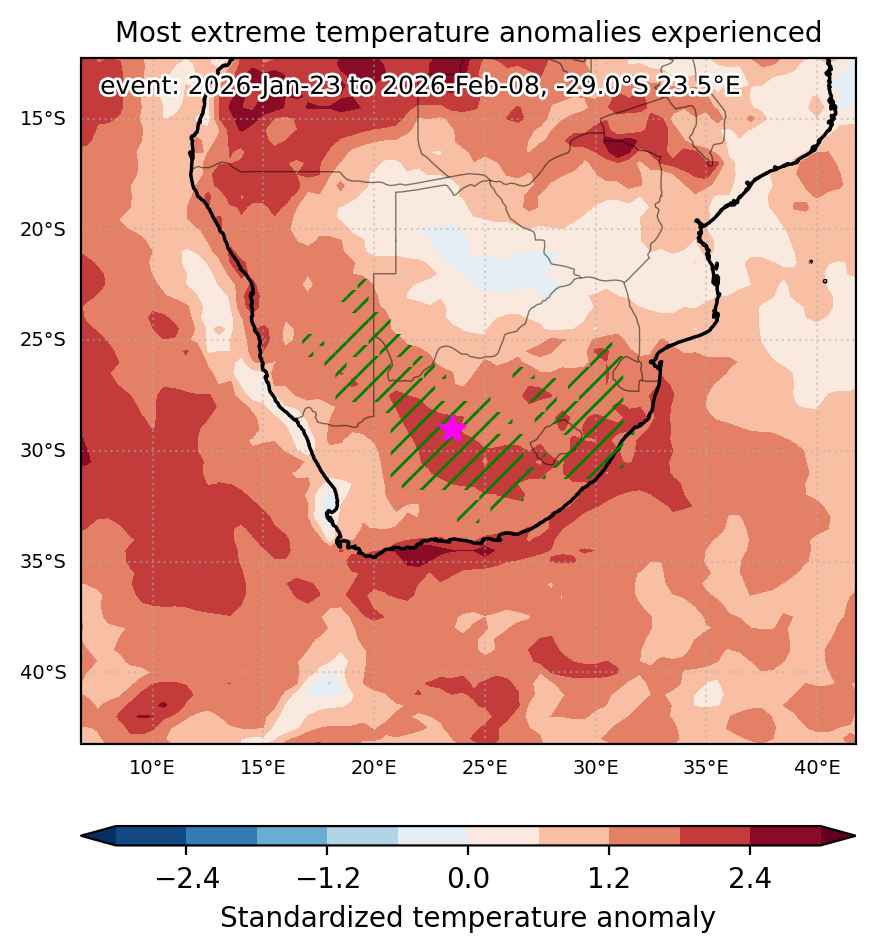
Heat wave occuring from January 23 2026 to February 08 2026 at -29.0°S 23.5°E

Download data: JSON

Event type: Heat wave

Countries affected (identified with ArcGIS Online; provided only for geographical reference):

  • Botswana
  • Eswatini
  • Lesotho
  • Namibia
  • South Africa

Duration: 17 days

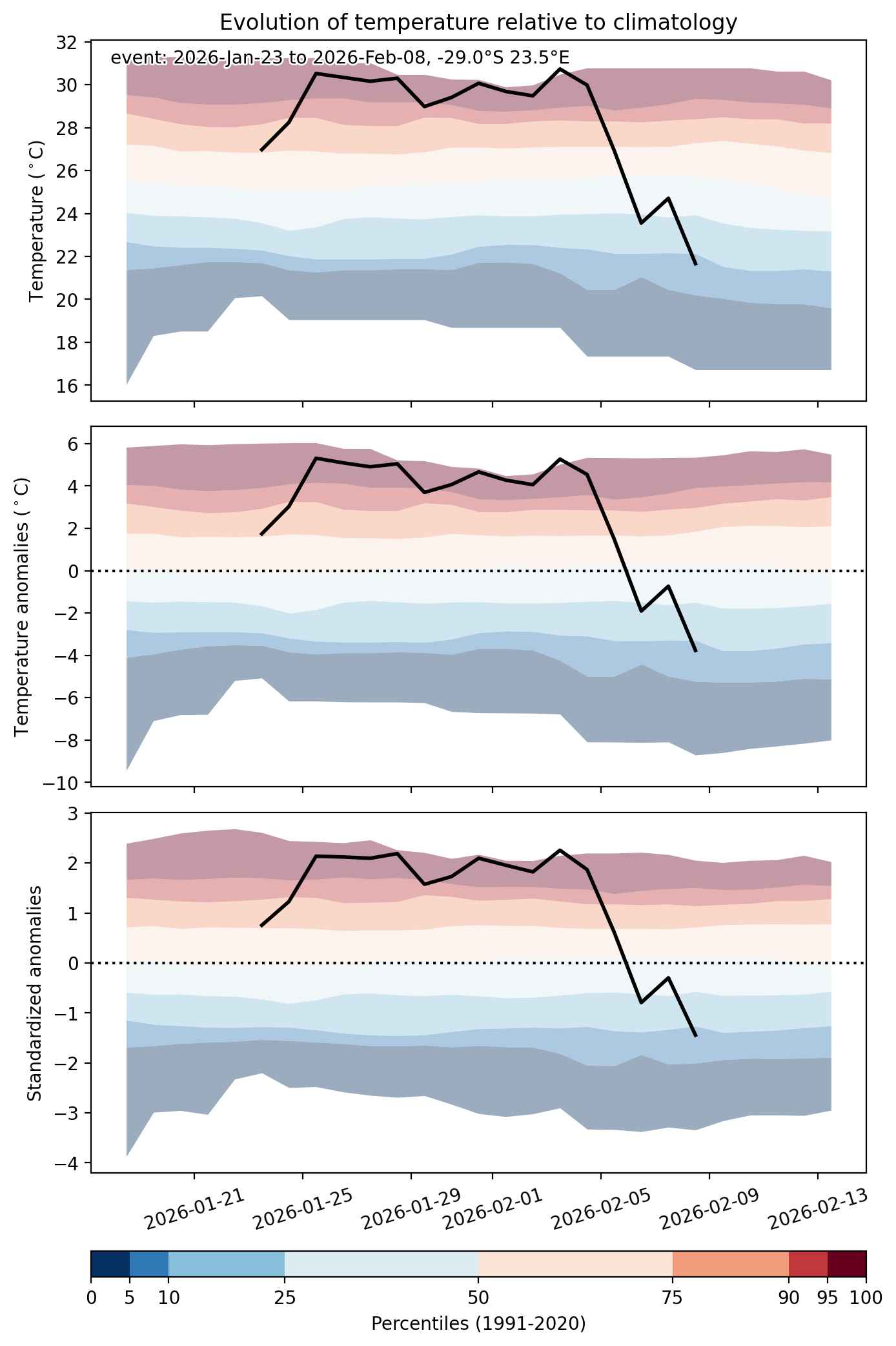
Time span: January 23 2026 to February 08 2026

Statistics over entire affected area:

  • Mean temperature anomaly: 4.0 °C
  • Mean temperature: 28.1 °C
  • Maximum temperature anomaly: 9.1 °C
  • Maximum temperature: 34.2 °C

Event center: -29.0°S 23.5°E

Area affected: 638459 km$^2$


Fig. 1: Map of most extreme temperature anomalies (standardized) experienced during the event. The purple star indicates the center of the extreme event. Green hatching illustrates all areas under the effect of extremes at some time during the event.


Fig. 2: Evolution of temperature at the center of the event. The climatological percentile distribution is illustrated with color shadings.


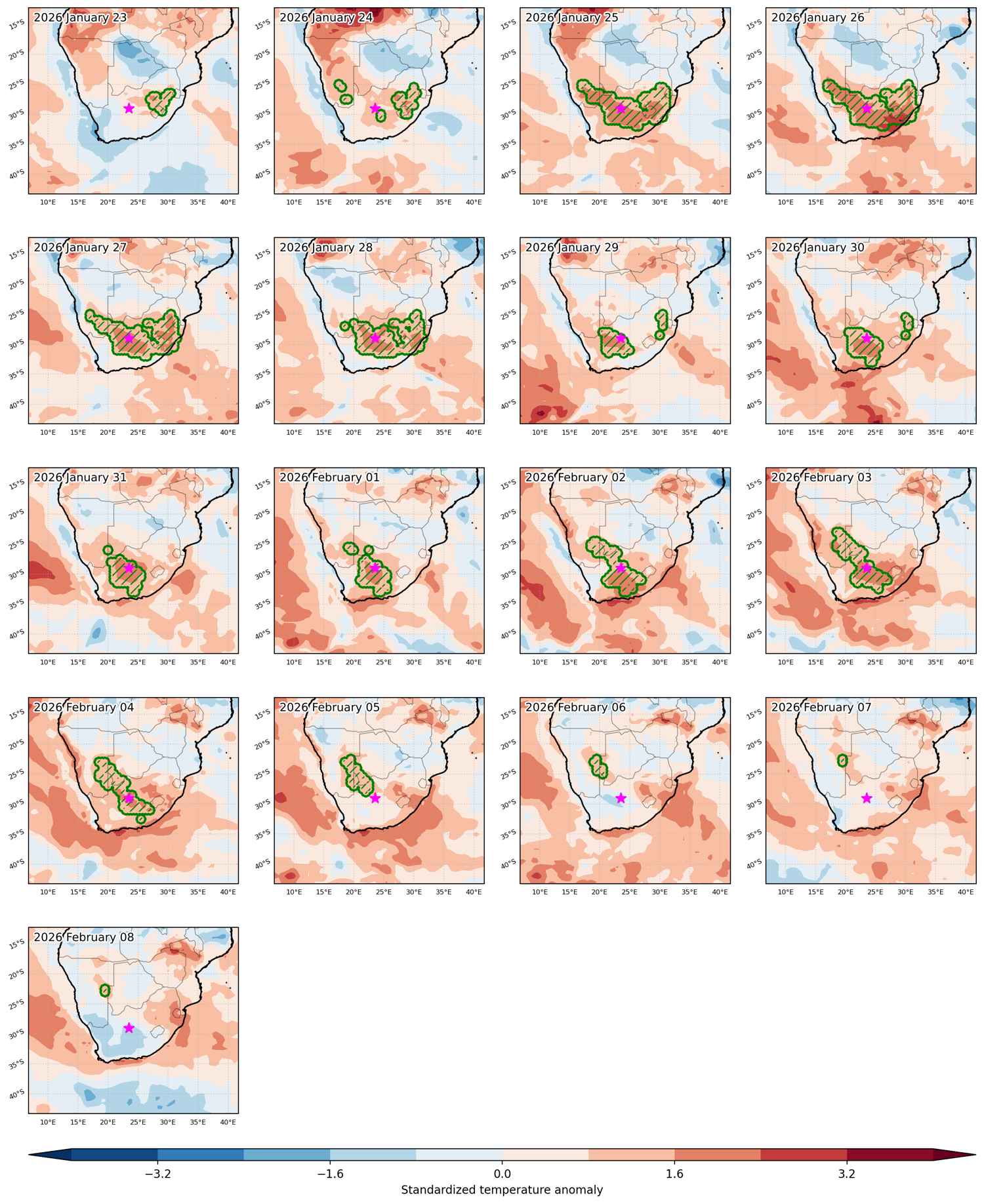
Fig. 3: Maps illustrating the evolution of standardized temperature anomalies during the event.

Event ID: Heat_wave_2026-Jan-23_to_2026-Feb-08_23.5_-29.0

Cold spell occuring from January 23 2026 to February 07 2026 at 56.5°N 20.5°E

Download data: JSON

Event type: Cold spell

Countries affected (identified with ArcGIS Online; provided only for geographical reference):

  • Belarus
  • Denmark
  • Estonia
  • Finland
  • Germany
  • Kazakhstan
  • Latvia
  • Lithuania
  • Netherlands
  • Norway
  • Poland
  • Russian Federation
  • Sweden
  • Ukraine

Duration: 16 days

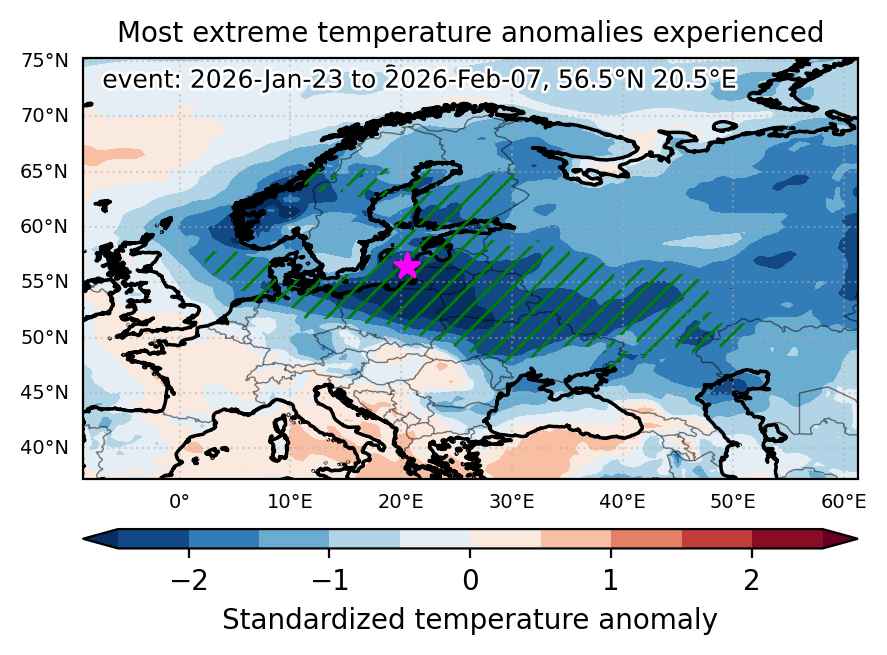
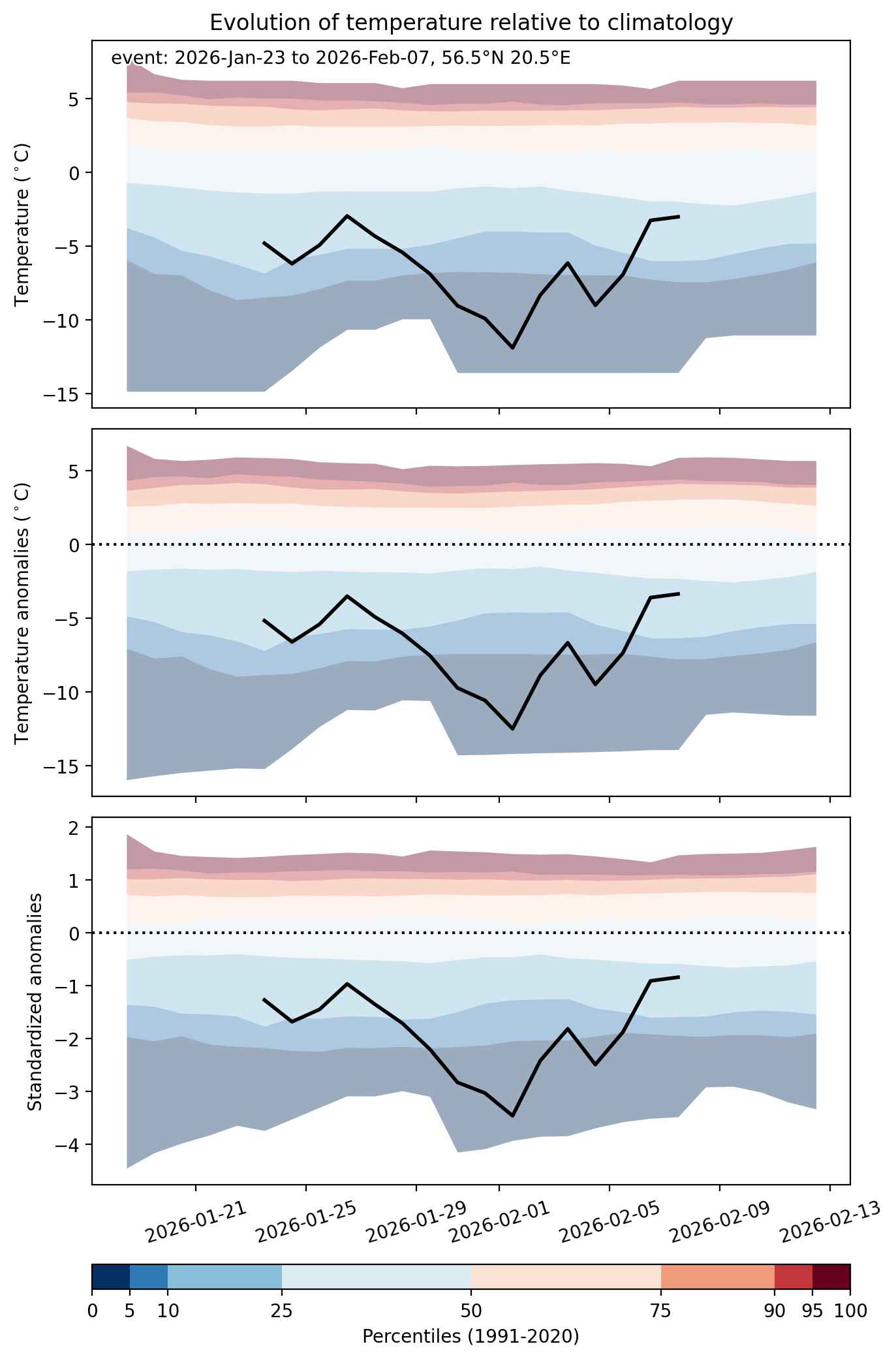
Time span: January 23 2026 to February 07 2026

Statistics over entire affected area:

  • Mean temperature anomaly: -11.3 °C
  • Mean temperature: -15.5 °C
  • Minimum temperature anomaly: -19.8 °C
  • Minimum temperature: -28.0 °C

Event center: 56.5°N 20.5°E

Area affected: 2610392 km$^2$


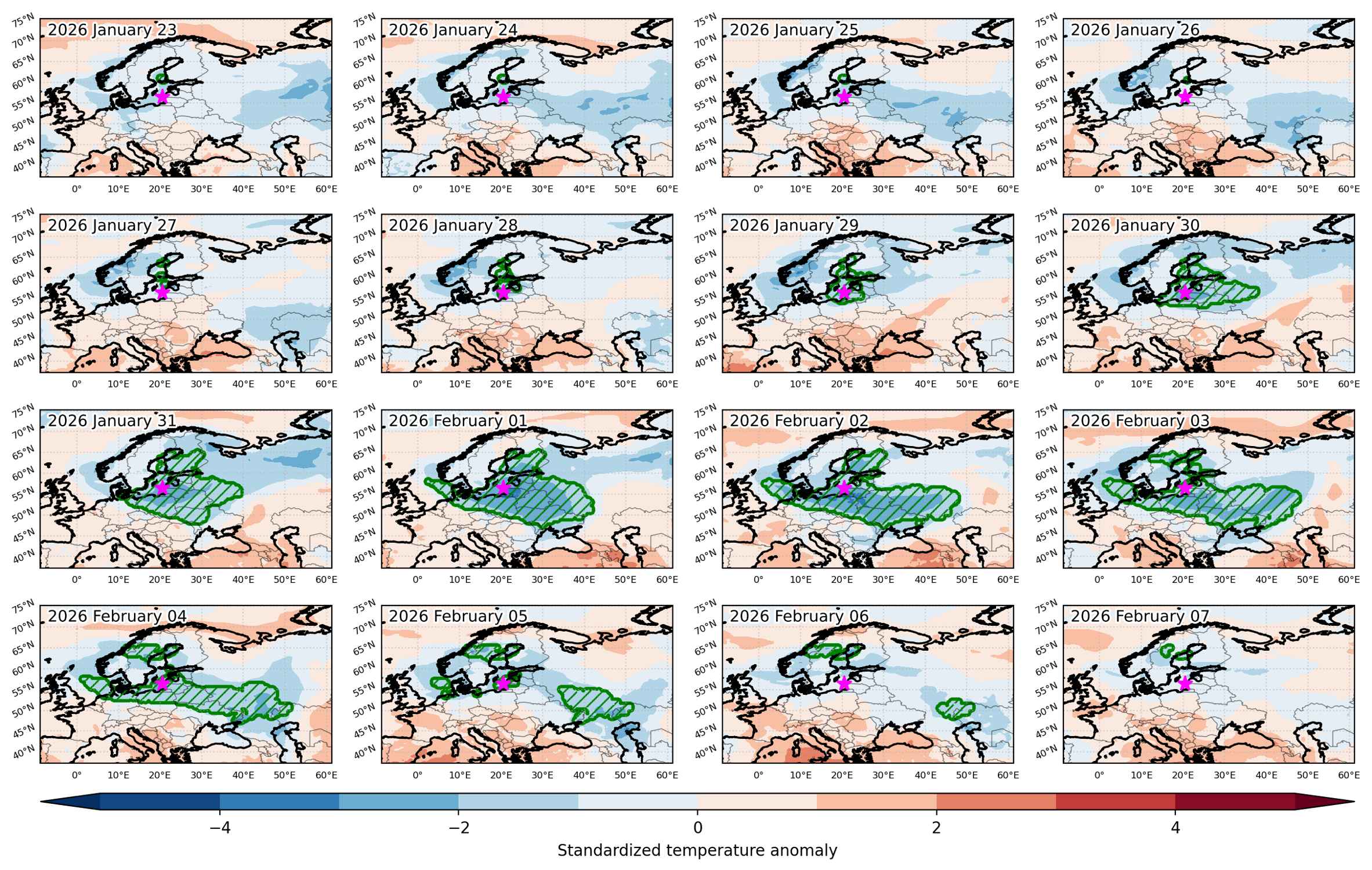
Fig. 1: Map of most extreme temperature anomalies (standardized) experienced during the event. The purple star indicates the center of the extreme event. Green hatching illustrates all areas under the effect of extremes at some time during the event.


Fig. 2: Evolution of temperature at the center of the event. The climatological percentile distribution is illustrated with color shadings.


Fig. 3: Maps illustrating the evolution of standardized temperature anomalies during the event.

Event ID: Cold_spell_2026-Jan-23_to_2026-Feb-07_20.5_56.5

Cold spell occuring from January 23 2026 to February 01 2026 at -84.5°S 206.0°E

Download data: JSON

Event type: Cold spell

Countries affected (identified with ArcGIS Online; provided only for geographical reference):

  • Antarctica

Duration: 10 days

Time span: January 23 2026 to February 01 2026

Statistics over entire affected area:

  • Mean temperature anomaly: -5.3 °C
  • Mean temperature: -16.2 °C
  • Minimum temperature anomaly: -9.0 °C
  • Minimum temperature: -19.7 °C

Event center: -84.5°S 206.0°E

Area affected: 243223 km$^2$


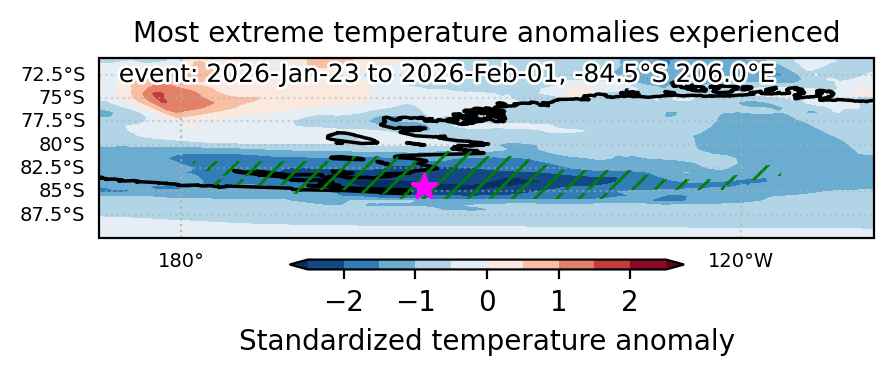
Fig. 1: Map of most extreme temperature anomalies (standardized) experienced during the event. The purple star indicates the center of the extreme event. Green hatching illustrates all areas under the effect of extremes at some time during the event.


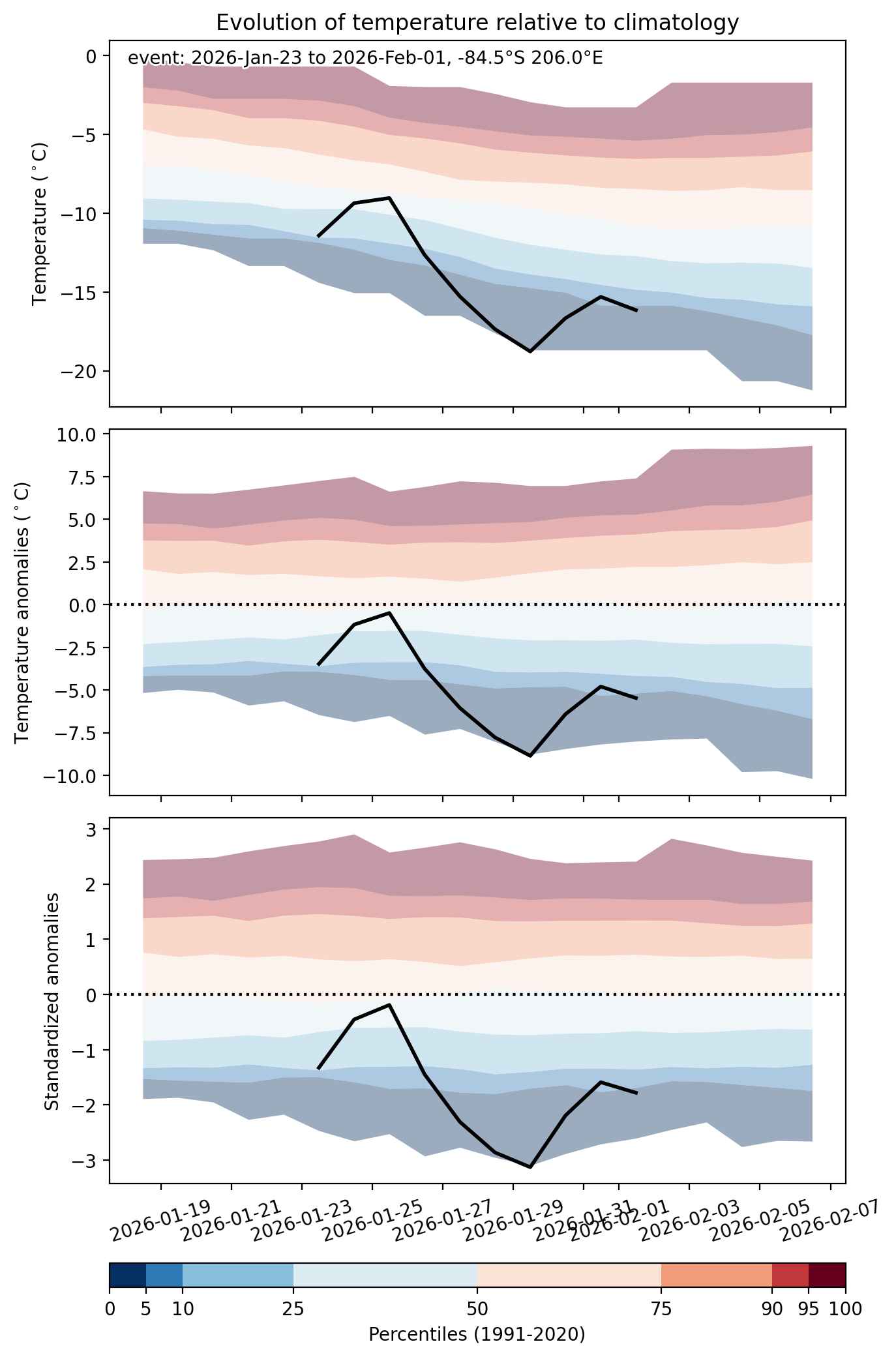
Fig. 2: Evolution of temperature at the center of the event. The climatological percentile distribution is illustrated with color shadings.


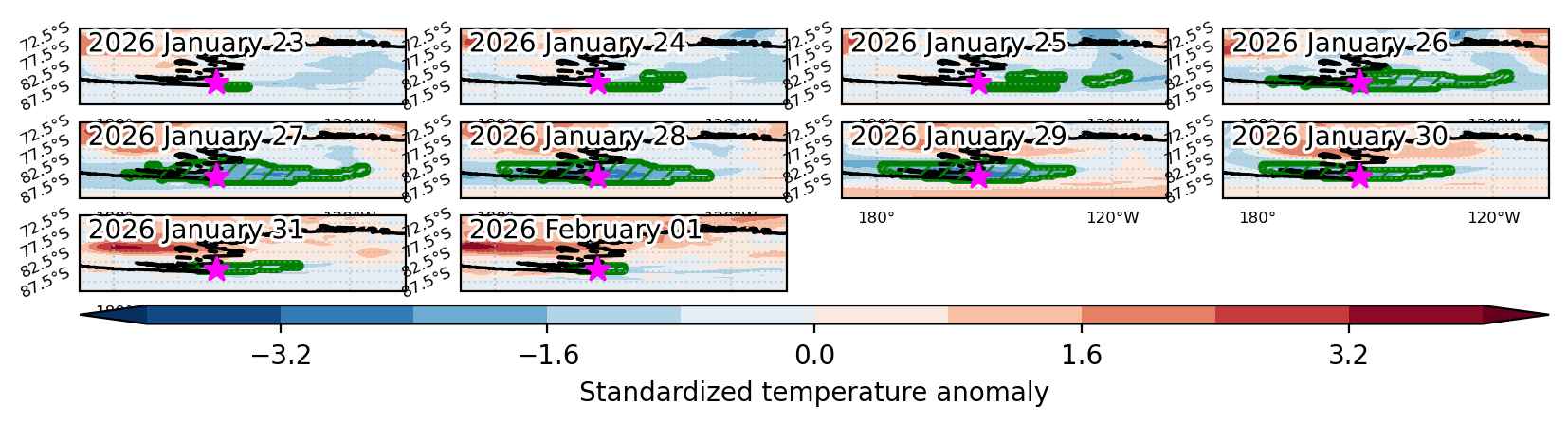
Fig. 3: Maps illustrating the evolution of standardized temperature anomalies during the event.

Event ID: Cold_spell_2026-Jan-23_to_2026-Feb-01_206.0_-84.5