Cold spell occuring from January 23 2026 to January 30 2026 at -28.0°S 115.0°E

Download data: JSON

Event type: Cold spell

Countries affected (identified with ArcGIS Online; provided only for geographical reference):

  • Australia

Duration: 8 days

Time span: January 23 2026 to January 30 2026

Statistics over entire affected area:

  • Mean temperature anomaly: -5.5 °C
  • Mean temperature: 23.9 °C
  • Minimum temperature anomaly: -8.3 °C
  • Minimum temperature: 17.6 °C

Event center: -28.0°S 115.0°E

Area affected: 160284 km$^2$
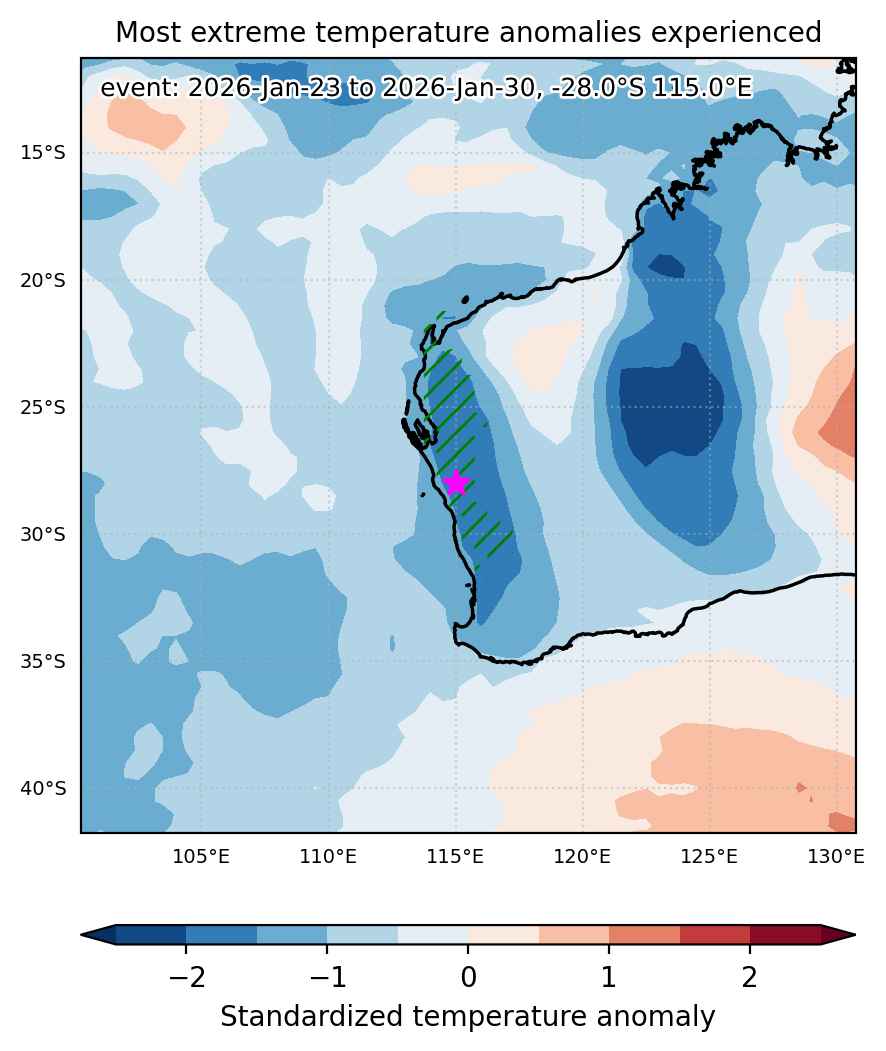

Fig. 1: Map of most extreme temperature anomalies (standardized) experienced during the event. The purple star indicates the center of the extreme event. Green hatching illustrates all areas under the effect of extremes at some time during the event.
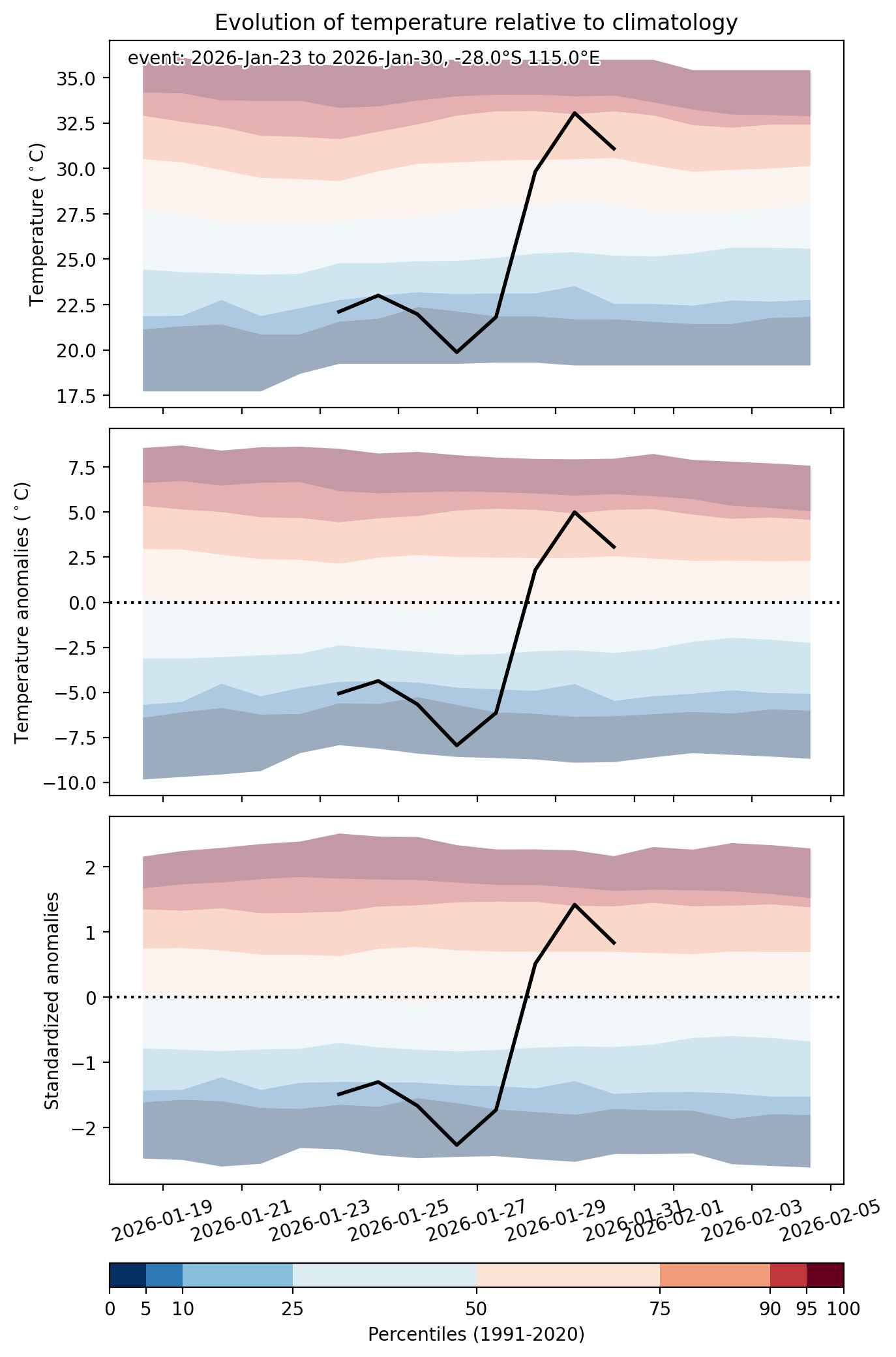


Fig. 2: Evolution of temperature at the center of the event. The climatological percentile distribution is illustrated with color shadings.
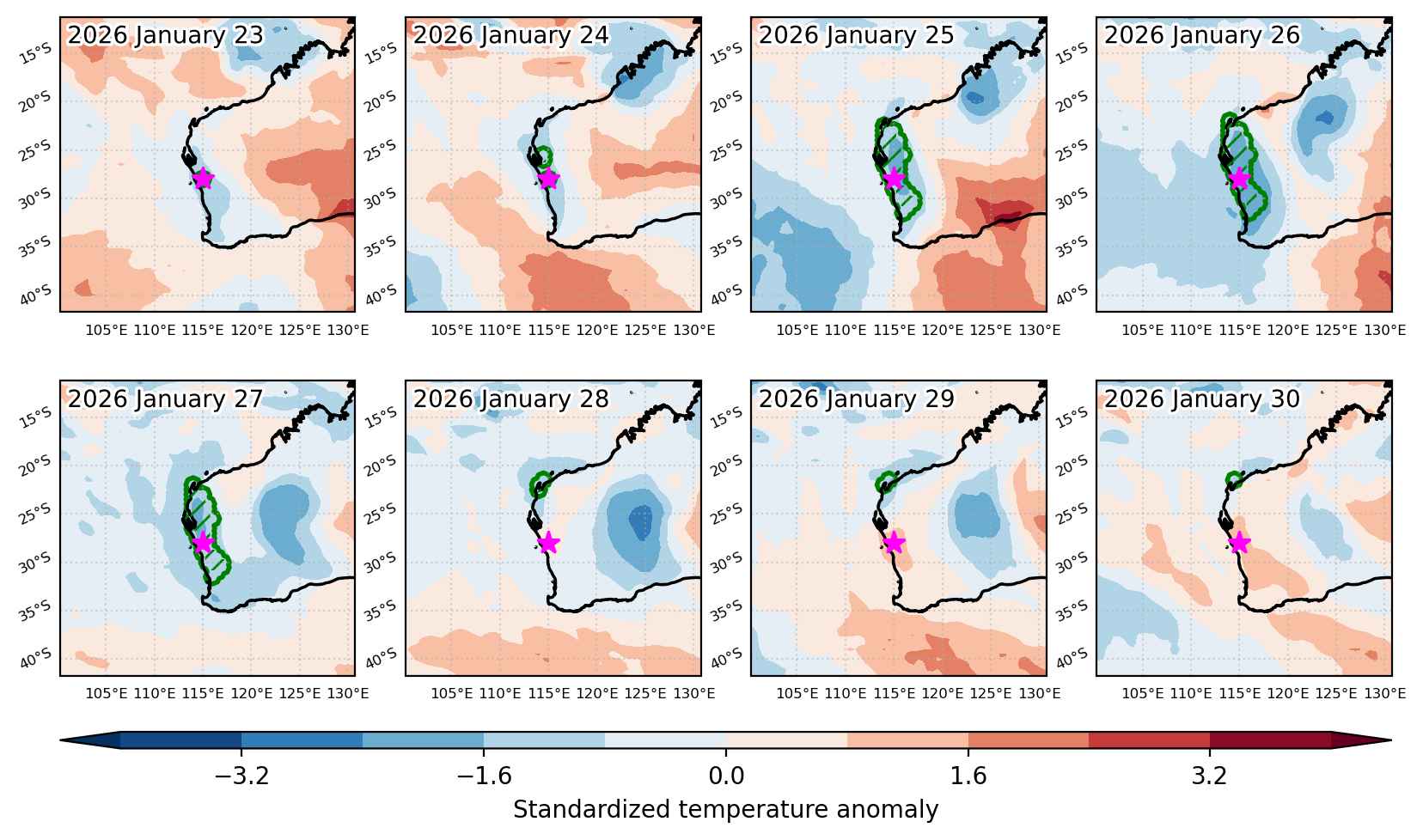


Fig. 3: Maps illustrating the evolution of standardized temperature anomalies during the event.

Event ID: Cold_spell_2026-Jan-23_to_2026-Jan-30_115.0_-28.0
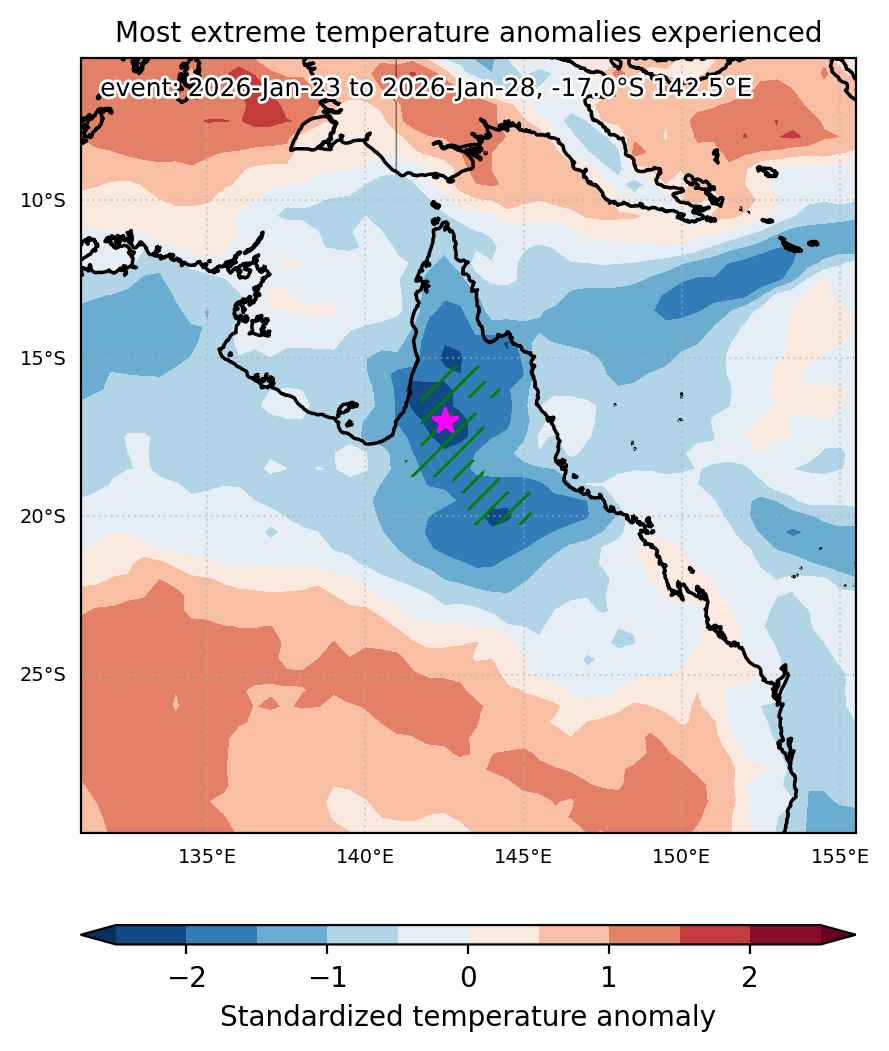
Cold spell occuring from January 23 2026 to January 28 2026 at -17.0°S 142.5°E

Download data: JSON

Event type: Cold spell

Countries affected (identified with ArcGIS Online; provided only for geographical reference):

  • Australia

Duration: 6 days

Time span: January 23 2026 to January 28 2026

Statistics over entire affected area:

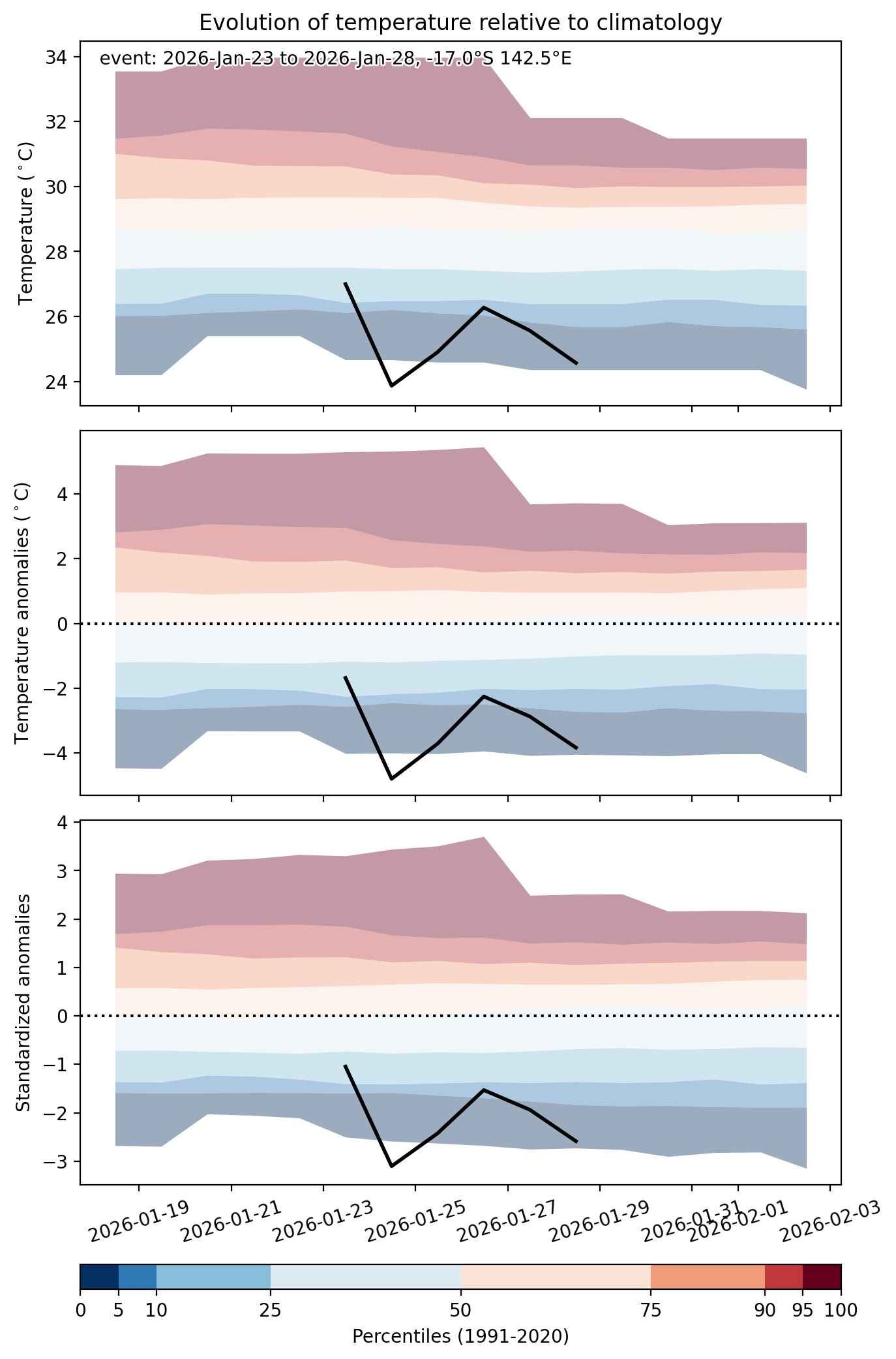
  • Mean temperature anomaly: -3.0 °C
  • Mean temperature: 24.8 °C
  • Minimum temperature anomaly: -5.0 °C
  • Minimum temperature: 19.9 °C

Event center: -17.0°S 142.5°E

Area affected: 108854 km$^2$


Fig. 1: Map of most extreme temperature anomalies (standardized) experienced during the event. The purple star indicates the center of the extreme event. Green hatching illustrates all areas under the effect of extremes at some time during the event.


Fig. 2: Evolution of temperature at the center of the event. The climatological percentile distribution is illustrated with color shadings.


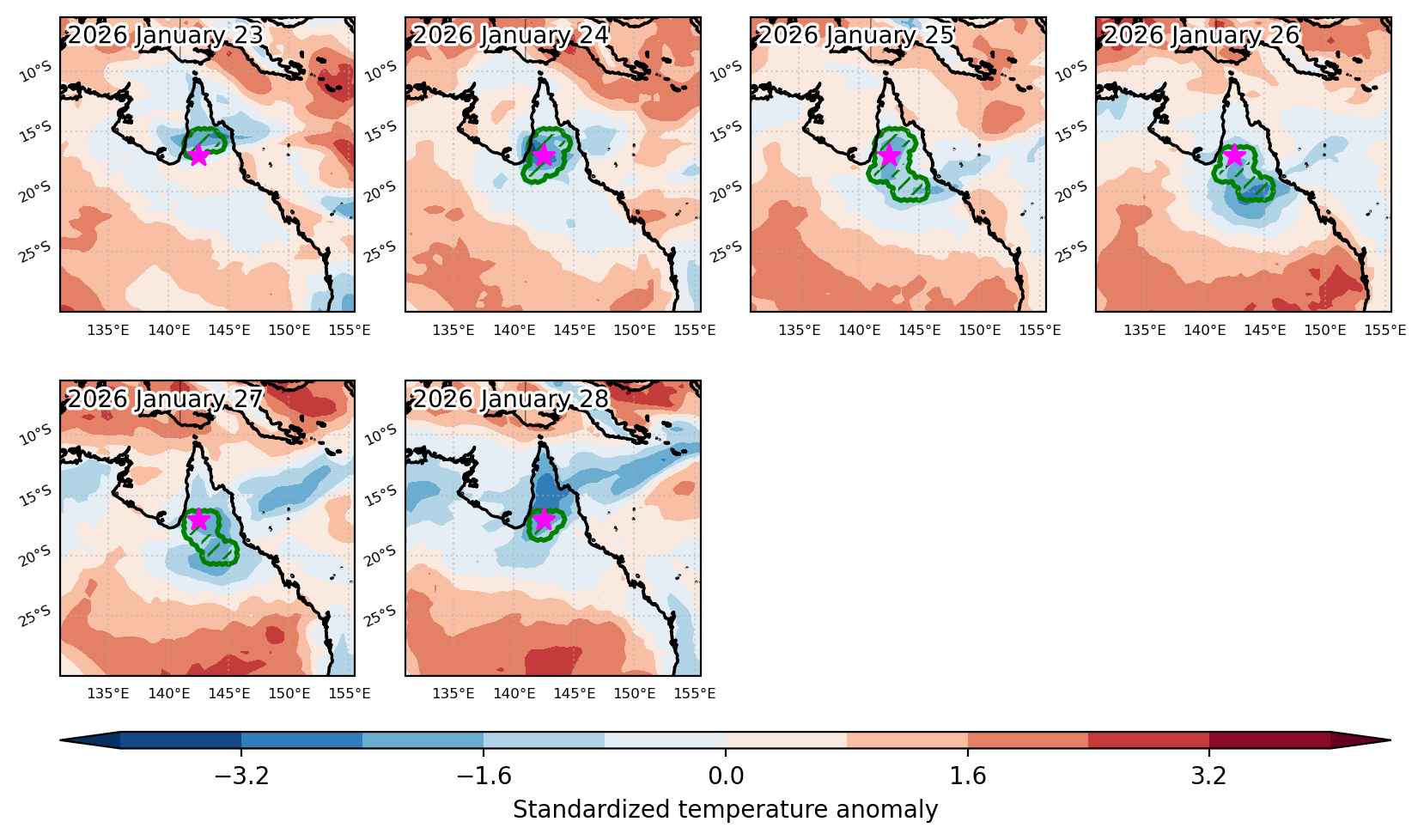
Fig. 3: Maps illustrating the evolution of standardized temperature anomalies during the event.

Event ID: Cold_spell_2026-Jan-23_to_2026-Jan-28_142.5_-17.0

Cold spell occuring from January 22 2026 to January 31 2026 at 23.5°N 68.0°E

Download data: JSON

Event type: Cold spell

Countries affected (identified with ArcGIS Online; provided only for geographical reference):

  • Afghanistan
  • India
  • Iran, Islamic Republic of
  • Pakistan

Duration: 10 days

Time span: January 22 2026 to January 31 2026

Statistics over entire affected area:

  • Mean temperature anomaly: -3.2 °C
  • Mean temperature: 15.6 °C
  • Minimum temperature anomaly: -11.8 °C
  • Minimum temperature: -8.7 °C

Event center: 23.5°N 68.0°E

Area affected: 1277101 km$^2$


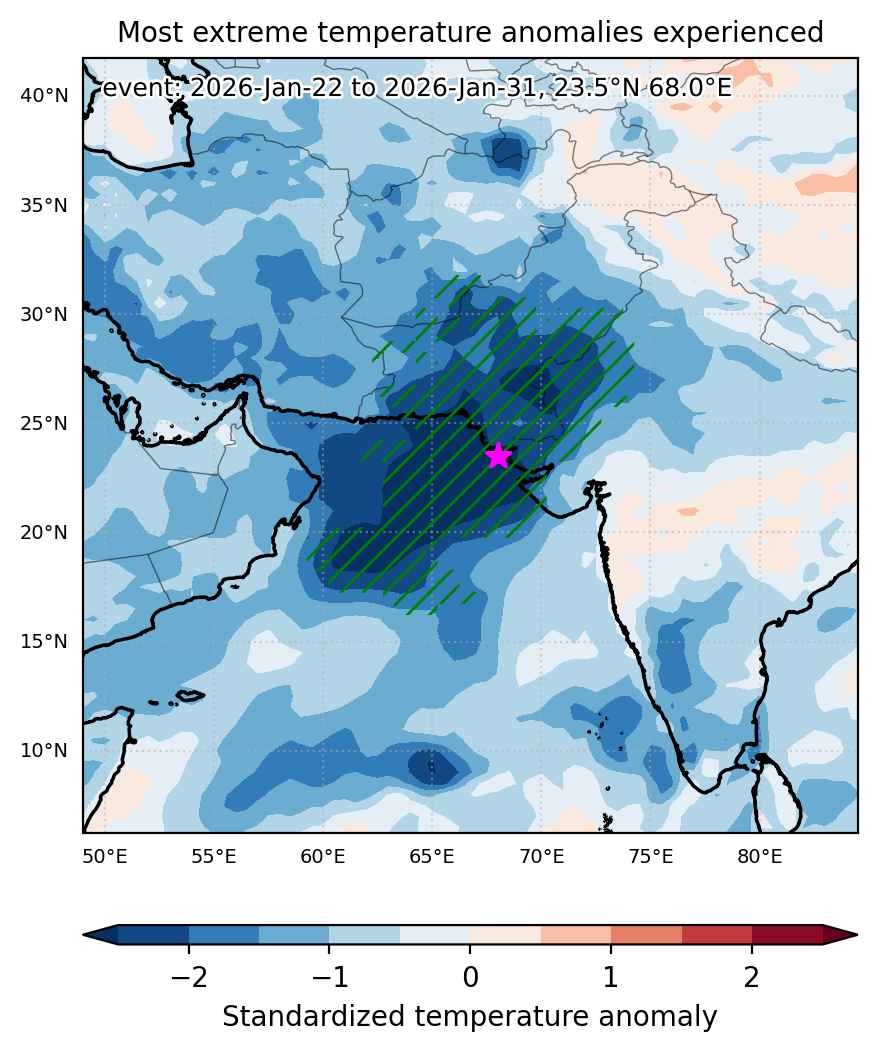
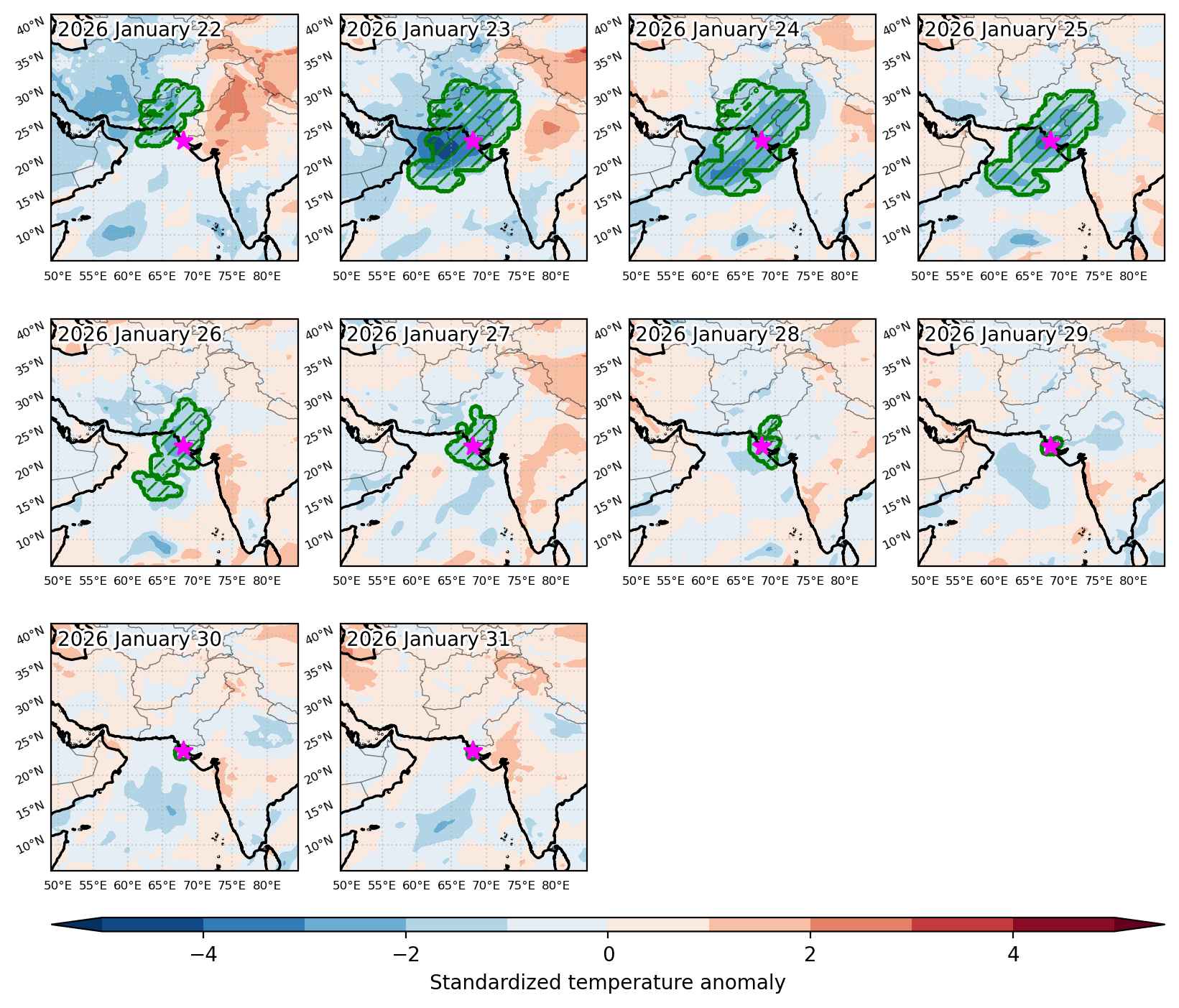
Fig. 1: Map of most extreme temperature anomalies (standardized) experienced during the event. The purple star indicates the center of the extreme event. Green hatching illustrates all areas under the effect of extremes at some time during the event.


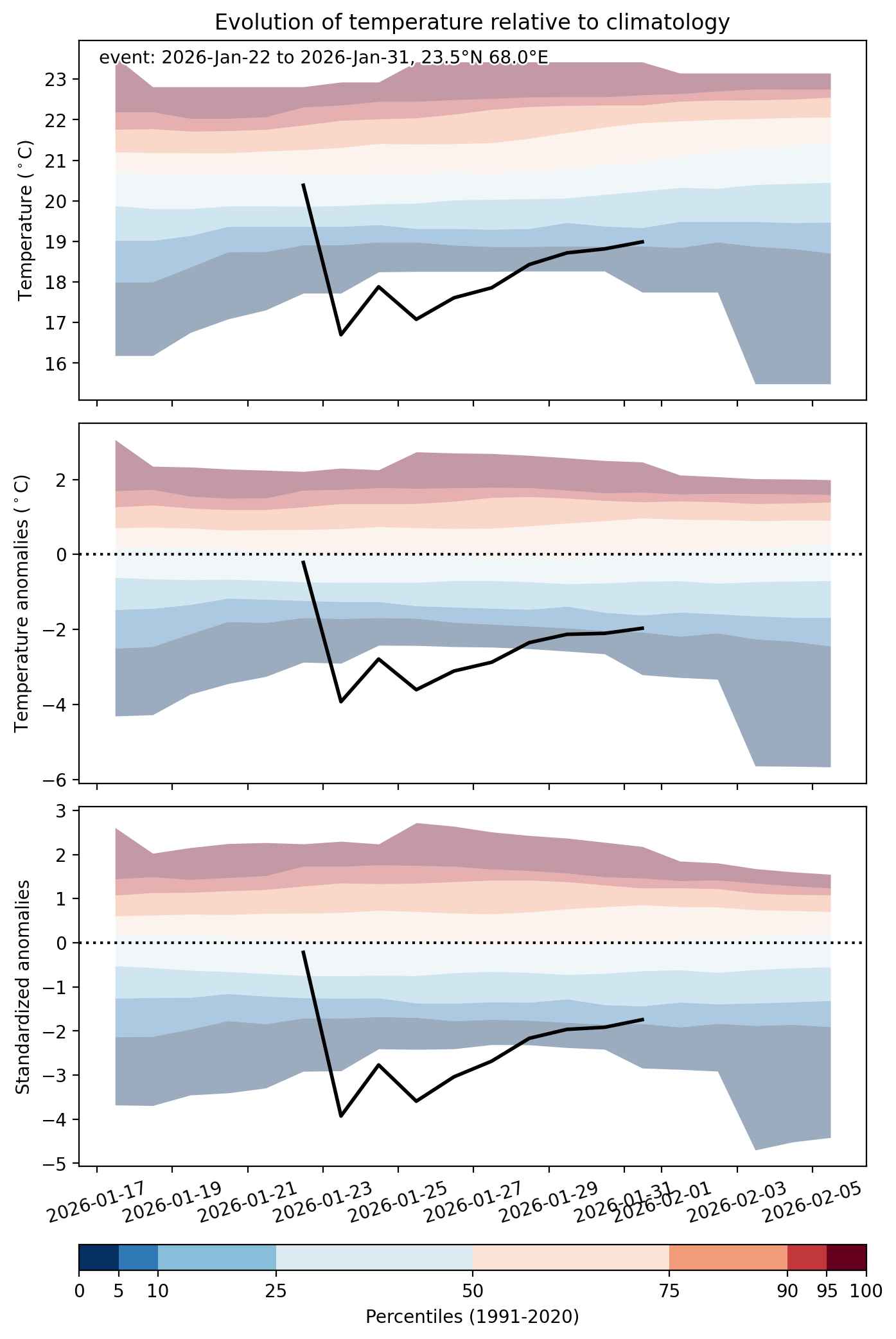
Fig. 2: Evolution of temperature at the center of the event. The climatological percentile distribution is illustrated with color shadings.


Fig. 3: Maps illustrating the evolution of standardized temperature anomalies during the event.

Event ID: Cold_spell_2026-Jan-22_to_2026-Jan-31_68.0_23.5

Cold spell occuring from January 22 2026 to February 06 2026 at 62.0°N 7.0°E

Download data: JSON

Event type: Cold spell

Countries affected (identified with ArcGIS Online; provided only for geographical reference):

  • Norway
  • Sweden

Duration: 16 days

Time span: January 22 2026 to February 06 2026

Statistics over entire affected area:

  • Mean temperature anomaly: -6.7 °C
  • Mean temperature: -7.2 °C
  • Minimum temperature anomaly: -17.7 °C
  • Minimum temperature: -26.5 °C

Event center: 62.0°N 7.0°E

Area affected: 432357 km$^2$


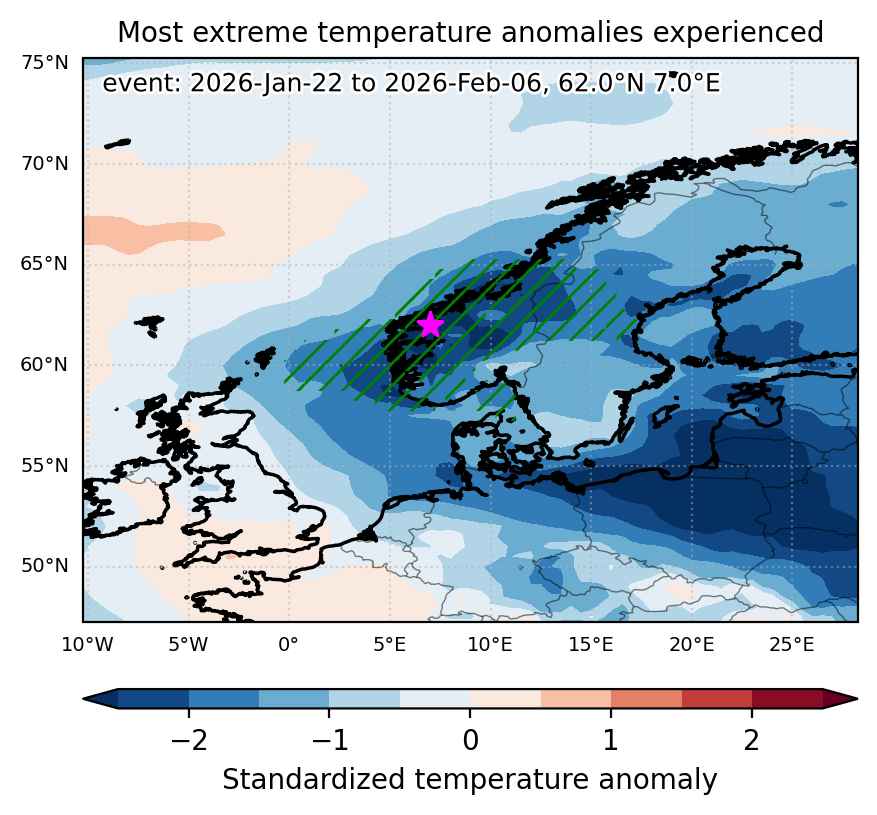
Fig. 1: Map of most extreme temperature anomalies (standardized) experienced during the event. The purple star indicates the center of the extreme event. Green hatching illustrates all areas under the effect of extremes at some time during the event.


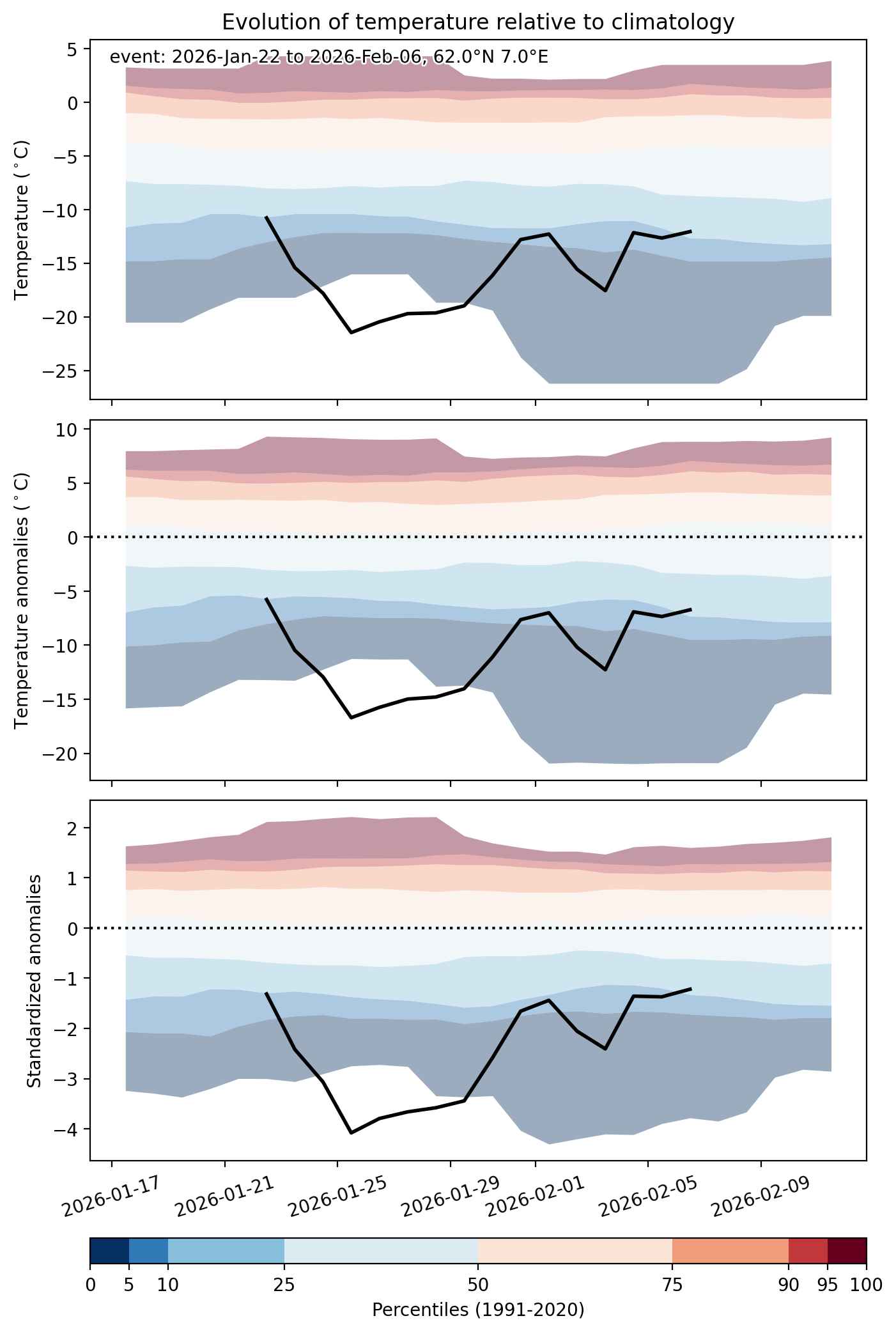
Fig. 2: Evolution of temperature at the center of the event. The climatological percentile distribution is illustrated with color shadings.


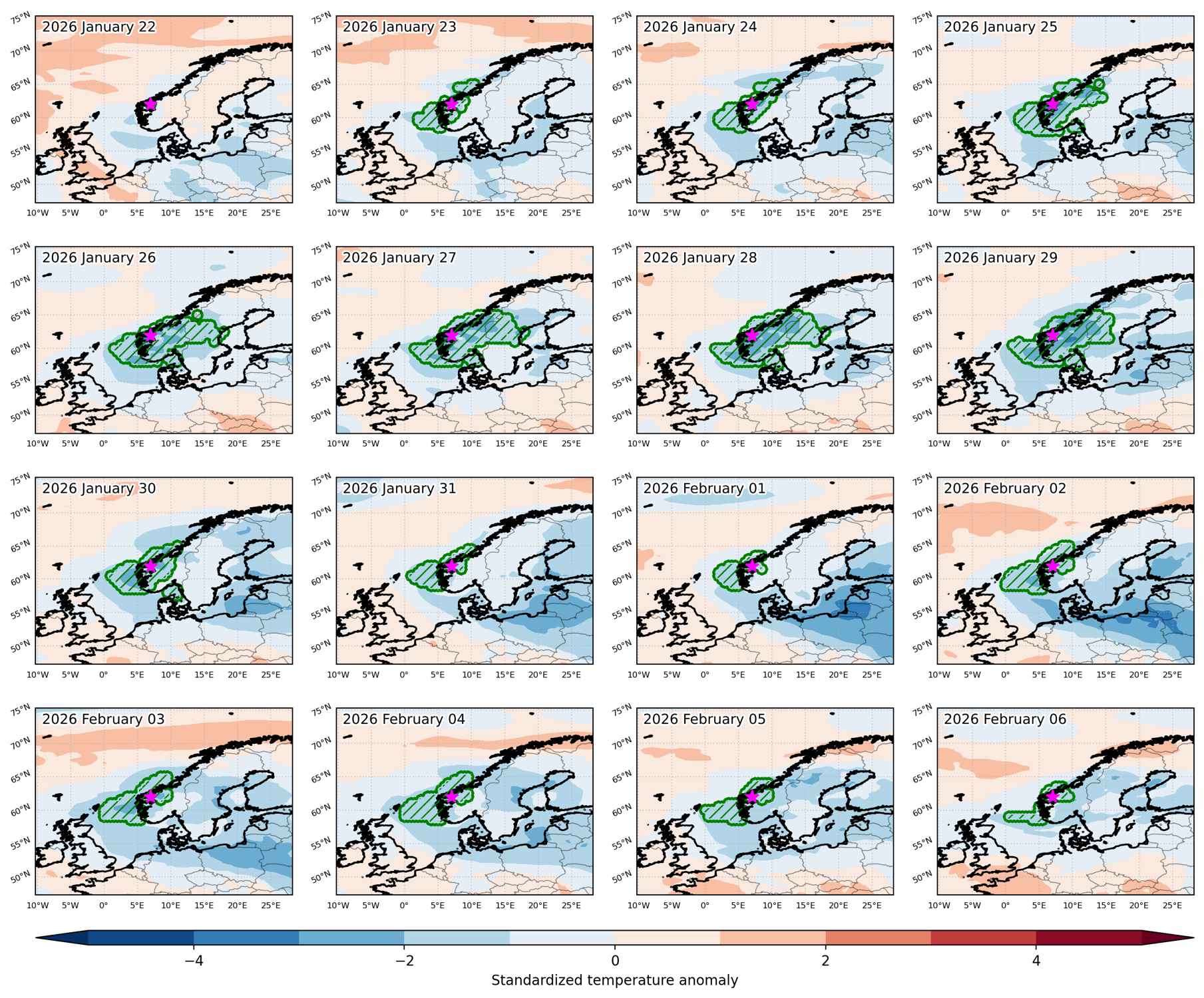
Fig. 3: Maps illustrating the evolution of standardized temperature anomalies during the event.

Event ID: Cold_spell_2026-Jan-22_to_2026-Feb-06_7.0_62.0

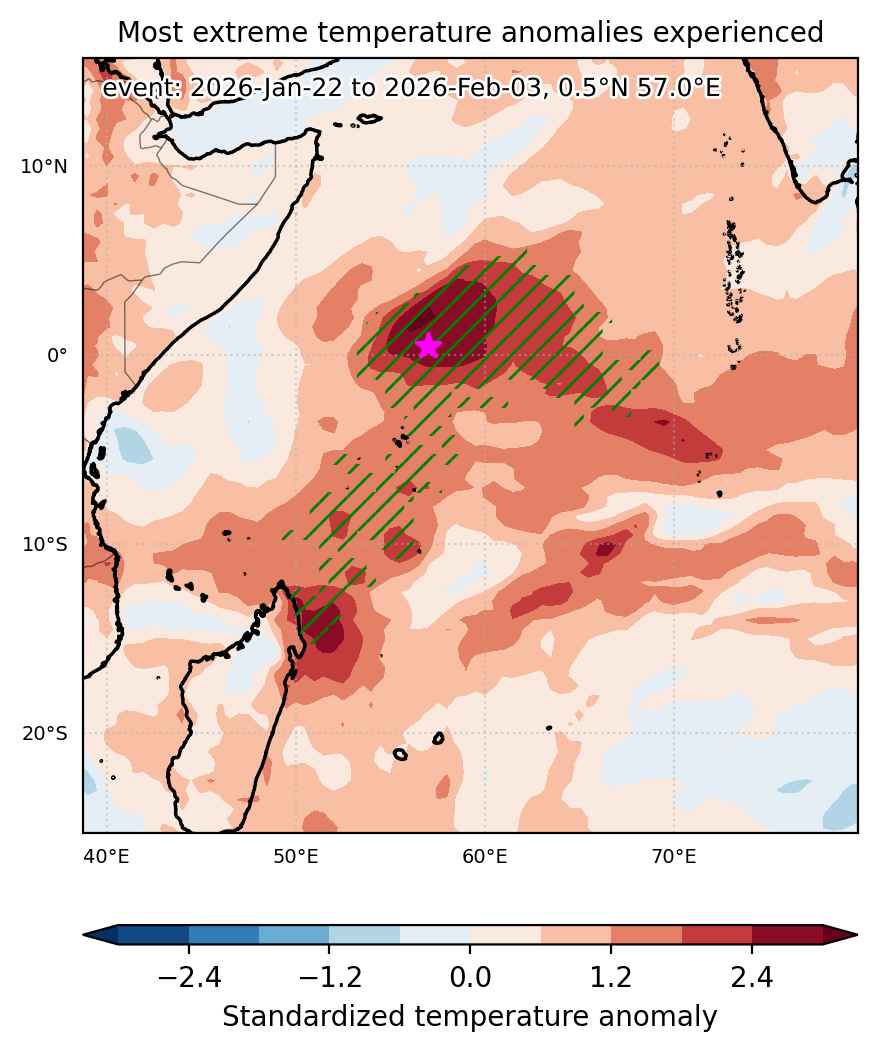
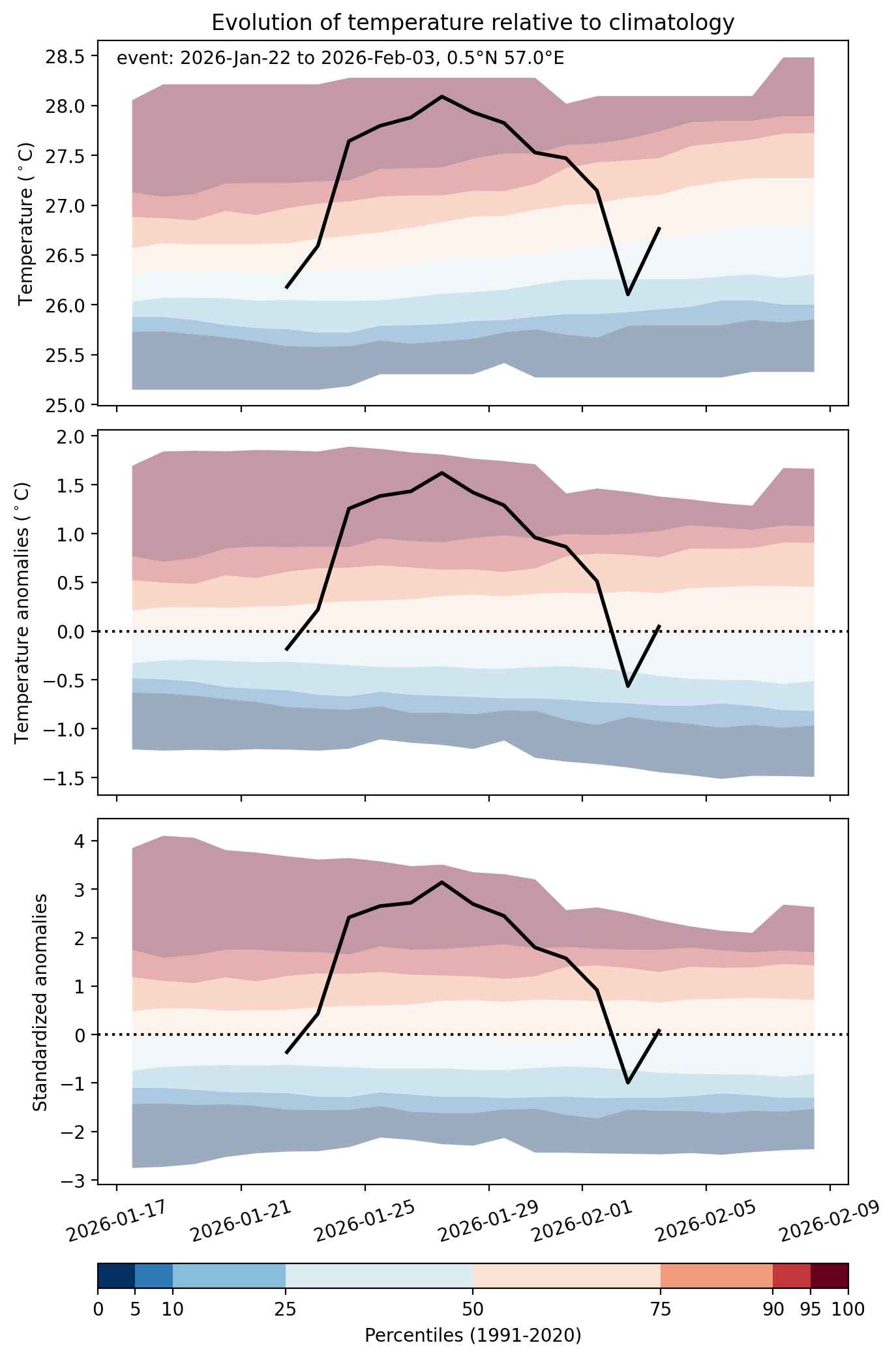
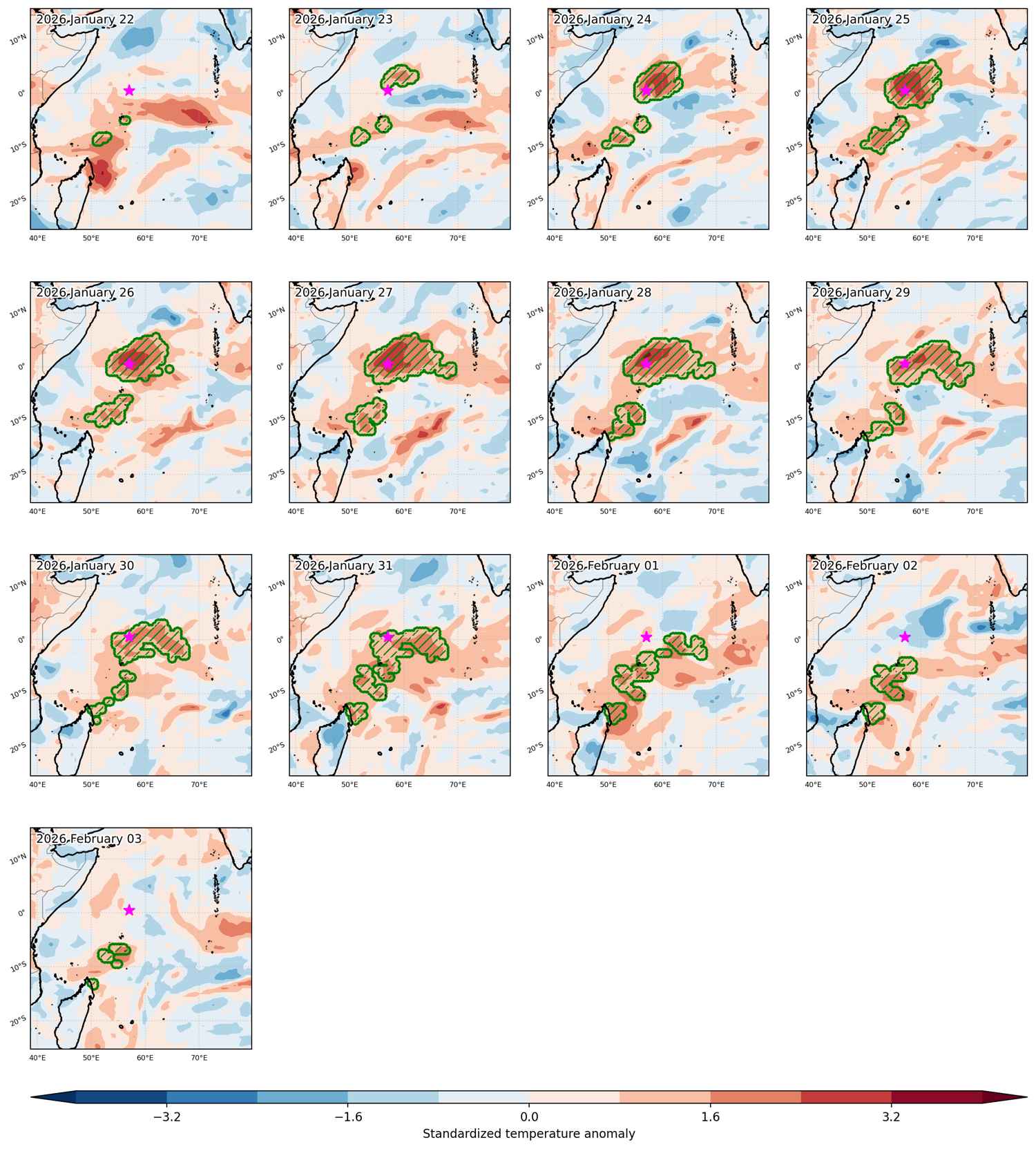
Heat wave occuring from January 22 2026 to February 03 2026 at 0.5°N 57.0°E

Download data: JSON

Event type: Heat wave

Countries affected (identified with ArcGIS Online; provided only for geographical reference):

  • Madagascar
  • Seychelles

Duration: 13 days

Time span: January 22 2026 to February 03 2026

Statistics over entire affected area:

  • Mean temperature anomaly: 1.1 °C
  • Mean temperature: 27.9 °C
  • Maximum temperature anomaly: 1.9 °C
  • Maximum temperature: 29.0 °C

Event center: 0.5°N 57.0°E

Area affected: 1520011 km$^2$


Fig. 1: Map of most extreme temperature anomalies (standardized) experienced during the event. The purple star indicates the center of the extreme event. Green hatching illustrates all areas under the effect of extremes at some time during the event.


Fig. 2: Evolution of temperature at the center of the event. The climatological percentile distribution is illustrated with color shadings.


Fig. 3: Maps illustrating the evolution of standardized temperature anomalies during the event.

Event ID: Heat_wave_2026-Jan-22_to_2026-Feb-03_57.0_0.5

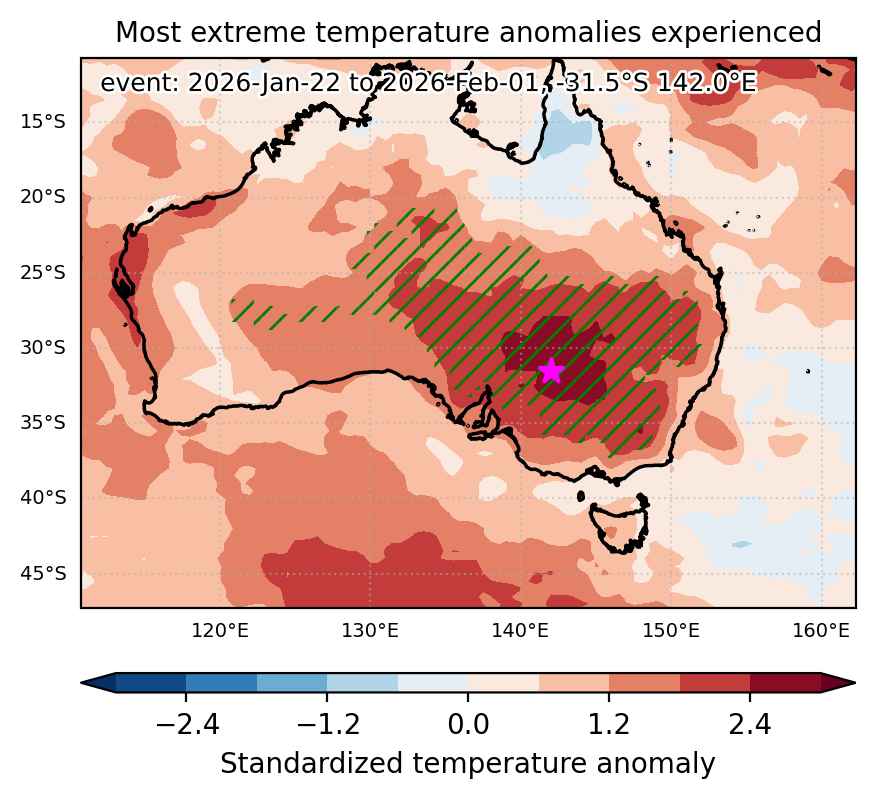
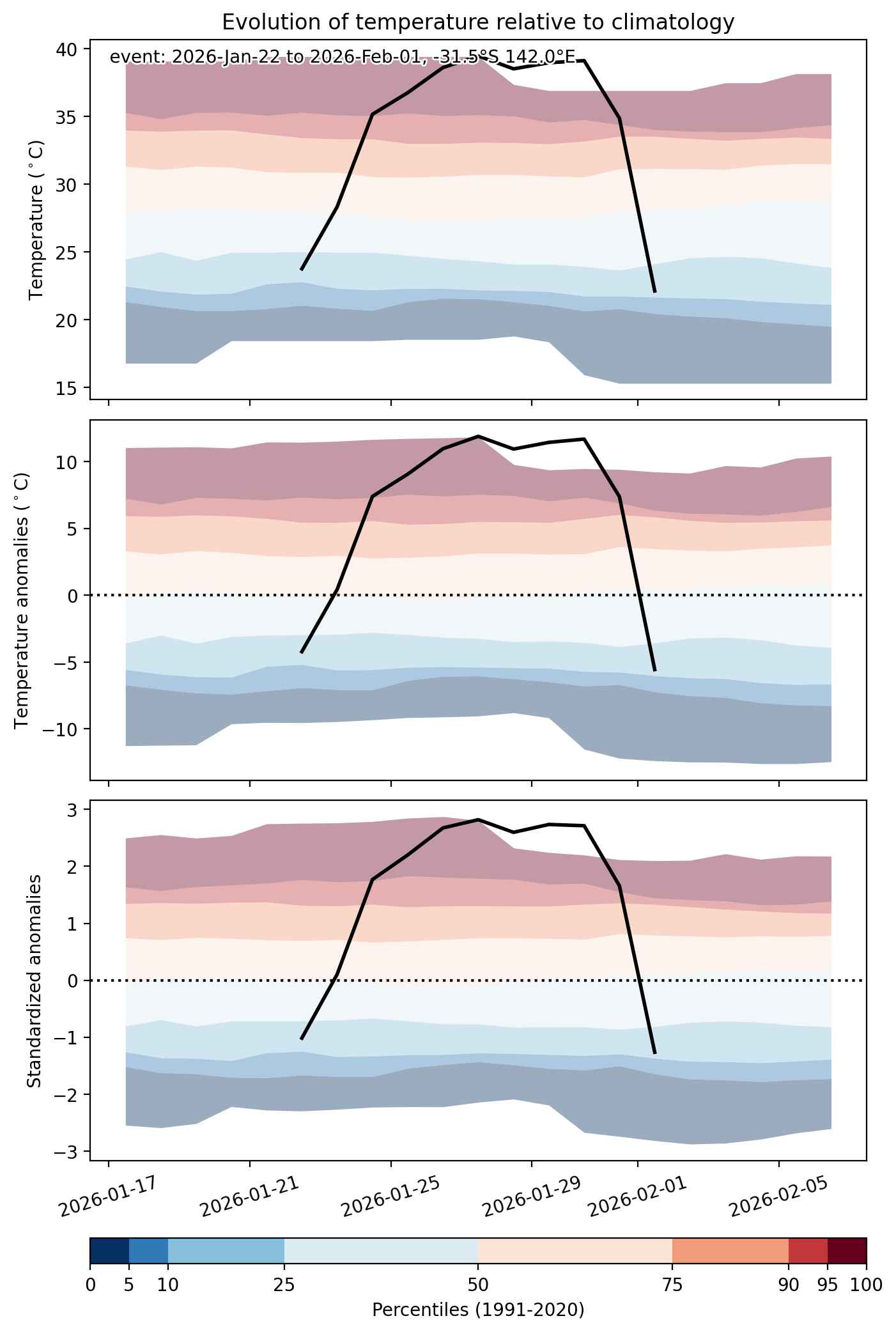
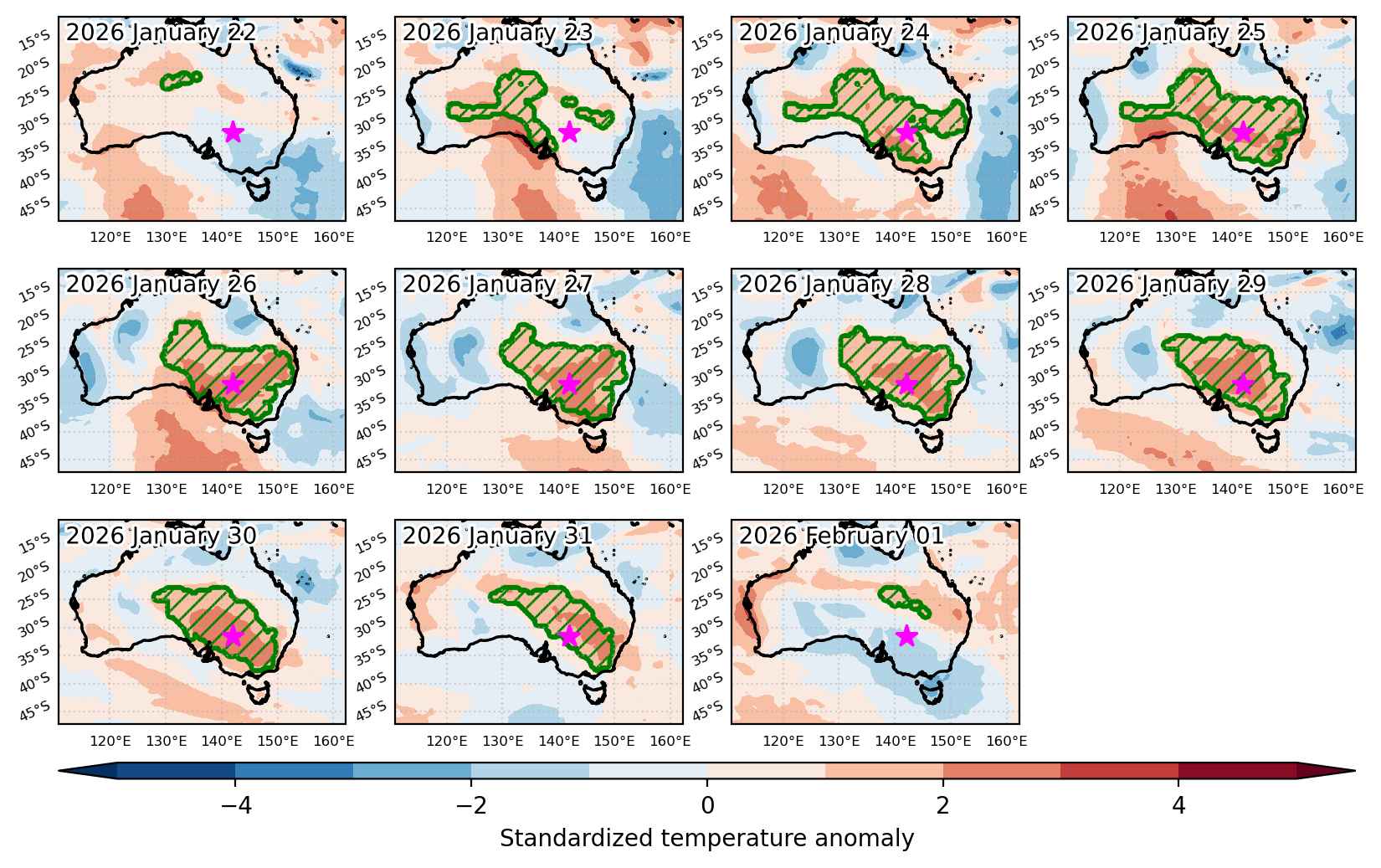
Heat wave occuring from January 22 2026 to February 01 2026 at -31.5°S 142.0°E

Download data: JSON

Event type: Heat wave

Countries affected (identified with ArcGIS Online; provided only for geographical reference):

  • Australia

Duration: 11 days

Time span: January 22 2026 to February 01 2026

Statistics over entire affected area:

  • Mean temperature anomaly: 7.0 °C
  • Mean temperature: 36.1 °C
  • Maximum temperature anomaly: 14.2 °C
  • Maximum temperature: 41.8 °C

Event center: -31.5°S 142.0°E

Area affected: 2294806 km$^2$


Fig. 1: Map of most extreme temperature anomalies (standardized) experienced during the event. The purple star indicates the center of the extreme event. Green hatching illustrates all areas under the effect of extremes at some time during the event.


Fig. 2: Evolution of temperature at the center of the event. The climatological percentile distribution is illustrated with color shadings.


Fig. 3: Maps illustrating the evolution of standardized temperature anomalies during the event.

Event ID: Heat_wave_2026-Jan-22_to_2026-Feb-01_142.0_-31.5

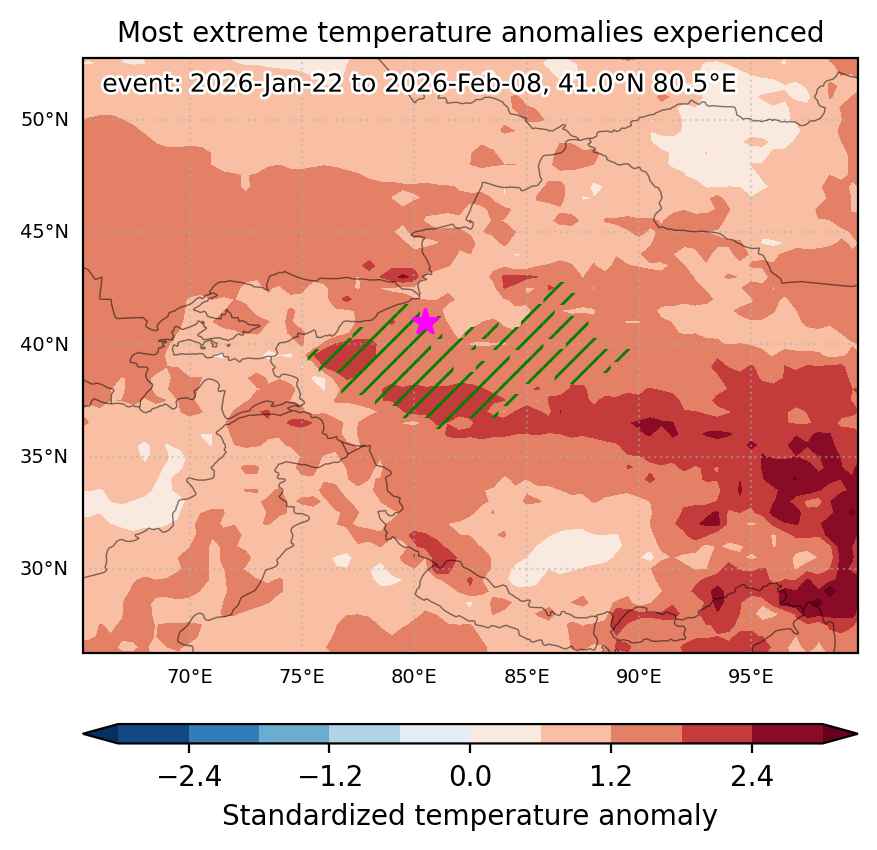
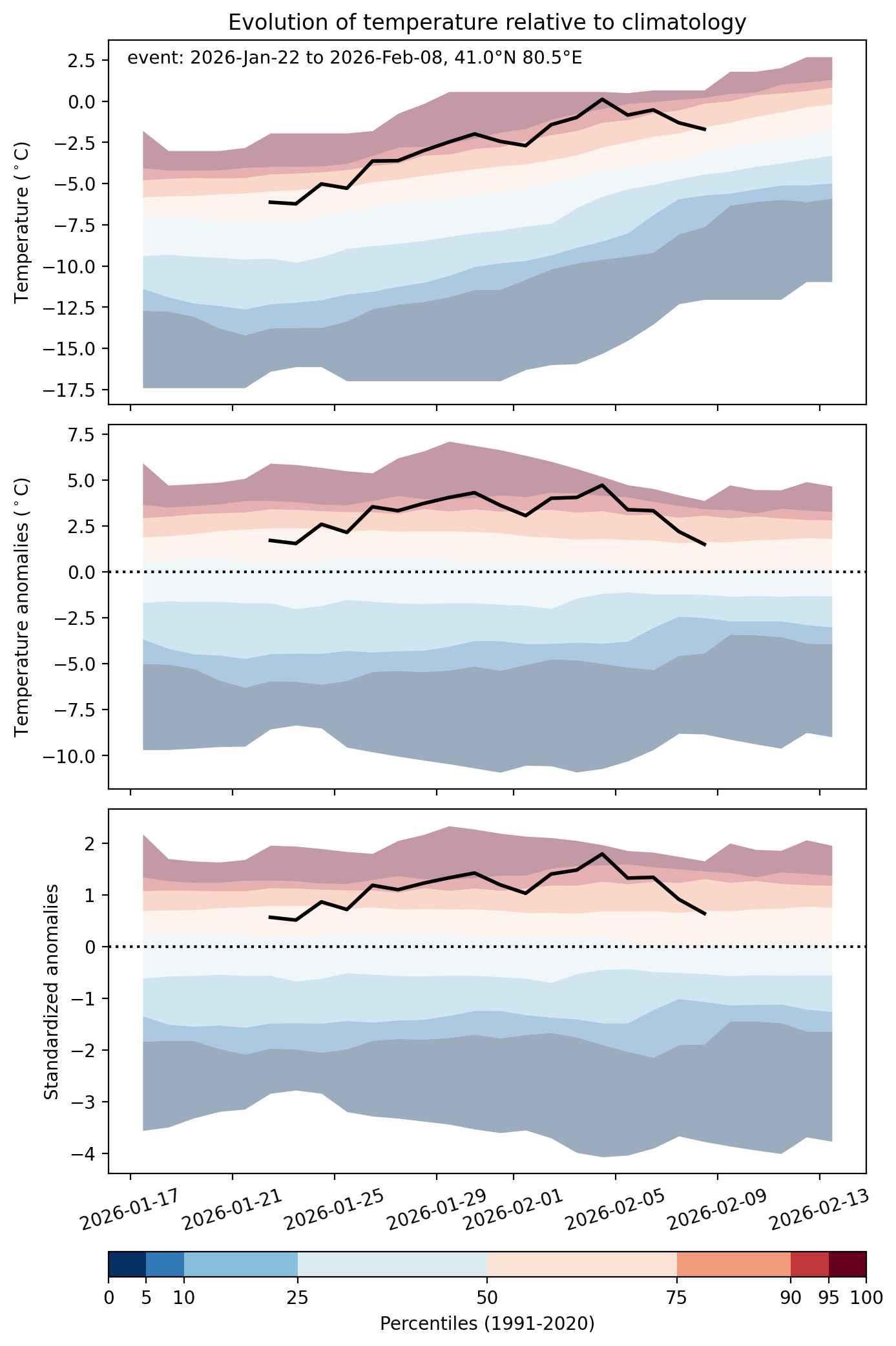
Heat wave occuring from January 22 2026 to February 08 2026 at 41.0°N 80.5°E

Download data: JSON

Event type: Heat wave

Countries affected (identified with ArcGIS Online; provided only for geographical reference):

  • China

Duration: 18 days

Time span: January 22 2026 to February 08 2026

Statistics over entire affected area:

  • Mean temperature anomaly: 4.8 °C
  • Mean temperature: 0.1 °C
  • Maximum temperature anomaly: 8.8 °C
  • Maximum temperature: 6.6 °C

Event center: 41.0°N 80.5°E

Area affected: 408986 km$^2$


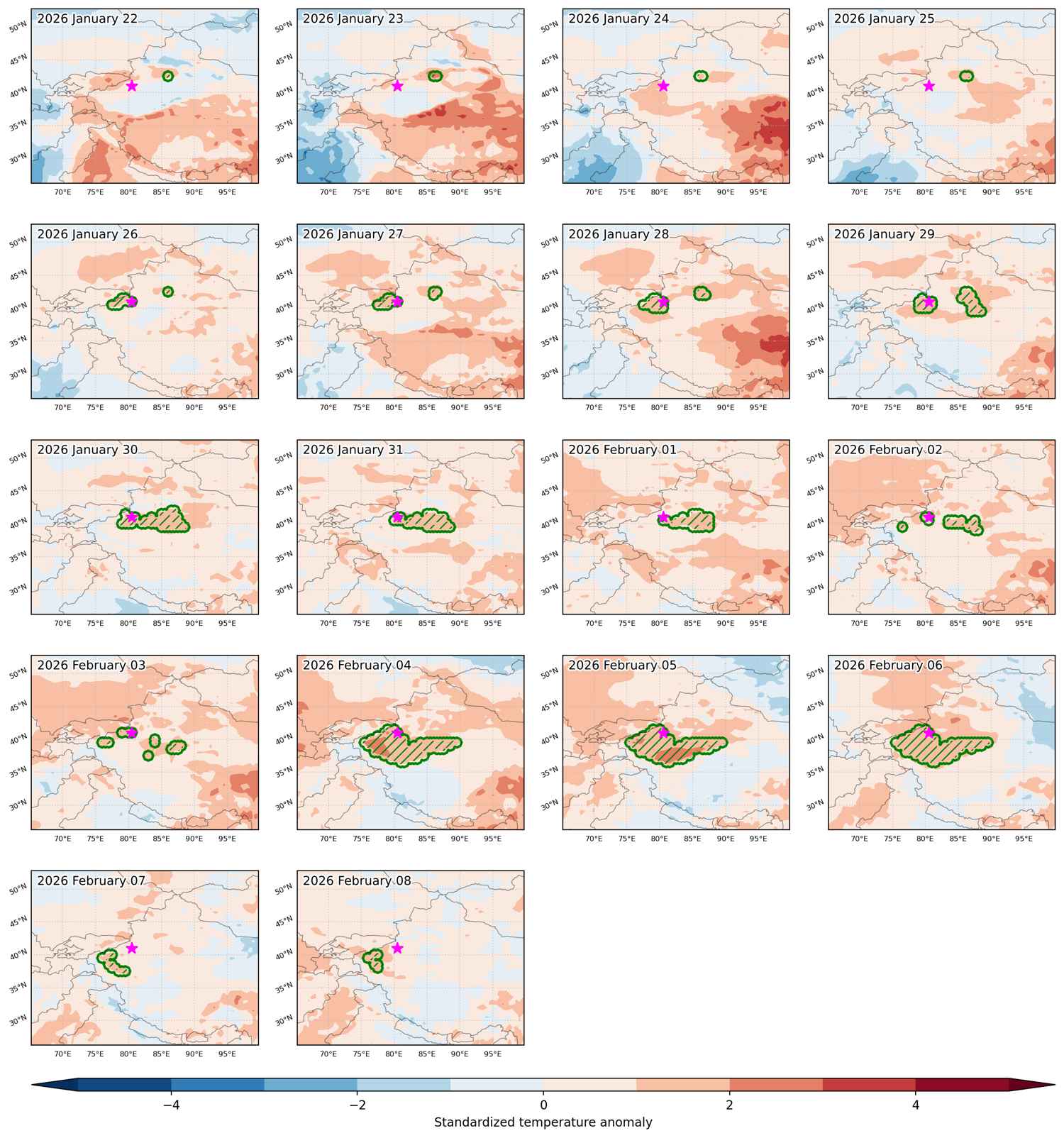
Fig. 1: Map of most extreme temperature anomalies (standardized) experienced during the event. The purple star indicates the center of the extreme event. Green hatching illustrates all areas under the effect of extremes at some time during the event.


Fig. 2: Evolution of temperature at the center of the event. The climatological percentile distribution is illustrated with color shadings.


Fig. 3: Maps illustrating the evolution of standardized temperature anomalies during the event.

Event ID: Heat_wave_2026-Jan-22_to_2026-Feb-08_80.5_41.0

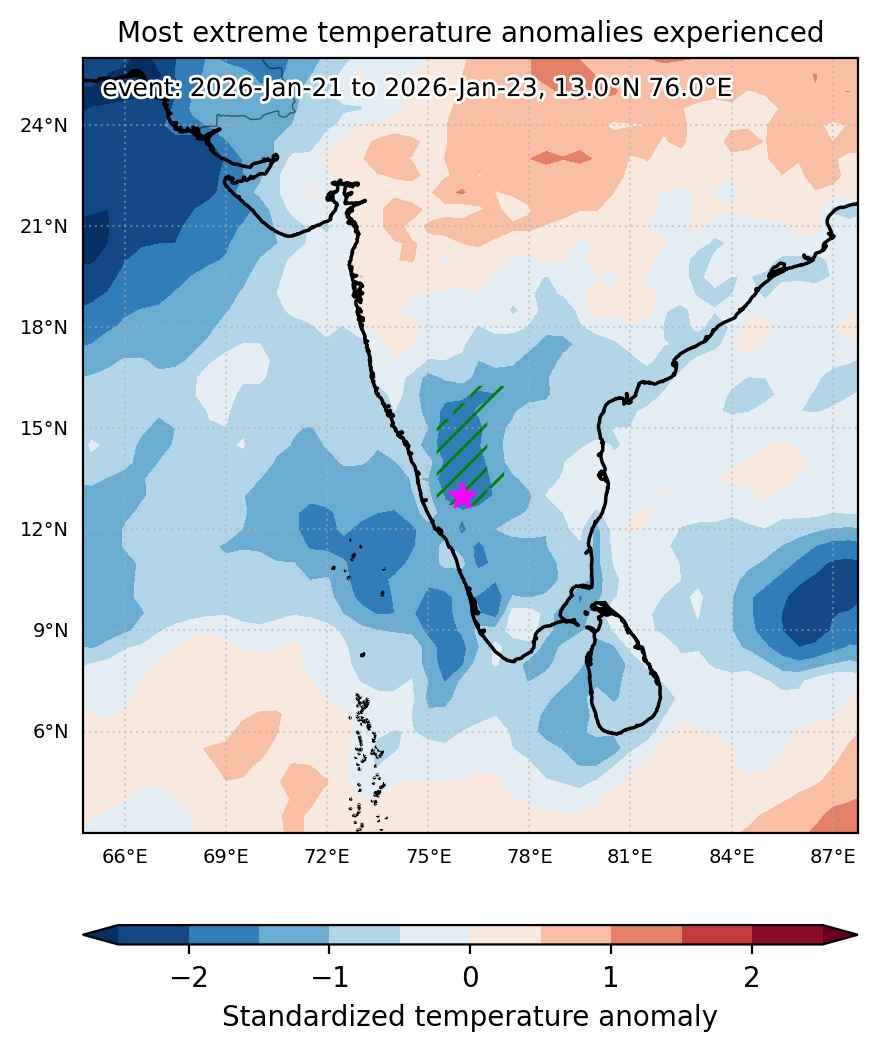
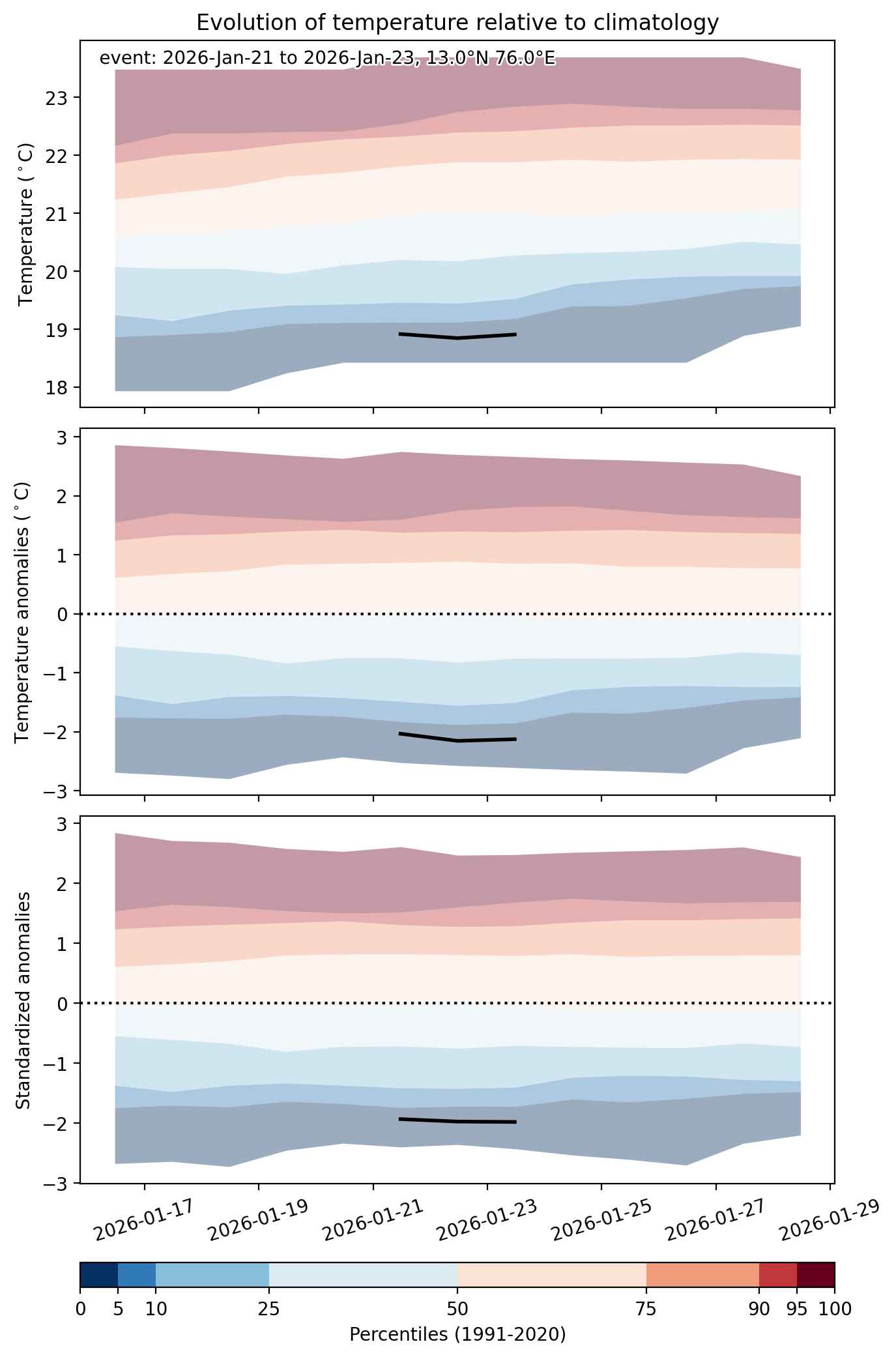
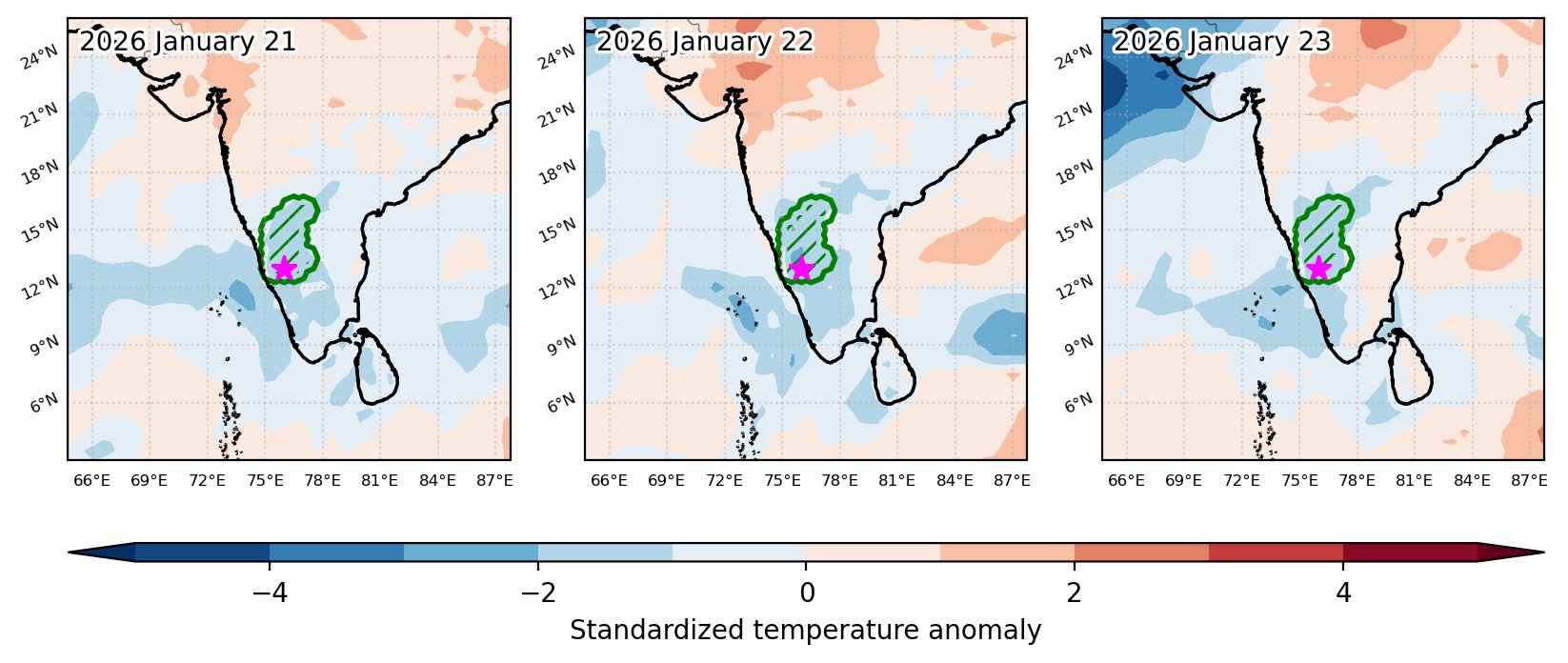
Cold spell occuring from January 21 2026 to January 23 2026 at 13.0°N 76.0°E

Download data: JSON

Event type: Cold spell

Countries affected (identified with ArcGIS Online; provided only for geographical reference):

  • India

Duration: 3 days

Time span: January 21 2026 to January 23 2026

Statistics over entire affected area:

  • Mean temperature anomaly: -2.0 °C
  • Mean temperature: 21.4 °C
  • Minimum temperature anomaly: -2.7 °C
  • Minimum temperature: 18.8 °C

Event center: 13.0°N 76.0°E

Area affected: 59891 km$^2$


Fig. 1: Map of most extreme temperature anomalies (standardized) experienced during the event. The purple star indicates the center of the extreme event. Green hatching illustrates all areas under the effect of extremes at some time during the event.


Fig. 2: Evolution of temperature at the center of the event. The climatological percentile distribution is illustrated with color shadings.


Fig. 3: Maps illustrating the evolution of standardized temperature anomalies during the event.

Event ID: Cold_spell_2026-Jan-21_to_2026-Jan-23_76.0_13.0

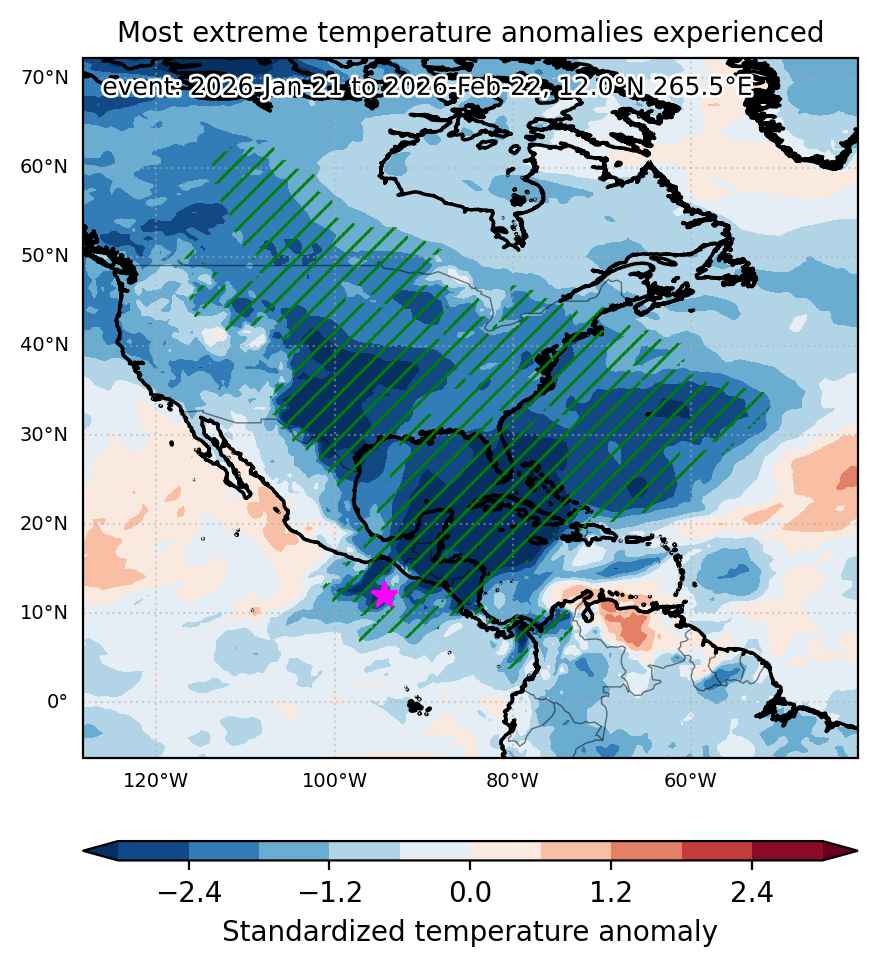
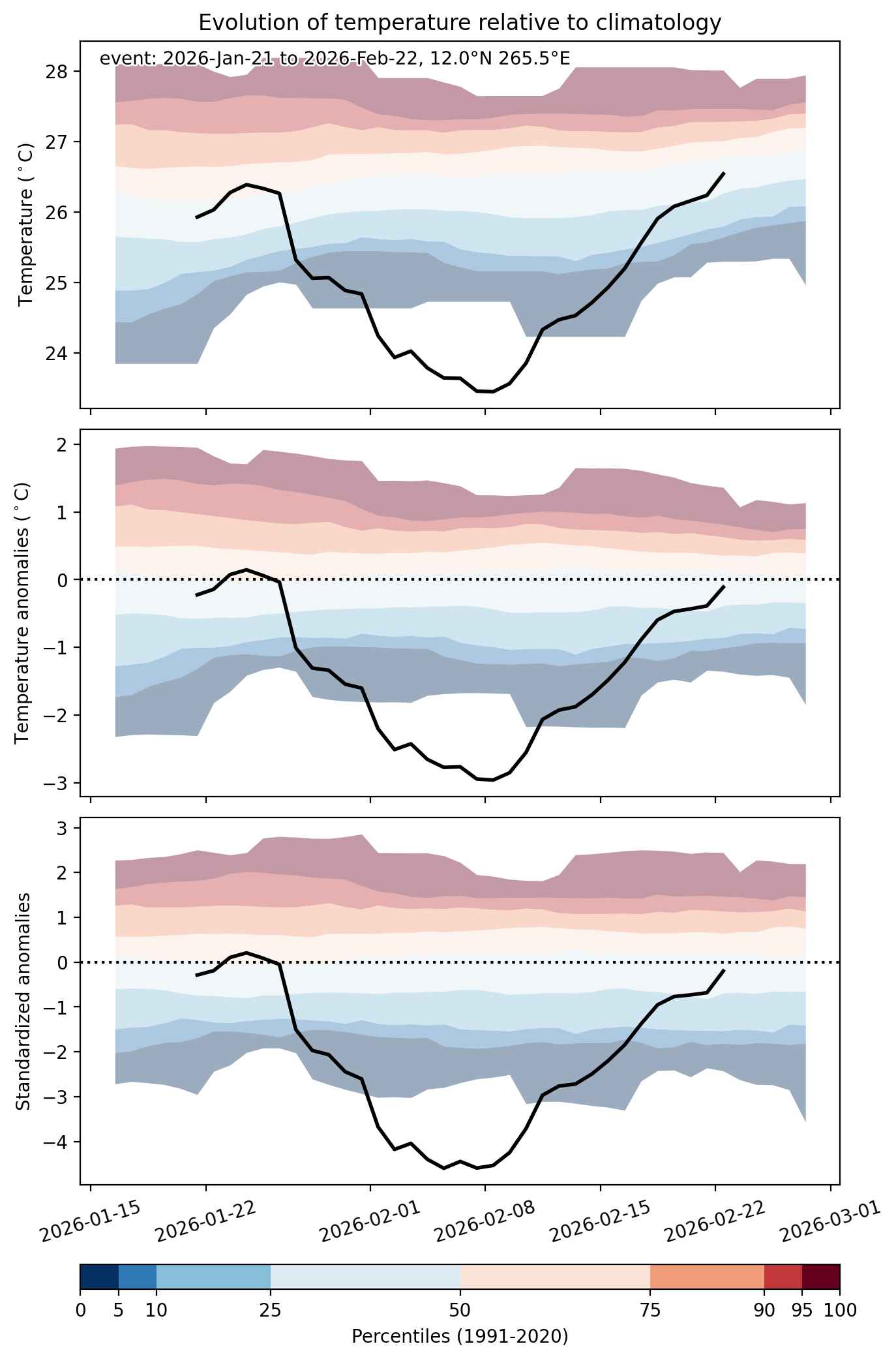
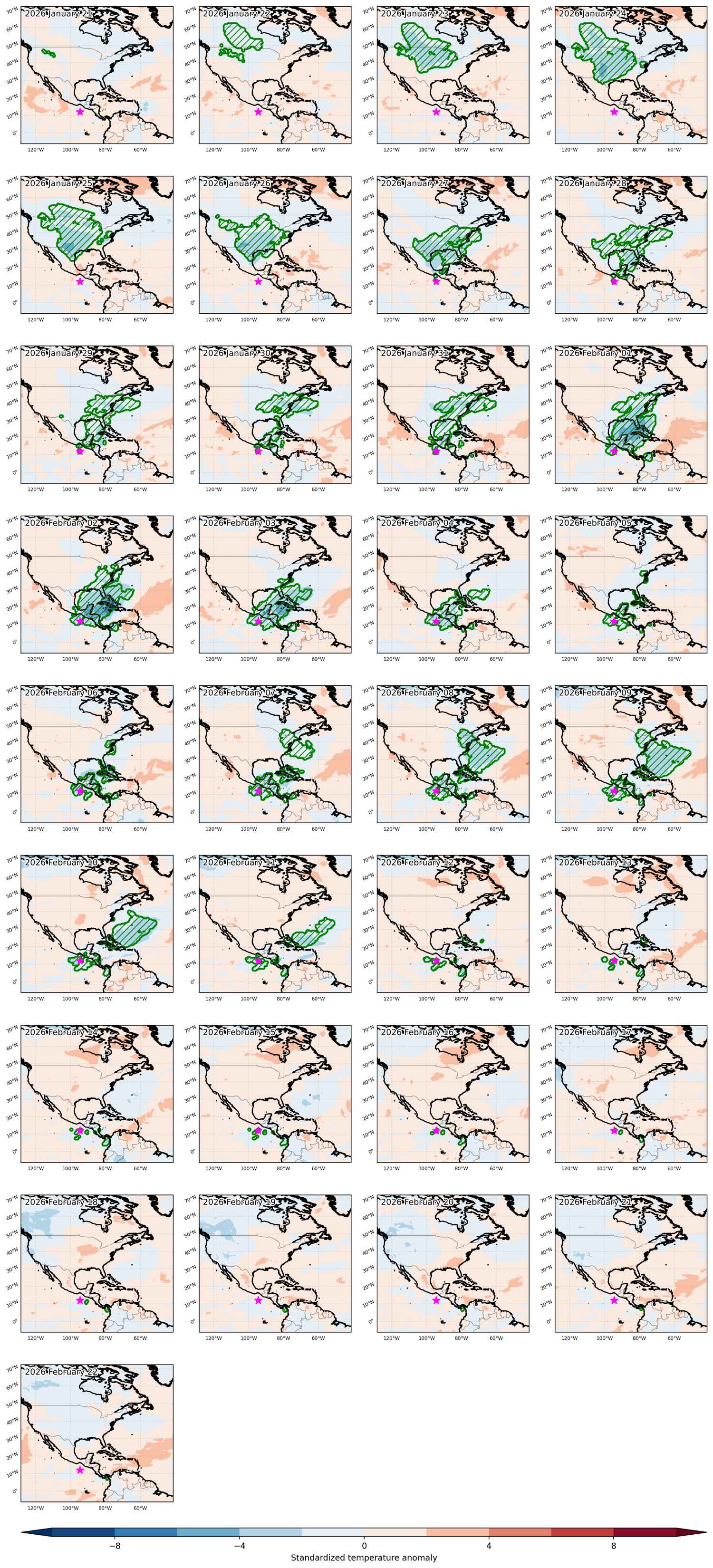
Cold spell occuring from January 21 2026 to February 22 2026 at 12.0°N 265.5°E

Download data: JSON

Event type: Cold spell

Countries affected (identified with ArcGIS Online; provided only for geographical reference):

  • Bahamas
  • Belize
  • Canada
  • Colombia
  • Costa Rica
  • Cuba
  • El Salvador
  • Guatemala
  • Haiti
  • Honduras
  • Mexico
  • Nicaragua
  • Panama
  • Turks and Caicos Islands
  • United States

Duration: 33 days

Time span: January 21 2026 to February 22 2026

Statistics over entire affected area:

  • Mean temperature anomaly: -7.7 °C
  • Mean temperature: 2.4 °C
  • Minimum temperature anomaly: -25.2 °C
  • Minimum temperature: -41.8 °C

Event center: 12.0°N 265.5°E

Area affected: 15448330 km$^2$


Fig. 1: Map of most extreme temperature anomalies (standardized) experienced during the event. The purple star indicates the center of the extreme event. Green hatching illustrates all areas under the effect of extremes at some time during the event.


Fig. 2: Evolution of temperature at the center of the event. The climatological percentile distribution is illustrated with color shadings.


Fig. 3: Maps illustrating the evolution of standardized temperature anomalies during the event.

Event ID: Cold_spell_2026-Jan-21_to_2026-Feb-22_265.5_12.0

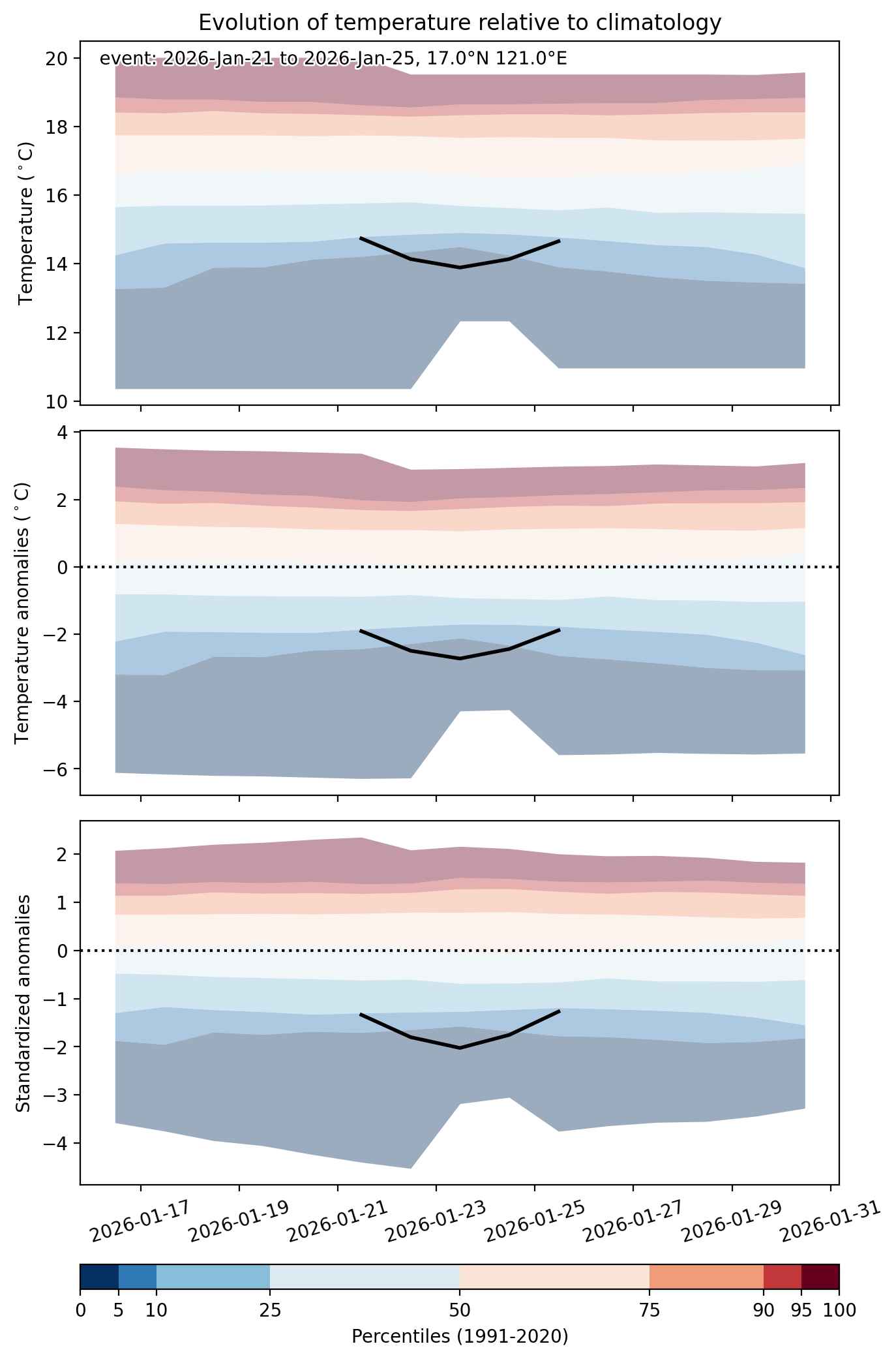
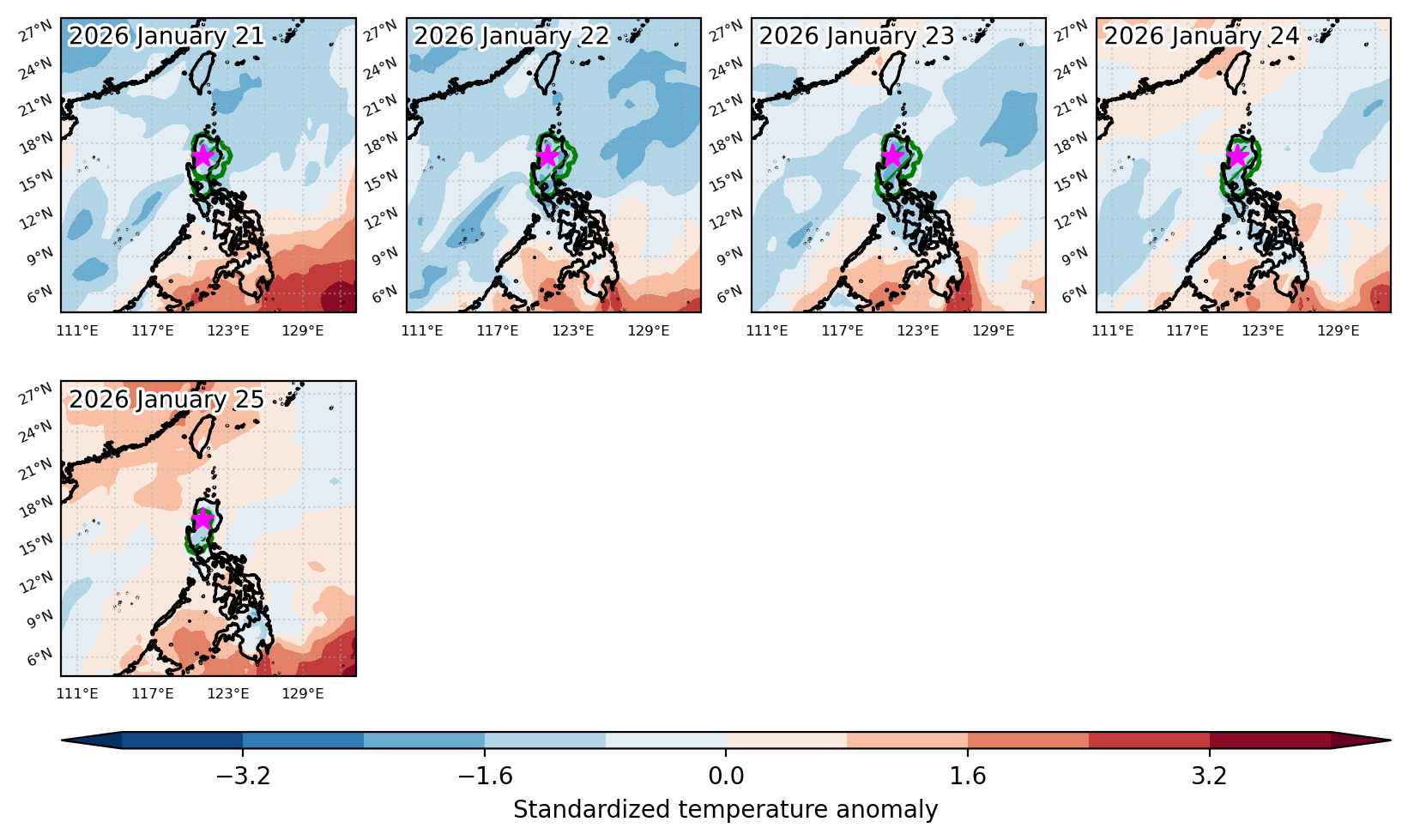
Cold spell occuring from January 21 2026 to January 25 2026 at 17.0°N 121.0°E

Download data: JSON

Event type: Cold spell

Countries affected (identified with ArcGIS Online; provided only for geographical reference):

  • Philippines

Duration: 5 days

Time span: January 21 2026 to January 25 2026

Statistics over entire affected area:

  • Mean temperature anomaly: -2.0 °C
  • Mean temperature: 20.3 °C
  • Minimum temperature anomaly: -3.0 °C
  • Minimum temperature: 13.9 °C

Event center: 17.0°N 121.0°E

Area affected: 59327 km$^2$


Fig. 1: Map of most extreme temperature anomalies (standardized) experienced during the event. The purple star indicates the center of the extreme event. Green hatching illustrates all areas under the effect of extremes at some time during the event.


Fig. 2: Evolution of temperature at the center of the event. The climatological percentile distribution is illustrated with color shadings.


Fig. 3: Maps illustrating the evolution of standardized temperature anomalies during the event.

Event ID: Cold_spell_2026-Jan-21_to_2026-Jan-25_121.0_17.0