Cold spell occuring from January 21 2026 to January 25 2026 at -55.0°S 157.5°E

Download data: JSON

Event type: Cold spell

Countries affected (identified with ArcGIS Online; provided only for geographical reference):

  • Australia

Duration: 5 days

Time span: January 21 2026 to January 25 2026

Statistics over entire affected area:

  • Mean temperature anomaly: -1.9 °C
  • Mean temperature: 5.2 °C
  • Minimum temperature anomaly: -2.8 °C
  • Minimum temperature: 3.8 °C

Event center: -55.0°S 157.5°E

Area affected: 129792 km$^2$
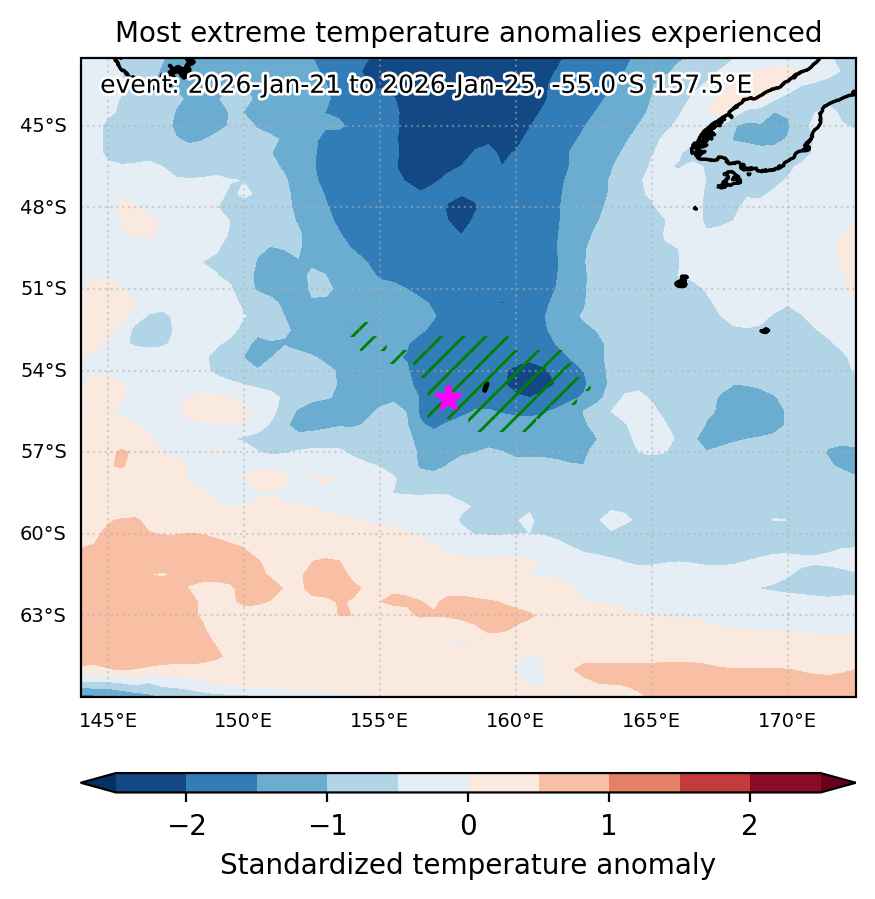

Fig. 1: Map of most extreme temperature anomalies (standardized) experienced during the event. The purple star indicates the center of the extreme event. Green hatching illustrates all areas under the effect of extremes at some time during the event.
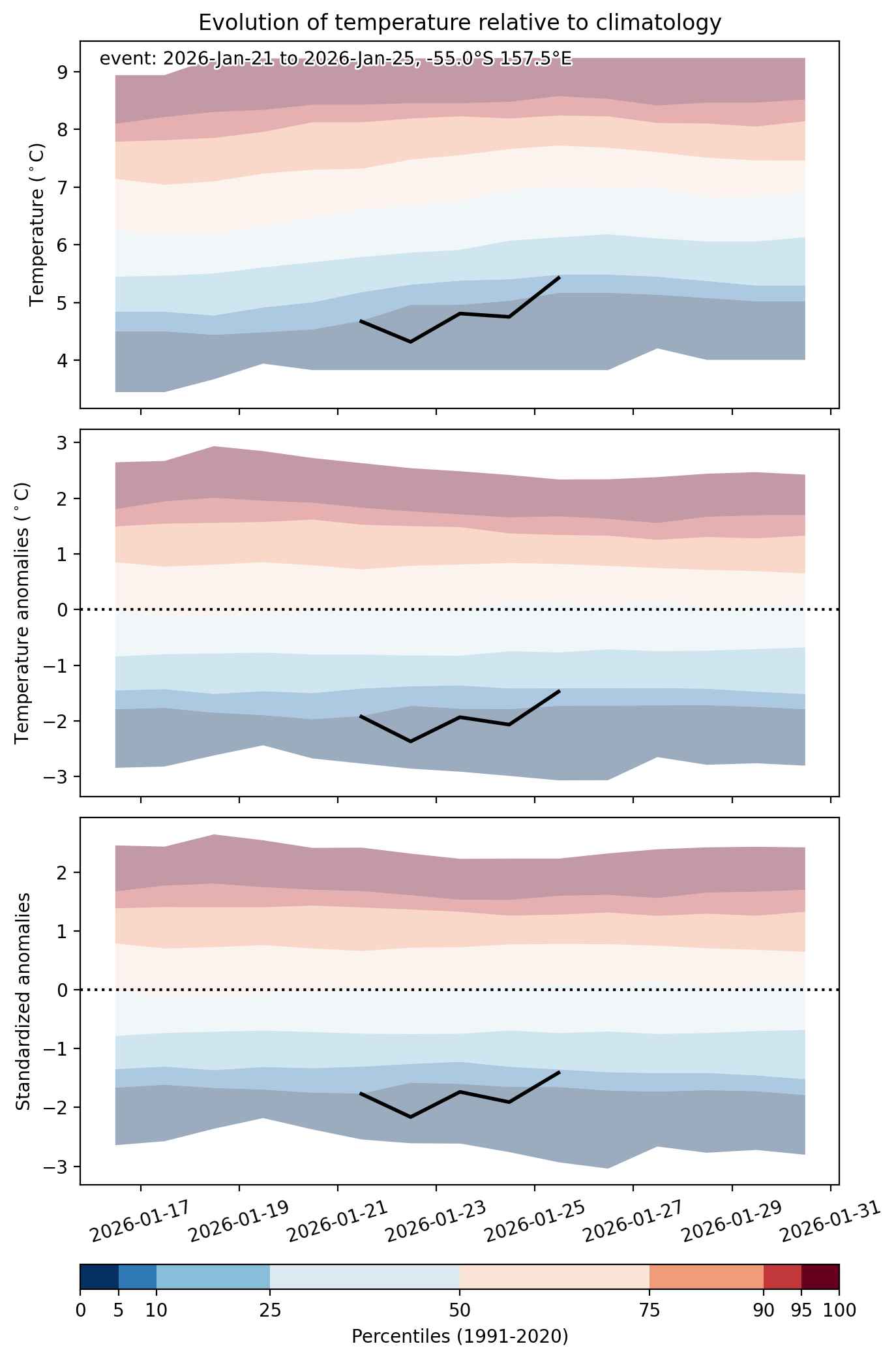


Fig. 2: Evolution of temperature at the center of the event. The climatological percentile distribution is illustrated with color shadings.
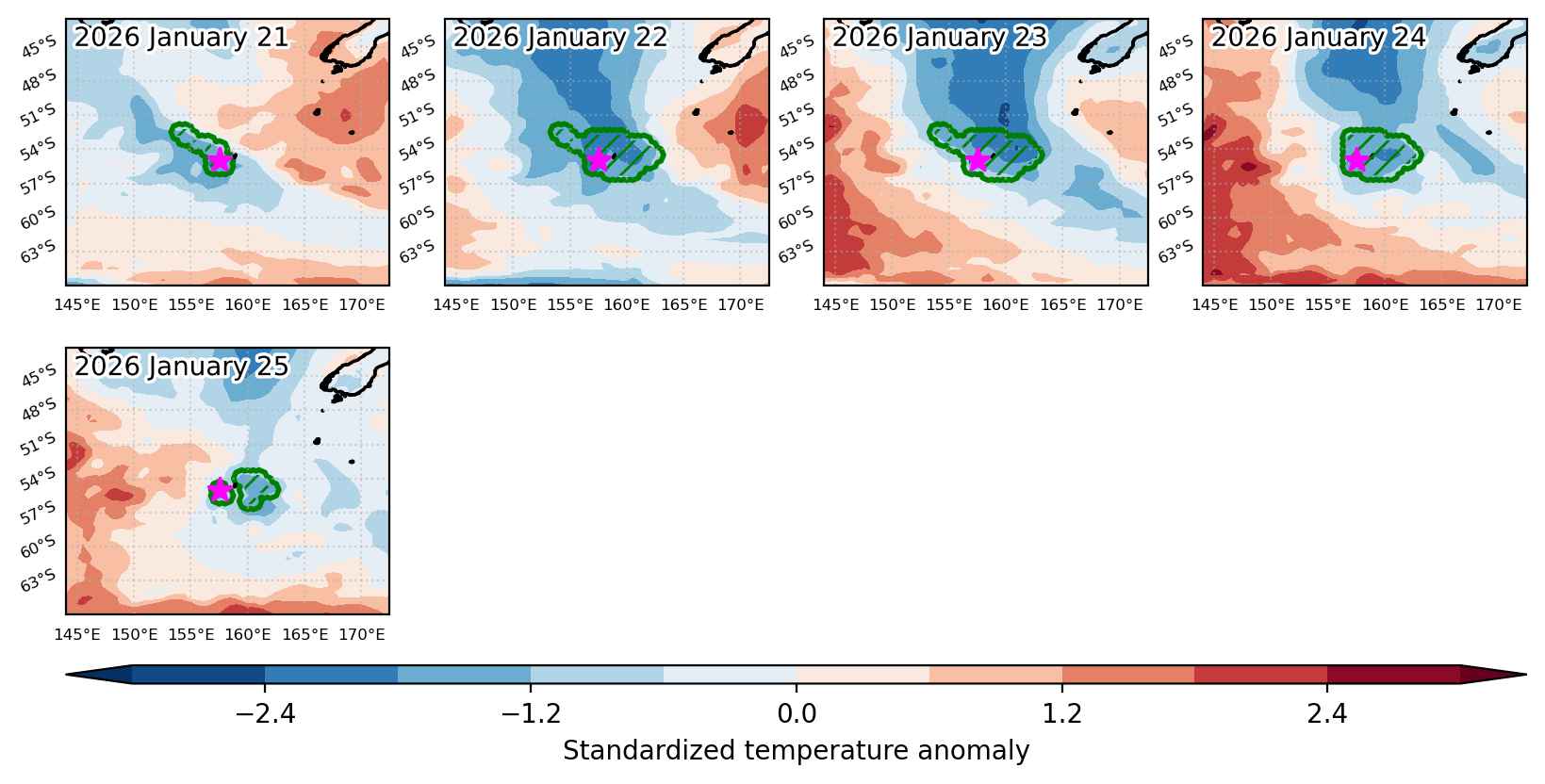


Fig. 3: Maps illustrating the evolution of standardized temperature anomalies during the event.

Event ID: Cold_spell_2026-Jan-21_to_2026-Jan-25_157.5_-55.0

Cold spell occuring from January 20 2026 to January 23 2026 at 23.5°N 5.5°E

Download data: JSON

Event type: Cold spell

Countries affected (identified with ArcGIS Online; provided only for geographical reference):

  • Algeria
  • Mali

Duration: 4 days

Time span: January 20 2026 to January 23 2026

Statistics over entire affected area:

  • Mean temperature anomaly: -4.1 °C
  • Mean temperature: 12.3 °C
  • Minimum temperature anomaly: -6.0 °C
  • Minimum temperature: 4.2 °C

Event center: 23.5°N 5.5°E

Area affected: 250956 km$^2$


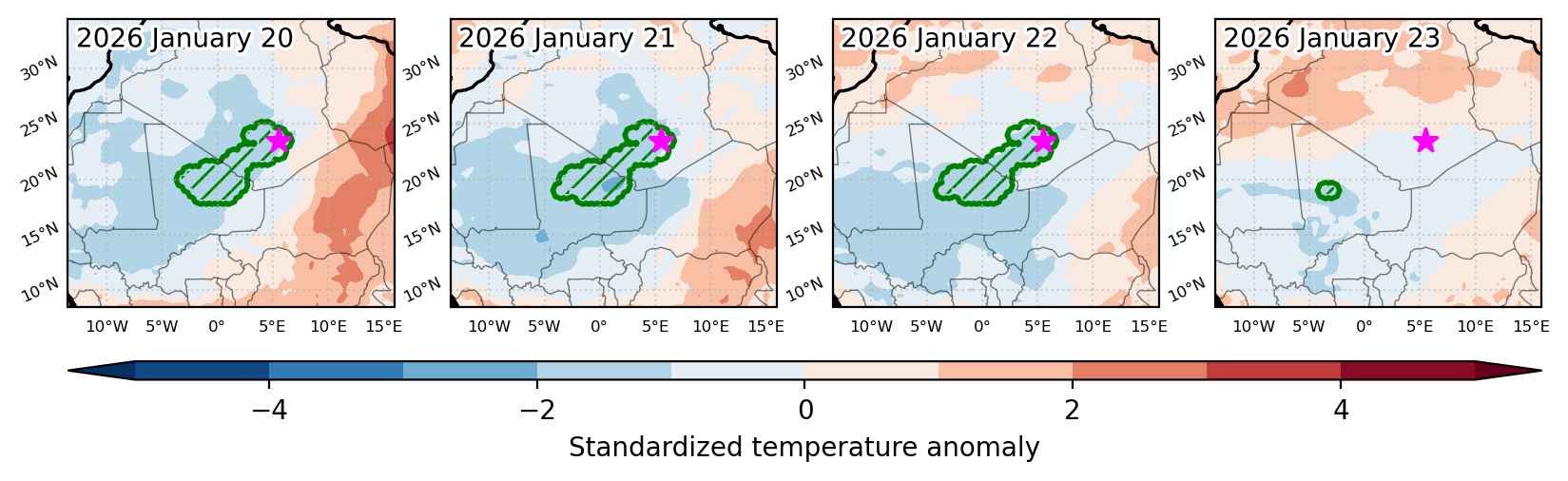
Fig. 1: Map of most extreme temperature anomalies (standardized) experienced during the event. The purple star indicates the center of the extreme event. Green hatching illustrates all areas under the effect of extremes at some time during the event.


Fig. 2: Evolution of temperature at the center of the event. The climatological percentile distribution is illustrated with color shadings.


Fig. 3: Maps illustrating the evolution of standardized temperature anomalies during the event.

Event ID: Cold_spell_2026-Jan-20_to_2026-Jan-23_5.5_23.5

Cold spell occuring from January 20 2026 to January 23 2026 at 58.0°N 279.5°E

Download data: JSON

Event type: Cold spell

Countries affected (identified with ArcGIS Online; provided only for geographical reference):

  • Canada

Duration: 4 days

Time span: January 20 2026 to January 23 2026

Statistics over entire affected area:

  • Mean temperature anomaly: -7.4 °C
  • Mean temperature: -30.6 °C
  • Minimum temperature anomaly: -11.2 °C
  • Minimum temperature: -37.6 °C

Event center: 58.0°N 279.5°E

Area affected: 120272 km$^2$


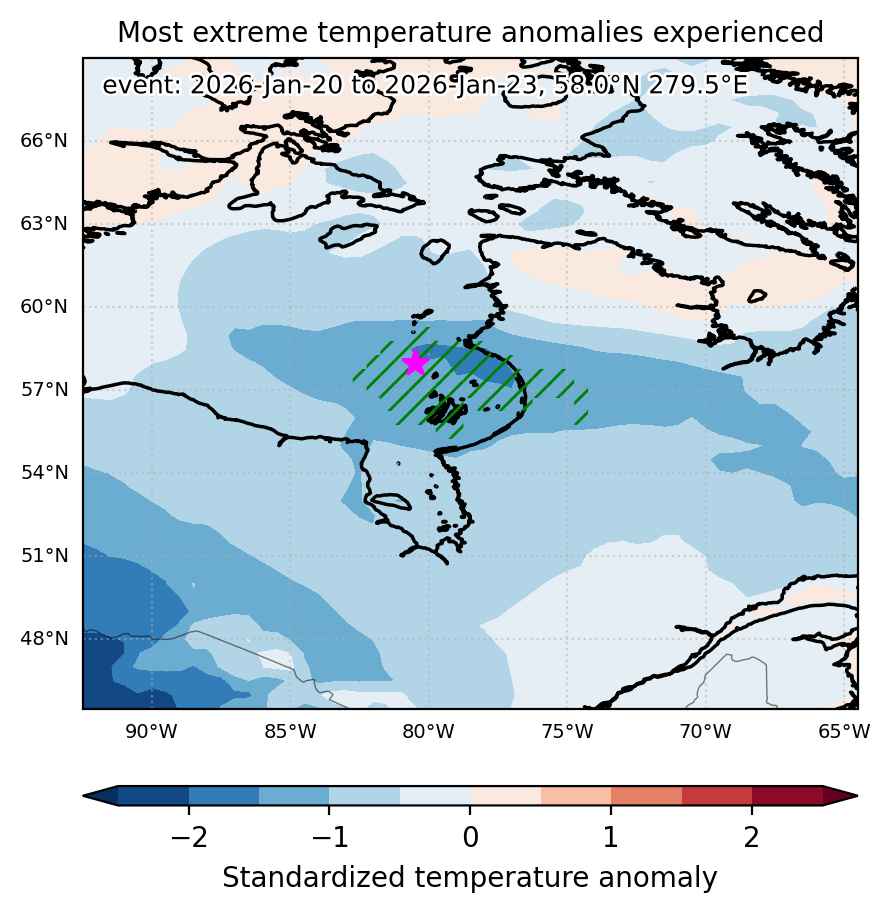
Fig. 1: Map of most extreme temperature anomalies (standardized) experienced during the event. The purple star indicates the center of the extreme event. Green hatching illustrates all areas under the effect of extremes at some time during the event.


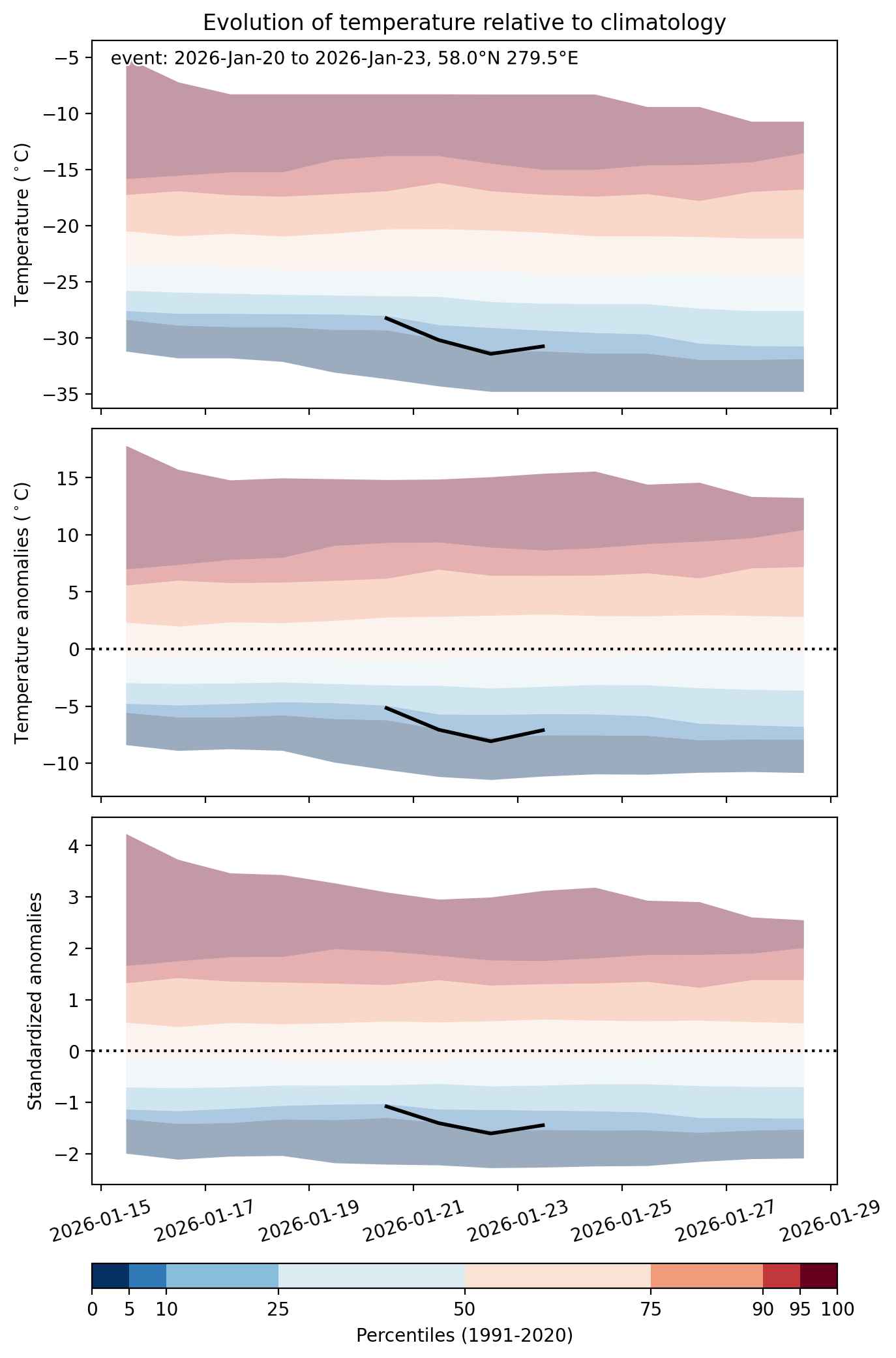
Fig. 2: Evolution of temperature at the center of the event. The climatological percentile distribution is illustrated with color shadings.


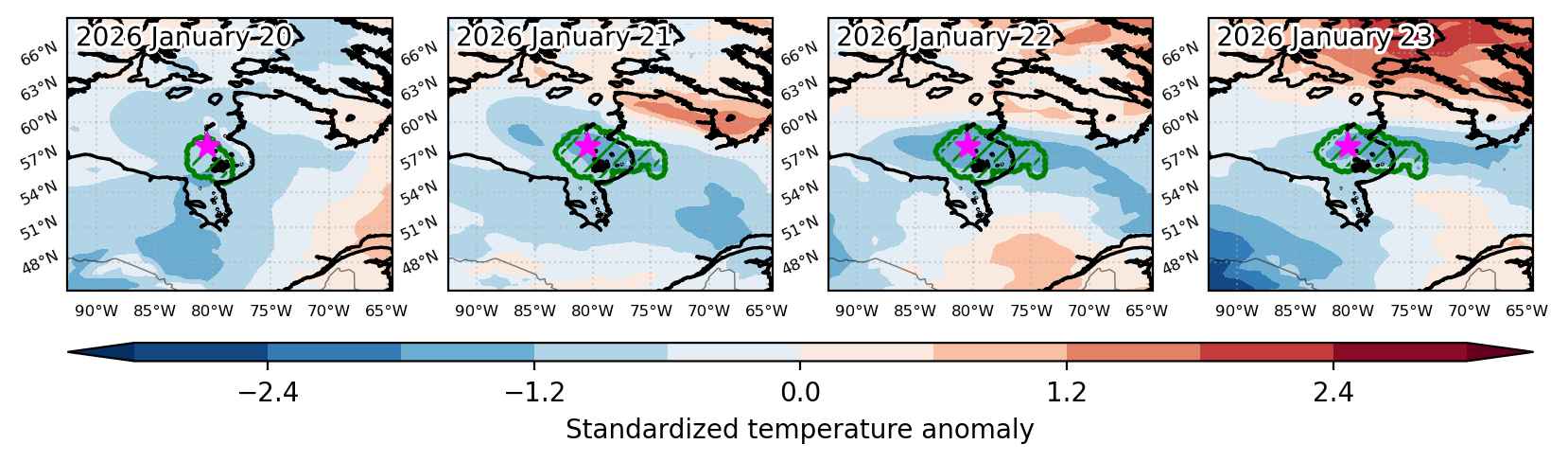
Fig. 3: Maps illustrating the evolution of standardized temperature anomalies during the event.

Event ID: Cold_spell_2026-Jan-20_to_2026-Jan-23_279.5_58.0

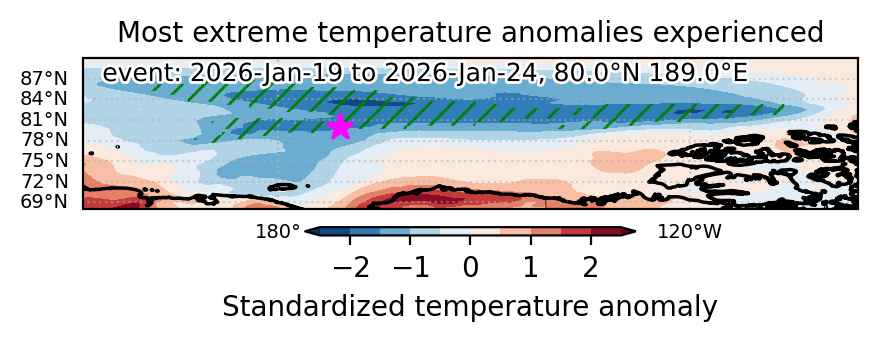
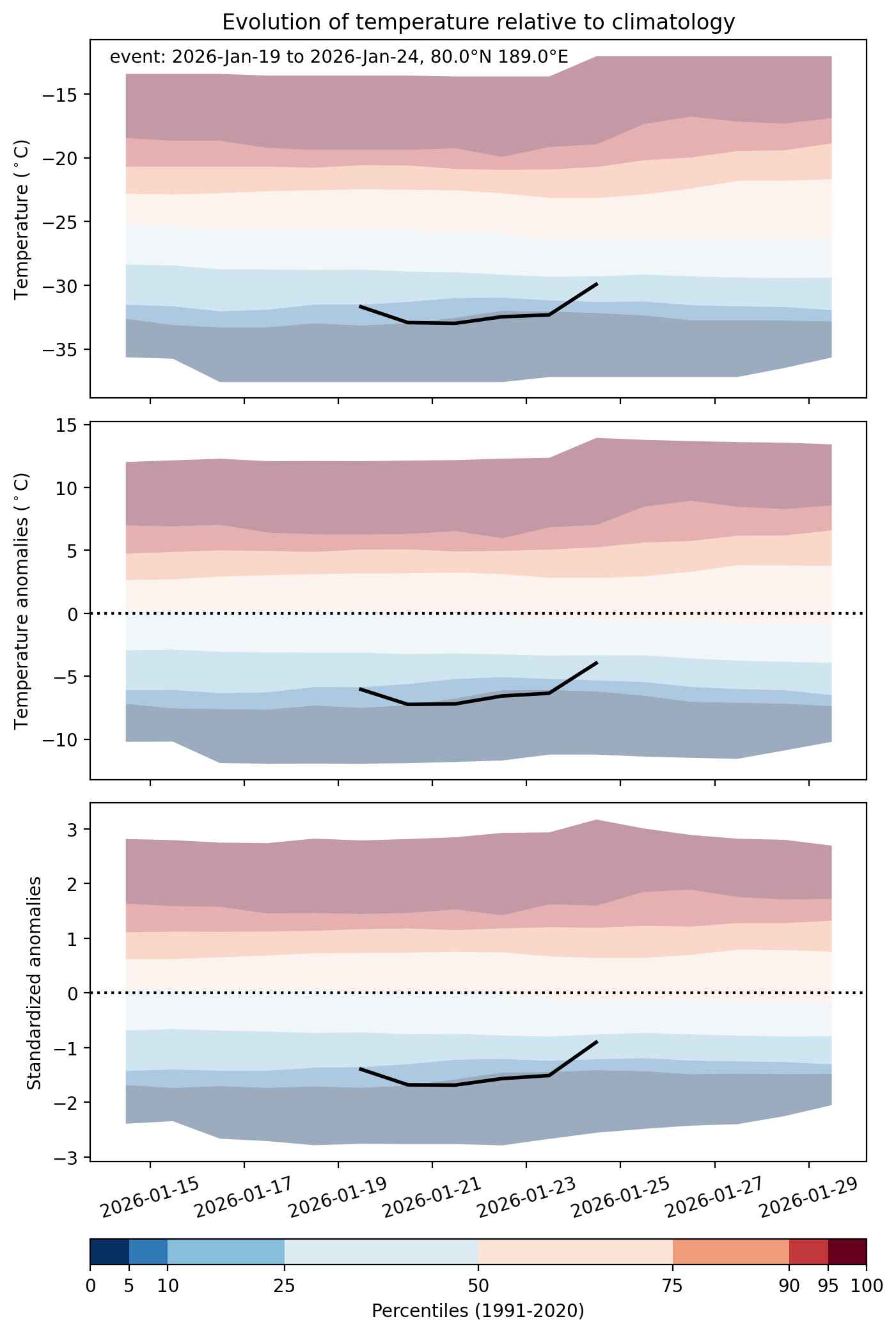
Cold spell occuring from January 19 2026 to January 24 2026 at 80.0°N 189.0°E

Download data: JSON

Event type: Cold spell

Countries affected (identified with ArcGIS Online; provided only for geographical reference):

  • Canada

Duration: 6 days

Time span: January 19 2026 to January 24 2026

Statistics over entire affected area:

  • Mean temperature anomaly: -6.8 °C
  • Mean temperature: -33.0 °C
  • Minimum temperature anomaly: -9.7 °C
  • Minimum temperature: -36.4 °C

Event center: 80.0°N 189.0°E

Area affected: 506444 km$^2$


Fig. 1: Map of most extreme temperature anomalies (standardized) experienced during the event. The purple star indicates the center of the extreme event. Green hatching illustrates all areas under the effect of extremes at some time during the event.


Fig. 2: Evolution of temperature at the center of the event. The climatological percentile distribution is illustrated with color shadings.


Fig. 3: Maps illustrating the evolution of standardized temperature anomalies during the event.

Event ID: Cold_spell_2026-Jan-19_to_2026-Jan-24_189.0_80.0

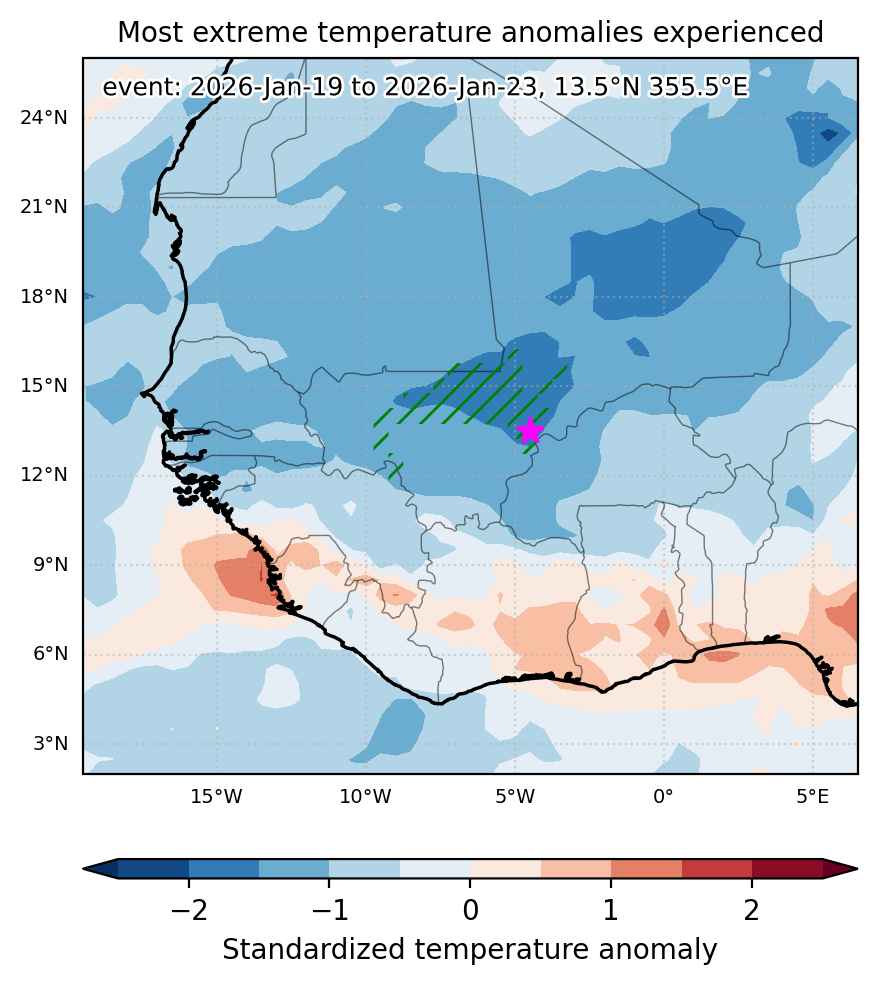
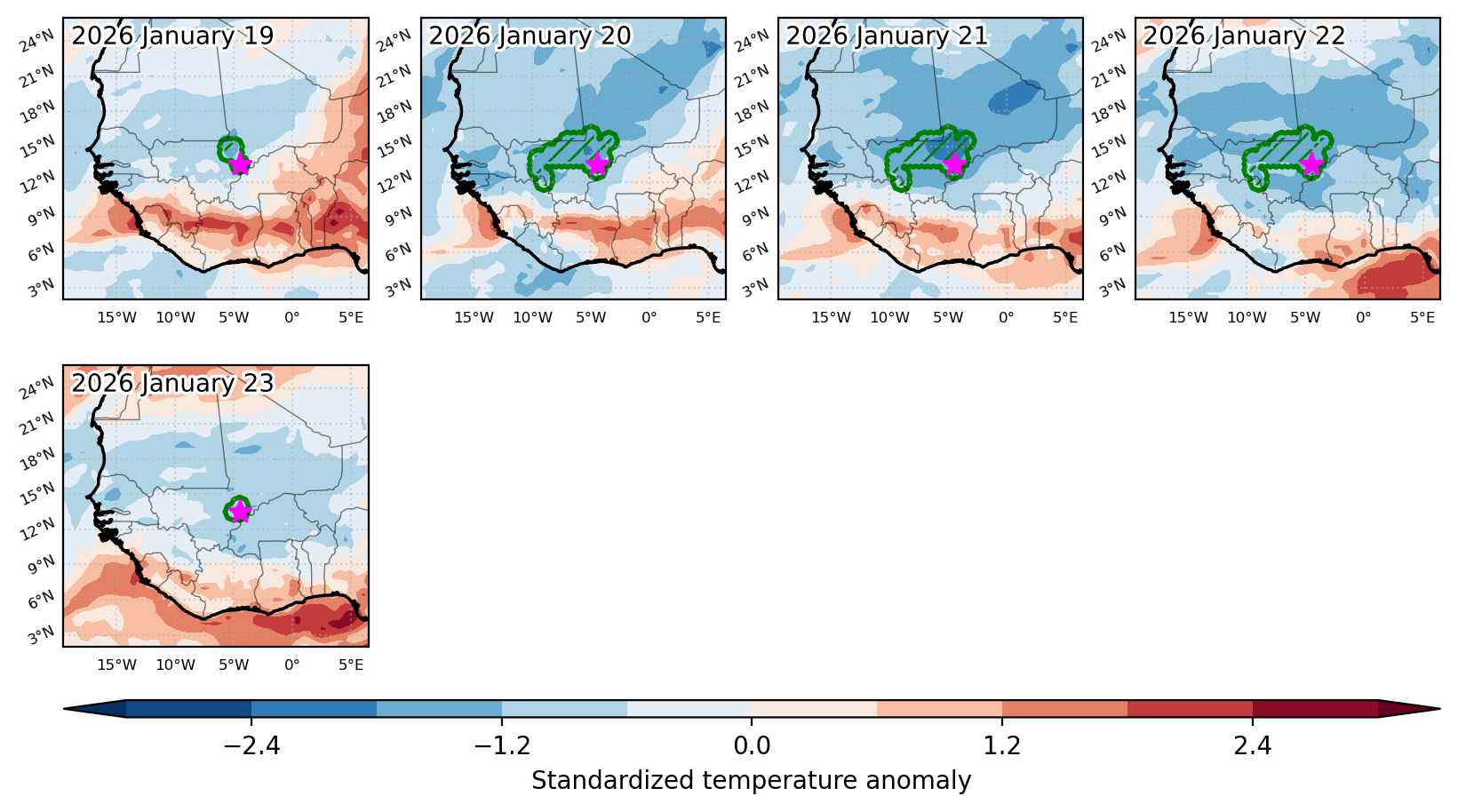
Cold spell occuring from January 19 2026 to January 23 2026 at 13.5°N 355.5°E

Download data: JSON

Event type: Cold spell

Countries affected (identified with ArcGIS Online; provided only for geographical reference):

  • Guinea
  • Mali

Duration: 5 days

Time span: January 19 2026 to January 23 2026

Statistics over entire affected area:

  • Mean temperature anomaly: -3.9 °C
  • Mean temperature: 20.1 °C
  • Minimum temperature anomaly: -5.4 °C
  • Minimum temperature: 16.4 °C

Event center: 13.5°N 355.5°E

Area affected: 125750 km$^2$


Fig. 1: Map of most extreme temperature anomalies (standardized) experienced during the event. The purple star indicates the center of the extreme event. Green hatching illustrates all areas under the effect of extremes at some time during the event.


Fig. 2: Evolution of temperature at the center of the event. The climatological percentile distribution is illustrated with color shadings.


Fig. 3: Maps illustrating the evolution of standardized temperature anomalies during the event.

Event ID: Cold_spell_2026-Jan-19_to_2026-Jan-23_355.5_13.5

Cold spell occuring from January 18 2026 to January 21 2026 at -27.0°S 248.0°E

Download data: JSON

Event type: Cold spell

Countries affected (identified with ArcGIS Online; provided only for geographical reference):

  • Chile

Duration: 4 days

Time span: January 18 2026 to January 21 2026

Statistics over entire affected area:

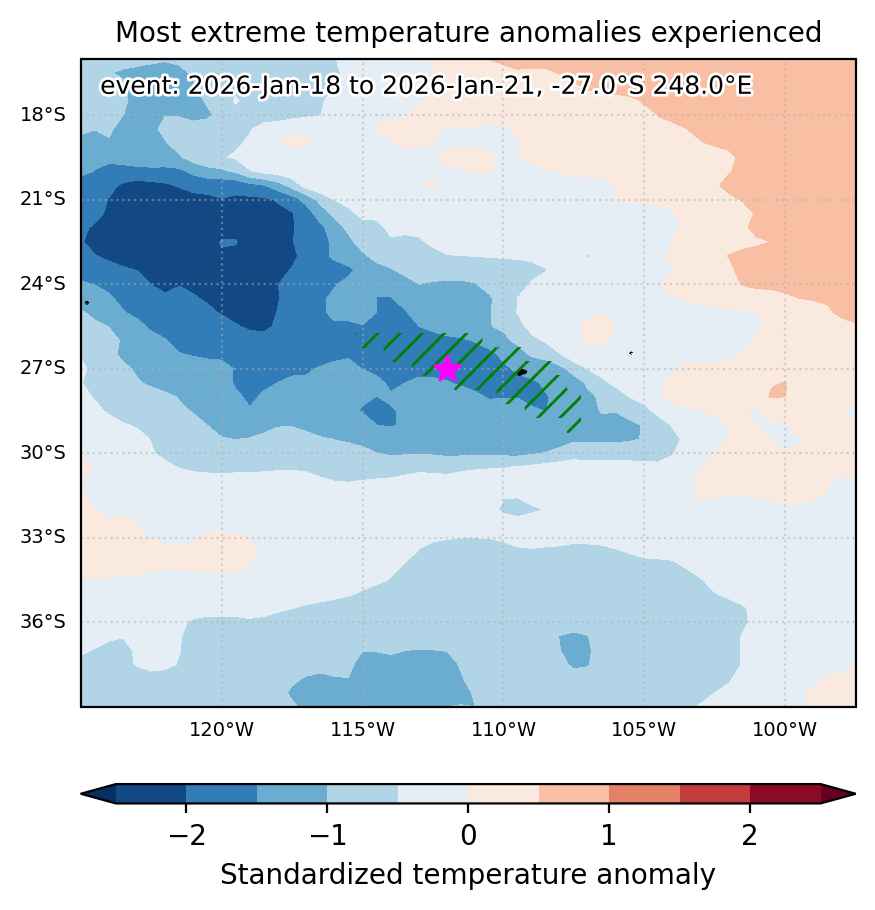
  • Mean temperature anomaly: -1.1 °C
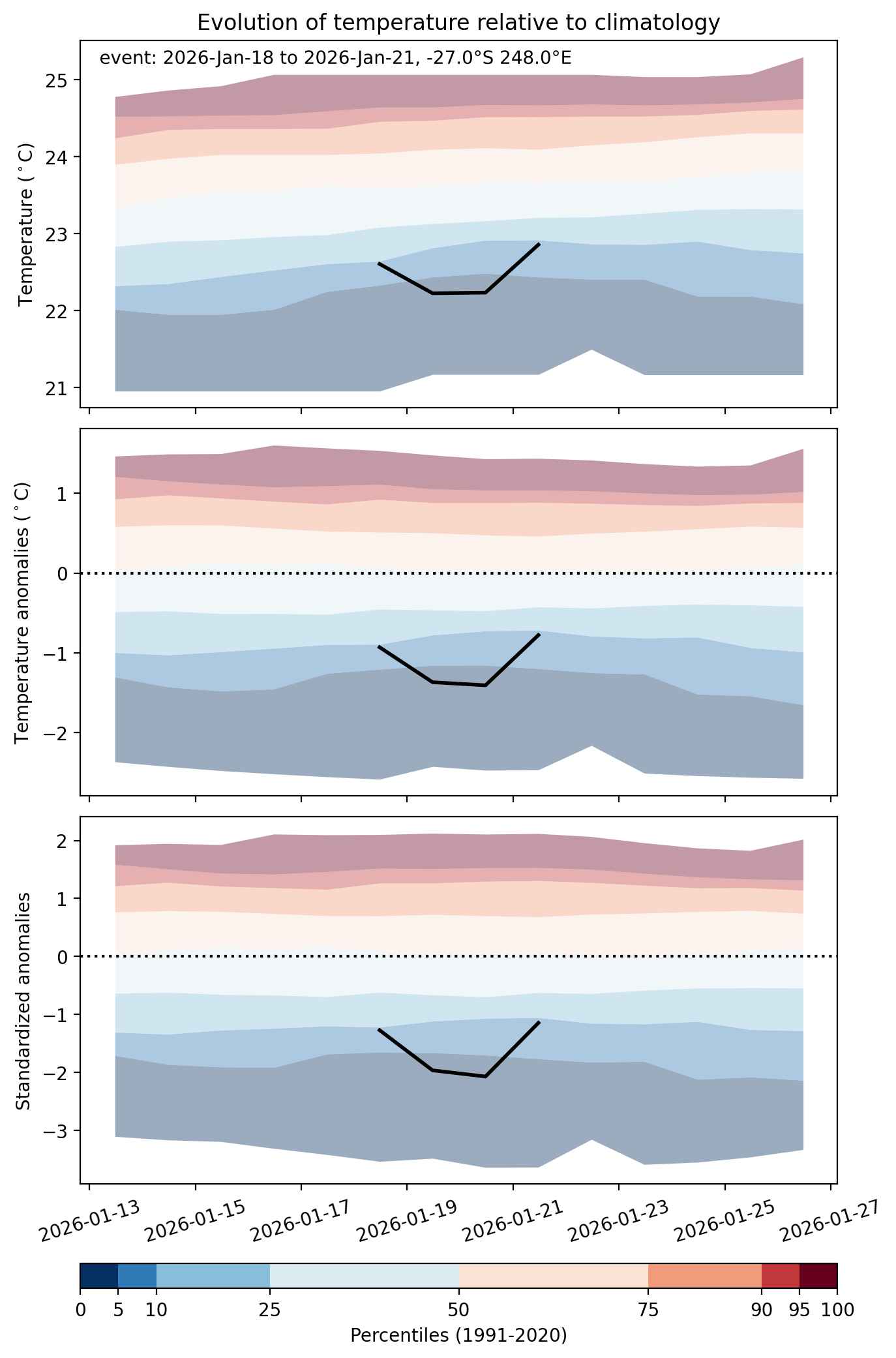
  • Mean temperature: 22.4 °C
  • Minimum temperature anomaly: -1.5 °C
  • Minimum temperature: 21.7 °C

Event center: -27.0°S 248.0°E

Area affected: 132088 km$^2$


Fig. 1: Map of most extreme temperature anomalies (standardized) experienced during the event. The purple star indicates the center of the extreme event. Green hatching illustrates all areas under the effect of extremes at some time during the event.


Fig. 2: Evolution of temperature at the center of the event. The climatological percentile distribution is illustrated with color shadings.


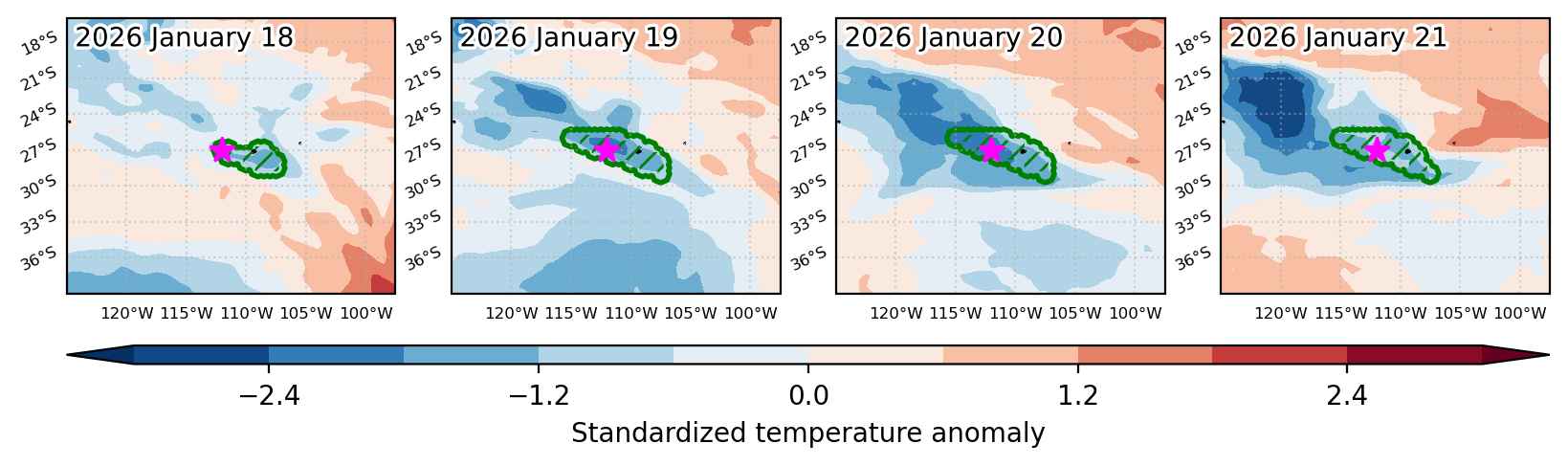
Fig. 3: Maps illustrating the evolution of standardized temperature anomalies during the event.

Event ID: Cold_spell_2026-Jan-18_to_2026-Jan-21_248.0_-27.0

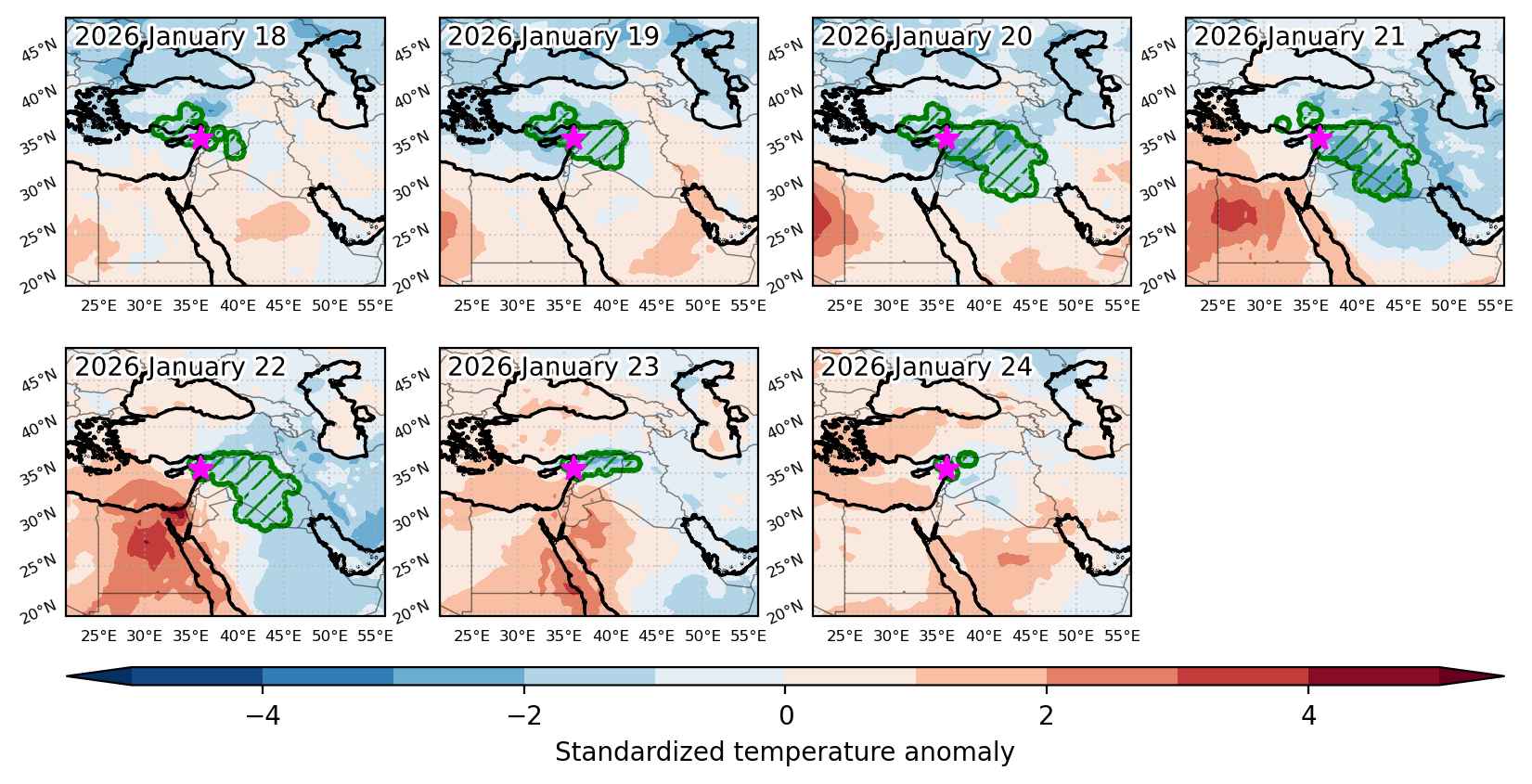
Cold spell occuring from January 18 2026 to January 24 2026 at 35.5°N 36.0°E

Download data: JSON

Event type: Cold spell

Countries affected (identified with ArcGIS Online; provided only for geographical reference):

  • Iran, Islamic Republic of
  • Iraq
  • Lebanon
  • Saudi Arabia
  • Syrian Arab Republic
  • Türkiye

Duration: 7 days

Time span: January 18 2026 to January 24 2026

Statistics over entire affected area:

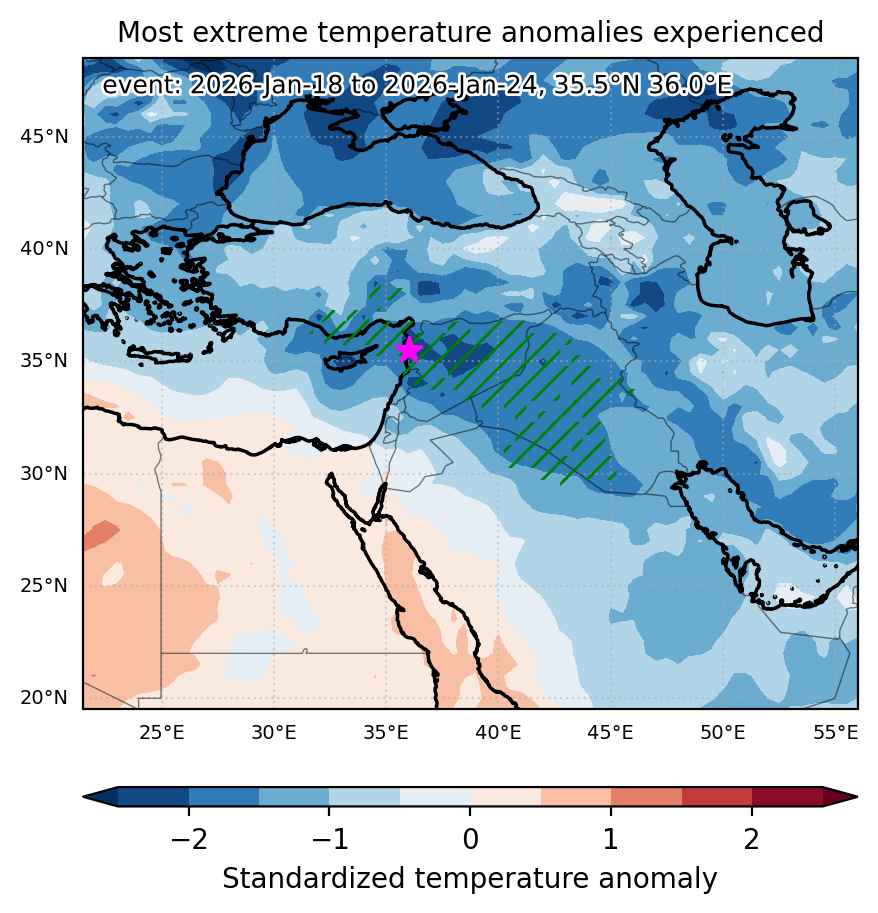
  • Mean temperature anomaly: -4.2 °C
  • Mean temperature: 3.8 °C
  • Minimum temperature anomaly: -9.5 °C
  • Minimum temperature: -12.9 °C

Event center: 35.5°N 36.0°E

Area affected: 457936 km$^2$


Fig. 1: Map of most extreme temperature anomalies (standardized) experienced during the event. The purple star indicates the center of the extreme event. Green hatching illustrates all areas under the effect of extremes at some time during the event.


Fig. 2: Evolution of temperature at the center of the event. The climatological percentile distribution is illustrated with color shadings.


Fig. 3: Maps illustrating the evolution of standardized temperature anomalies during the event.

Event ID: Cold_spell_2026-Jan-18_to_2026-Jan-24_36.0_35.5

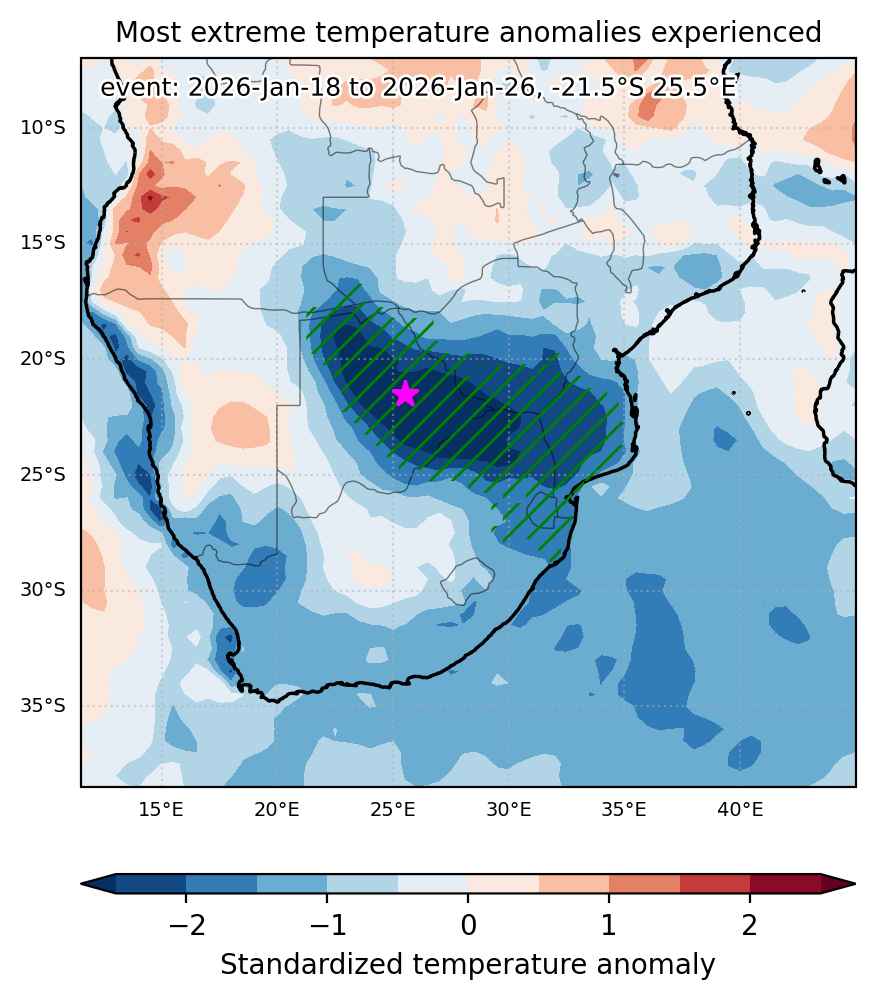
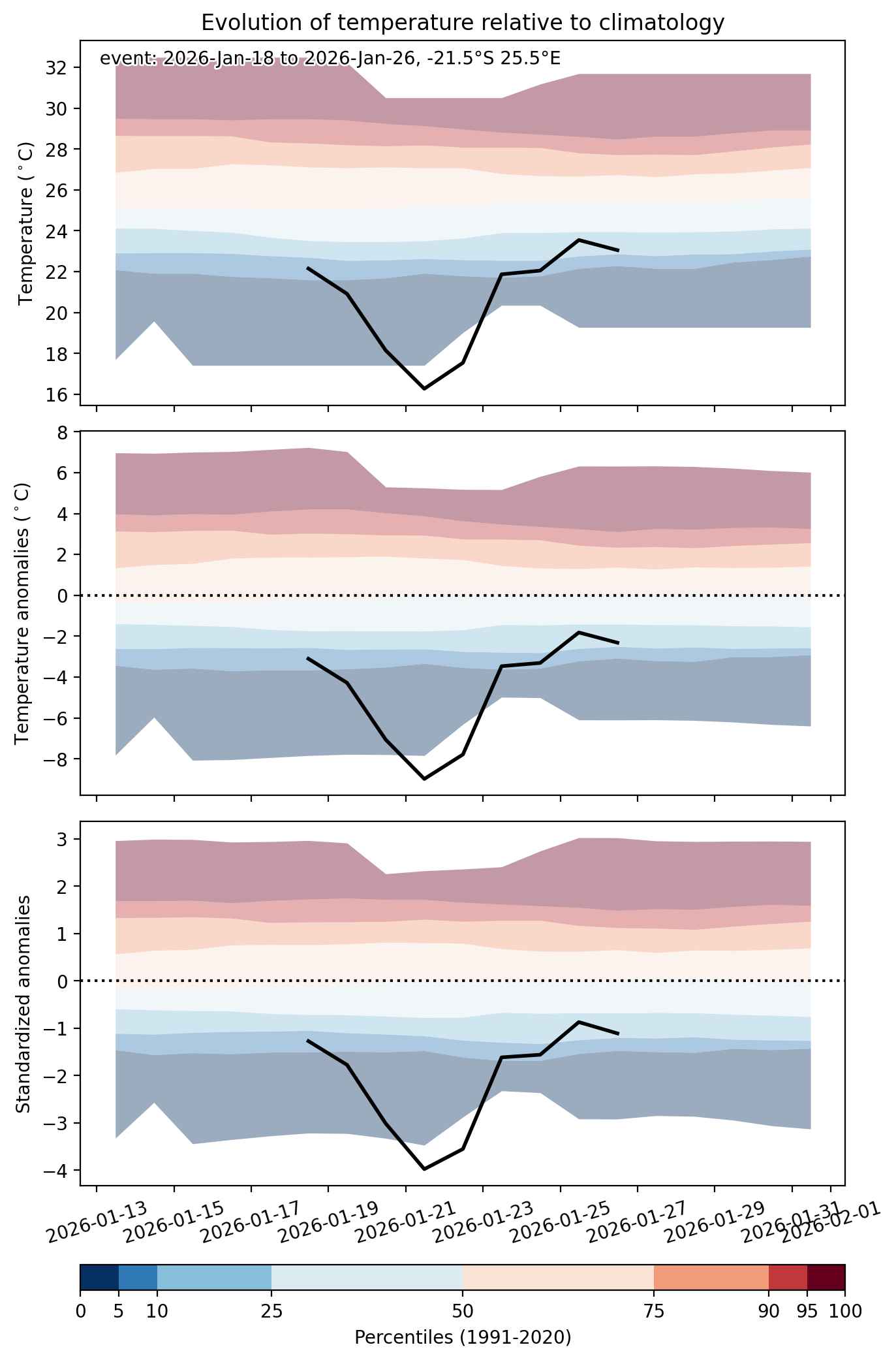
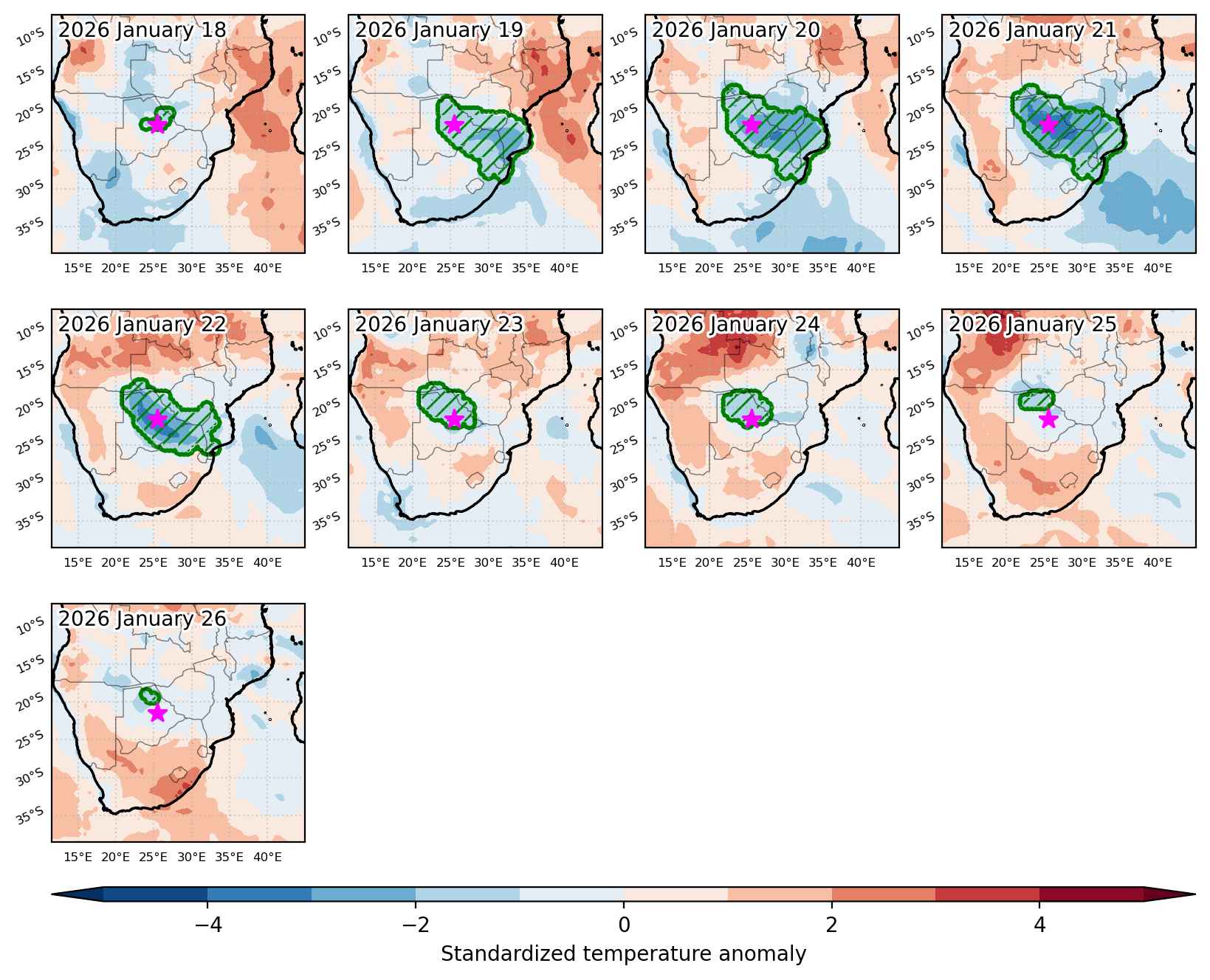
Cold spell occuring from January 18 2026 to January 26 2026 at -21.5°S 25.5°E

Download data: JSON

Event type: Cold spell

Countries affected (identified with ArcGIS Online; provided only for geographical reference):

  • Angola
  • Botswana
  • Eswatini
  • Mozambique
  • Namibia
  • South Africa
  • Zambia
  • Zimbabwe

Duration: 9 days

Time span: January 18 2026 to January 26 2026

Statistics over entire affected area:

  • Mean temperature anomaly: -4.5 °C
  • Mean temperature: 20.5 °C
  • Minimum temperature anomaly: -9.0 °C
  • Minimum temperature: 14.5 °C

Event center: -21.5°S 25.5°E

Area affected: 879109 km$^2$


Fig. 1: Map of most extreme temperature anomalies (standardized) experienced during the event. The purple star indicates the center of the extreme event. Green hatching illustrates all areas under the effect of extremes at some time during the event.


Fig. 2: Evolution of temperature at the center of the event. The climatological percentile distribution is illustrated with color shadings.


Fig. 3: Maps illustrating the evolution of standardized temperature anomalies during the event.

Event ID: Cold_spell_2026-Jan-18_to_2026-Jan-26_25.5_-21.5

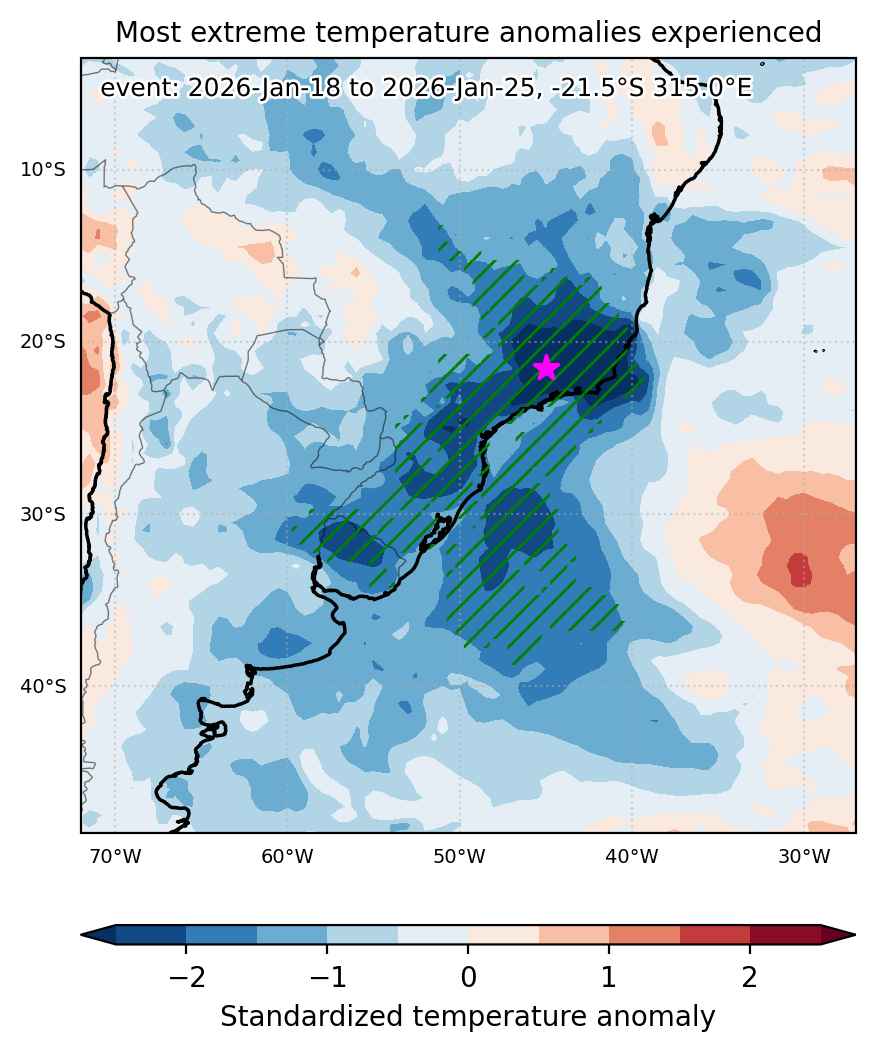
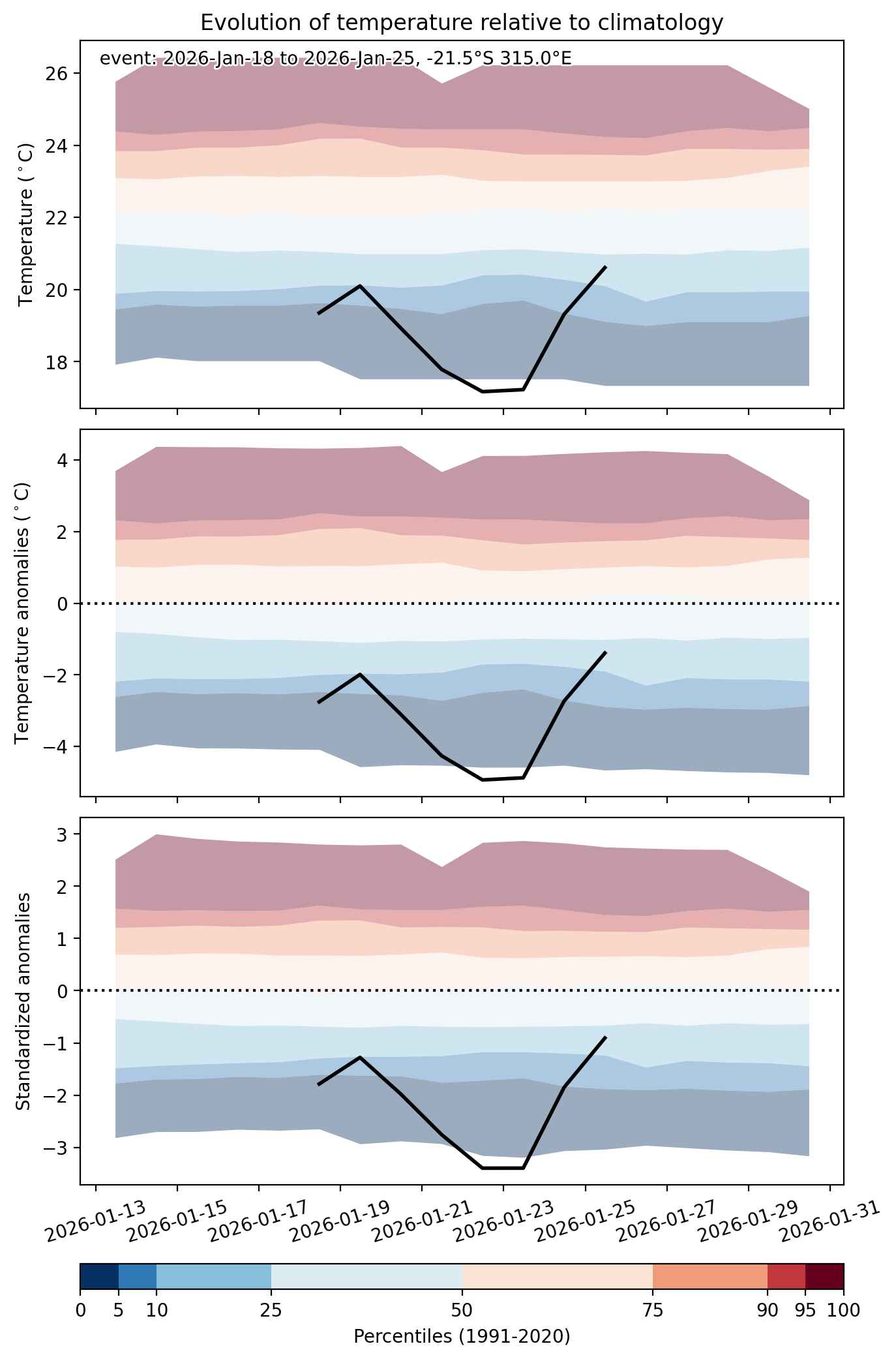
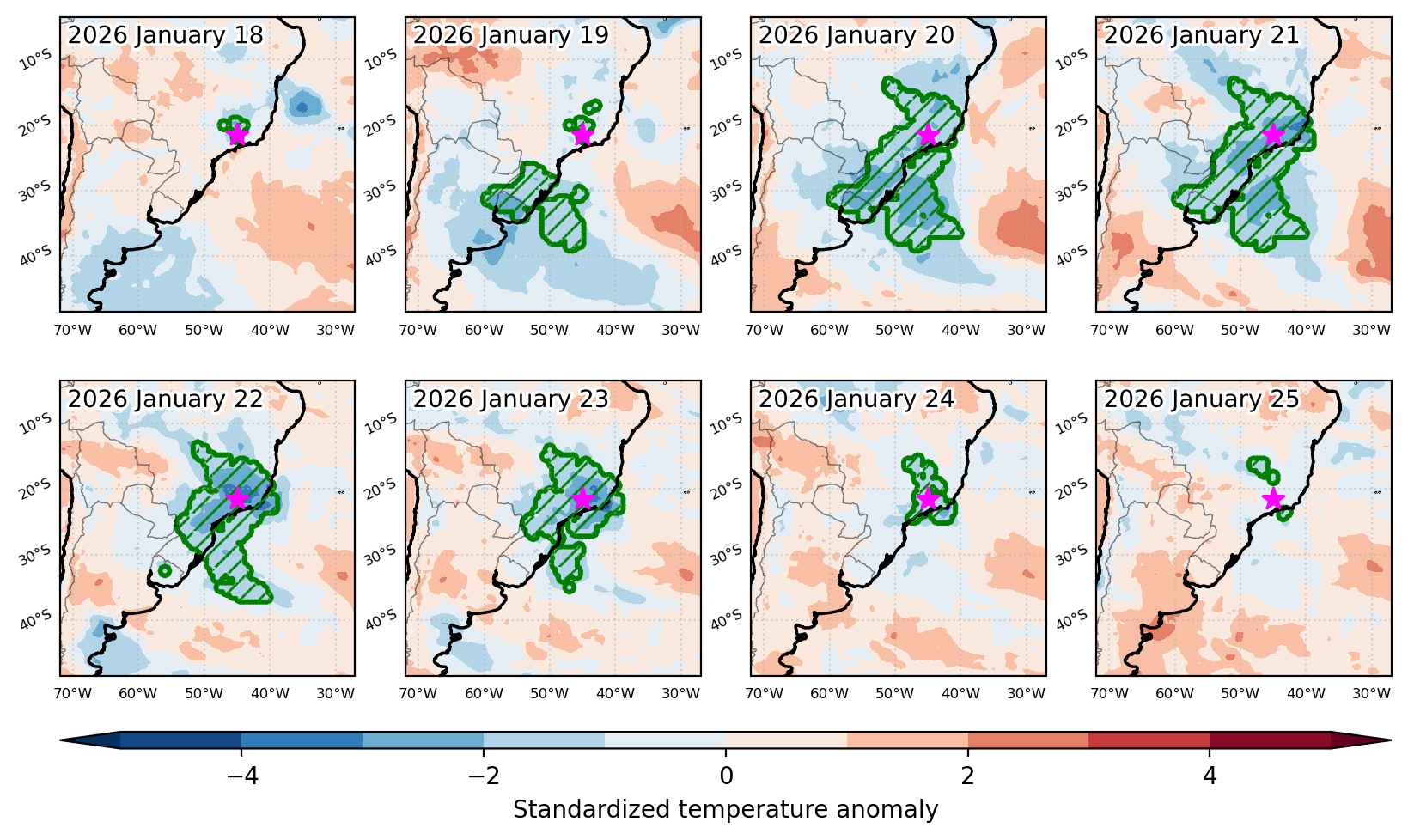
Cold spell occuring from January 18 2026 to January 25 2026 at -21.5°S 315.0°E

Download data: JSON

Event type: Cold spell

Countries affected (identified with ArcGIS Online; provided only for geographical reference):

  • Argentina
  • Brazil
  • Uruguay

Duration: 8 days

Time span: January 18 2026 to January 25 2026

Statistics over entire affected area:

  • Mean temperature anomaly: -2.9 °C
  • Mean temperature: 20.4 °C
  • Minimum temperature anomaly: -6.3 °C
  • Minimum temperature: 13.1 °C

Event center: -21.5°S 315.0°E

Area affected: 2258095 km$^2$


Fig. 1: Map of most extreme temperature anomalies (standardized) experienced during the event. The purple star indicates the center of the extreme event. Green hatching illustrates all areas under the effect of extremes at some time during the event.


Fig. 2: Evolution of temperature at the center of the event. The climatological percentile distribution is illustrated with color shadings.


Fig. 3: Maps illustrating the evolution of standardized temperature anomalies during the event.

Event ID: Cold_spell_2026-Jan-18_to_2026-Jan-25_315.0_-21.5

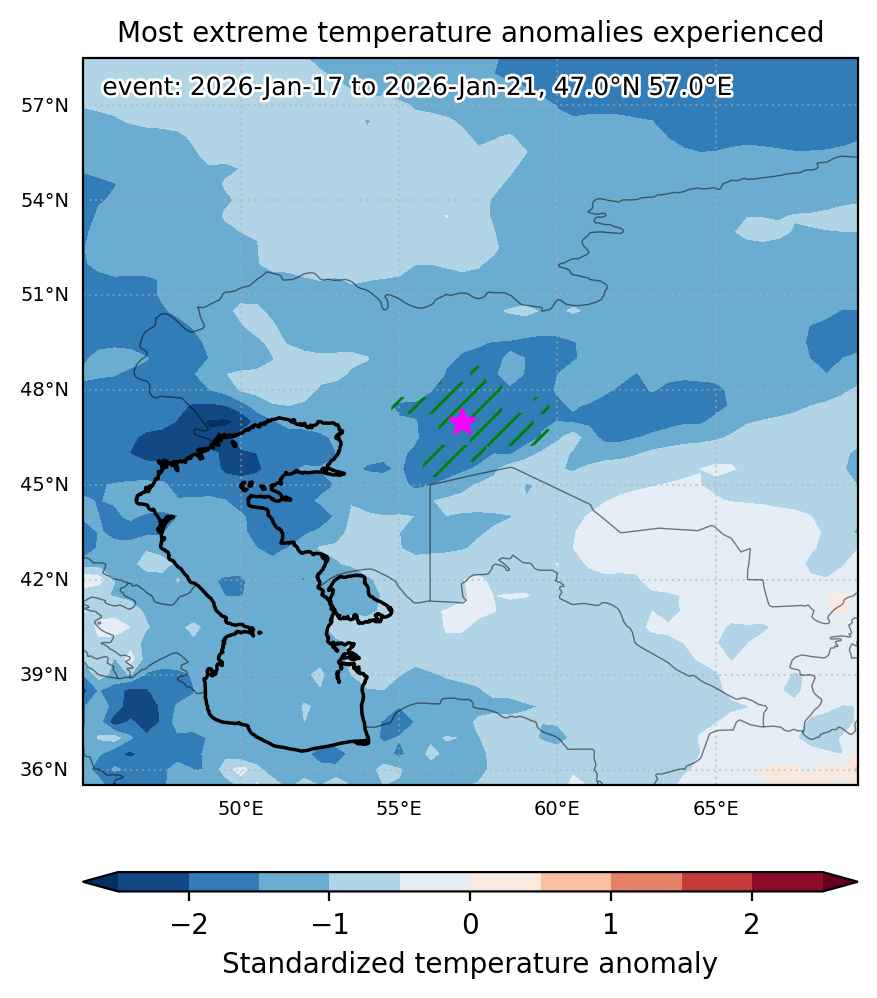
Cold spell occuring from January 17 2026 to January 21 2026 at 47.0°N 57.0°E

Download data: JSON

Event type: Cold spell

Countries affected (identified with ArcGIS Online; provided only for geographical reference):

  • Kazakhstan

Duration: 5 days

Time span: January 17 2026 to January 21 2026

Statistics over entire affected area:

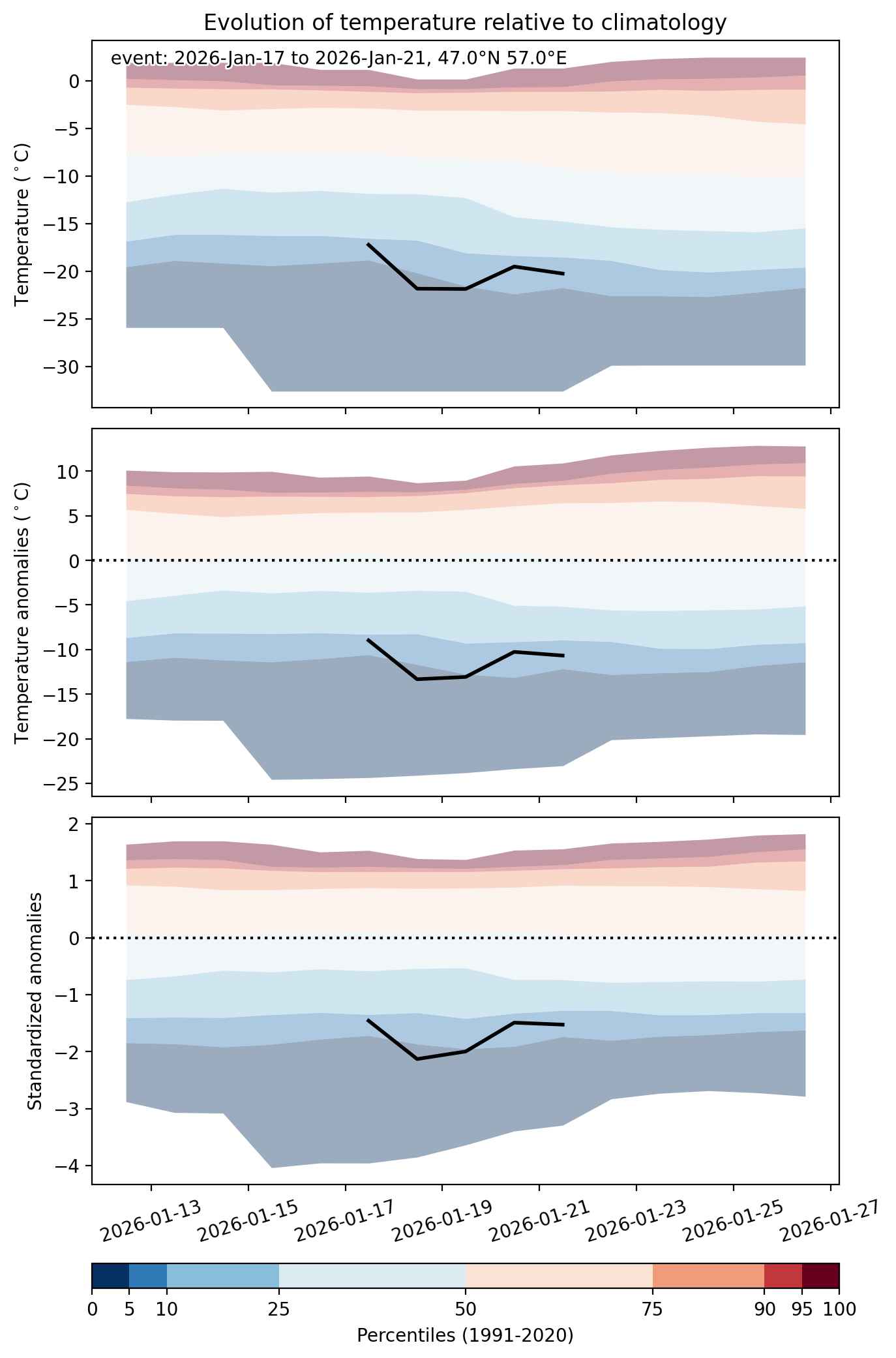
  • Mean temperature anomaly: -10.8 °C
  • Mean temperature: -19.8 °C
  • Minimum temperature anomaly: -13.4 °C
  • Minimum temperature: -23.3 °C

Event center: 47.0°N 57.0°E

Area affected: 63237 km$^2$


Fig. 1: Map of most extreme temperature anomalies (standardized) experienced during the event. The purple star indicates the center of the extreme event. Green hatching illustrates all areas under the effect of extremes at some time during the event.


Fig. 2: Evolution of temperature at the center of the event. The climatological percentile distribution is illustrated with color shadings.


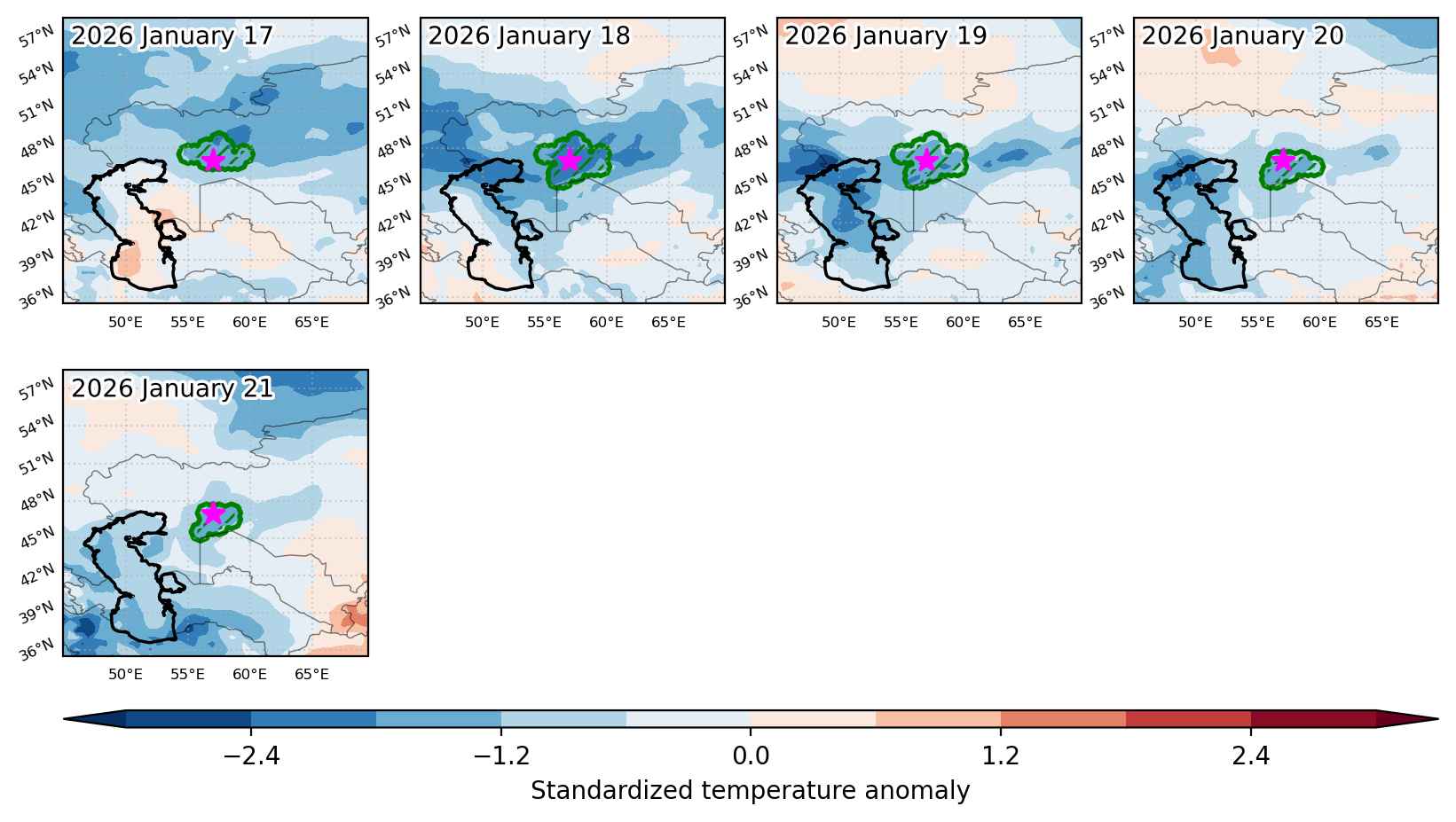
Fig. 3: Maps illustrating the evolution of standardized temperature anomalies during the event.

Event ID: Cold_spell_2026-Jan-17_to_2026-Jan-21_57.0_47.0