Heat wave occuring from July 24 2020 to July 30 2020 at -22.5°S 319.0°E

Download data: JSON

Event type: Heat wave

Countries affected (identified with ArcGIS Online; provided only for geographical reference):

  • Brazil

Duration: 7 days

Time span: July 24 2020 to July 30 2020

Statistics over entire affected area:

  • Mean temperature anomaly: 1.3 °C
  • Mean temperature: 23.7 °C
  • Maximum temperature anomaly: 2.2 °C
  • Maximum temperature: 24.4 °C

Event center: -22.5°S 319.0°E

Area affected: 204698 km$^2$
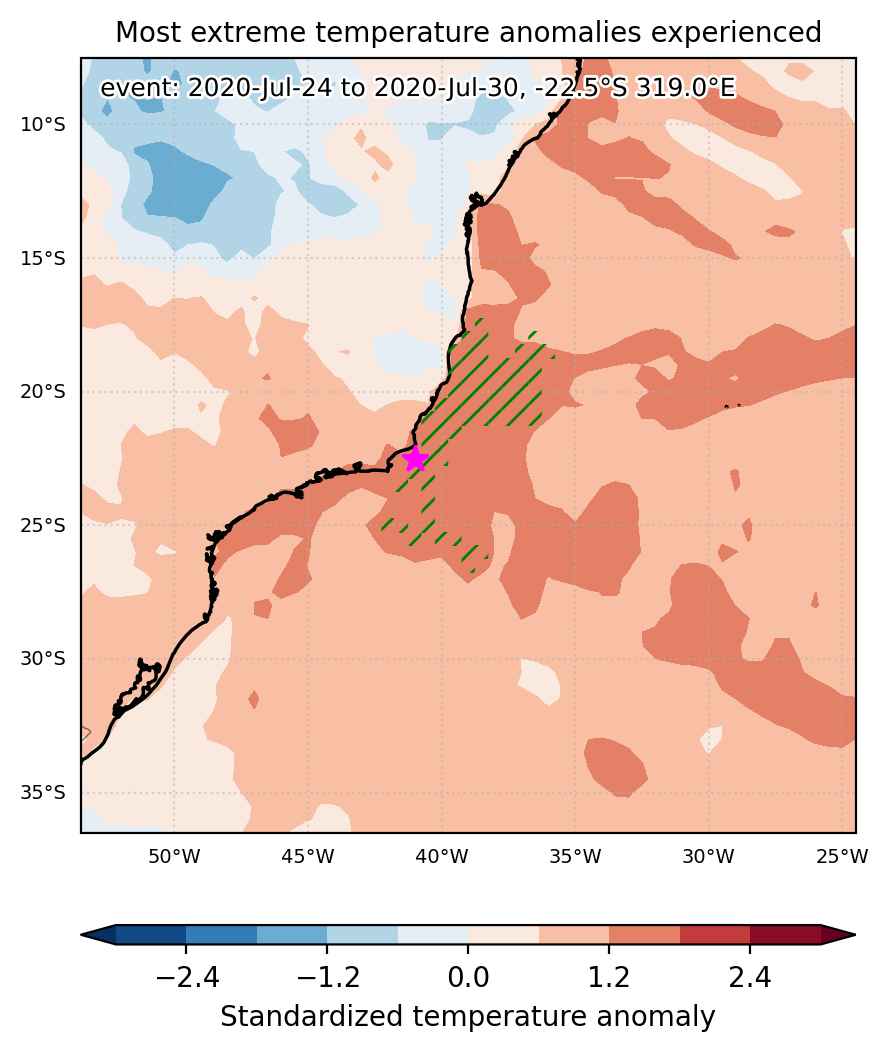

Fig. 1: Map of most extreme temperature anomalies (standardized) experienced during the event. The purple star indicates the center of the extreme event. Green hatching illustrates all areas under the effect of extremes at some time during the event.
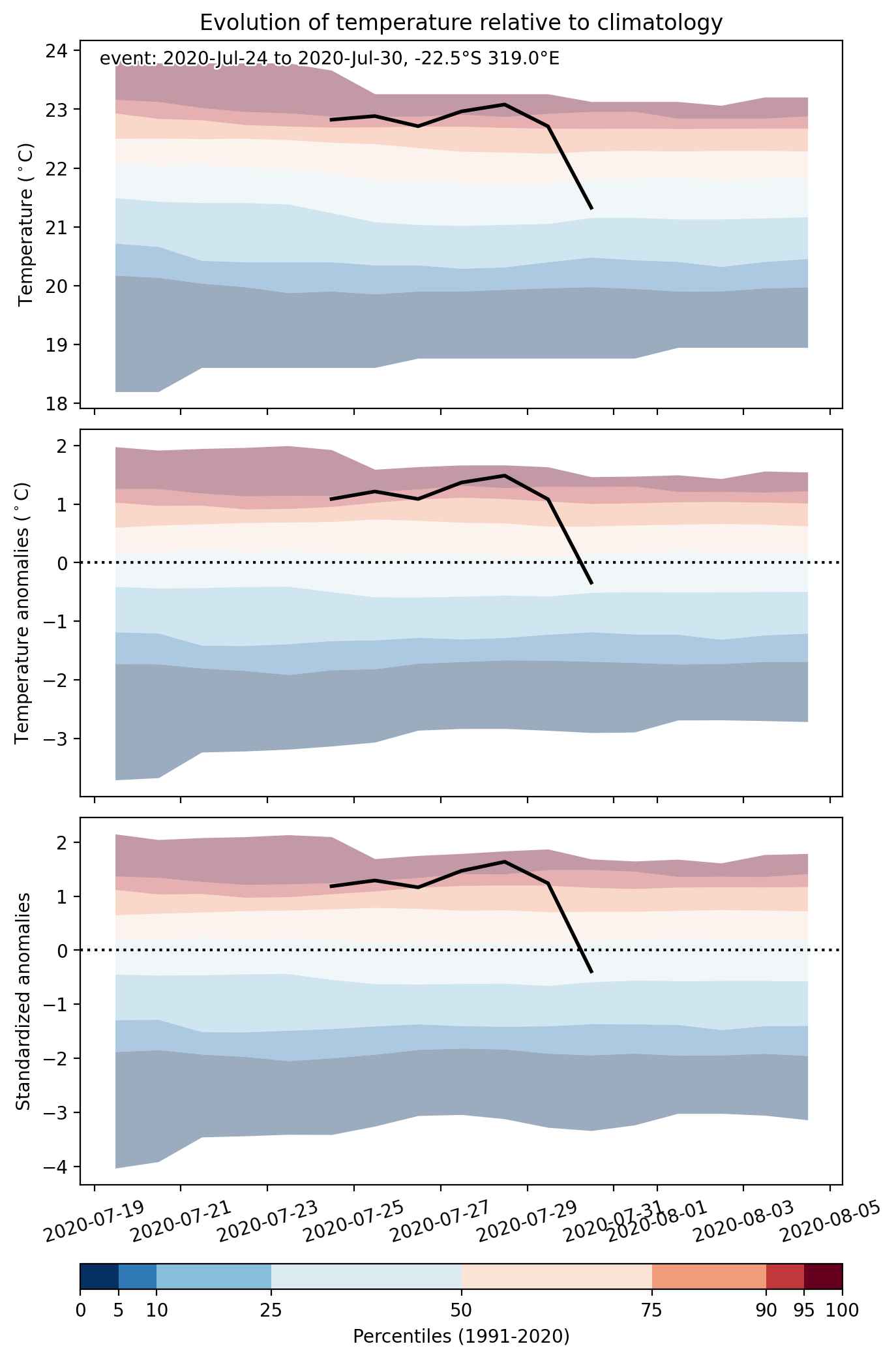


Fig. 2: Evolution of temperature at the center of the event. The climatological percentile distribution is illustrated with color shadings.
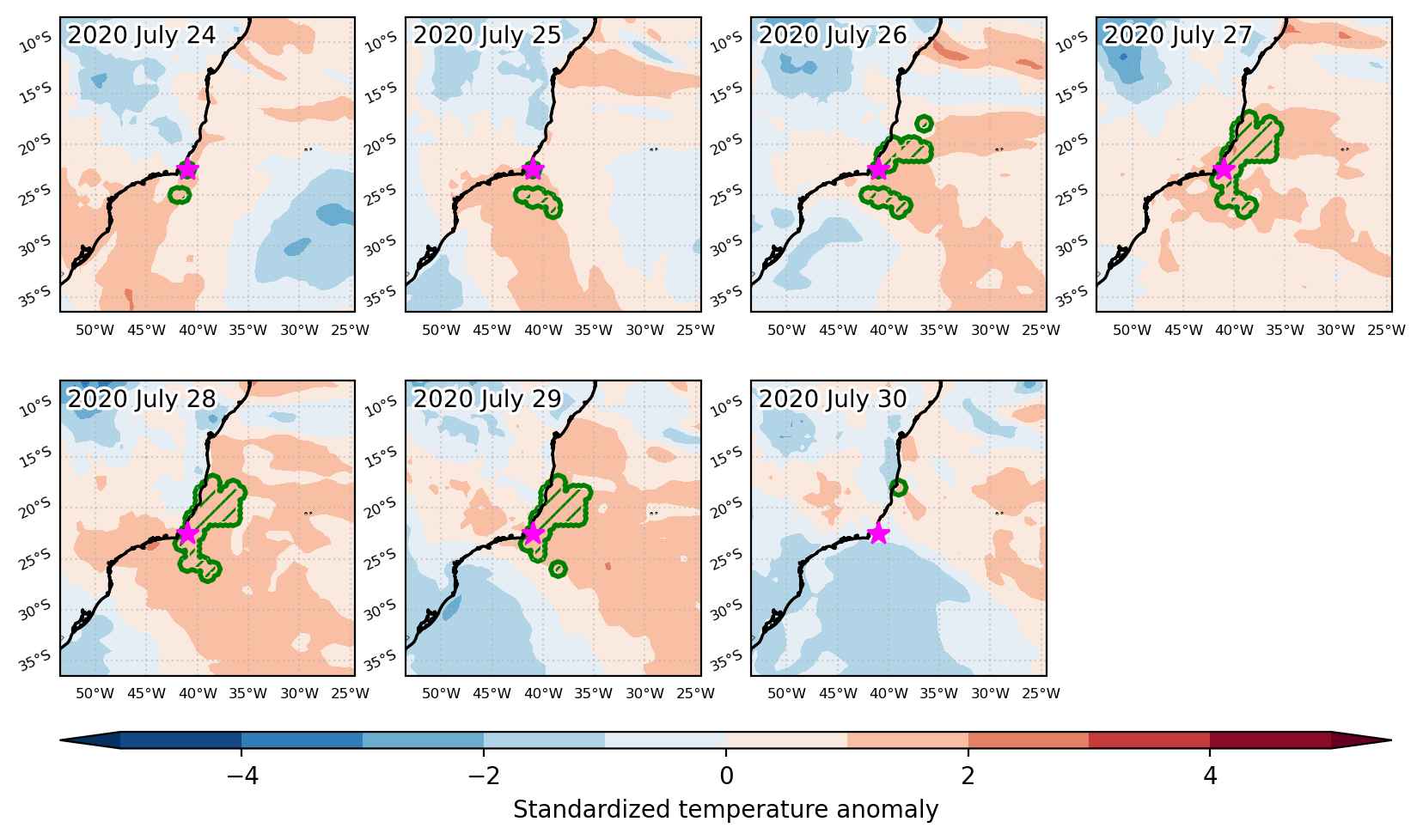


Fig. 3: Maps illustrating the evolution of standardized temperature anomalies during the event.

Event ID: Heat_wave_2020-Jul-24_to_2020-Jul-30_319.0_-22.5
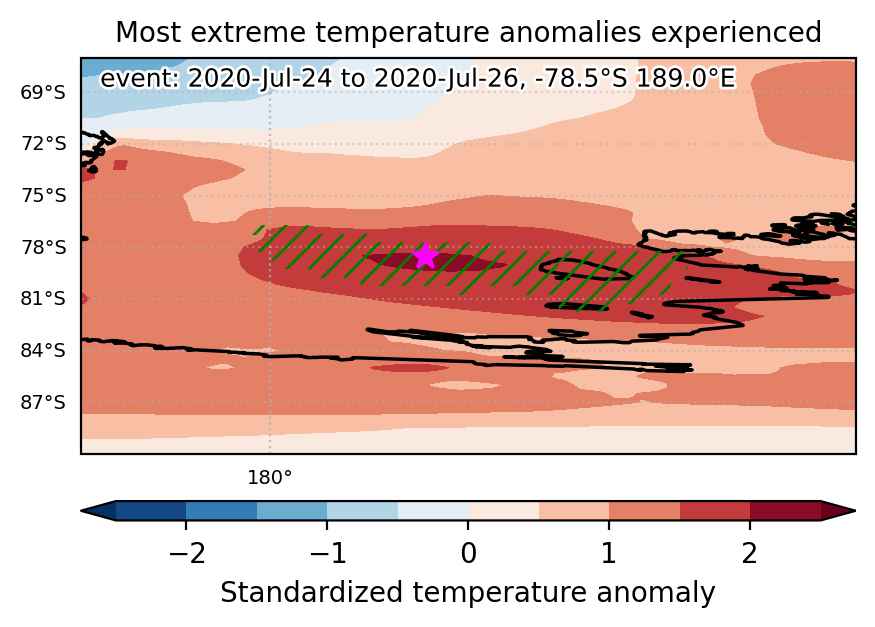
Heat wave occuring from July 24 2020 to July 26 2020 at -78.5°S 189.0°E

Download data: JSON

Event type: Heat wave

Countries affected (identified with ArcGIS Online; provided only for geographical reference):

  • Antarctica

Duration: 3 days

Time span: July 24 2020 to July 26 2020

Statistics over entire affected area:

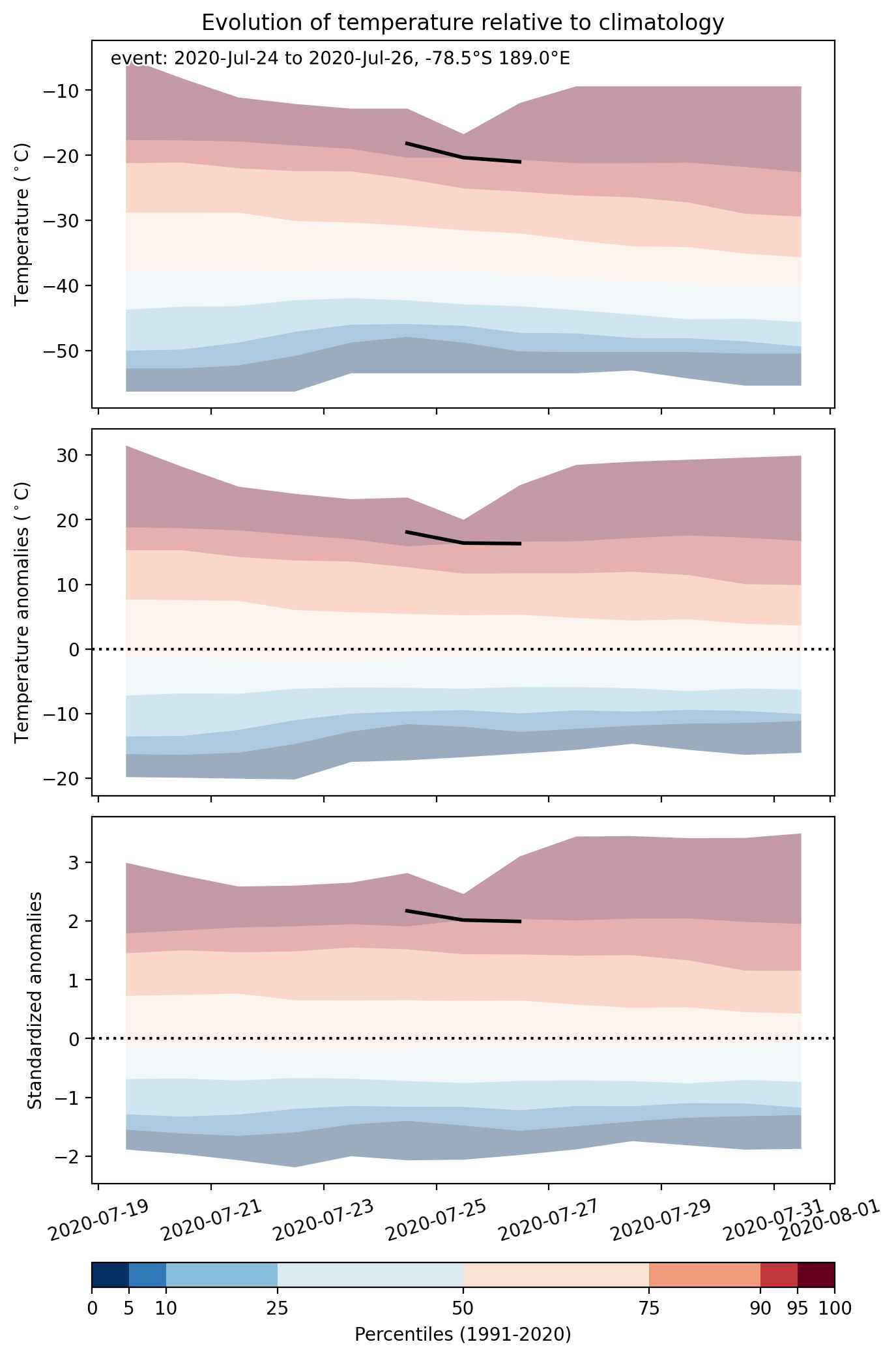
  • Mean temperature anomaly: 14.4 °C
  • Mean temperature: -21.4 °C
  • Maximum temperature anomaly: 20.8 °C
  • Maximum temperature: -11.1 °C

Event center: -78.5°S 189.0°E

Area affected: 150908 km$^2$


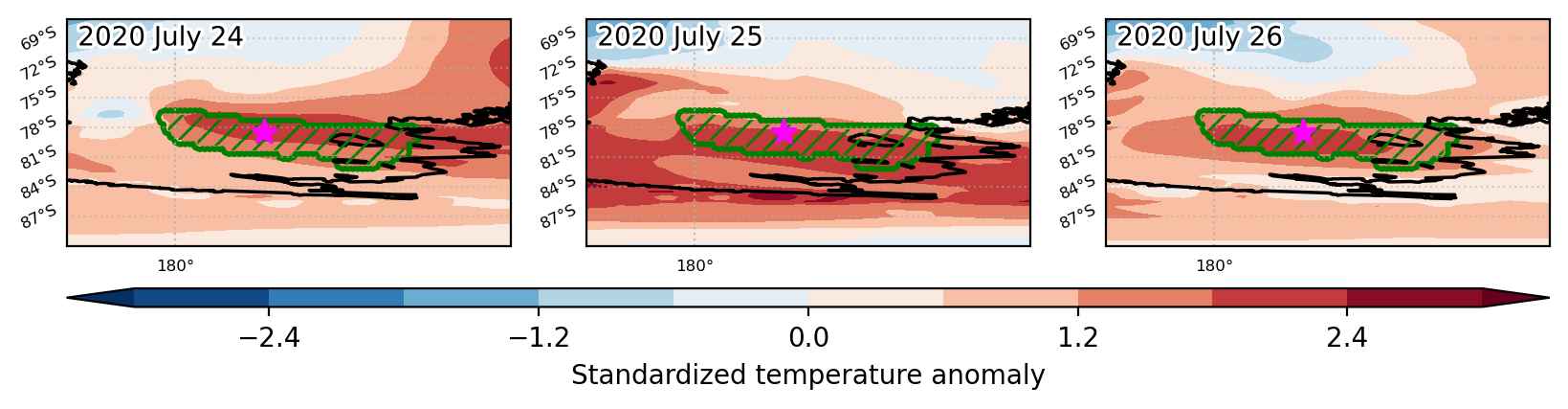
Fig. 1: Map of most extreme temperature anomalies (standardized) experienced during the event. The purple star indicates the center of the extreme event. Green hatching illustrates all areas under the effect of extremes at some time during the event.


Fig. 2: Evolution of temperature at the center of the event. The climatological percentile distribution is illustrated with color shadings.


Fig. 3: Maps illustrating the evolution of standardized temperature anomalies during the event.

Event ID: Heat_wave_2020-Jul-24_to_2020-Jul-26_189.0_-78.5

Heat wave occuring from July 24 2020 to July 29 2020 at 17.5°N 293.0°E

Download data: JSON

Event type: Heat wave

Countries affected (identified with ArcGIS Online; provided only for geographical reference):

  • Puerto Rico

Duration: 6 days

Time span: July 24 2020 to July 29 2020

Statistics over entire affected area:

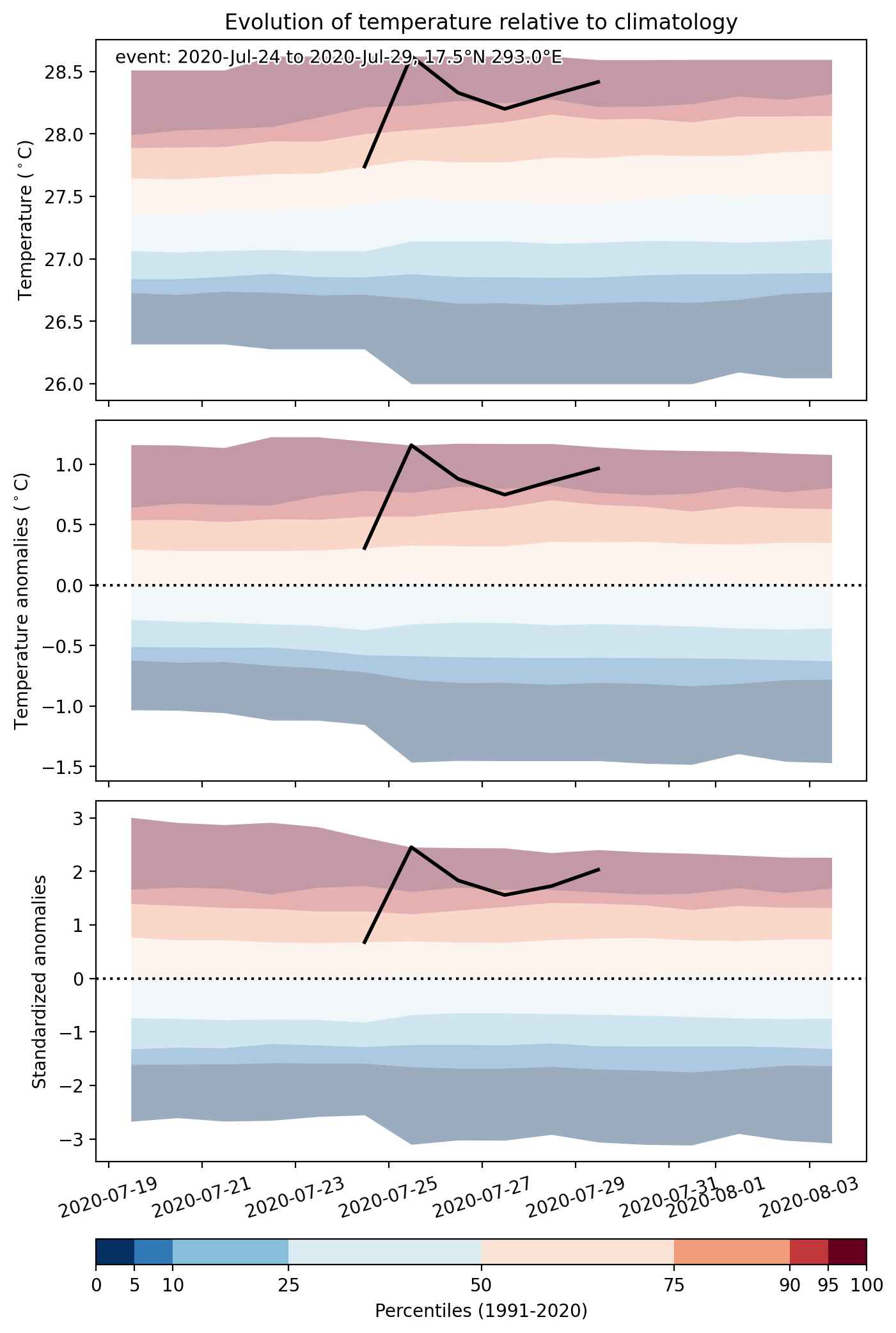
  • Mean temperature anomaly: 0.8 °C
  • Mean temperature: 28.2 °C
  • Maximum temperature anomaly: 1.4 °C
  • Maximum temperature: 28.8 °C

Event center: 17.5°N 293.0°E

Area affected: 210963 km$^2$


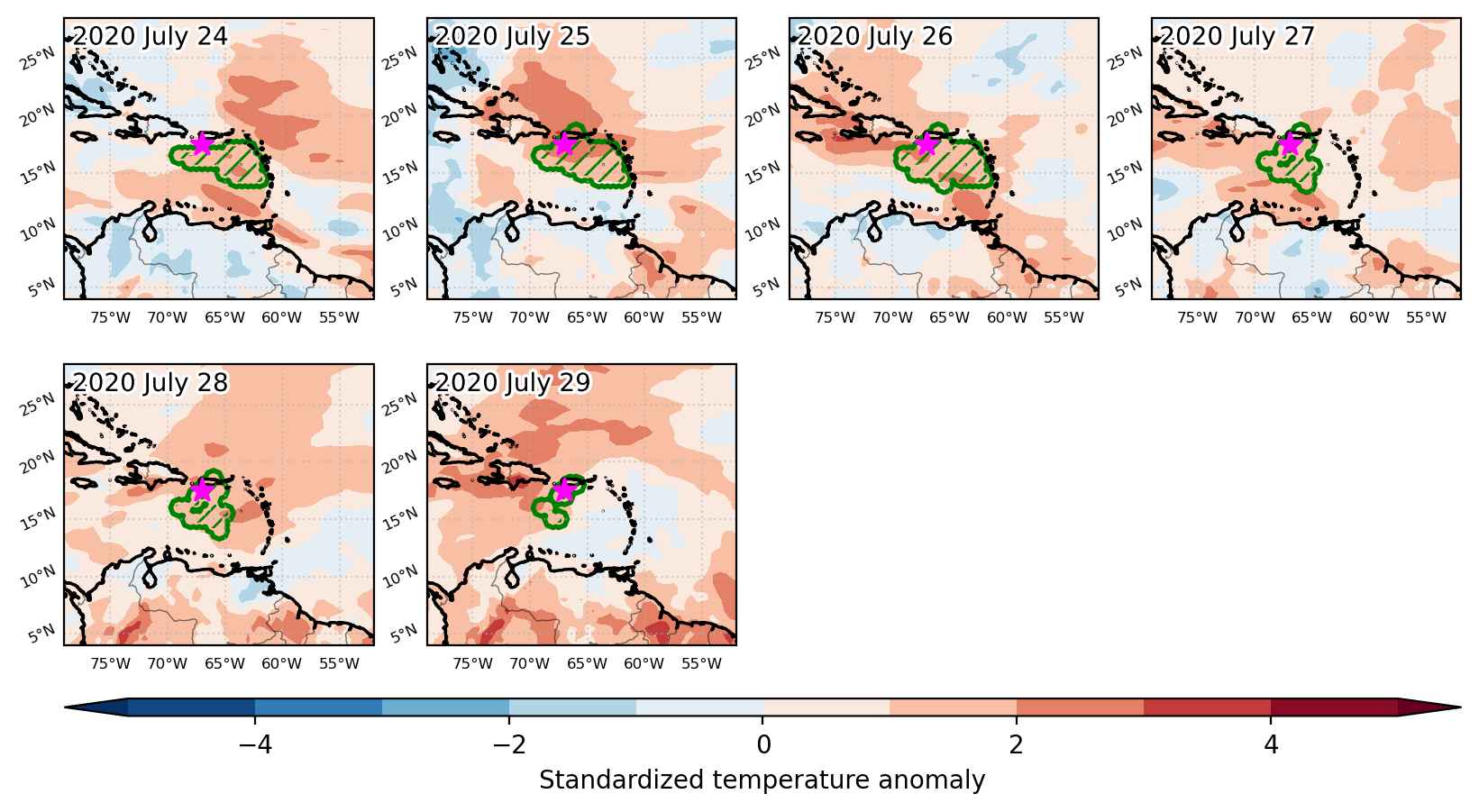
Fig. 1: Map of most extreme temperature anomalies (standardized) experienced during the event. The purple star indicates the center of the extreme event. Green hatching illustrates all areas under the effect of extremes at some time during the event.


Fig. 2: Evolution of temperature at the center of the event. The climatological percentile distribution is illustrated with color shadings.


Fig. 3: Maps illustrating the evolution of standardized temperature anomalies during the event.

Event ID: Heat_wave_2020-Jul-24_to_2020-Jul-29_293.0_17.5

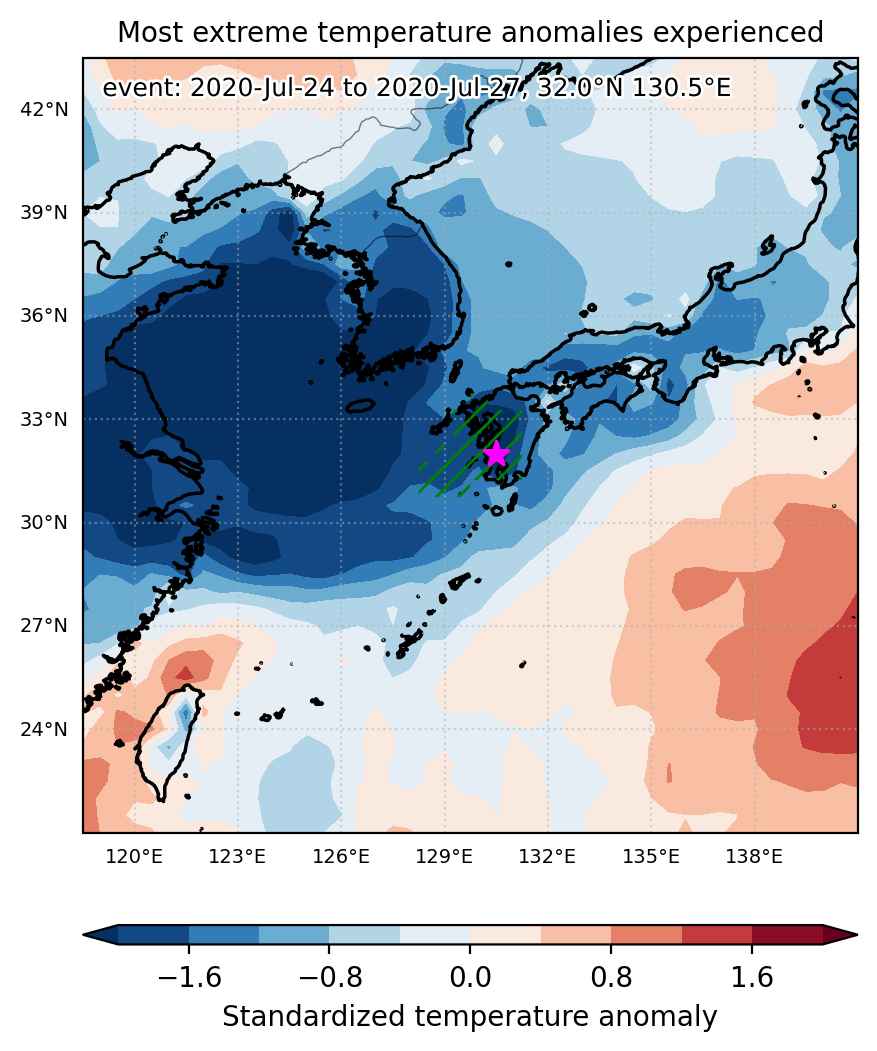
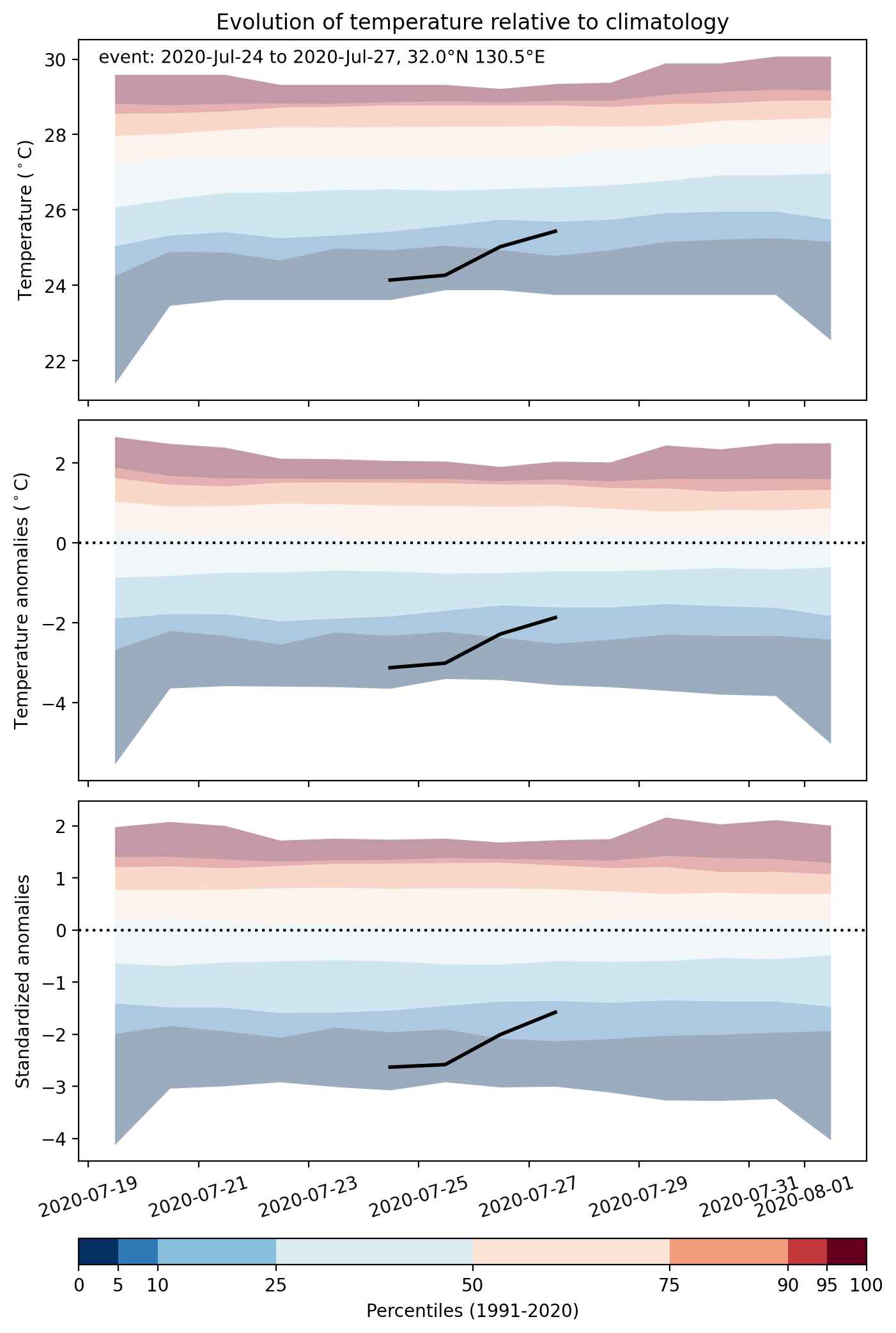
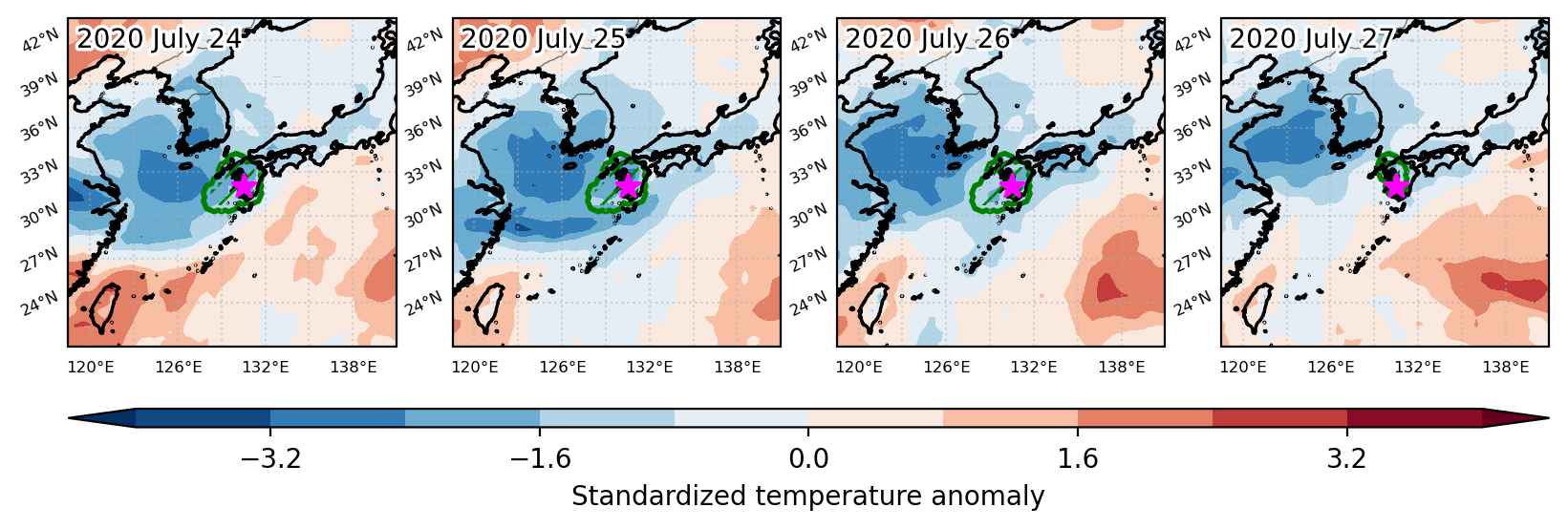
Cold spell occuring from July 24 2020 to July 27 2020 at 32.0°N 130.5°E

Download data: JSON

Event type: Cold spell

Countries affected (identified with ArcGIS Online; provided only for geographical reference):

  • Japan

Duration: 4 days

Time span: July 24 2020 to July 27 2020

Statistics over entire affected area:

  • Mean temperature anomaly: -2.0 °C
  • Mean temperature: 25.3 °C
  • Minimum temperature anomaly: -3.7 °C
  • Minimum temperature: 21.7 °C

Event center: 32.0°N 130.5°E

Area affected: 60244 km$^2$


Fig. 1: Map of most extreme temperature anomalies (standardized) experienced during the event. The purple star indicates the center of the extreme event. Green hatching illustrates all areas under the effect of extremes at some time during the event.


Fig. 2: Evolution of temperature at the center of the event. The climatological percentile distribution is illustrated with color shadings.


Fig. 3: Maps illustrating the evolution of standardized temperature anomalies during the event.

Event ID: Cold_spell_2020-Jul-24_to_2020-Jul-27_130.5_32.0

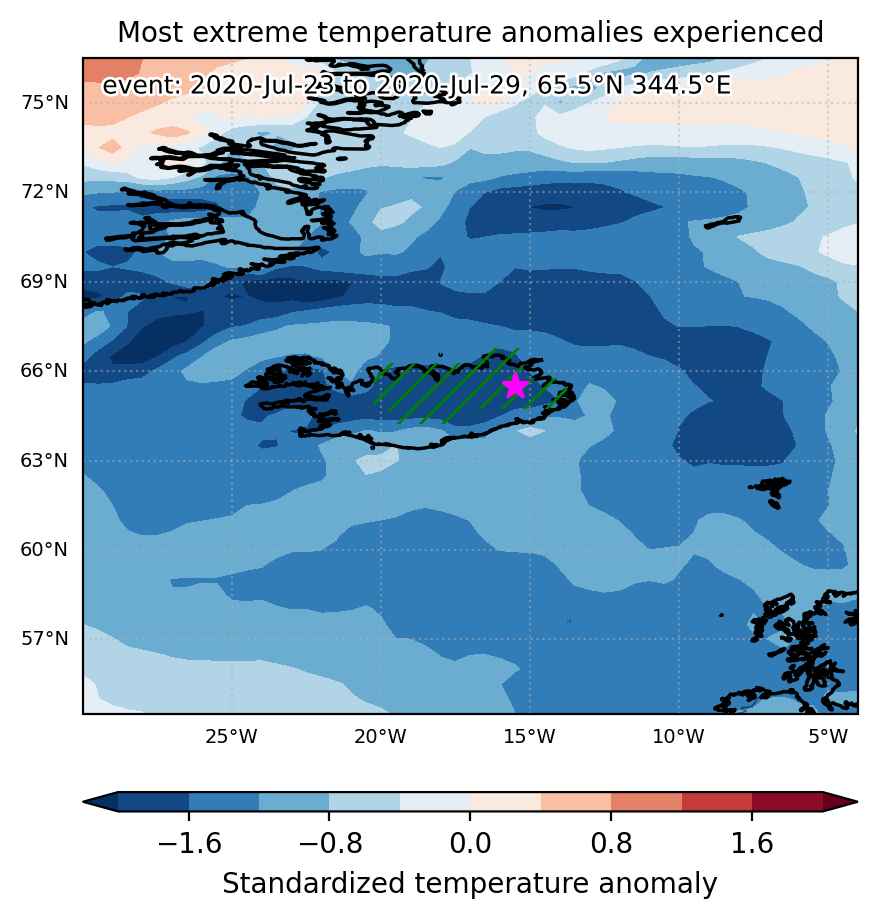
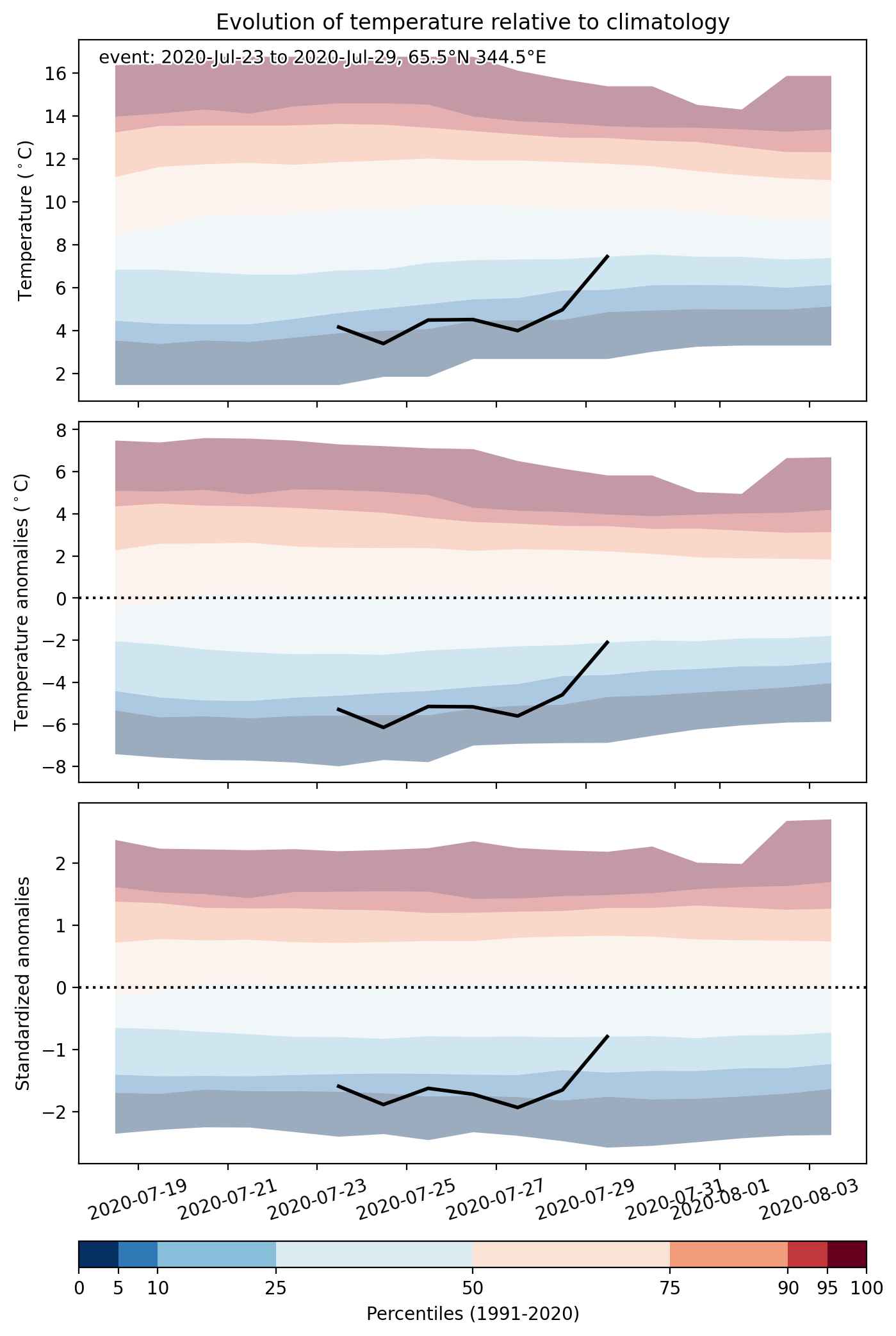
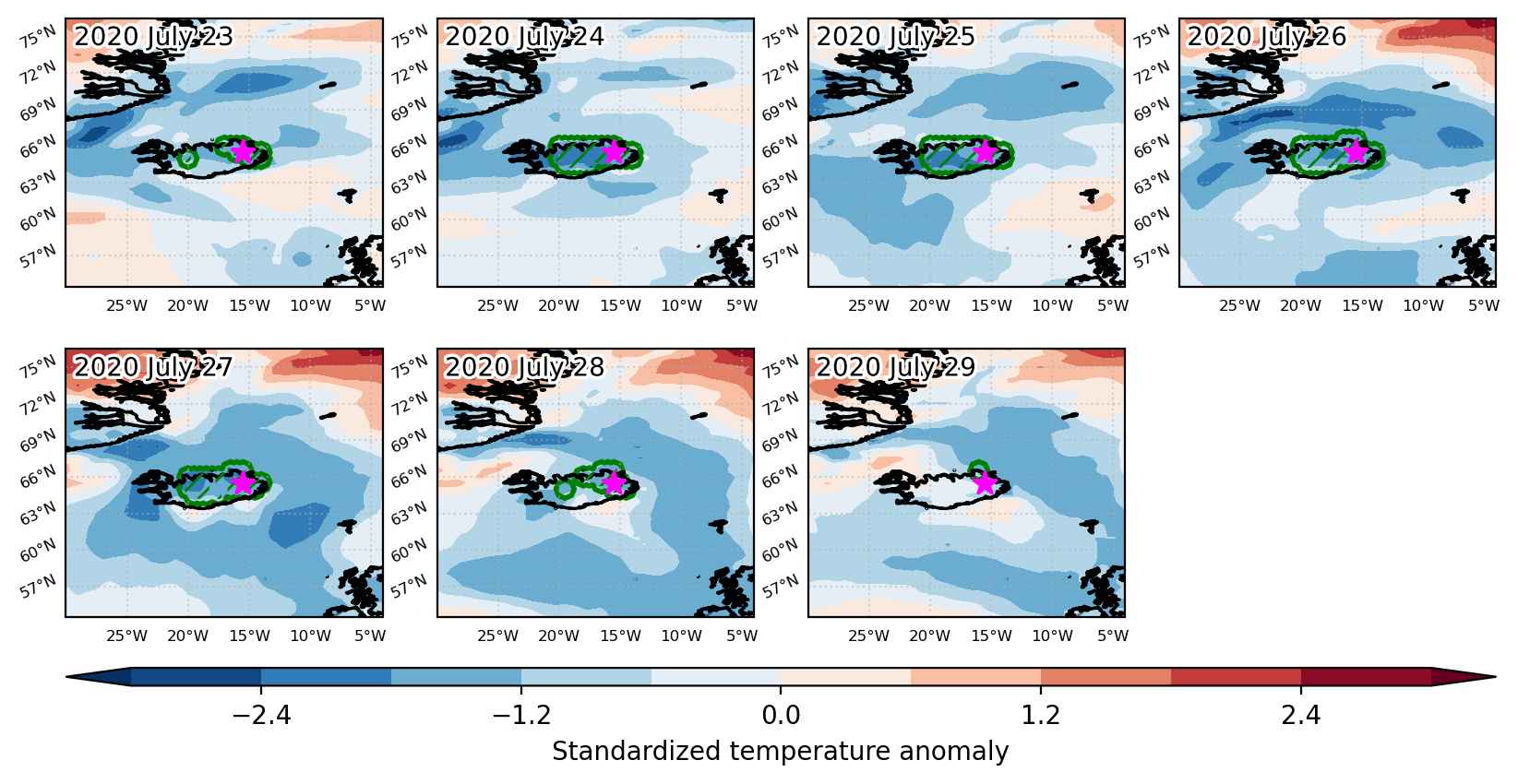
Cold spell occuring from July 23 2020 to July 29 2020 at 65.5°N 344.5°E

Download data: JSON

Event type: Cold spell

Countries affected (identified with ArcGIS Online; provided only for geographical reference):

  • Iceland

Duration: 7 days

Time span: July 23 2020 to July 29 2020

Statistics over entire affected area:

  • Mean temperature anomaly: -4.6 °C
  • Mean temperature: 5.0 °C
  • Minimum temperature anomaly: -6.7 °C
  • Minimum temperature: -1.5 °C

Event center: 65.5°N 344.5°E

Area affected: 56570 km$^2$


Fig. 1: Map of most extreme temperature anomalies (standardized) experienced during the event. The purple star indicates the center of the extreme event. Green hatching illustrates all areas under the effect of extremes at some time during the event.


Fig. 2: Evolution of temperature at the center of the event. The climatological percentile distribution is illustrated with color shadings.


Fig. 3: Maps illustrating the evolution of standardized temperature anomalies during the event.

Event ID: Cold_spell_2020-Jul-23_to_2020-Jul-29_344.5_65.5

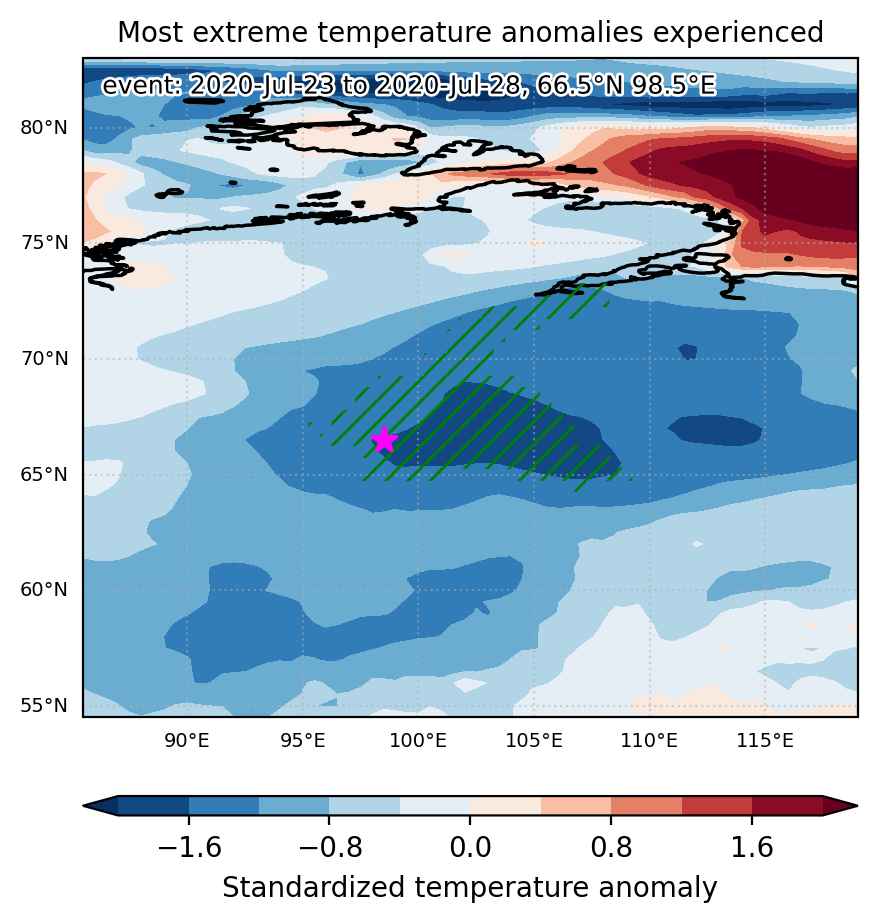
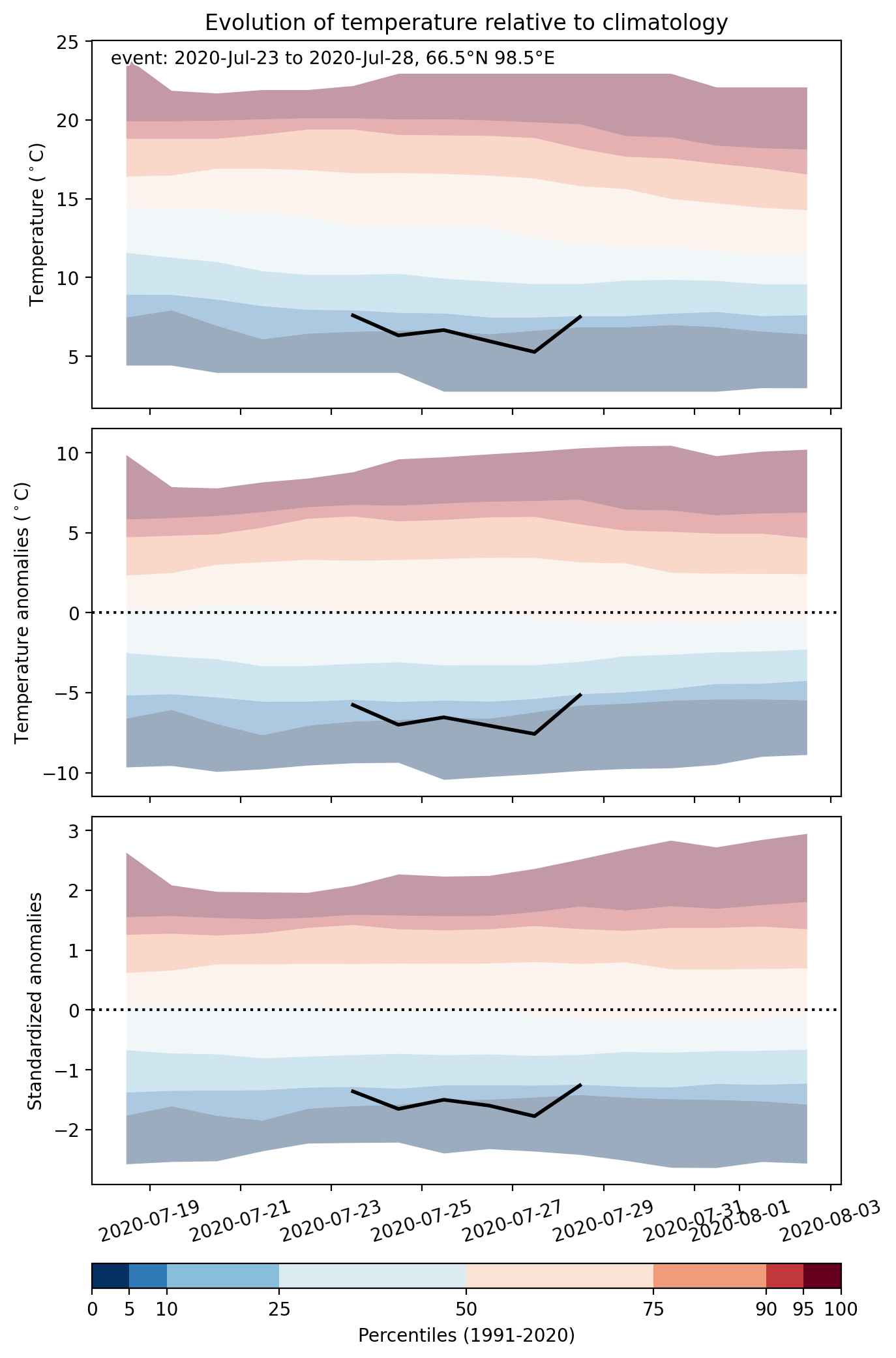
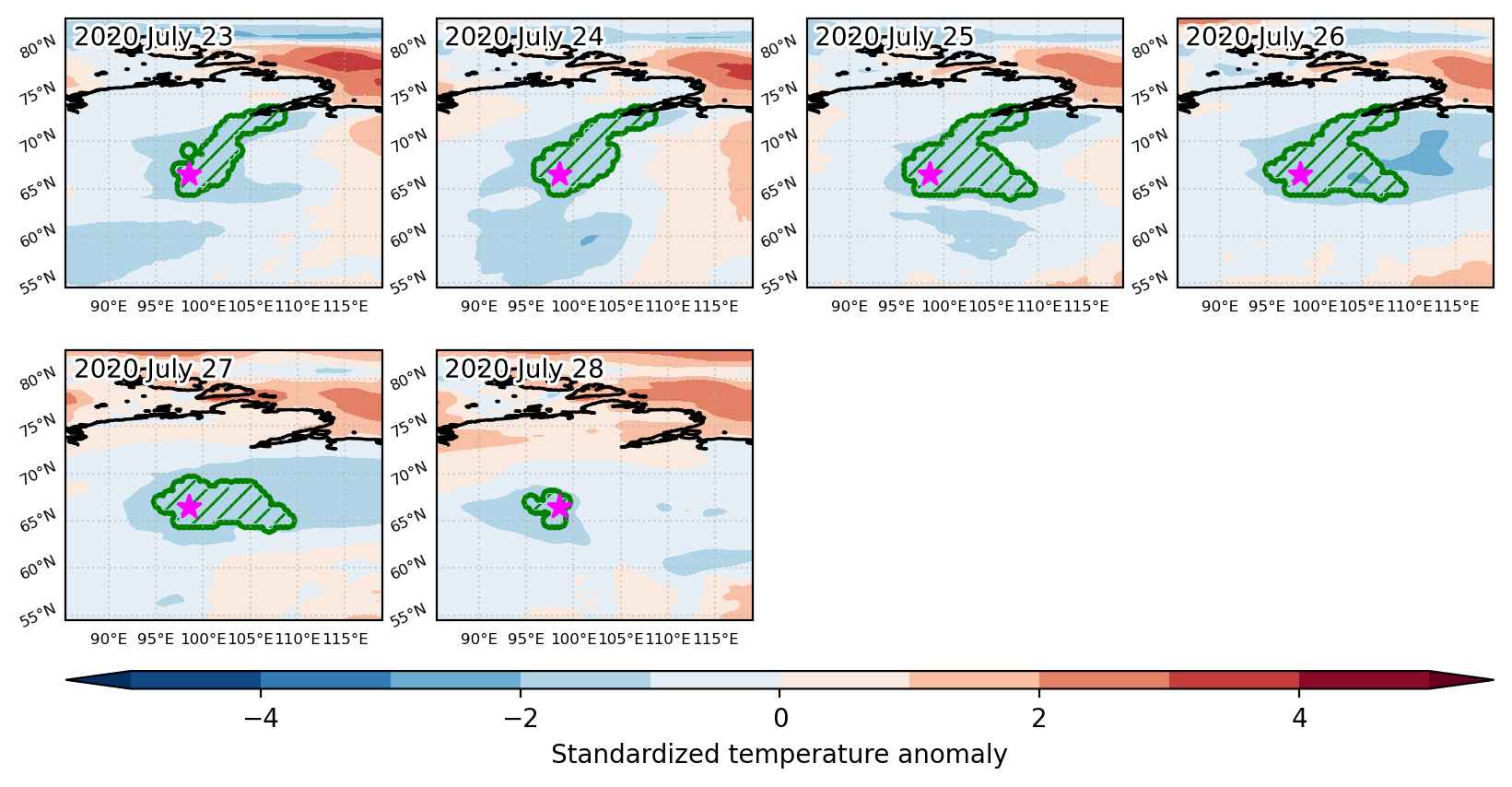
Cold spell occuring from July 23 2020 to July 28 2020 at 66.5°N 98.5°E

Download data: JSON

Event type: Cold spell

Countries affected (identified with ArcGIS Online; provided only for geographical reference):

  • Russian Federation

Duration: 6 days

Time span: July 23 2020 to July 28 2020

Statistics over entire affected area:

  • Mean temperature anomaly: -7.0 °C
  • Mean temperature: 6.2 °C
  • Minimum temperature anomaly: -9.7 °C
  • Minimum temperature: 2.3 °C

Event center: 66.5°N 98.5°E

Area affected: 255653 km$^2$


Fig. 1: Map of most extreme temperature anomalies (standardized) experienced during the event. The purple star indicates the center of the extreme event. Green hatching illustrates all areas under the effect of extremes at some time during the event.


Fig. 2: Evolution of temperature at the center of the event. The climatological percentile distribution is illustrated with color shadings.


Fig. 3: Maps illustrating the evolution of standardized temperature anomalies during the event.

Event ID: Cold_spell_2020-Jul-23_to_2020-Jul-28_98.5_66.5

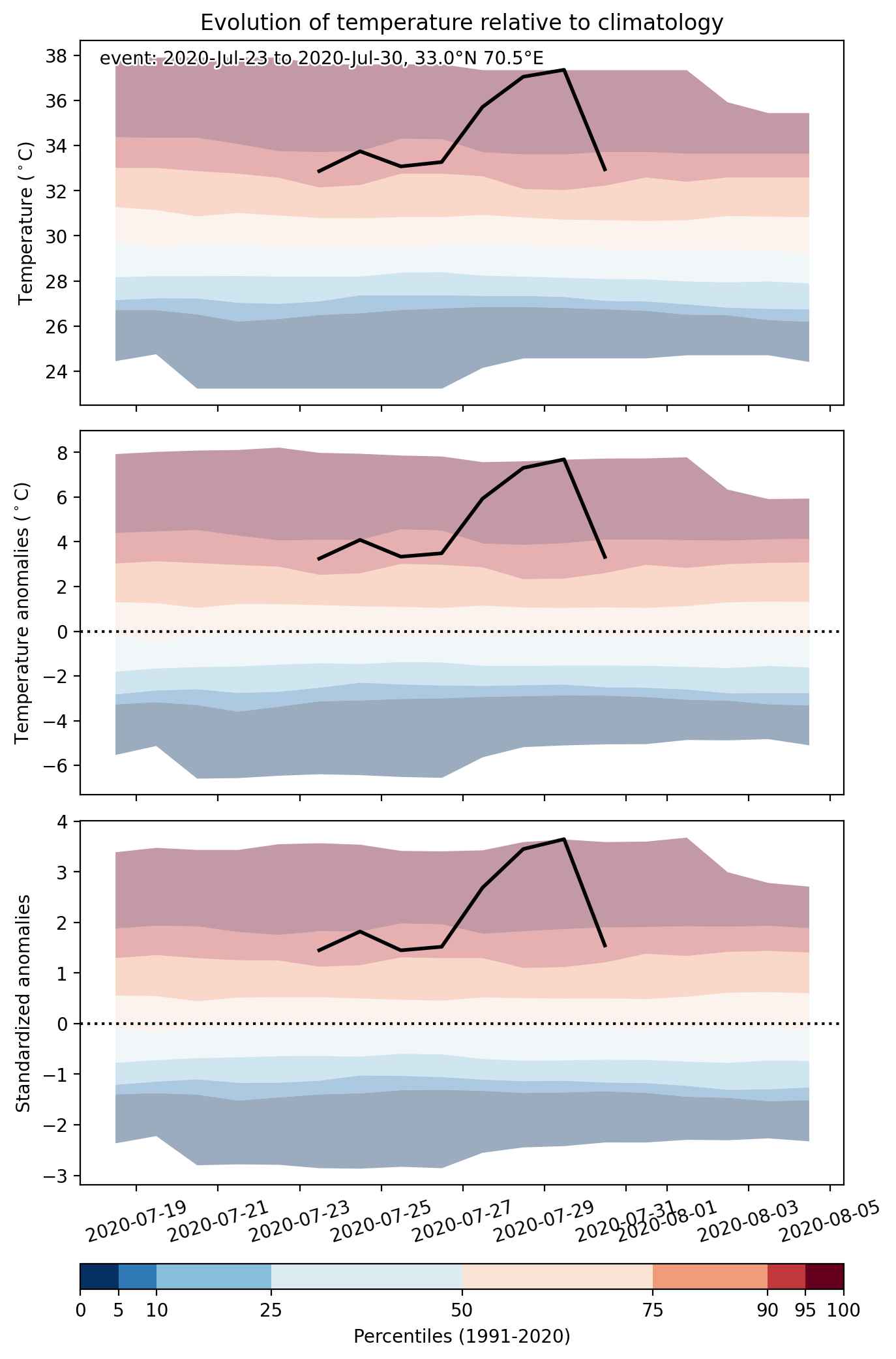
Heat wave occuring from July 23 2020 to July 30 2020 at 33.0°N 70.5°E

Download data: JSON

Event type: Heat wave

Countries affected (identified with ArcGIS Online; provided only for geographical reference):

  • Afghanistan
  • Pakistan

Duration: 8 days

Time span: July 23 2020 to July 30 2020

Statistics over entire affected area:

  • Mean temperature anomaly: 4.1 °C
  • Mean temperature: 33.7 °C
  • Maximum temperature anomaly: 7.7 °C
  • Maximum temperature: 39.3 °C

Event center: 33.0°N 70.5°E

Area affected: 120029 km$^2$


Fig. 1: Map of most extreme temperature anomalies (standardized) experienced during the event. The purple star indicates the center of the extreme event. Green hatching illustrates all areas under the effect of extremes at some time during the event.


Fig. 2: Evolution of temperature at the center of the event. The climatological percentile distribution is illustrated with color shadings.


Fig. 3: Maps illustrating the evolution of standardized temperature anomalies during the event.

Event ID: Heat_wave_2020-Jul-23_to_2020-Jul-30_70.5_33.0

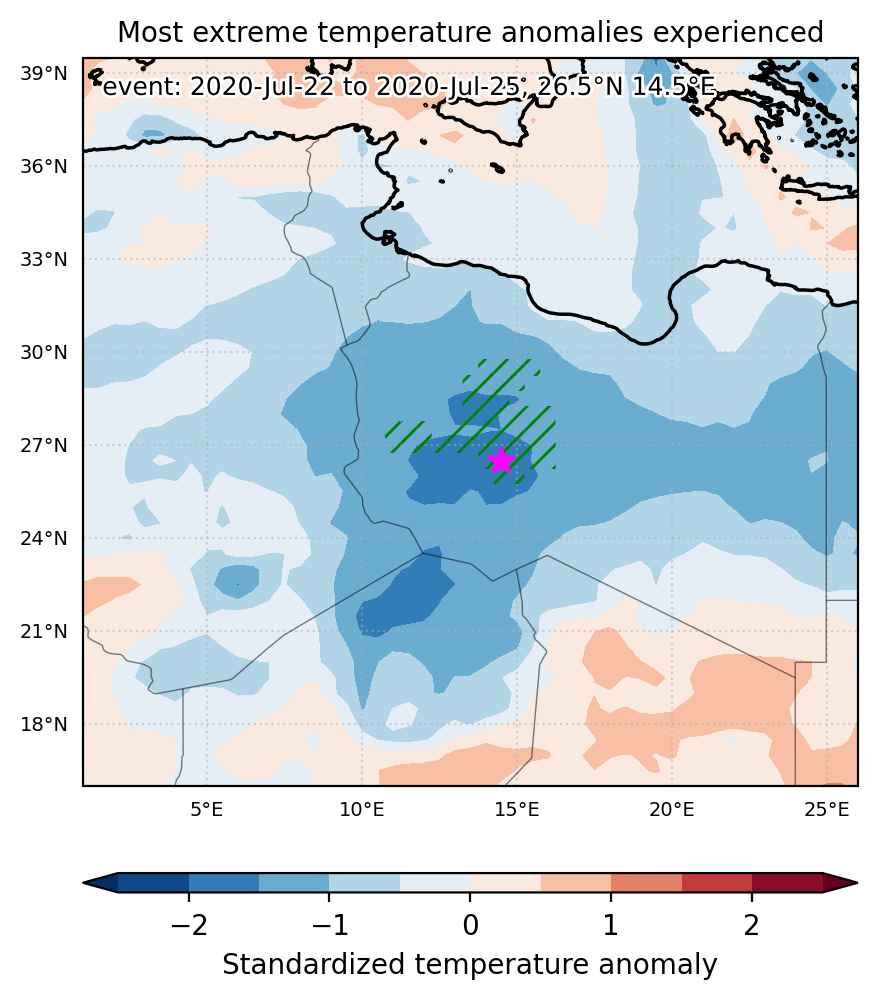
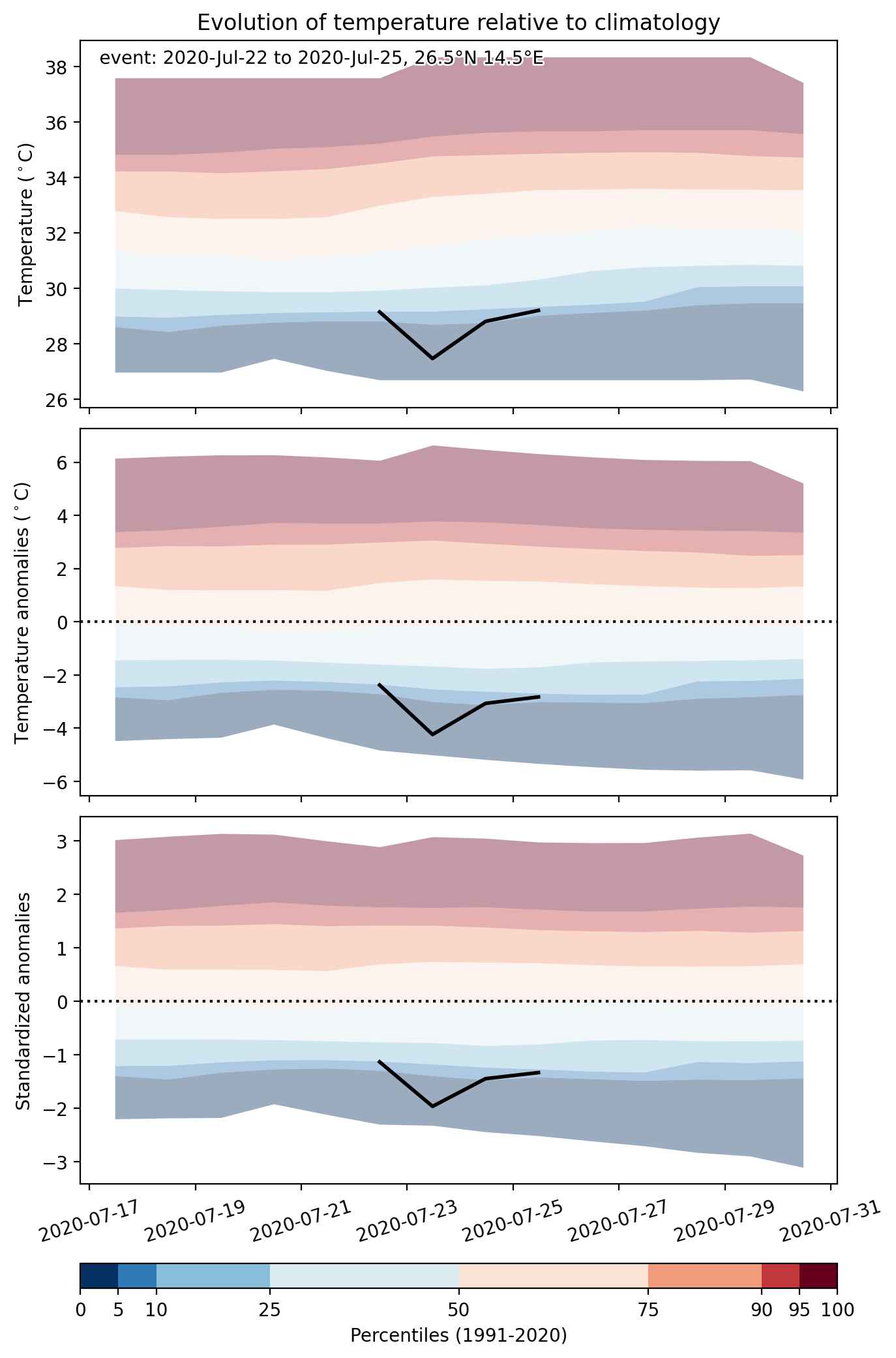
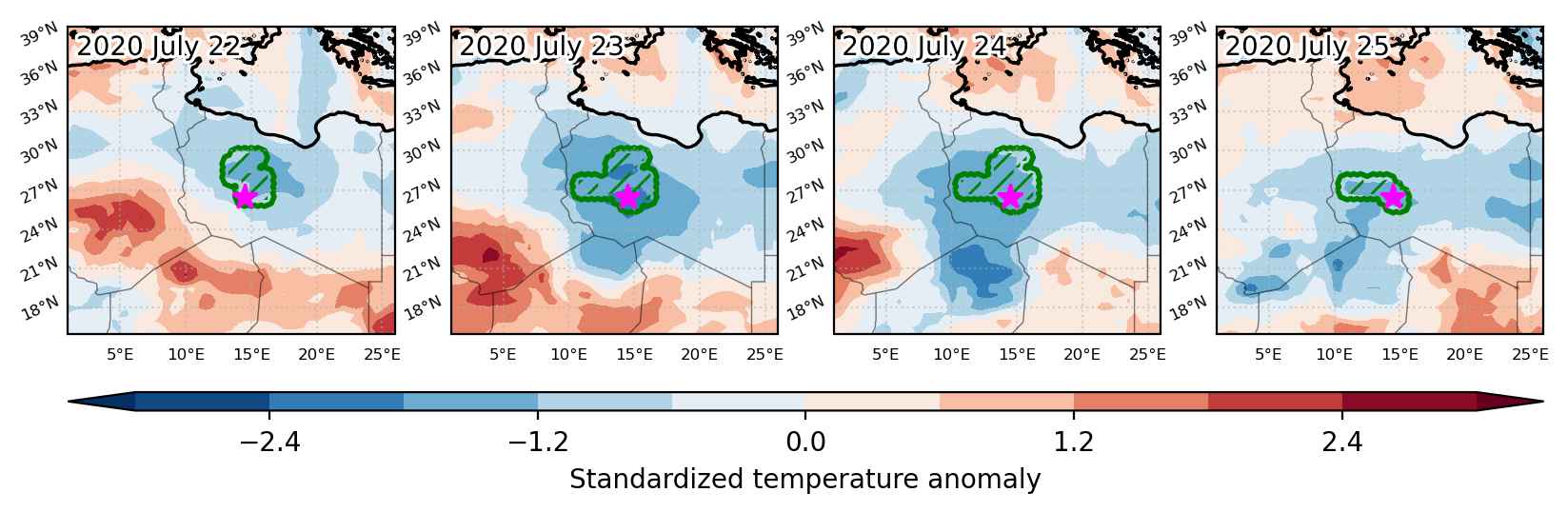
Cold spell occuring from July 22 2020 to July 25 2020 at 26.5°N 14.5°E

Download data: JSON

Event type: Cold spell

Countries affected (identified with ArcGIS Online; provided only for geographical reference):

  • Libya

Duration: 4 days

Time span: July 22 2020 to July 25 2020

Statistics over entire affected area:

  • Mean temperature anomaly: -3.4 °C
  • Mean temperature: 27.5 °C
  • Minimum temperature anomaly: -4.9 °C
  • Minimum temperature: 24.7 °C

Event center: 26.5°N 14.5°E

Area affected: 123202 km$^2$


Fig. 1: Map of most extreme temperature anomalies (standardized) experienced during the event. The purple star indicates the center of the extreme event. Green hatching illustrates all areas under the effect of extremes at some time during the event.


Fig. 2: Evolution of temperature at the center of the event. The climatological percentile distribution is illustrated with color shadings.


Fig. 3: Maps illustrating the evolution of standardized temperature anomalies during the event.

Event ID: Cold_spell_2020-Jul-22_to_2020-Jul-25_14.5_26.5

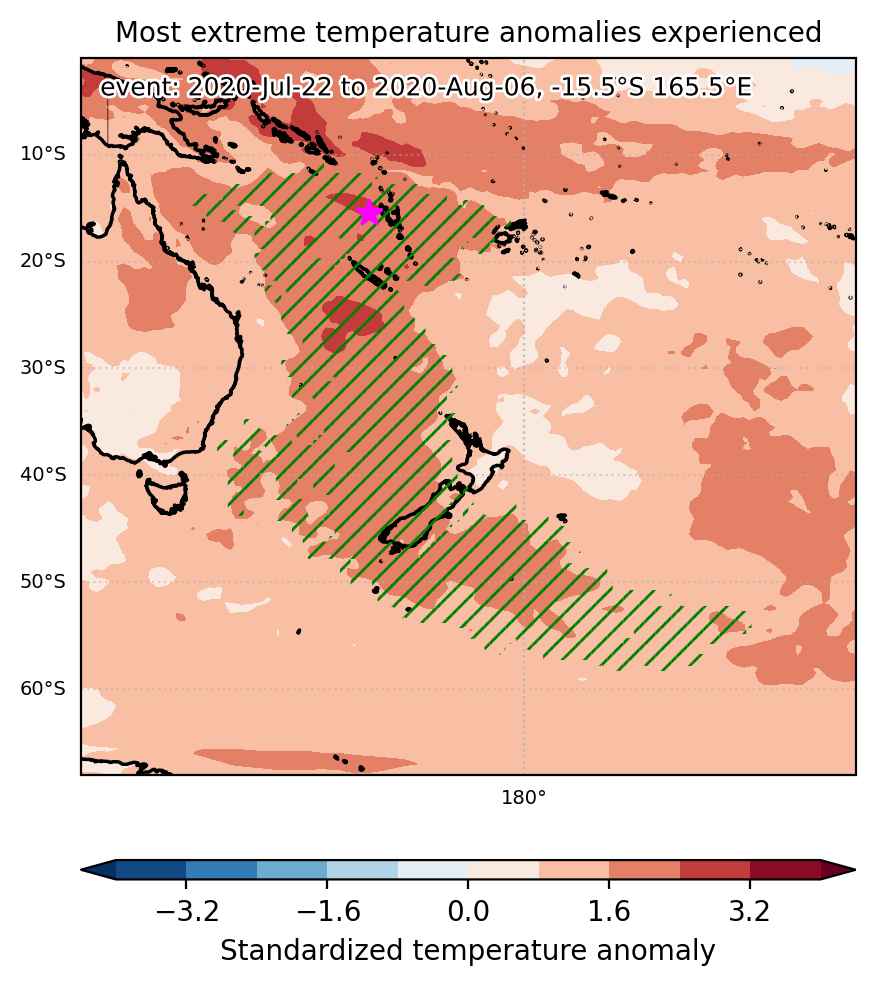
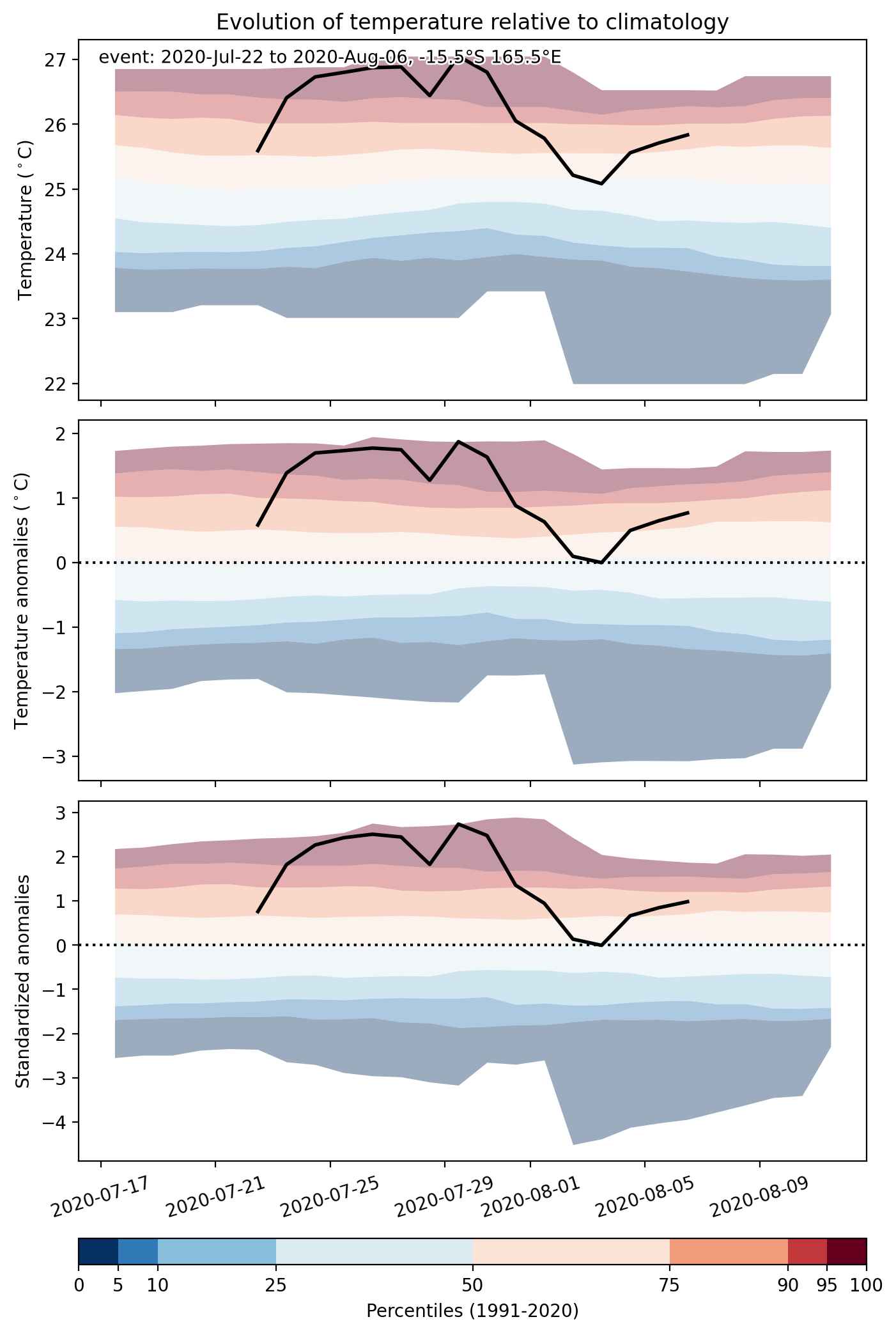
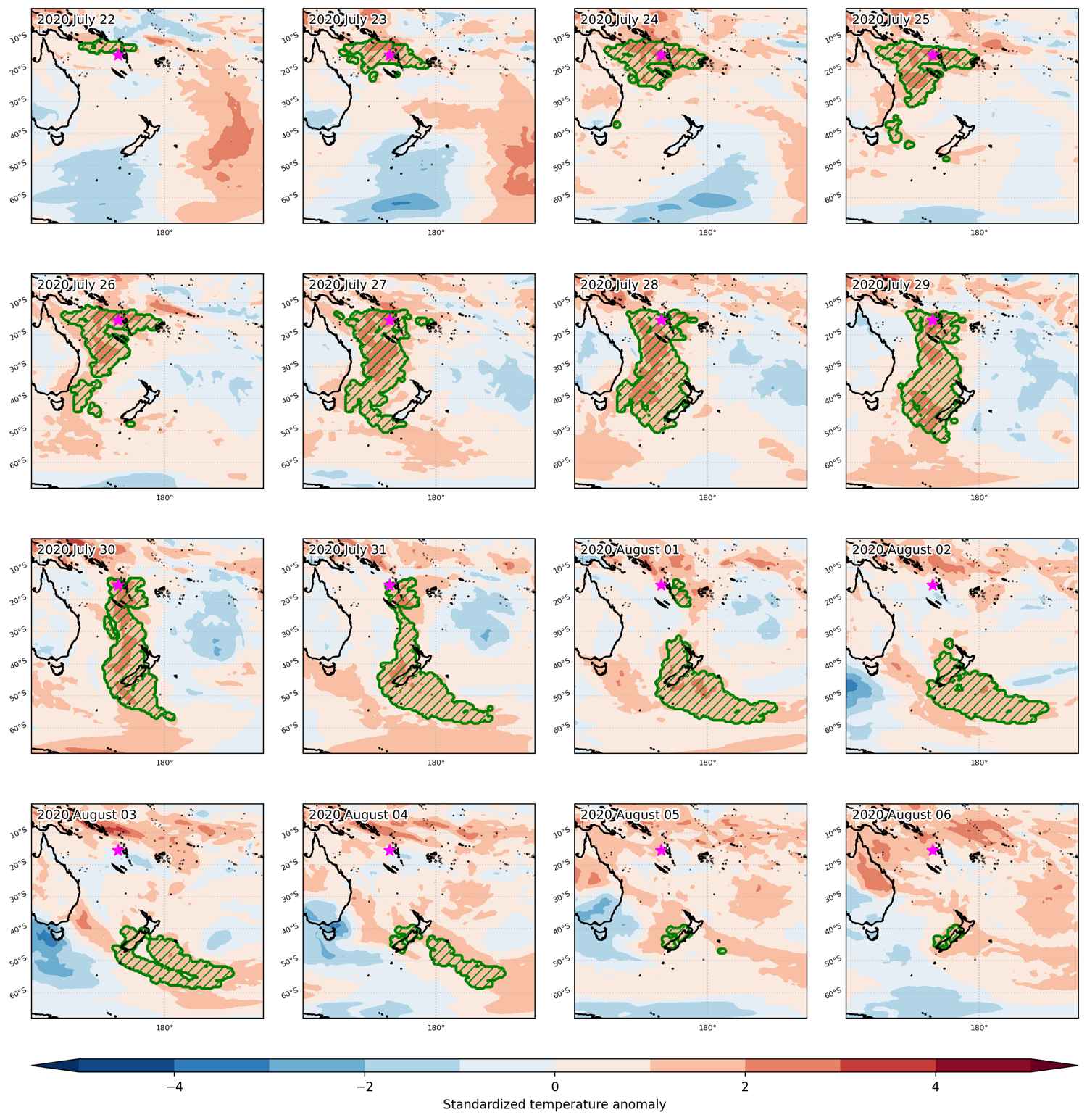
Heat wave occuring from July 22 2020 to August 06 2020 at -15.5°S 165.5°E

Download data: JSON

Event type: Heat wave

Countries affected (identified with ArcGIS Online; provided only for geographical reference):

  • Australia
  • Fiji
  • New Caledonia
  • New Zealand
  • Norfolk Island
  • Solomon Islands
  • Vanuatu

Duration: 16 days

Time span: July 22 2020 to August 06 2020

Statistics over entire affected area:

  • Mean temperature anomaly: 1.9 °C
  • Mean temperature: 16.3 °C
  • Maximum temperature anomaly: 6.1 °C
  • Maximum temperature: 27.5 °C

Event center: -15.5°S 165.5°E

Area affected: 8407268 km$^2$


Fig. 1: Map of most extreme temperature anomalies (standardized) experienced during the event. The purple star indicates the center of the extreme event. Green hatching illustrates all areas under the effect of extremes at some time during the event.


Fig. 2: Evolution of temperature at the center of the event. The climatological percentile distribution is illustrated with color shadings.


Fig. 3: Maps illustrating the evolution of standardized temperature anomalies during the event.

Event ID: Heat_wave_2020-Jul-22_to_2020-Aug-06_165.5_-15.5

Cold spell occuring from July 22 2020 to July 26 2020 at -37.5°S 292.0°E

Download data: JSON

Event type: Cold spell

Countries affected (identified with ArcGIS Online; provided only for geographical reference):

  • Argentina

Duration: 5 days

Time span: July 22 2020 to July 26 2020

Statistics over entire affected area:

  • Mean temperature anomaly: -5.7 °C
  • Mean temperature: 1.3 °C
  • Minimum temperature anomaly: -9.7 °C
  • Minimum temperature: -5.7 °C

Event center: -37.5°S 292.0°E

Area affected: 51852 km$^2$


Fig. 1: Map of most extreme temperature anomalies (standardized) experienced during the event. The purple star indicates the center of the extreme event. Green hatching illustrates all areas under the effect of extremes at some time during the event.


Fig. 2: Evolution of temperature at the center of the event. The climatological percentile distribution is illustrated with color shadings.


Fig. 3: Maps illustrating the evolution of standardized temperature anomalies during the event.

Event ID: Cold_spell_2020-Jul-22_to_2020-Jul-26_292.0_-37.5