Heat wave occuring from July 22 2020 to August 02 2020 at 52.0°N 123.5°E

Download data: JSON

Event type: Heat wave

Countries affected (identified with ArcGIS Online; provided only for geographical reference):

  • China
  • Russian Federation

Duration: 12 days

Time span: July 22 2020 to August 02 2020

Statistics over entire affected area:

  • Mean temperature anomaly: 4.7 °C
  • Mean temperature: 24.3 °C
  • Maximum temperature anomaly: 12.8 °C
  • Maximum temperature: 31.4 °C

Event center: 52.0°N 123.5°E

Area affected: 1632771 km$^2$
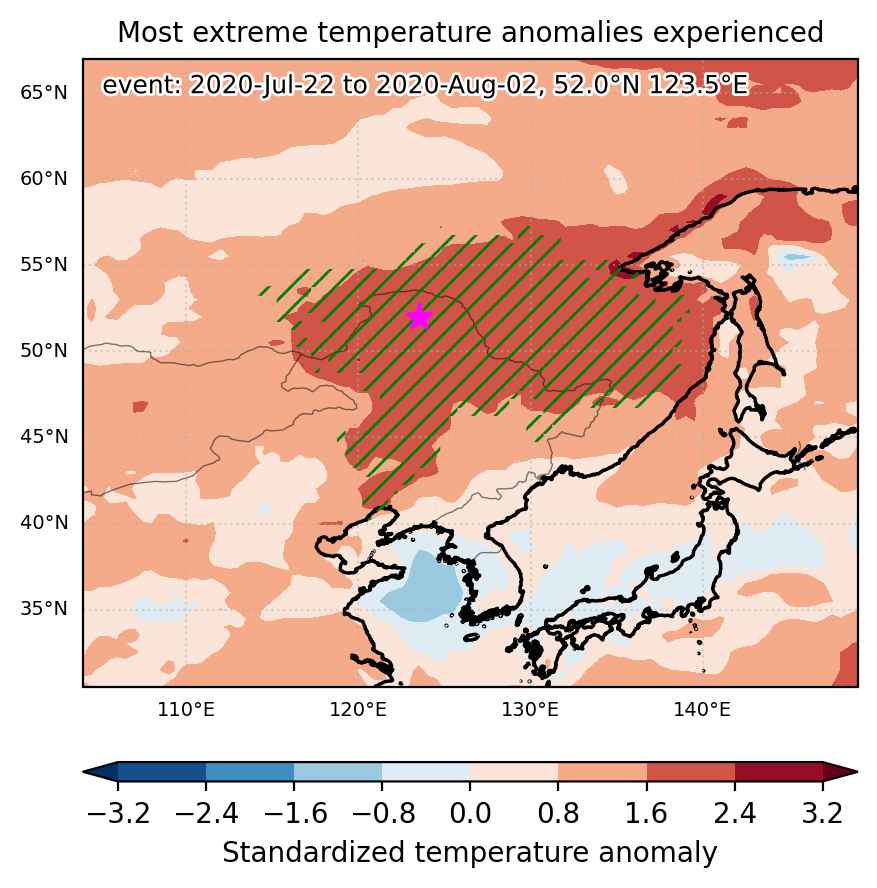

Fig. 1: Map of most extreme temperature anomalies (standardized) experienced during the event. The purple star indicates the center of the extreme event. Green hatching illustrates all areas under the effect of extremes at some time during the event.
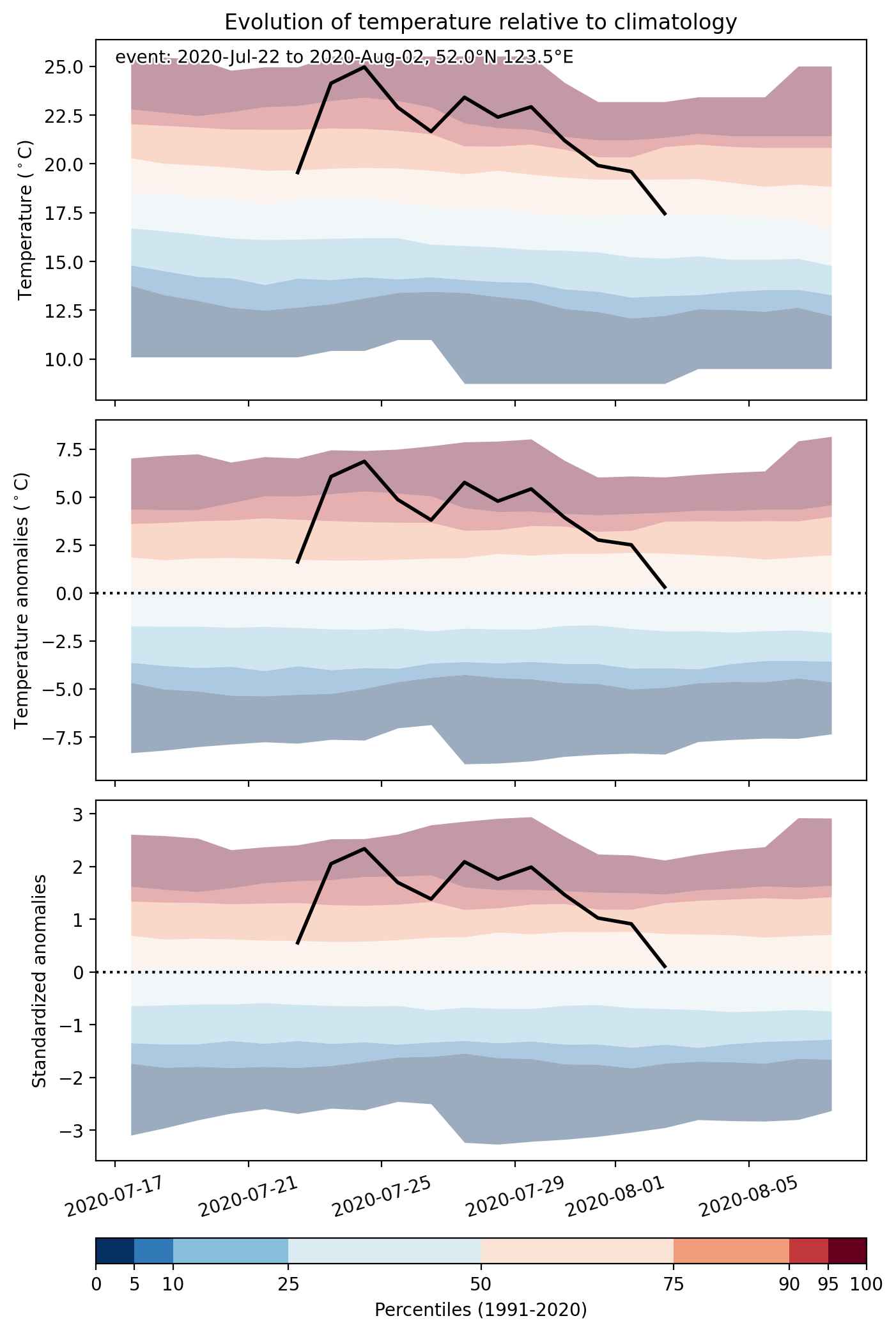


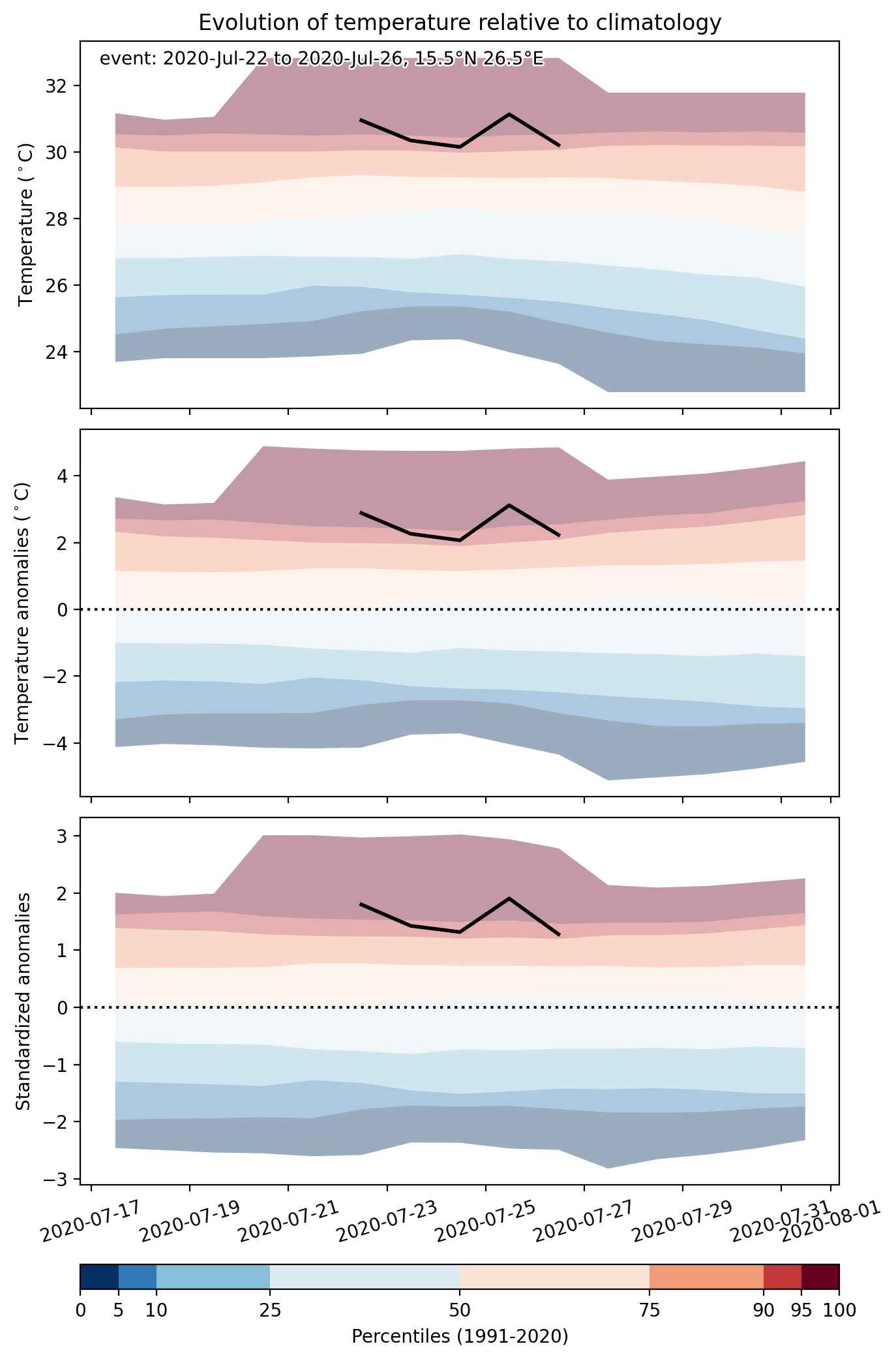
Fig. 2: Evolution of temperature at the center of the event. The climatological percentile distribution is illustrated with color shadings.
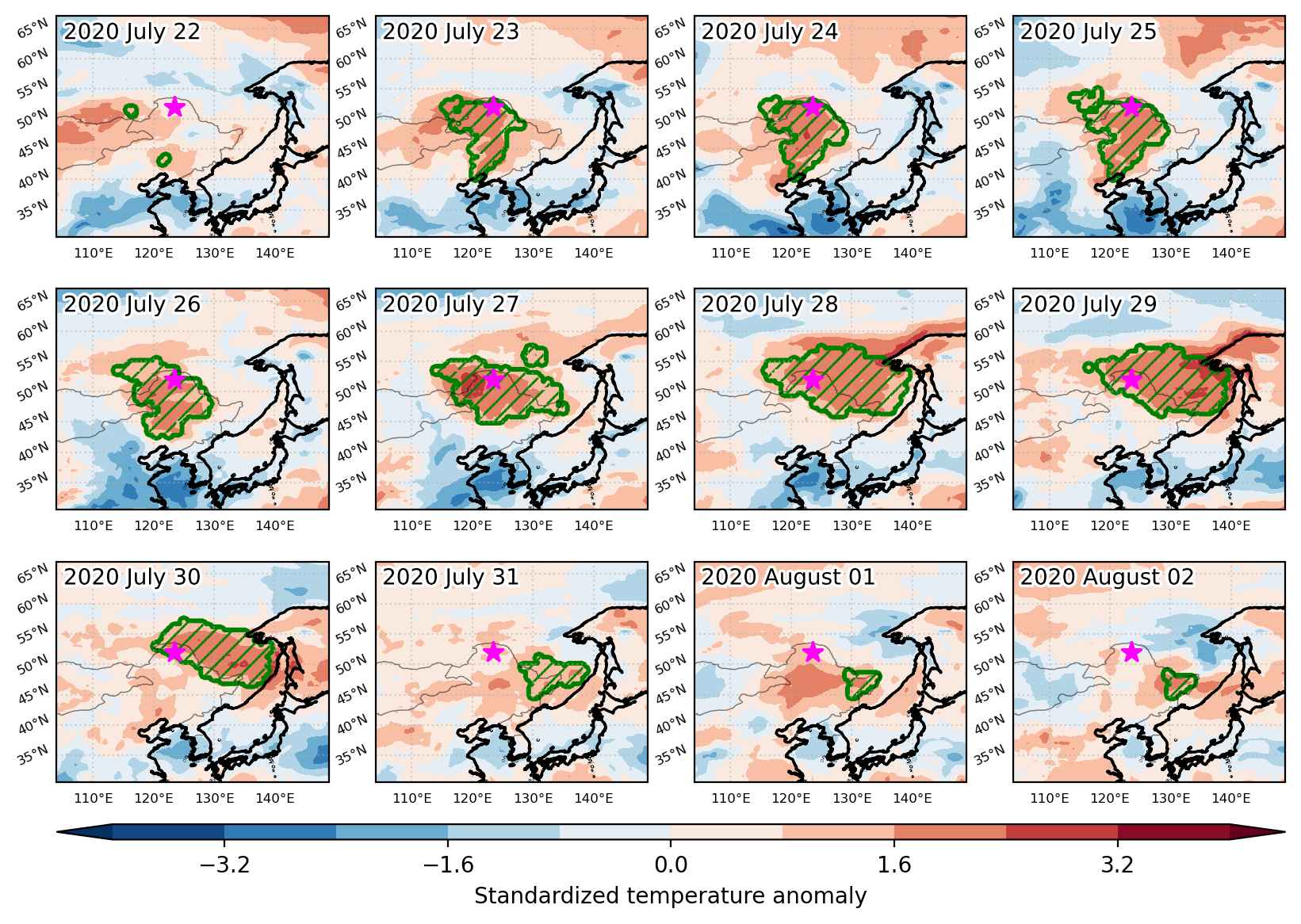


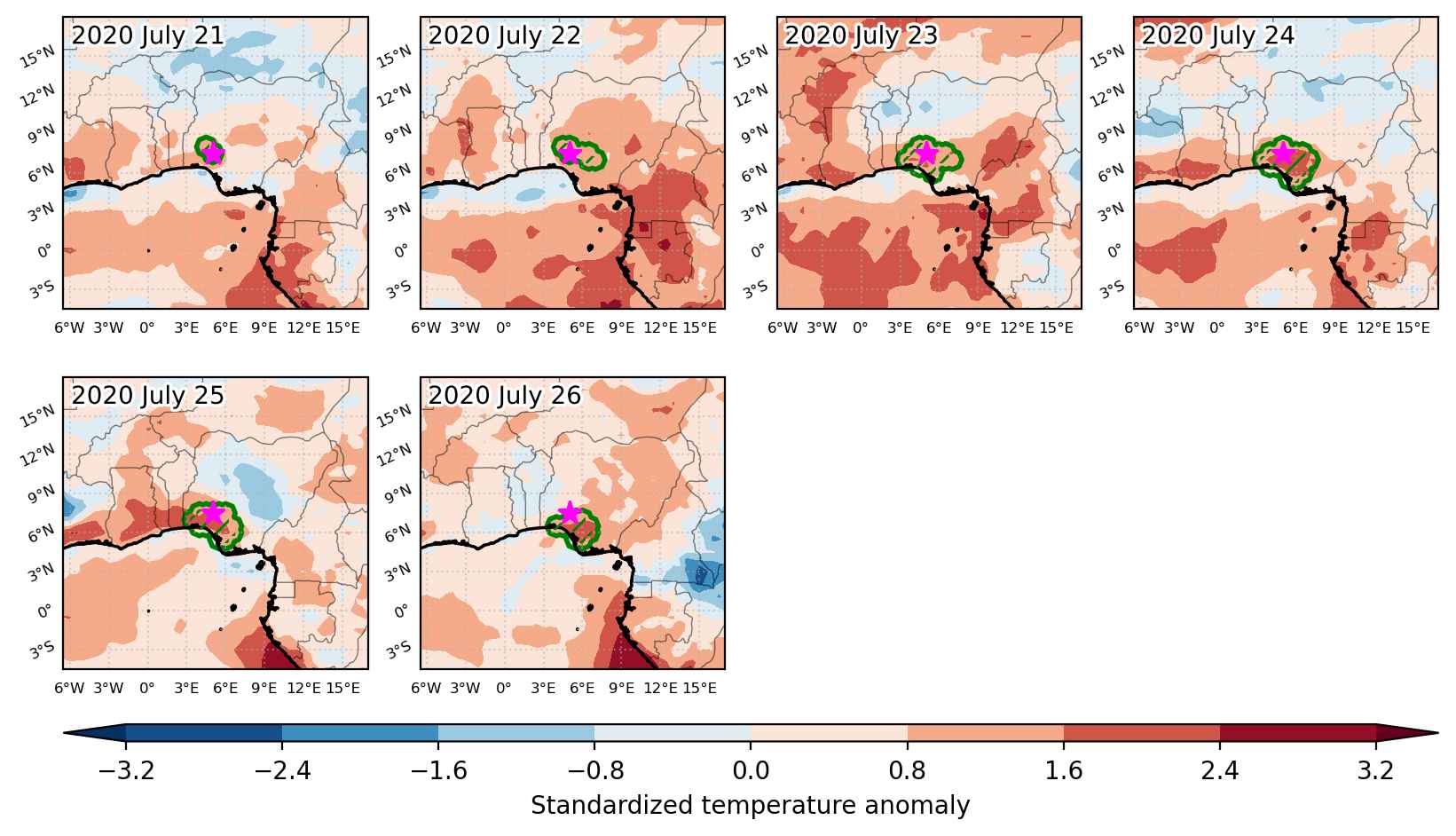
Fig. 3: Maps illustrating the evolution of standardized temperature anomalies during the event.

Event ID: Heat_wave_2020-Jul-22_to_2020-Aug-02_123.5_52.0
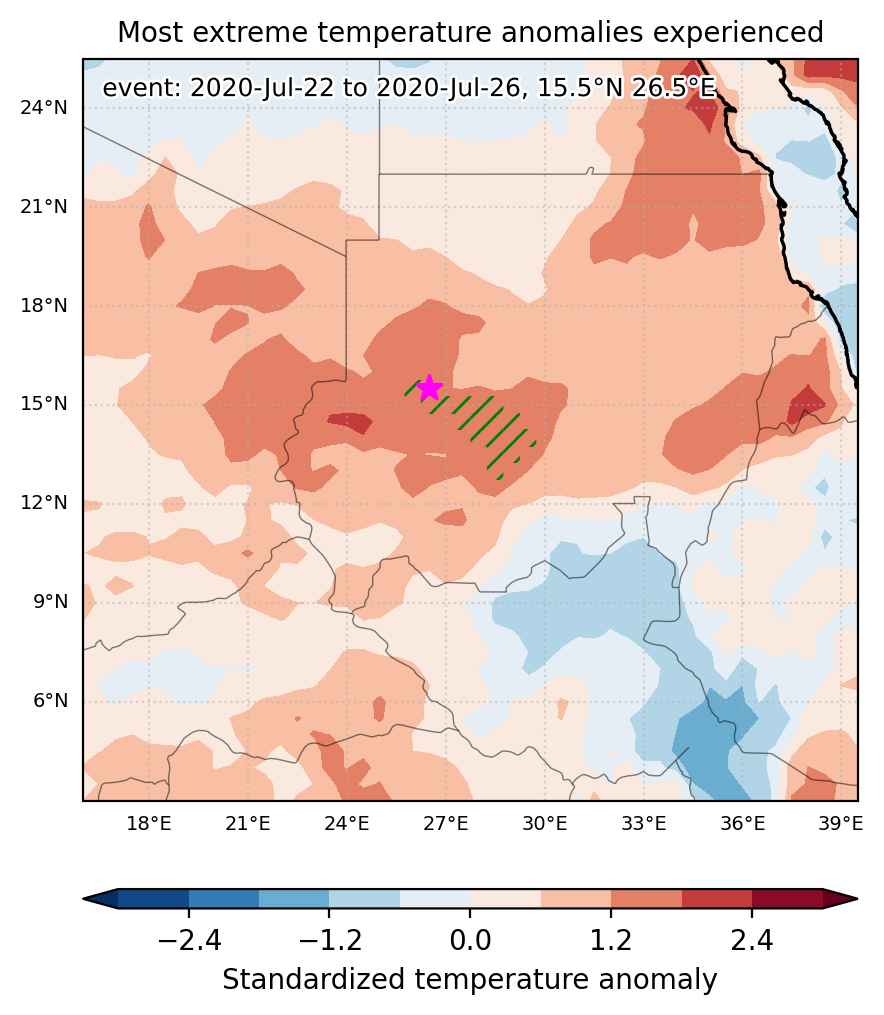
Heat wave occuring from July 22 2020 to July 26 2020 at 15.5°N 26.5°E

Download data: JSON

Event type: Heat wave

Countries affected (identified with ArcGIS Online; provided only for geographical reference):

  • Sudan

Duration: 5 days

Time span: July 22 2020 to July 26 2020

Statistics over entire affected area:

  • Mean temperature anomaly: 2.6 °C
  • Mean temperature: 31.8 °C
  • Maximum temperature anomaly: 3.8 °C
  • Maximum temperature: 33.8 °C

Event center: 15.5°N 26.5°E

Area affected: 53876 km$^2$


Fig. 1: Map of most extreme temperature anomalies (standardized) experienced during the event. The purple star indicates the center of the extreme event. Green hatching illustrates all areas under the effect of extremes at some time during the event.


Fig. 2: Evolution of temperature at the center of the event. The climatological percentile distribution is illustrated with color shadings.


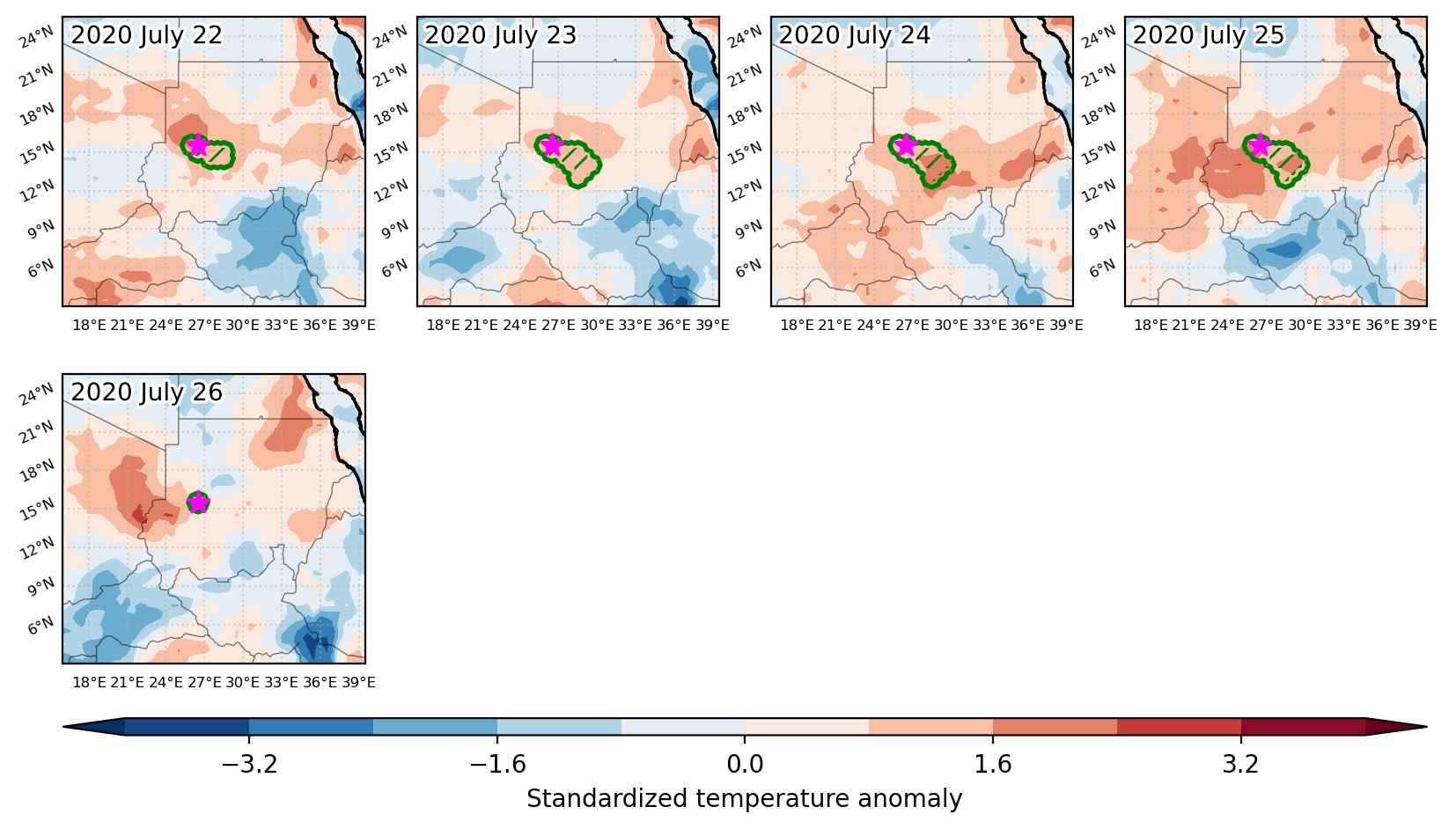
Fig. 3: Maps illustrating the evolution of standardized temperature anomalies during the event.

Event ID: Heat_wave_2020-Jul-22_to_2020-Jul-26_26.5_15.5

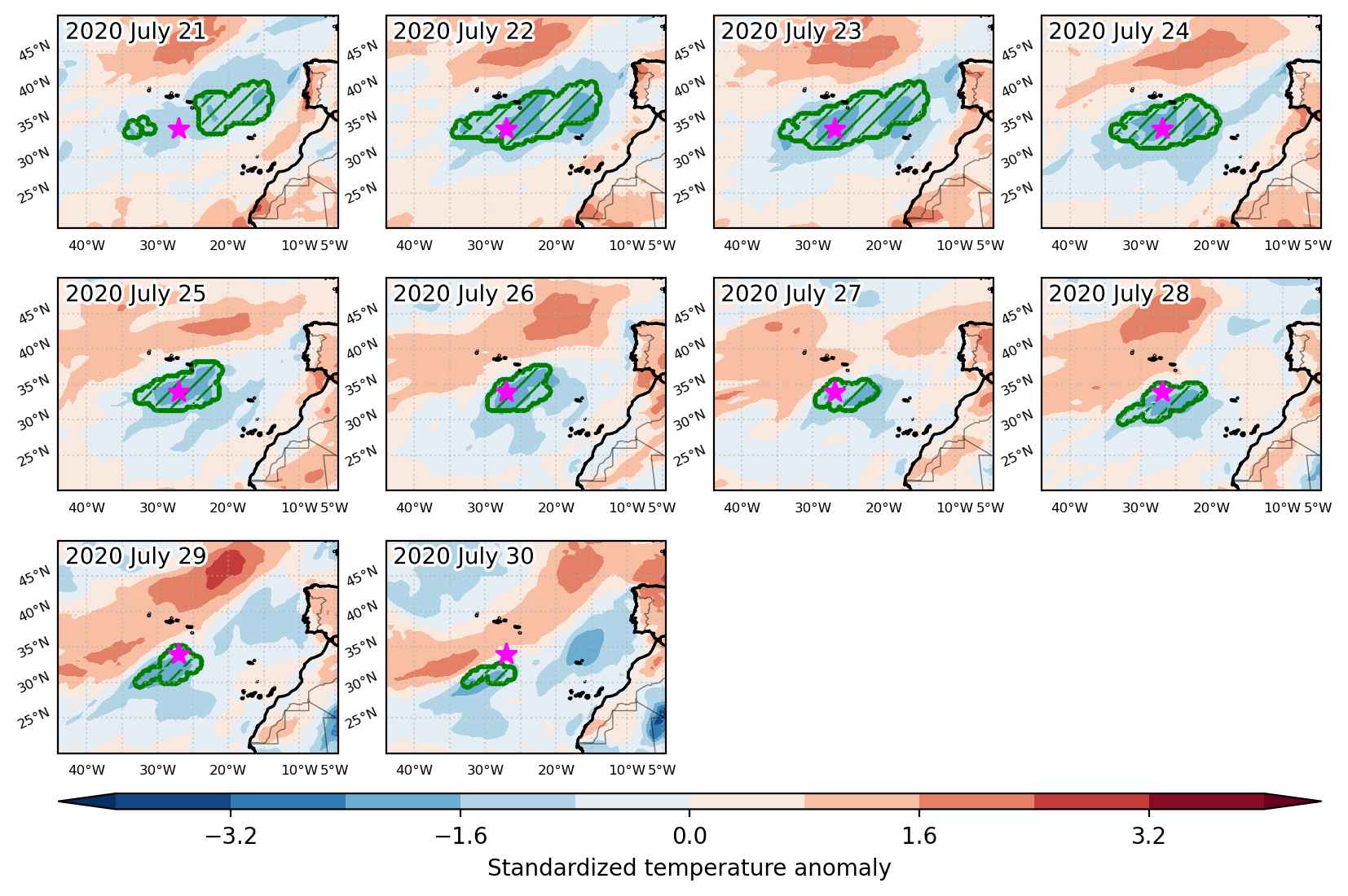
Cold spell occuring from July 21 2020 to July 30 2020 at 34.0°N 333.0°E

Download data: JSON

Event type: Cold spell

Countries affected (identified with ArcGIS Online; provided only for geographical reference):

  • Portugal

Duration: 10 days

Time span: July 21 2020 to July 30 2020

Statistics over entire affected area:

  • Mean temperature anomaly: -1.4 °C
  • Mean temperature: 21.0 °C
  • Minimum temperature anomaly: -2.1 °C
  • Minimum temperature: 18.5 °C

Event center: 34.0°N 333.0°E

Area affected: 873246 km$^2$


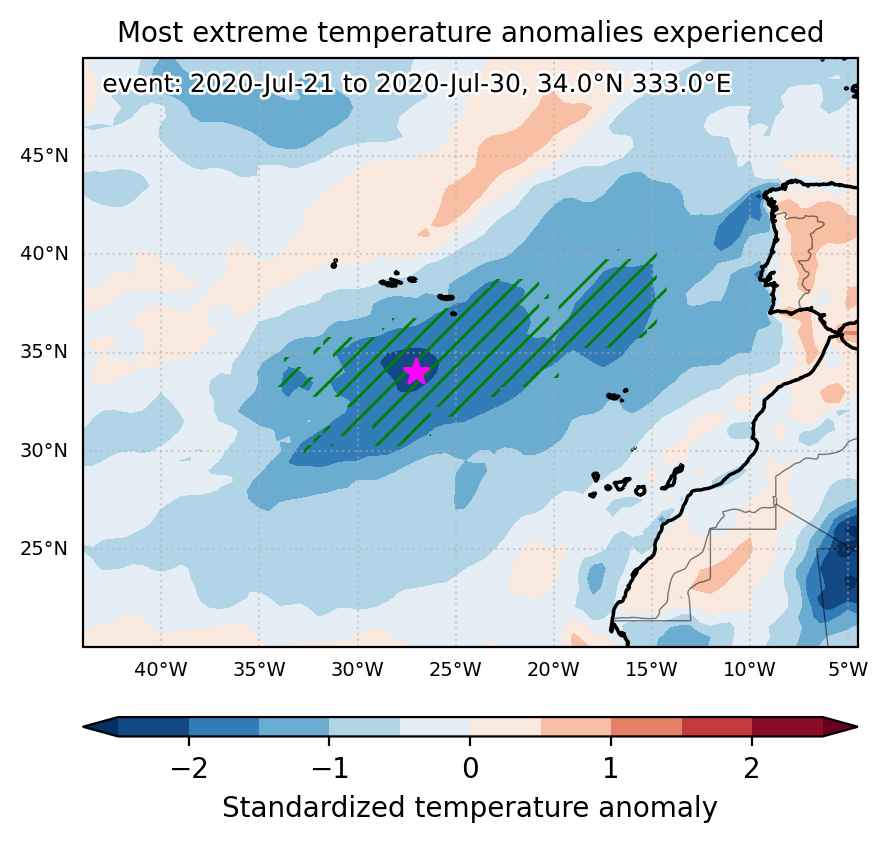
Fig. 1: Map of most extreme temperature anomalies (standardized) experienced during the event. The purple star indicates the center of the extreme event. Green hatching illustrates all areas under the effect of extremes at some time during the event.


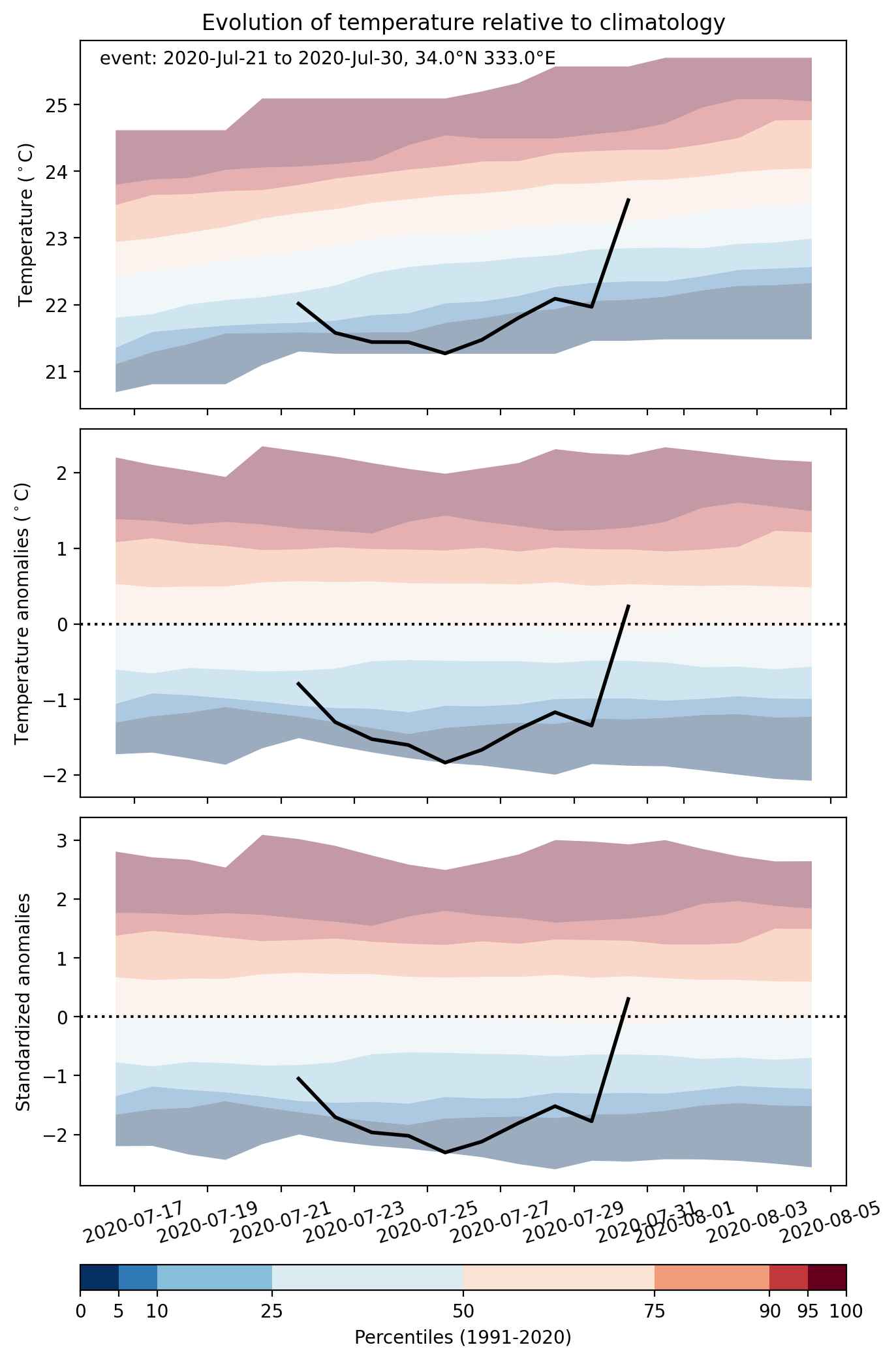
Fig. 2: Evolution of temperature at the center of the event. The climatological percentile distribution is illustrated with color shadings.


Fig. 3: Maps illustrating the evolution of standardized temperature anomalies during the event.

Event ID: Cold_spell_2020-Jul-21_to_2020-Jul-30_333.0_34.0

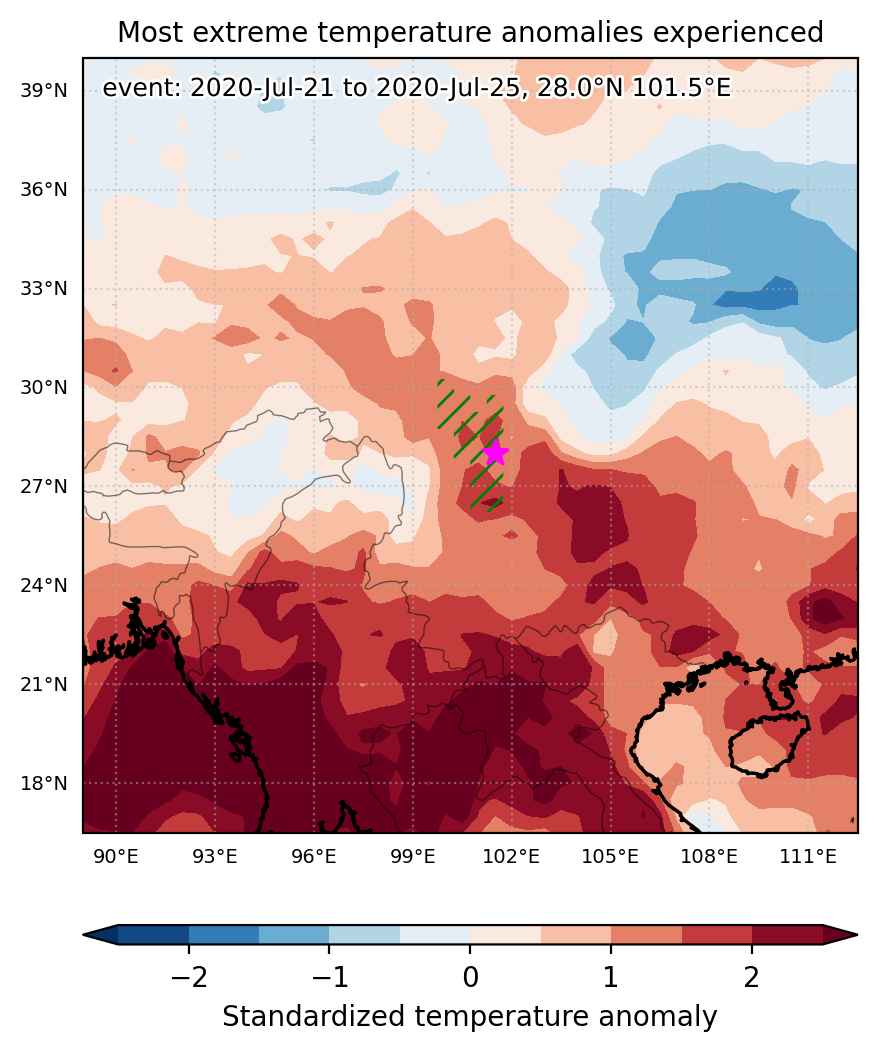
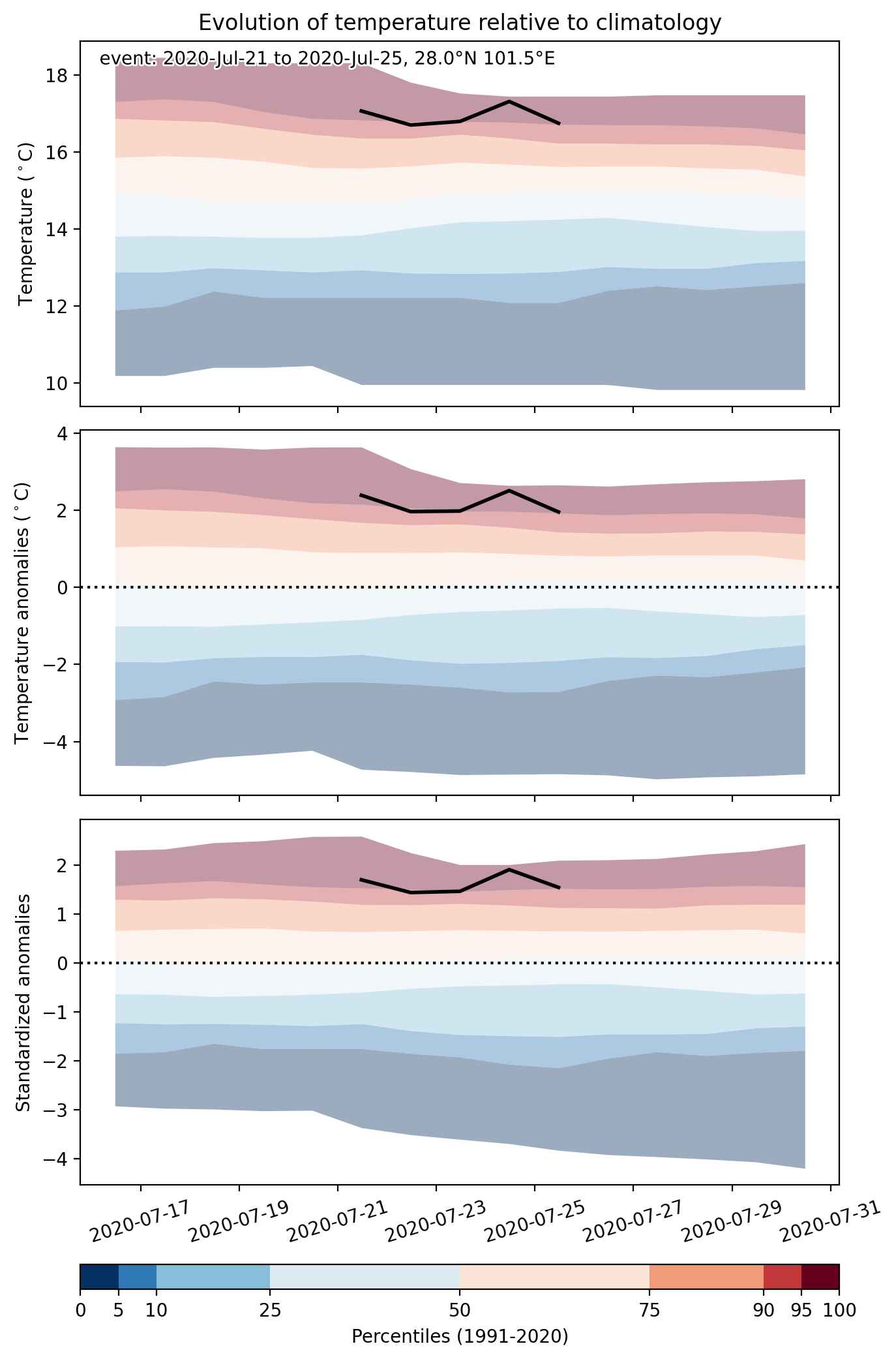
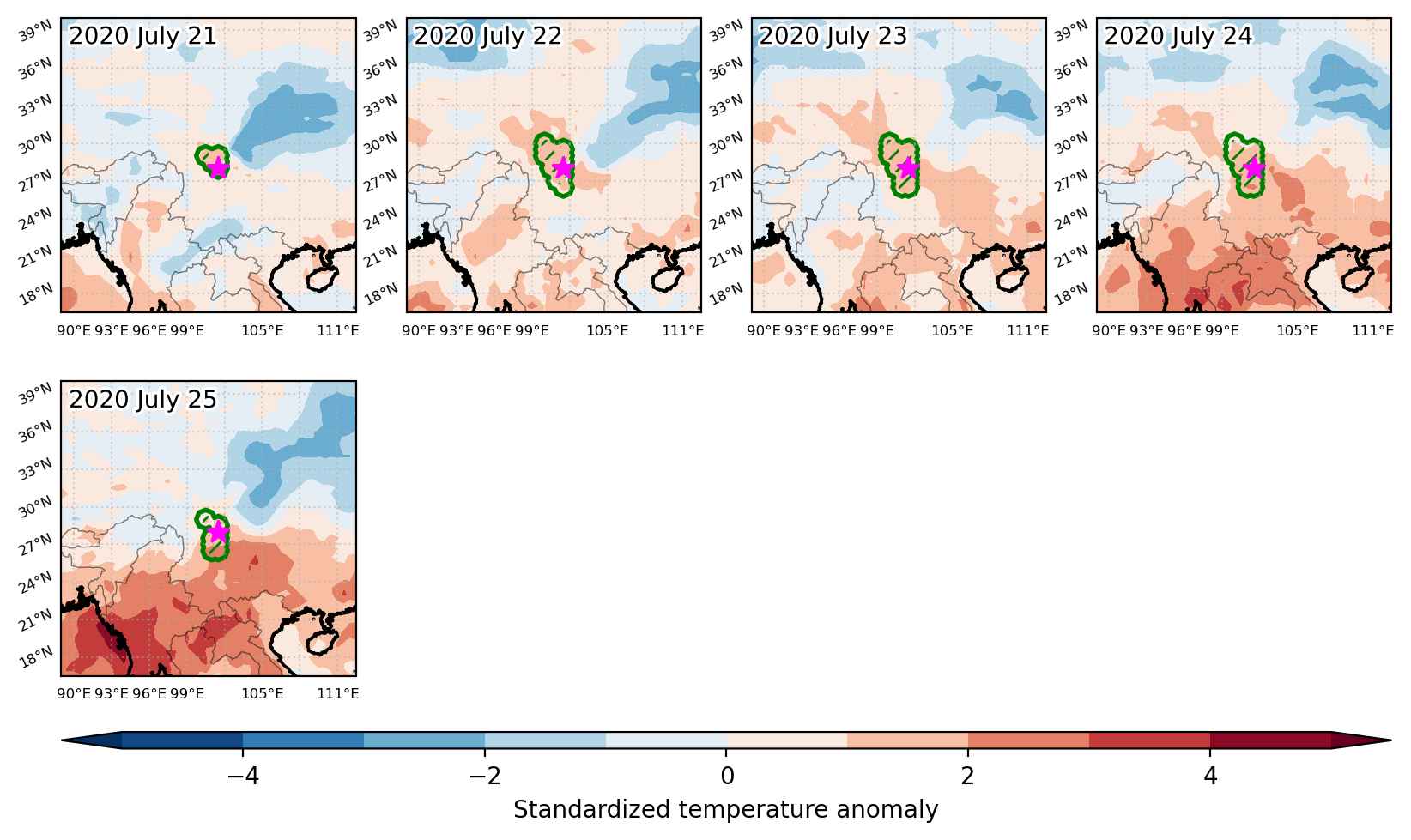
Heat wave occuring from July 21 2020 to July 25 2020 at 28.0°N 101.5°E

Download data: JSON

Event type: Heat wave

Countries affected (identified with ArcGIS Online; provided only for geographical reference):

  • China

Duration: 5 days

Time span: July 21 2020 to July 25 2020

Statistics over entire affected area:

  • Mean temperature anomaly: 2.0 °C
  • Mean temperature: 15.8 °C
  • Maximum temperature anomaly: 3.4 °C
  • Maximum temperature: 26.9 °C

Event center: 28.0°N 101.5°E

Area affected: 54423 km$^2$


Fig. 1: Map of most extreme temperature anomalies (standardized) experienced during the event. The purple star indicates the center of the extreme event. Green hatching illustrates all areas under the effect of extremes at some time during the event.


Fig. 2: Evolution of temperature at the center of the event. The climatological percentile distribution is illustrated with color shadings.


Fig. 3: Maps illustrating the evolution of standardized temperature anomalies during the event.

Event ID: Heat_wave_2020-Jul-21_to_2020-Jul-25_101.5_28.0

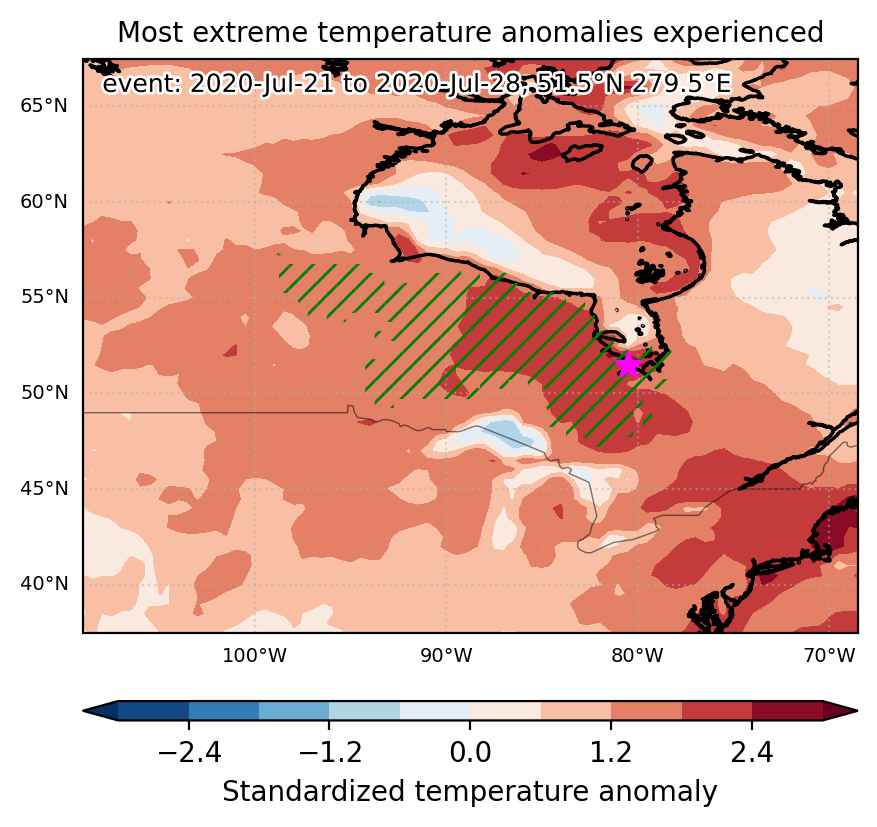
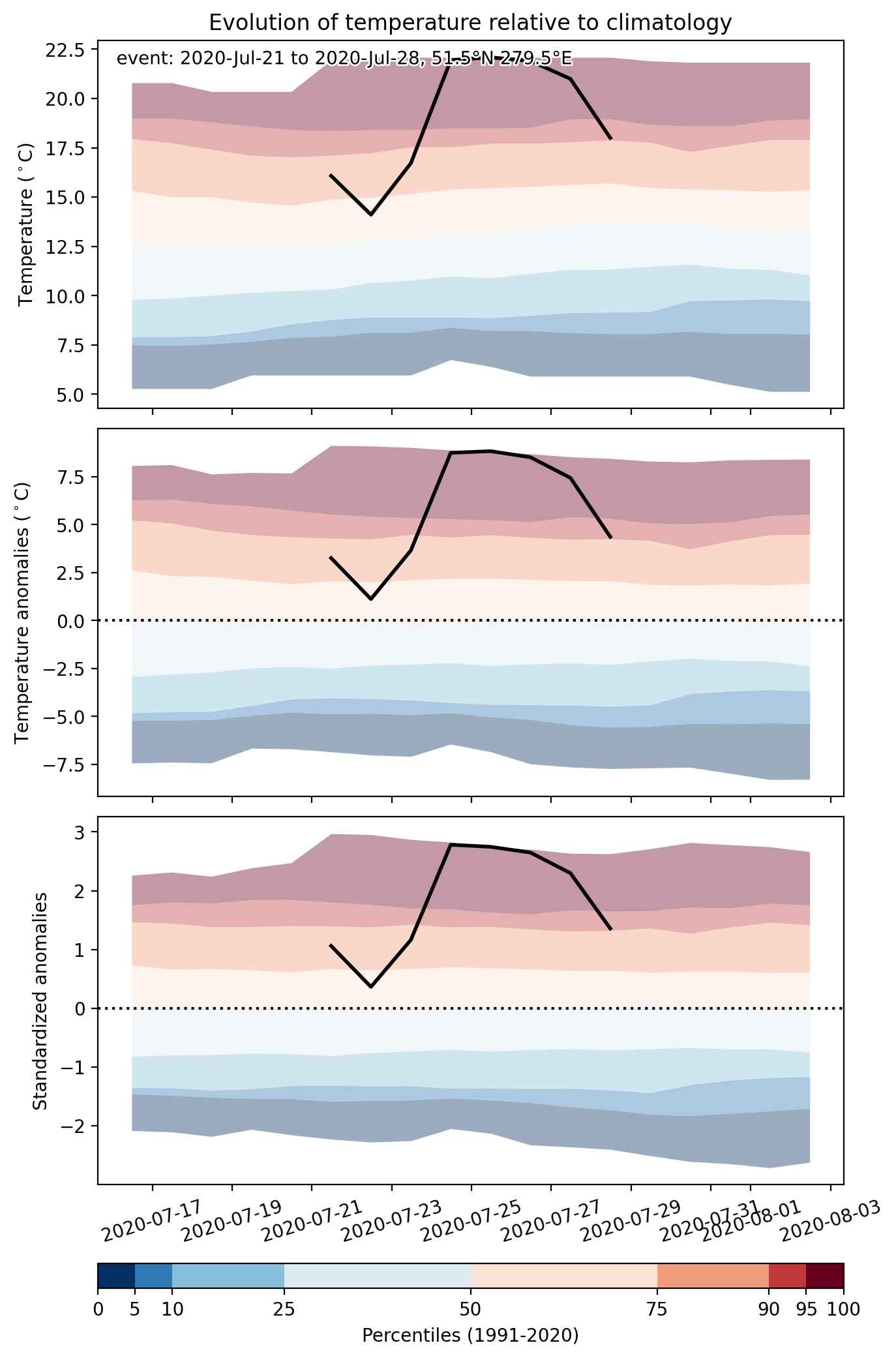
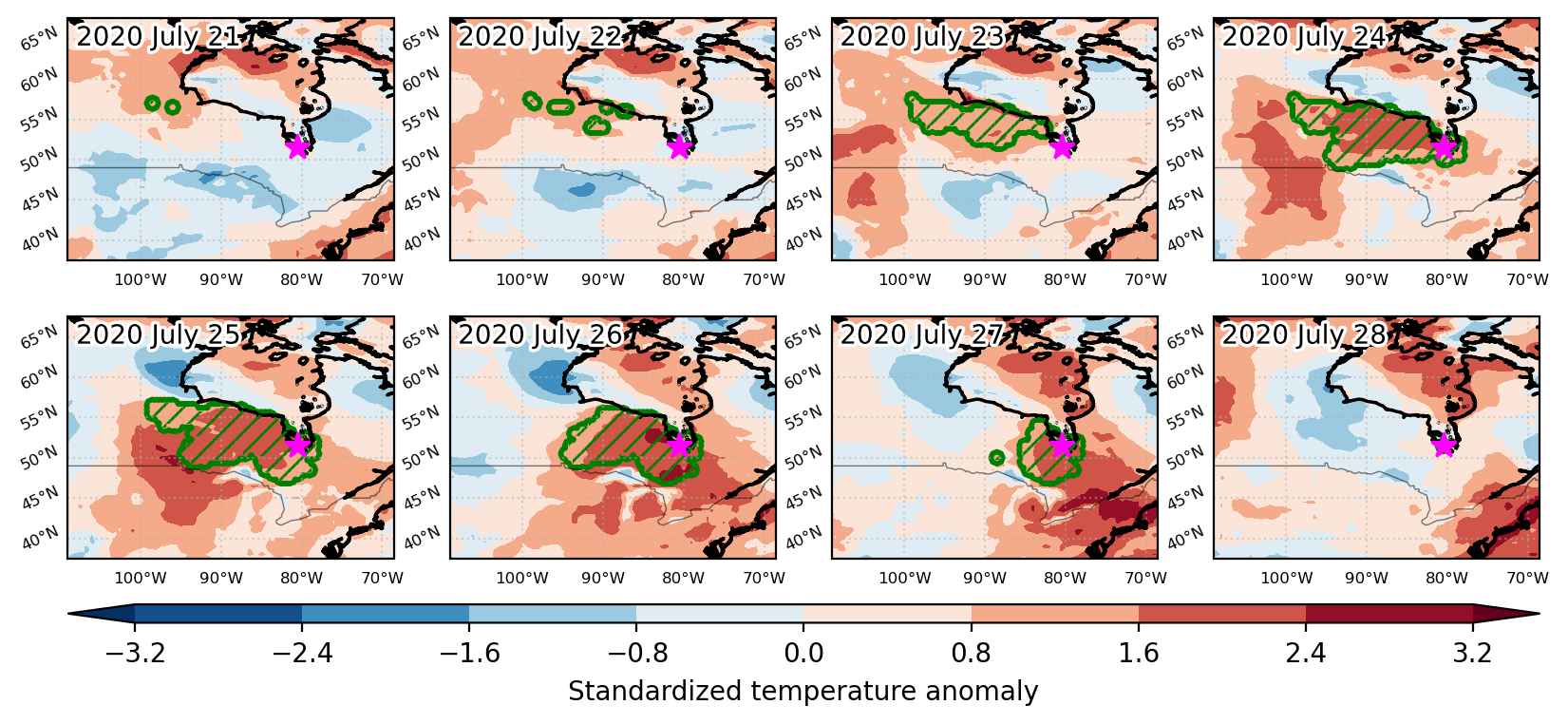
Heat wave occuring from July 21 2020 to July 28 2020 at 51.5°N 279.5°E

Download data: JSON

Event type: Heat wave

Countries affected (identified with ArcGIS Online; provided only for geographical reference):

  • Canada

Duration: 8 days

Time span: July 21 2020 to July 28 2020

Statistics over entire affected area:

  • Mean temperature anomaly: 6.0 °C
  • Mean temperature: 23.1 °C
  • Maximum temperature anomaly: 10.3 °C
  • Maximum temperature: 26.7 °C

Event center: 51.5°N 279.5°E

Area affected: 745776 km$^2$


Fig. 1: Map of most extreme temperature anomalies (standardized) experienced during the event. The purple star indicates the center of the extreme event. Green hatching illustrates all areas under the effect of extremes at some time during the event.


Fig. 2: Evolution of temperature at the center of the event. The climatological percentile distribution is illustrated with color shadings.


Fig. 3: Maps illustrating the evolution of standardized temperature anomalies during the event.

Event ID: Heat_wave_2020-Jul-21_to_2020-Jul-28_279.5_51.5

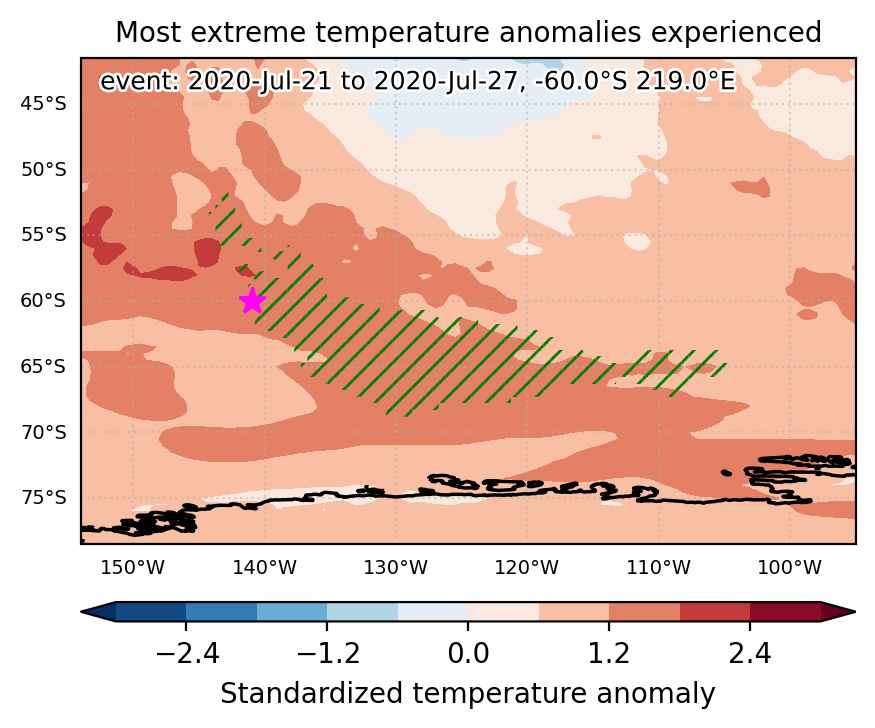
Heat wave occuring from July 21 2020 to July 27 2020 at -60.0°S 219.0°E

Download data: JSON

Event type: Heat wave

Countries affected (identified with ArcGIS Online; provided only for geographical reference):

  • Antarctica

Duration: 7 days

Time span: July 21 2020 to July 27 2020

Statistics over entire affected area:

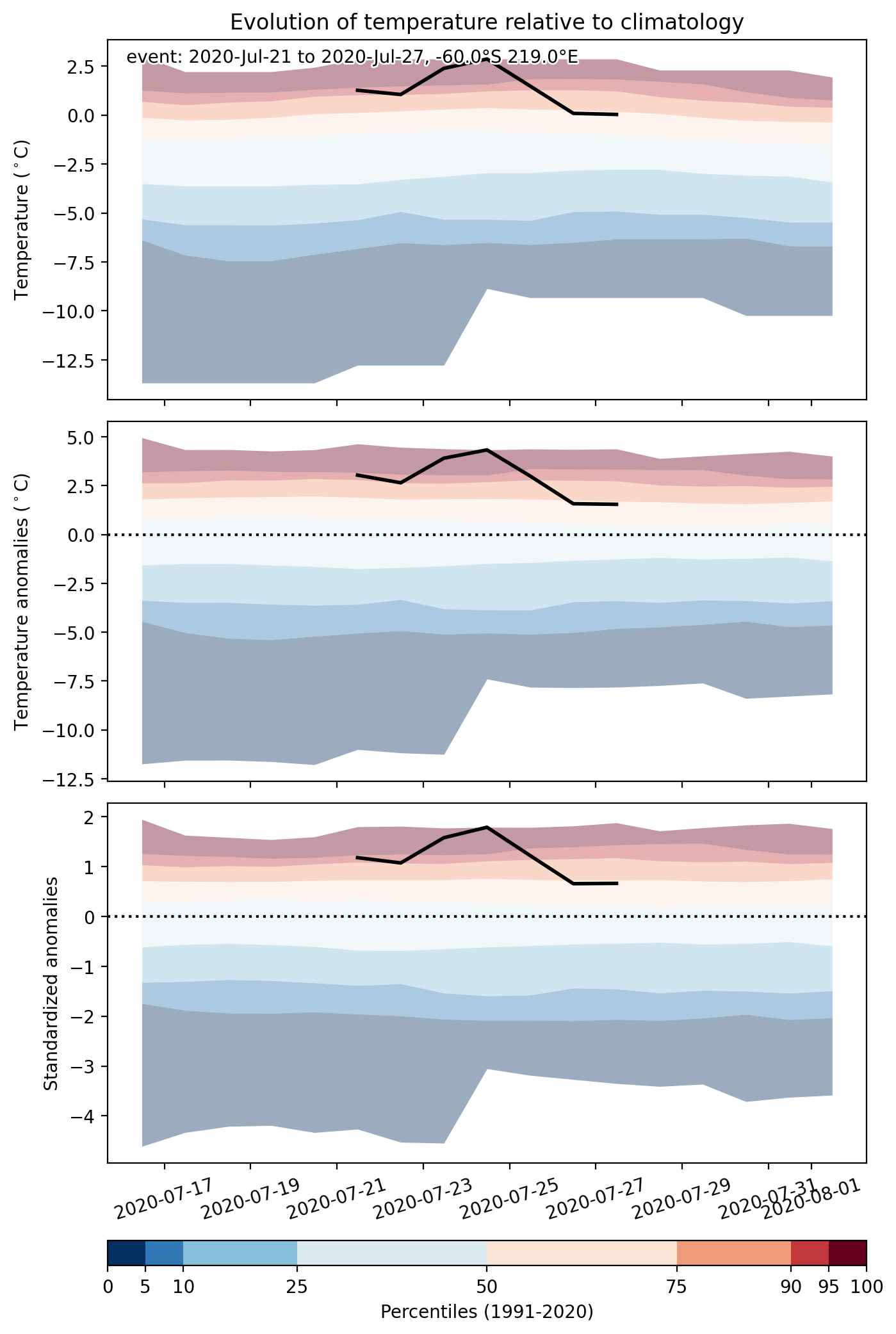
  • Mean temperature anomaly: 5.3 °C
  • Mean temperature: 1.6 °C
  • Maximum temperature anomaly: 12.6 °C
  • Maximum temperature: 9.1 °C

Event center: -60.0°S 219.0°E

Area affected: 1052926 km$^2$


Fig. 1: Map of most extreme temperature anomalies (standardized) experienced during the event. The purple star indicates the center of the extreme event. Green hatching illustrates all areas under the effect of extremes at some time during the event.


Fig. 2: Evolution of temperature at the center of the event. The climatological percentile distribution is illustrated with color shadings.


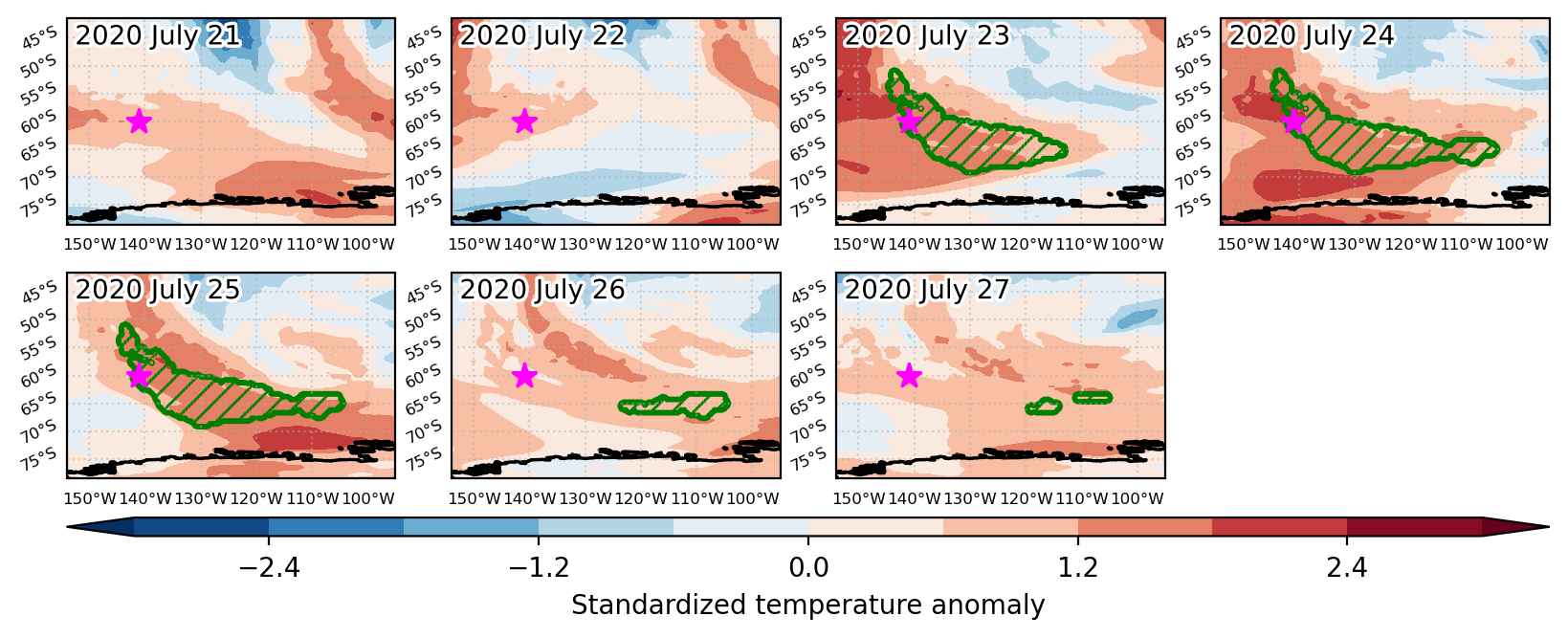
Fig. 3: Maps illustrating the evolution of standardized temperature anomalies during the event.

Event ID: Heat_wave_2020-Jul-21_to_2020-Jul-27_219.0_-60.0

Heat wave occuring from July 21 2020 to July 26 2020 at 7.5°N 5.0°E

Download data: JSON

Event type: Heat wave

Countries affected (identified with ArcGIS Online; provided only for geographical reference):

  • Nigeria

Duration: 6 days

Time span: July 21 2020 to July 26 2020

Statistics over entire affected area:

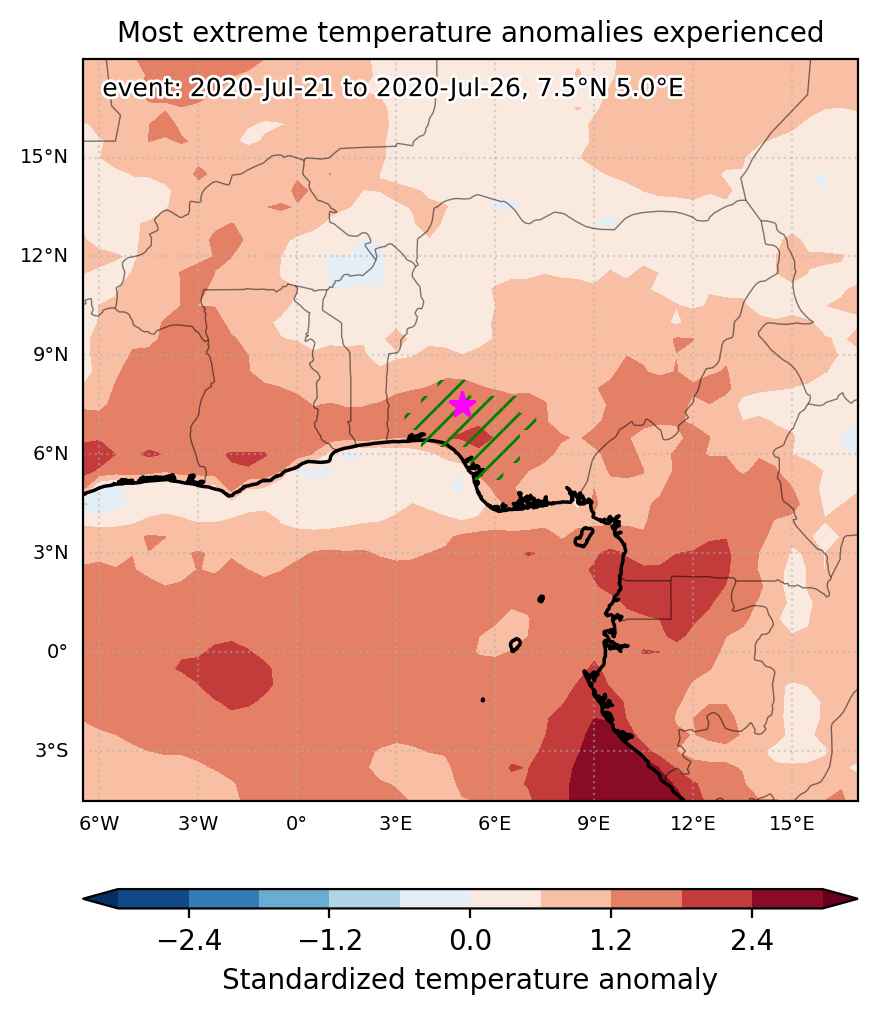
  • Mean temperature anomaly: 1.1 °C
  • Mean temperature: 25.5 °C
  • Maximum temperature anomaly: 1.7 °C
  • Maximum temperature: 26.8 °C

Event center: 7.5°N 5.0°E

Area affected: 82857 km$^2$


Fig. 1: Map of most extreme temperature anomalies (standardized) experienced during the event. The purple star indicates the center of the extreme event. Green hatching illustrates all areas under the effect of extremes at some time during the event.


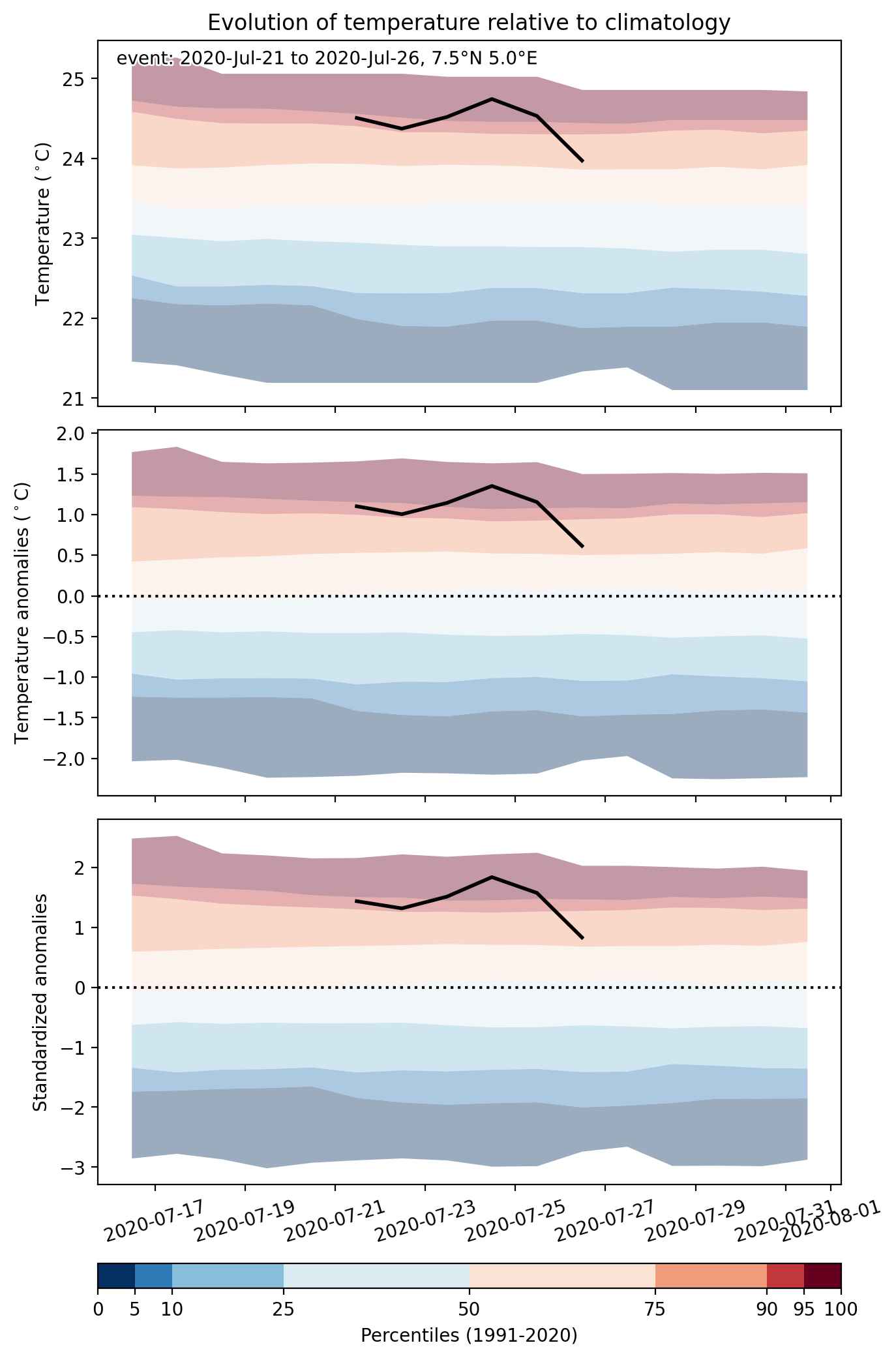
Fig. 2: Evolution of temperature at the center of the event. The climatological percentile distribution is illustrated with color shadings.


Fig. 3: Maps illustrating the evolution of standardized temperature anomalies during the event.

Event ID: Heat_wave_2020-Jul-21_to_2020-Jul-26_5.0_7.5

Cold spell occuring from July 20 2020 to August 03 2020 at 36.0°N 124.0°E

Download data: JSON

Event type: Cold spell

Countries affected (identified with ArcGIS Online; provided only for geographical reference):

  • China
  • Korea, Democratic People’s Republic of
  • Korea, Republic of

Duration: 15 days

Time span: July 20 2020 to August 03 2020

Statistics over entire affected area:

  • Mean temperature anomaly: -3.6 °C
  • Mean temperature: 23.1 °C
  • Minimum temperature anomaly: -8.3 °C
  • Minimum temperature: 15.4 °C

Event center: 36.0°N 124.0°E

Area affected: 1269860 km$^2$


Fig. 1: Map of most extreme temperature anomalies (standardized) experienced during the event. The purple star indicates the center of the extreme event. Green hatching illustrates all areas under the effect of extremes at some time during the event.


Fig. 2: Evolution of temperature at the center of the event. The climatological percentile distribution is illustrated with color shadings.


Fig. 3: Maps illustrating the evolution of standardized temperature anomalies during the event.

Event ID: Cold_spell_2020-Jul-20_to_2020-Aug-03_124.0_36.0

Cold spell occuring from July 20 2020 to July 28 2020 at 60.0°N 266.5°E

Download data: JSON

Event type: Cold spell

Countries affected (identified with ArcGIS Online; provided only for geographical reference):

  • Canada

Duration: 9 days

Time span: July 20 2020 to July 28 2020

Statistics over entire affected area:

  • Mean temperature anomaly: -5.6 °C
  • Mean temperature: 7.1 °C
  • Minimum temperature anomaly: -9.4 °C
  • Minimum temperature: 1.8 °C

Event center: 60.0°N 266.5°E

Area affected: 71921 km$^2$


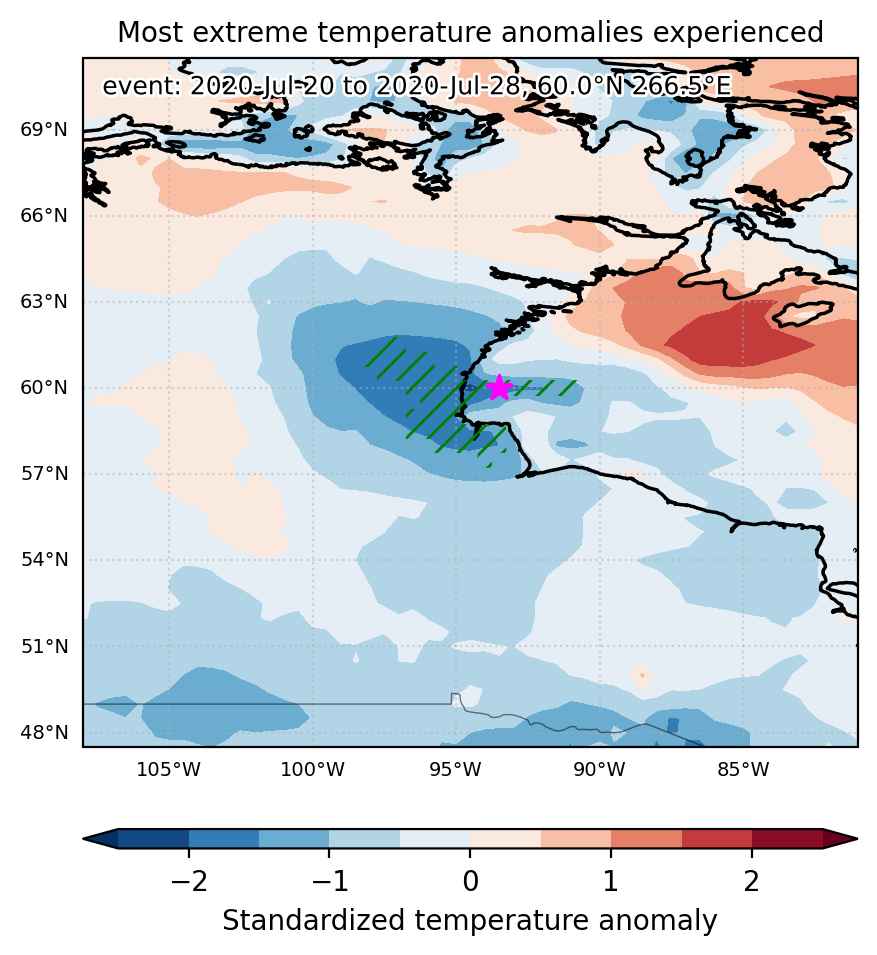
Fig. 1: Map of most extreme temperature anomalies (standardized) experienced during the event. The purple star indicates the center of the extreme event. Green hatching illustrates all areas under the effect of extremes at some time during the event.


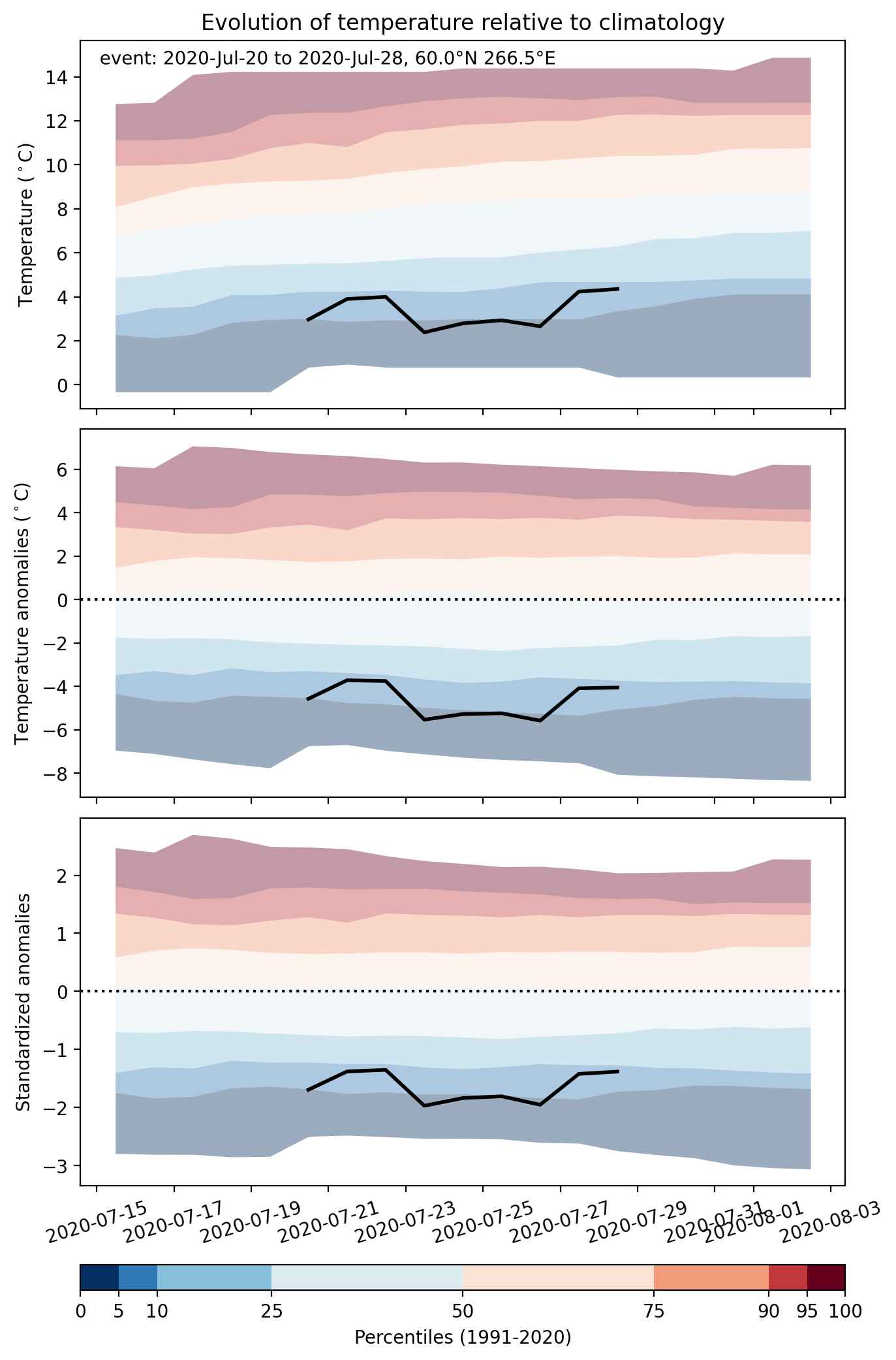
Fig. 2: Evolution of temperature at the center of the event. The climatological percentile distribution is illustrated with color shadings.


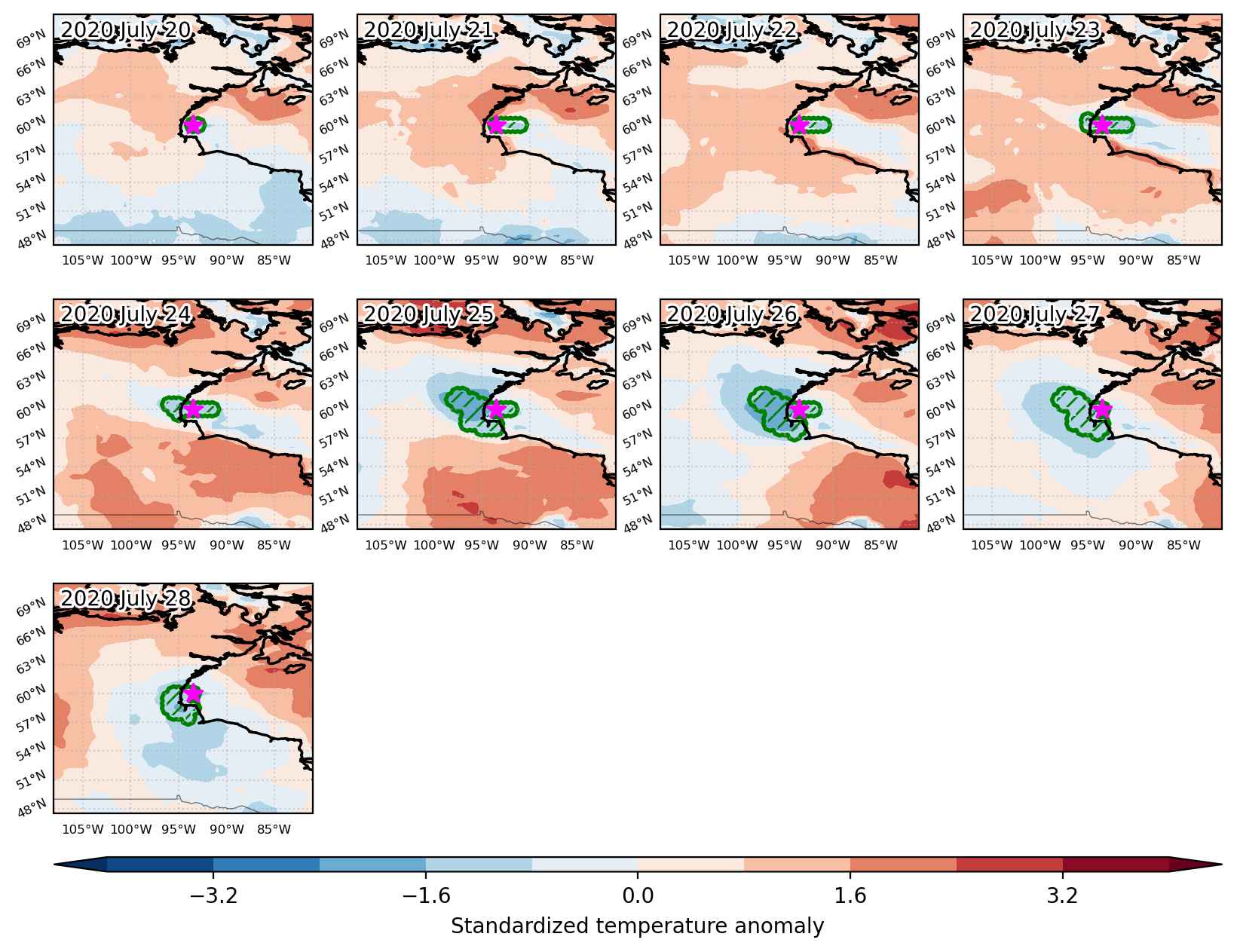
Fig. 3: Maps illustrating the evolution of standardized temperature anomalies during the event.

Event ID: Cold_spell_2020-Jul-20_to_2020-Jul-28_266.5_60.0

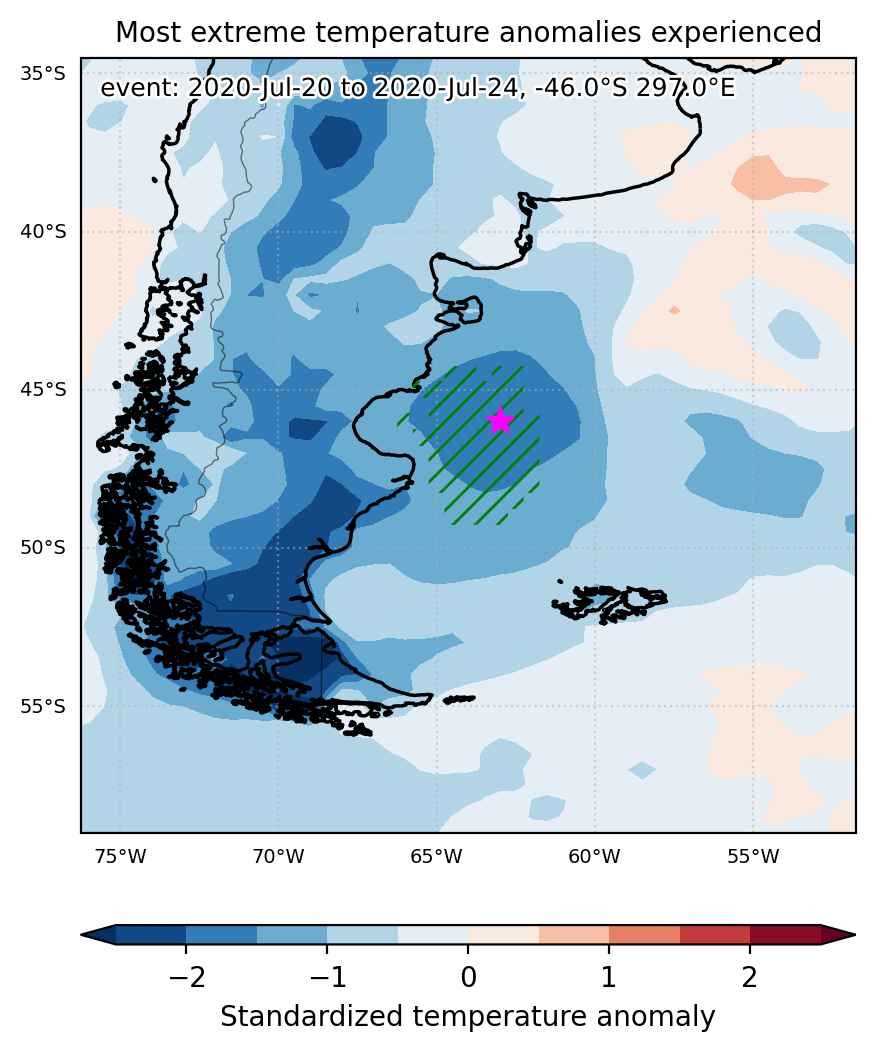
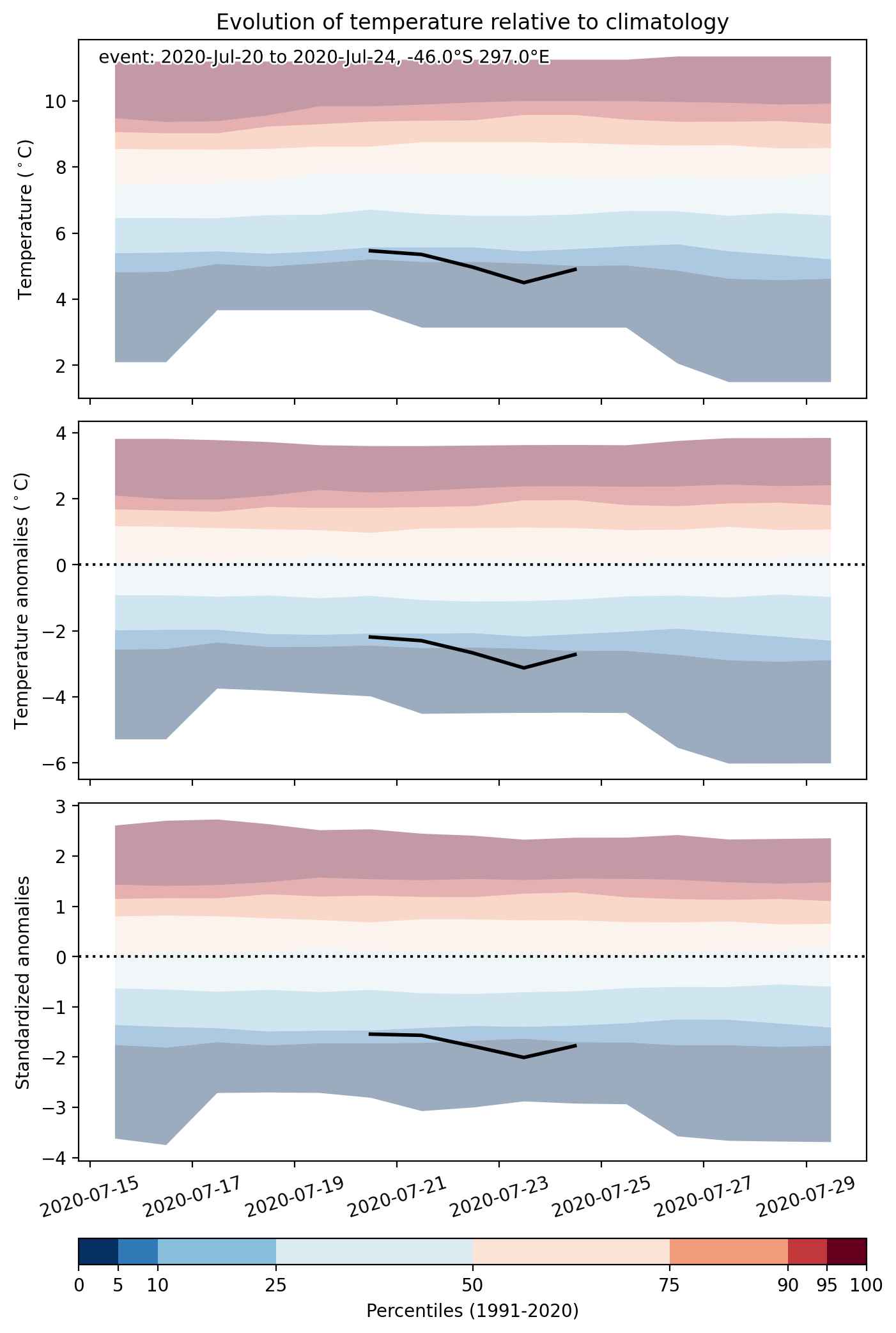
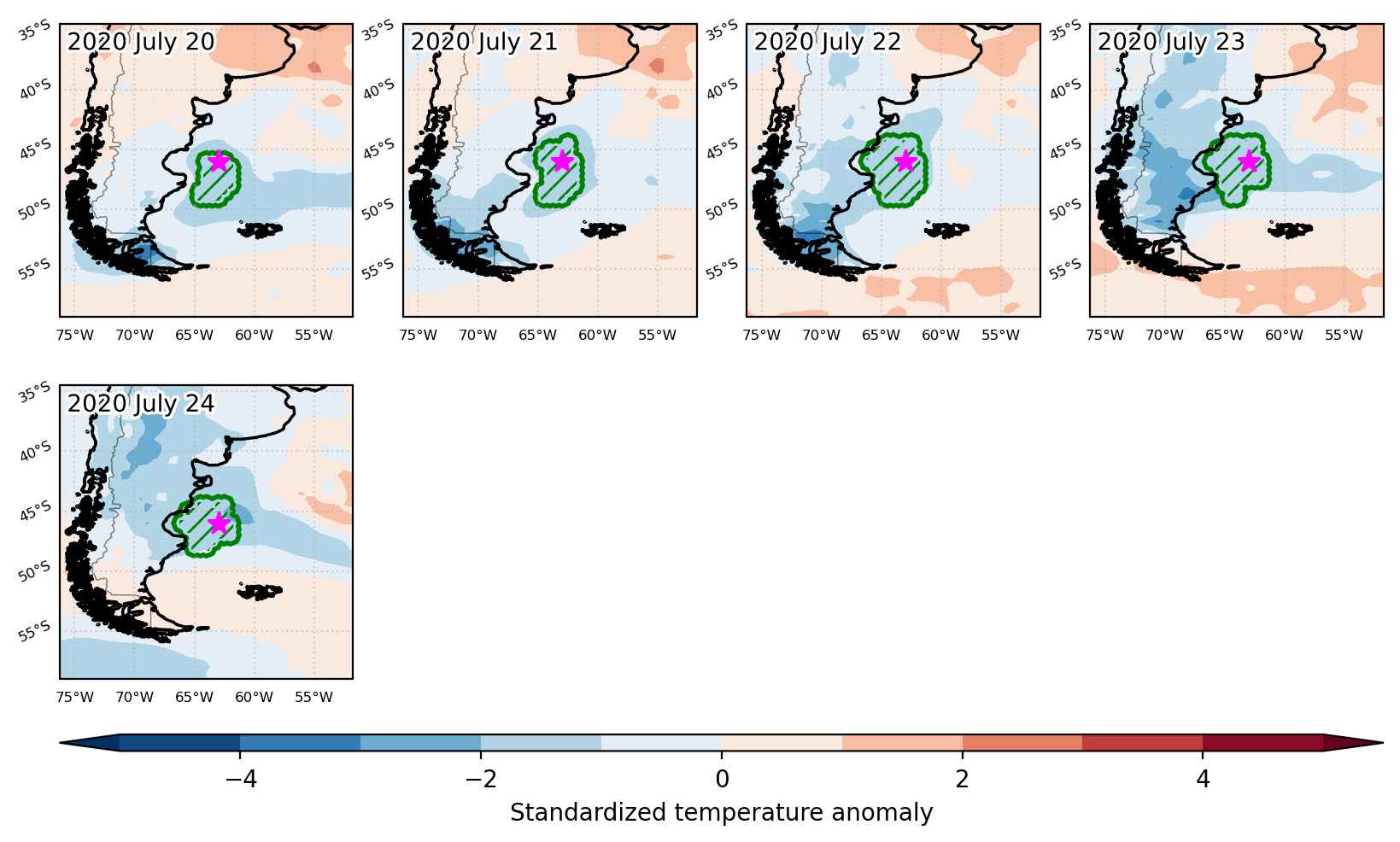
Cold spell occuring from July 20 2020 to July 24 2020 at -46.0°S 297.0°E

Download data: JSON

Event type: Cold spell

Countries affected (identified with ArcGIS Online; provided only for geographical reference):

  • Argentina

Duration: 5 days

Time span: July 20 2020 to July 24 2020

Statistics over entire affected area:

  • Mean temperature anomaly: -2.4 °C
  • Mean temperature: 4.9 °C
  • Minimum temperature anomaly: -3.2 °C
  • Minimum temperature: 3.9 °C

Event center: -46.0°S 297.0°E

Area affected: 133524 km$^2$


Fig. 1: Map of most extreme temperature anomalies (standardized) experienced during the event. The purple star indicates the center of the extreme event. Green hatching illustrates all areas under the effect of extremes at some time during the event.


Fig. 2: Evolution of temperature at the center of the event. The climatological percentile distribution is illustrated with color shadings.


Fig. 3: Maps illustrating the evolution of standardized temperature anomalies during the event.

Event ID: Cold_spell_2020-Jul-20_to_2020-Jul-24_297.0_-46.0